
January's haute couture season was defined by blockbuster creative debuts. Now, AW26 reveals what comes next, as Jonathan Anderson at Dior and Matthieu Blazy at Chanel begin to cement their visions, while a new wave of couture talent makes its mark in Paris.
If the Haute Couture shows back in January were all about succession, bringing with it some of the most important debuts in recent fashion, then the autumn/winter '26 season’s were all about the consolidation of the creative visions set forth – as they say, the sophomore outing is invariably more telling of the direction a designer is taking than a debut, making Jonathan Anderson at Dior and Matthieu Blazy at Chanel two of this season’s most keenly studied shows.
Related: Was there a hint to H.C. Andersen in Chanel's fairy tale-inspired Haute Couture collection?
All that said, fashion remains in a state of flux, with this slate of shows bringing a fair number of first-time showings – Pierpaolo Piccioli and Duran Lantink’s first flexes at fashion’s highest art form for Balenciaga and Jean Paul Gaultier respectively, Michael Stewart’s Paris debut for Standing Ground, and the triumphant off-schedule return of Olivier Theyskens under the banner of Boloria.
Below, scroll on for the top takeaways from the AW26 Haute Couture shows.
Balenciaga’s bright new day
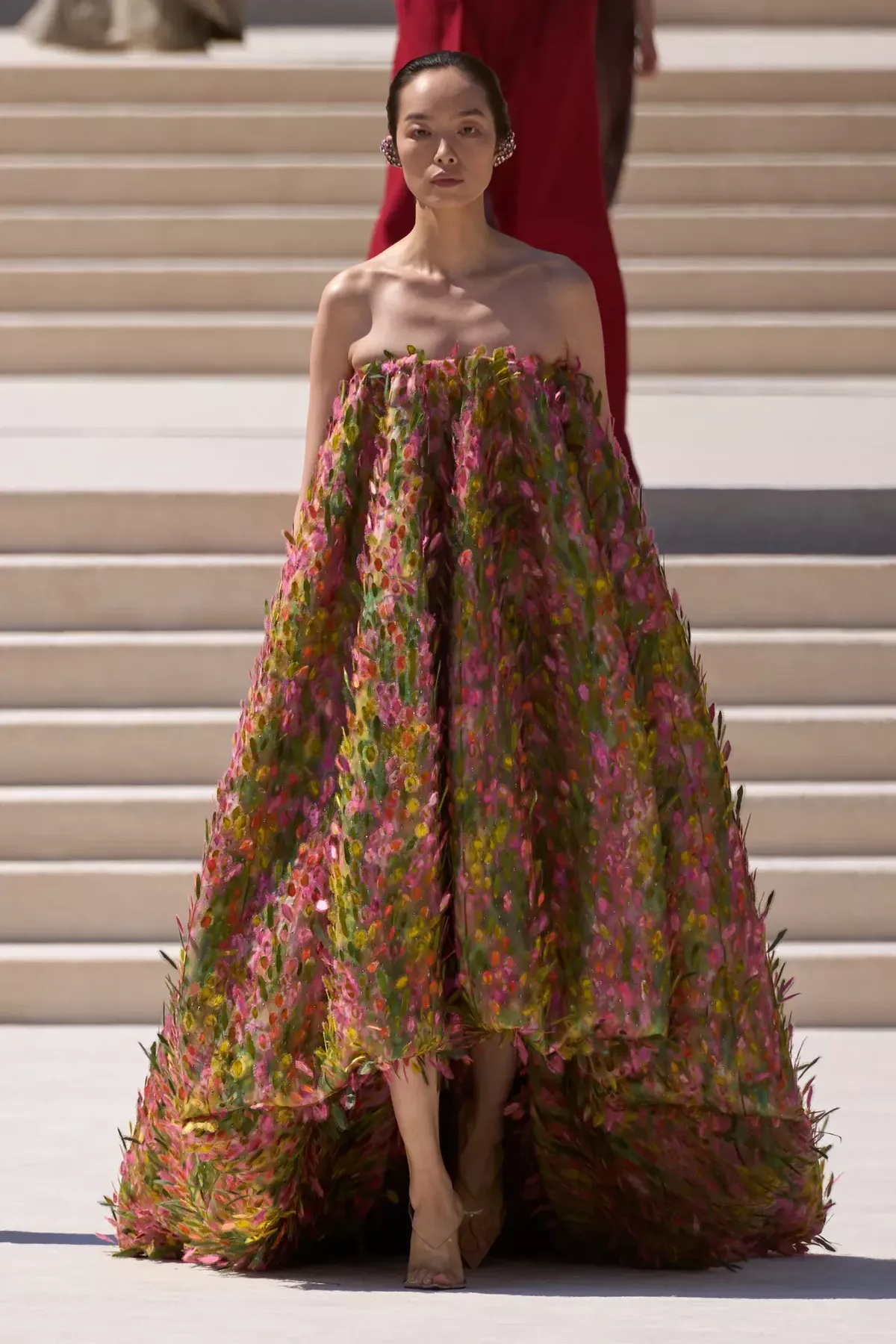
Photo: Vogue Runway
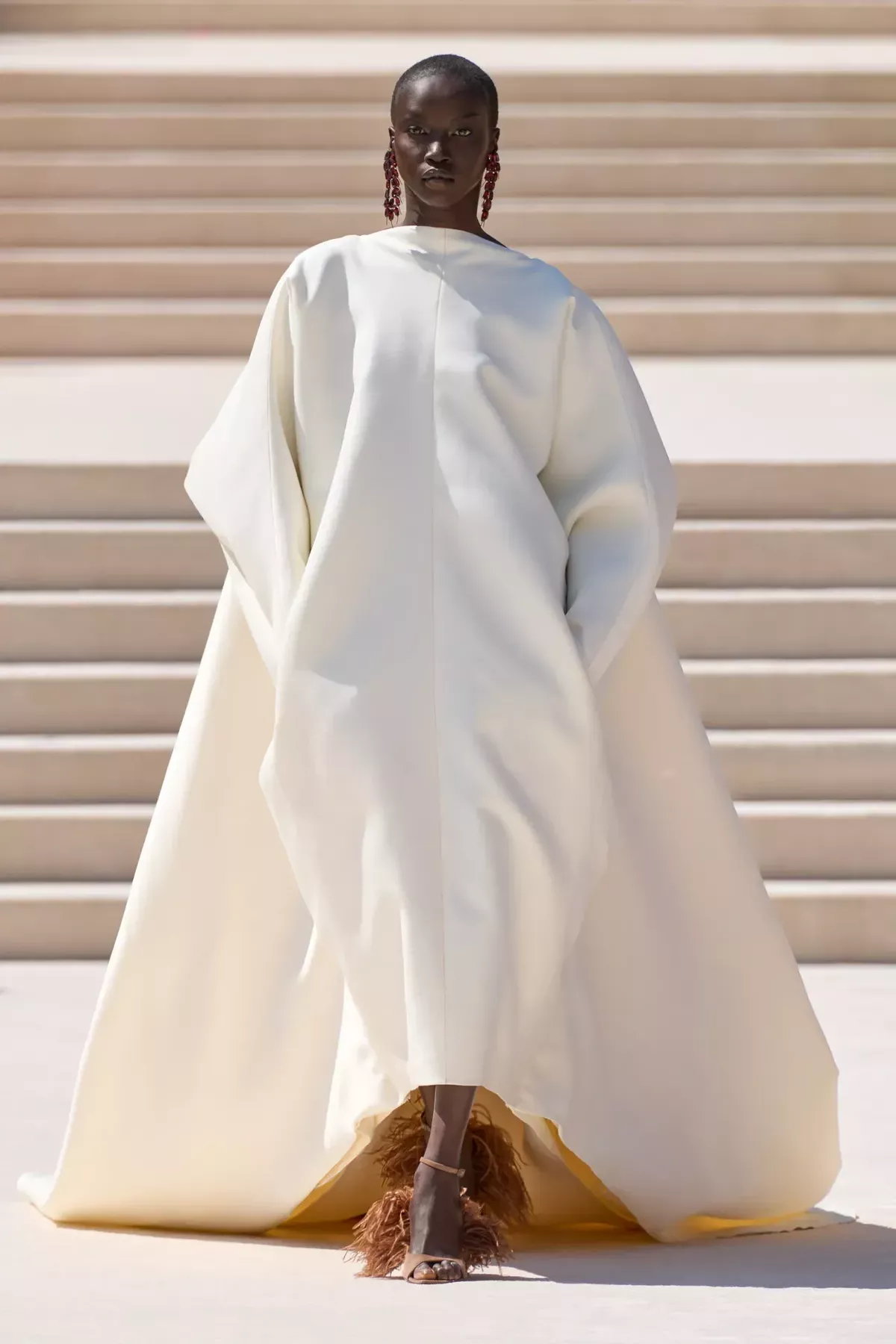
Photo: Vogue Runway
We know – another day, another debut. This one, though, is one that we’ve been awaiting with bated breath since the day this creative directorship was first announced. We are, of course, talking about Pierpaolo Piccioli’s very first couture showing for Balenciaga, the house he took the helm of this time last year. Haute Couture is, of course, a métier in which he’s more than proven his mettle, with the Italian designer staging some truly transportive couture spectacles during his extensive tenure at Valentino.
Staged beneath the high noon sun in the courtyard of the Église du Val-de-Grâce, before a self-fanning audience that included the likes of new house ambassador Hudson Williams and Lily Collins, Piccioli delivered a collection replete with both his signatures – unparalleled colour and textural plays (think: sea-green silk mousseline under a stone-grey ostrich fronded trench and lime green and dusty mauve beneath Amalfi-yellow tailoring). After a couple of awkward negotiations between the house’s distant legacy, recent history and Piccioli’s vision on the ready-to-wear front, this felt like the moment where the designer’s visions for one of fashion’s most storied couture houses truly clicked.
Mahoro Seward, fashion and style editor at British Vogue
Armani Privé keeps it private
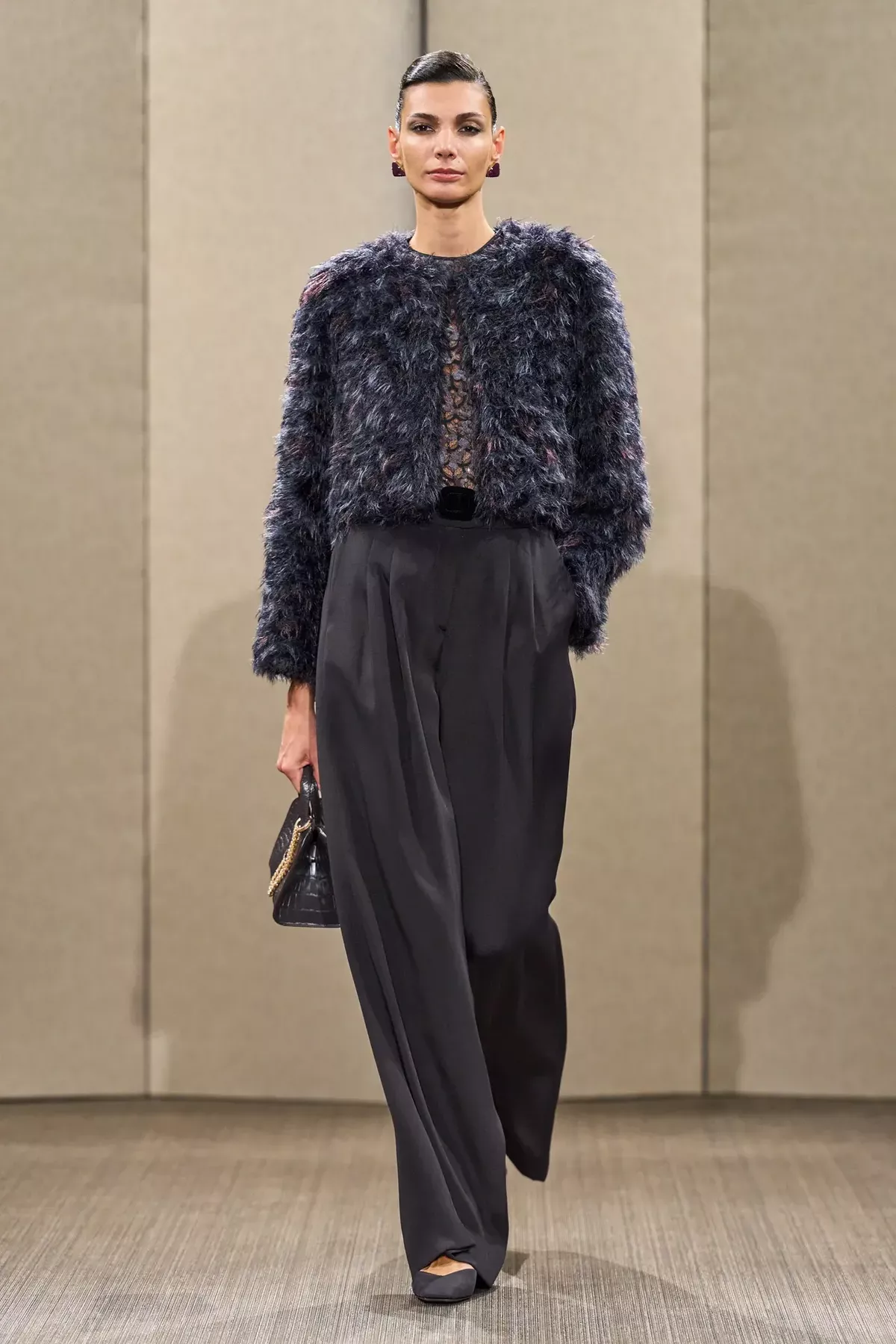
Photo: Vogue Runway
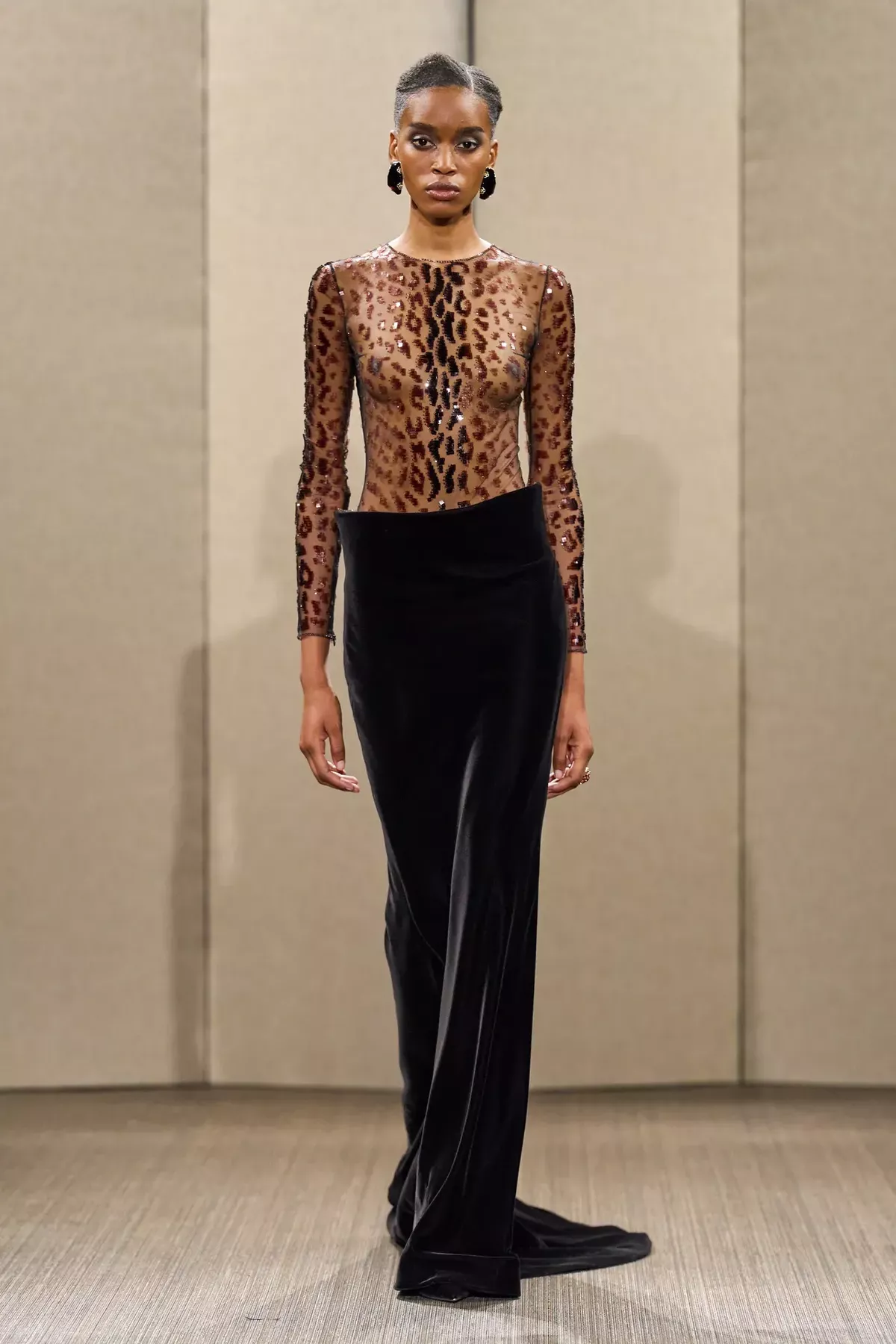
Photo: Vogue Runway
While a number of houses have been attempting to field a more casual, daytime-friendly approach to couture of late, Armani Privé has always been decidedly evening in tone. That reputation held this season – long-lined blazers in sheened, inky wools with decadent tonal crystal embroidery and form-swaddling sleeveless satin gowns that pooled into trains abounded. There was, however, a good number of looks that took a more subtle – and arguably more directional – take on the notion of eveningwear.
Titled 'Boudoir', this was, in part, a meditation on “dressing [as] a private ritual”, the show notes read – a contemplation of the dressing room as a liminal space between the private intimacy of nakedness and the dolled-up selves that the world gets to see. Accordingly, we saw pyjama-like separates in reassuringly hefty satins and lingerie-like transparencies beneath structured tailoring. Sombre as the palette may have been – something of a counterpoint to the lightness and almost springtime tones we’ve seen elsewhere – there was a playfulness (a cheekiness even) to what was presented here, giving new meaning to the brand.
Mahoro Seward, fashion and style editor at British Vogue
Matthieu climbs up the beanstalk for Chanel
Photo: Vogue Runway
Photo: Vogue Runway
No one could have foreseen the opening notes of The Fellowship of the Ring soundtracking Chanel's Haute Couture A26 show. Or that it would be called 'Gaby and the Beanstalk'. Or that a Chanel suit, constructed from guipure and light silk mousseline, would evoke actual magic beans. “Was Gabrielle Chanel’s life a fairy tale?” asked Matthieu Blazy, who found a book of such fables in her library, and ran with it, creating clothes for “the adventure of the everyday”. Here, in the sleeping bear minaudière, creeping vine heels and buttons depicting the metamorphosis from ugly duckling to swan was the lightness Blazy does so well. Of course, many of the best details – like the memos and charms sewn into linings, like the love letter pockets Gabrielle used to stitch into her handbags – are saved for the couture clients, but for a fleeting moment inside Blazy’s fantastical takeover of the Grand Palais, it was everyone’s story to enjoy.
Alice Newbold, fashion features and news director at British Vogue
Dior’s fine art fan-fiction
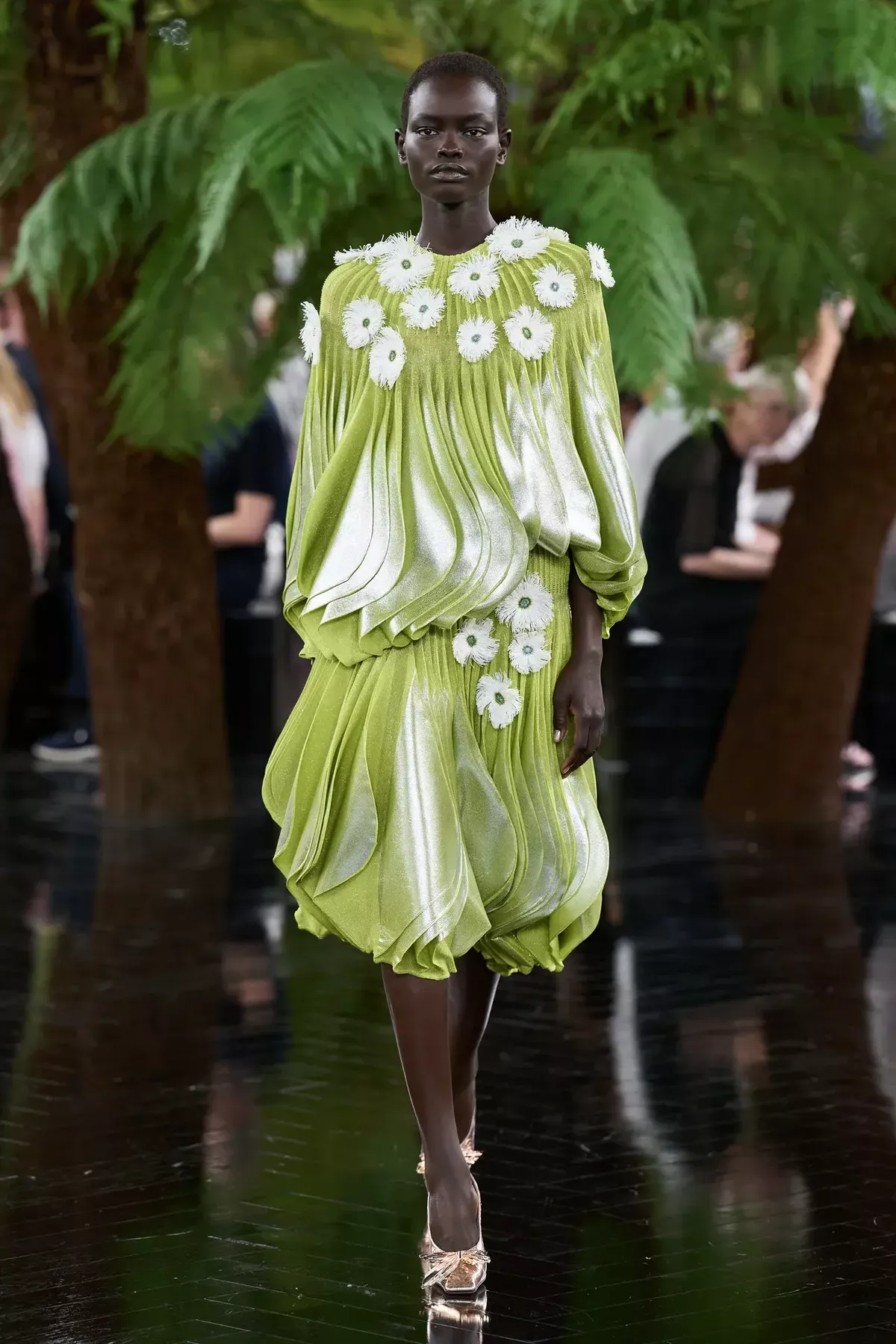
Photo: Vogue Runway
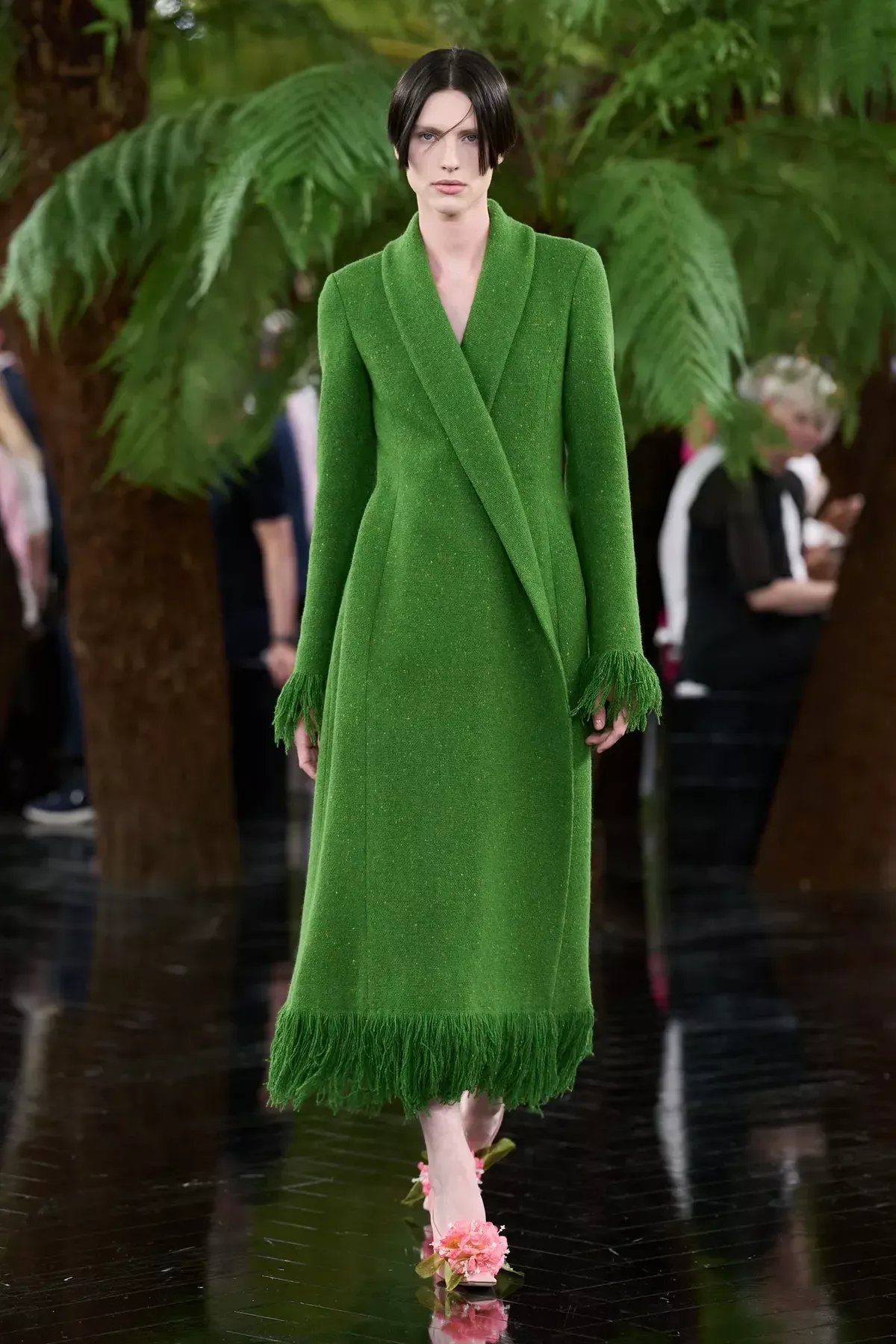
Photo: Vogue Runway
Housed in a black-lacquered hothouse in the middle of the Musée Rodin’s lush gardens, fans – the old-school paper kind, no newfangled Shark Chill Pills in sight – were the coolest couture accessory in sight. Until Jonathan Anderson’s second Dior couture show cranked into gear and gargantuan versions of the handheld devices were suspended on dresses like folded wings ready to take flight. Anderson, himself, declared in his show notes that he’s a longstanding fan of the American sculptor Lynda Benglis (whose stark, twisted bronze sculptures served as the centrepieces of his spring/summer '24 Loewe show).
Moreover, the transformative power of knotting, pleating and moulding in her work – particularly that inspired by the Indian city of Ahmedabad. In practice, the craft of the region manifested itself in colour-pop embellishments, like satin pumps bursting with frothy fauna, fabulously chintzy bags (four of which were made in collaboration with Benglis), and mother of-pearl, rock crystal and carved green onyx jewellery threaded onto tasselled cords. A “new line of enquiry for Anderson’s couture-as-lab”, was prompted by his comparison between Ahmedabad and the aridity of Santa Fe, where Benglis has a home, but for anyone taking the undulating pleated cocktail dresses and melted-down, louchely-knotted Bar jackets at face value, this “couture-as-lab” metaphor felt apt for describing one of fashion’s most experimental designers.
Alice Newbold, fashion features and news director at British Vogue
Standing Ground brings County Clare craft to couture week
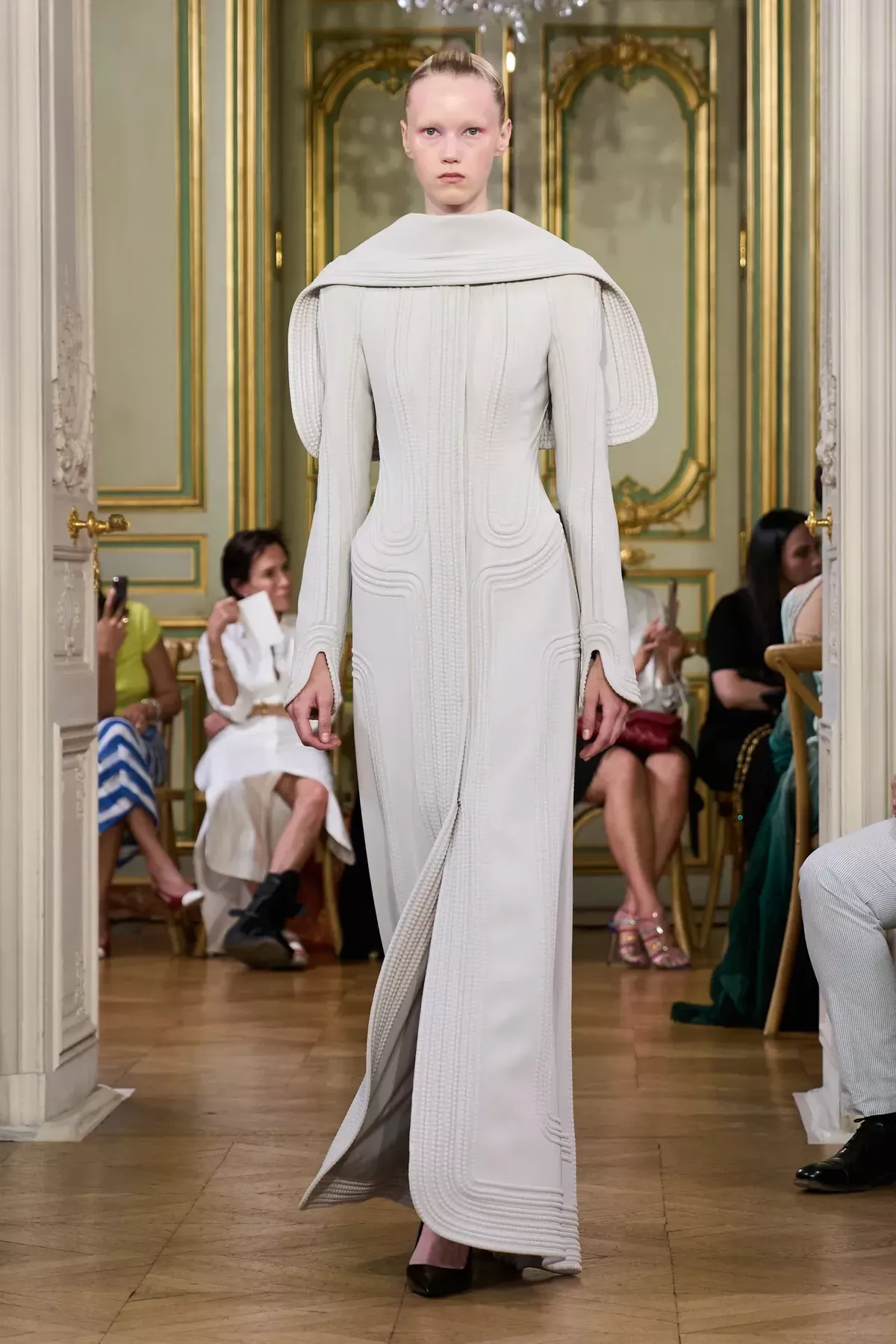
Photo: Vogue Runway
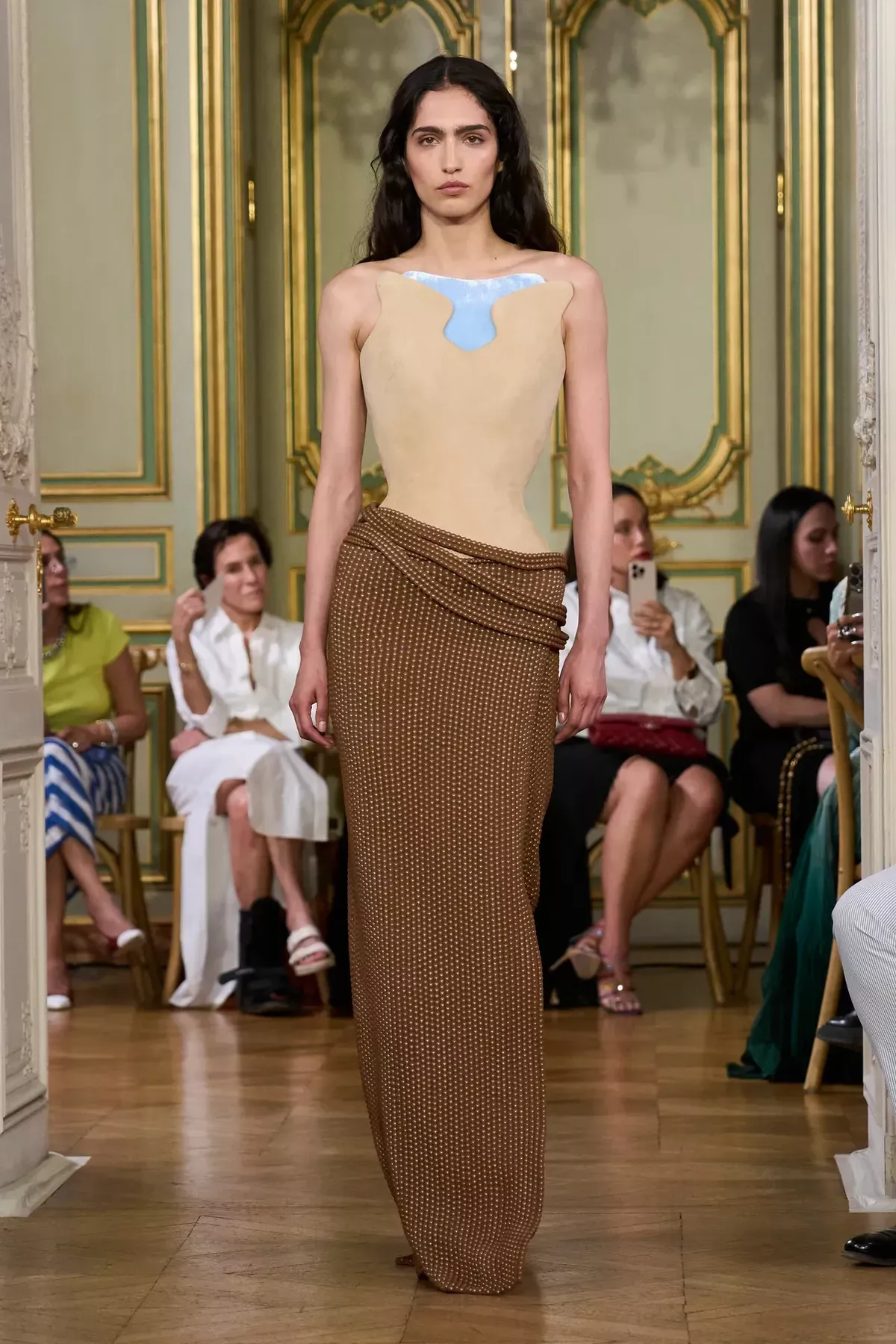
Photo: Vogue Runway
Michael Stewart operates out of a mere slice of a studio in 180 The Strand – a stone’s throw from British Vogue HQ – but, on the opening day of Haute Couture Week, he experienced a homecoming of sorts in the Irish Embassy in Paris. The County Clare native has been steadfast in his journey to the upper echelons of fashion and, after working on his debut collection as a recognised couturier for 18 months, it paid off. Whispers about many hours (was it 4,000 or 5,000?) his bridal gown – made from exquisite Carrickmacross lace and modelled by the ethereal Kristen McMenamy – took to make reverberated around the gilded space, while the absence of circuitous show notes meant that viewers could digest all this otherworldly craft without being fed a narrative.
Stewart’s work has always tapped into a higher power – his brand’s name refers to Ireland’s ancient standing stones – but, for those who have followed his career since his Fashion East days, this was a spellbinding shift towards true excellence. The lacemakers he worked with to preserve the ornate craft of Ireland would have been proud – of every microscopic beaded detail, not just the lace transforming the briar thickets of their home into couture-level beauty.
Alice Newbold, fashion features and news director at British Vogue
Olivier Theyskens’s triumphant return
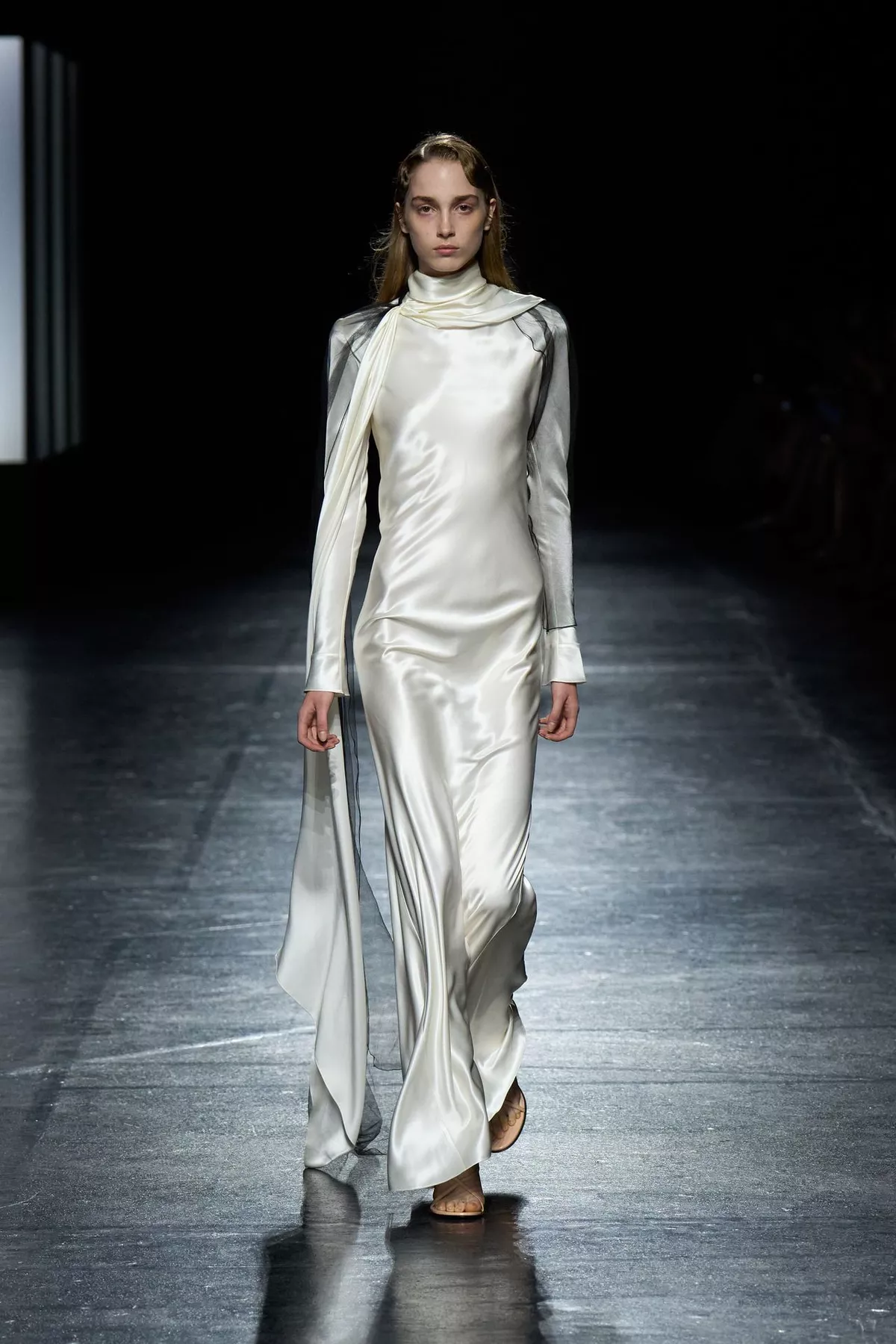
Photo: Courtesy of Boloria
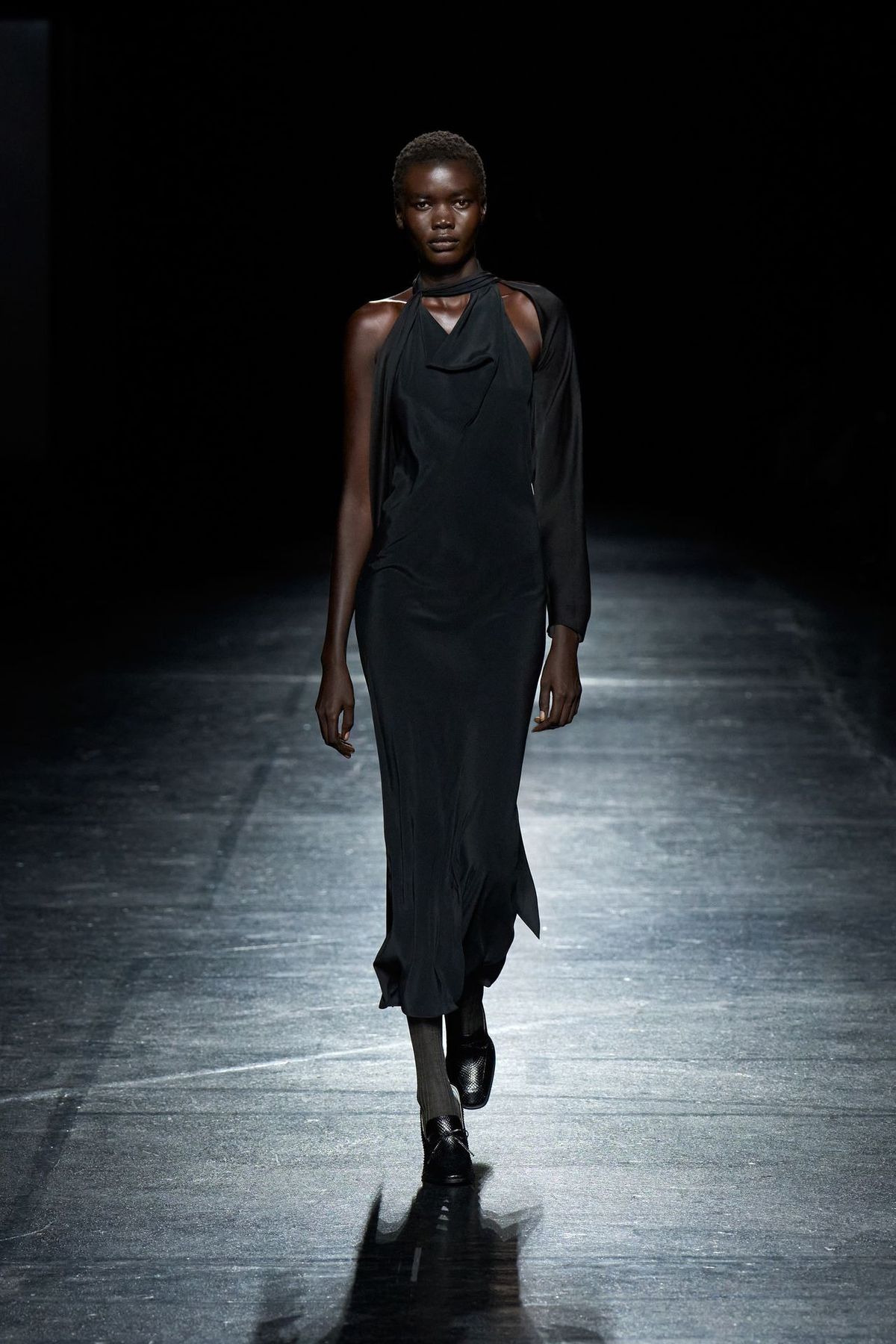
Photo: Courtesy of Boloria
While haute couture is the predominant focus of Paris Couture Week, the week almost invariably plays host to off-schedule moments that make use of the showcase’s rarified audience and crowd to show-stealing effect. This season, that’s just what Olivier Theyskens did, presenting his latest chapter – the debut of Boloria, a new brand helmed the cult Belgian designer. Known for his vision expressed through sinew-y silhouettes and an haute-gothic timbre – not to mention for his wildly popular sub-label for New York-based contemporary fashion brand Theory during the early 2010s – the collection he presented this week spoke to his honed ability to synthesise registers.
The structure of boxy tailored coats was counterposed by shirts, trousers and gowns draped from swathes of liquid silk satin, often overlaid with diaphanous scrims of gauze. Dusky silk charmeuse column dresses with twisted and draped necklines dripped down the wearer’s form in jaggy, asymmetric hems; crinoline ballgowns were assembled from wrapped midnight blue bodices than fluted out into swaggering hips that served as scaffolds for jellyfish puffs of chiffon. Title “Le monde flottant”, French for “the floating world”, it was a testament to Theyskens’s reputation as a master of darkly romantic style – and a welcome reminder of how much we’d missed him, not to mention how good it is to see him back.
Mahoro Seward, fashion and style editor at British Vogue
Originally published on British Vogue