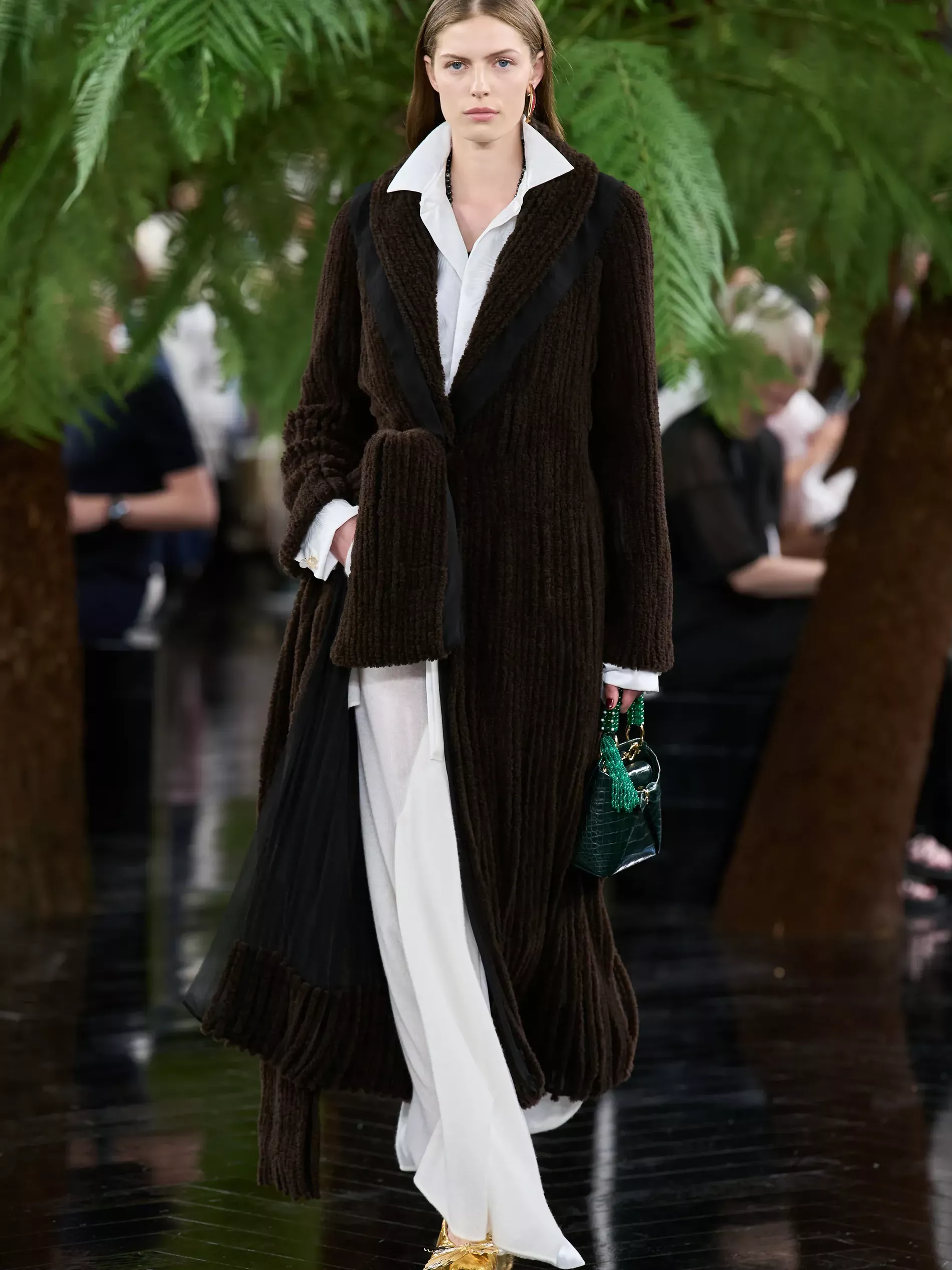
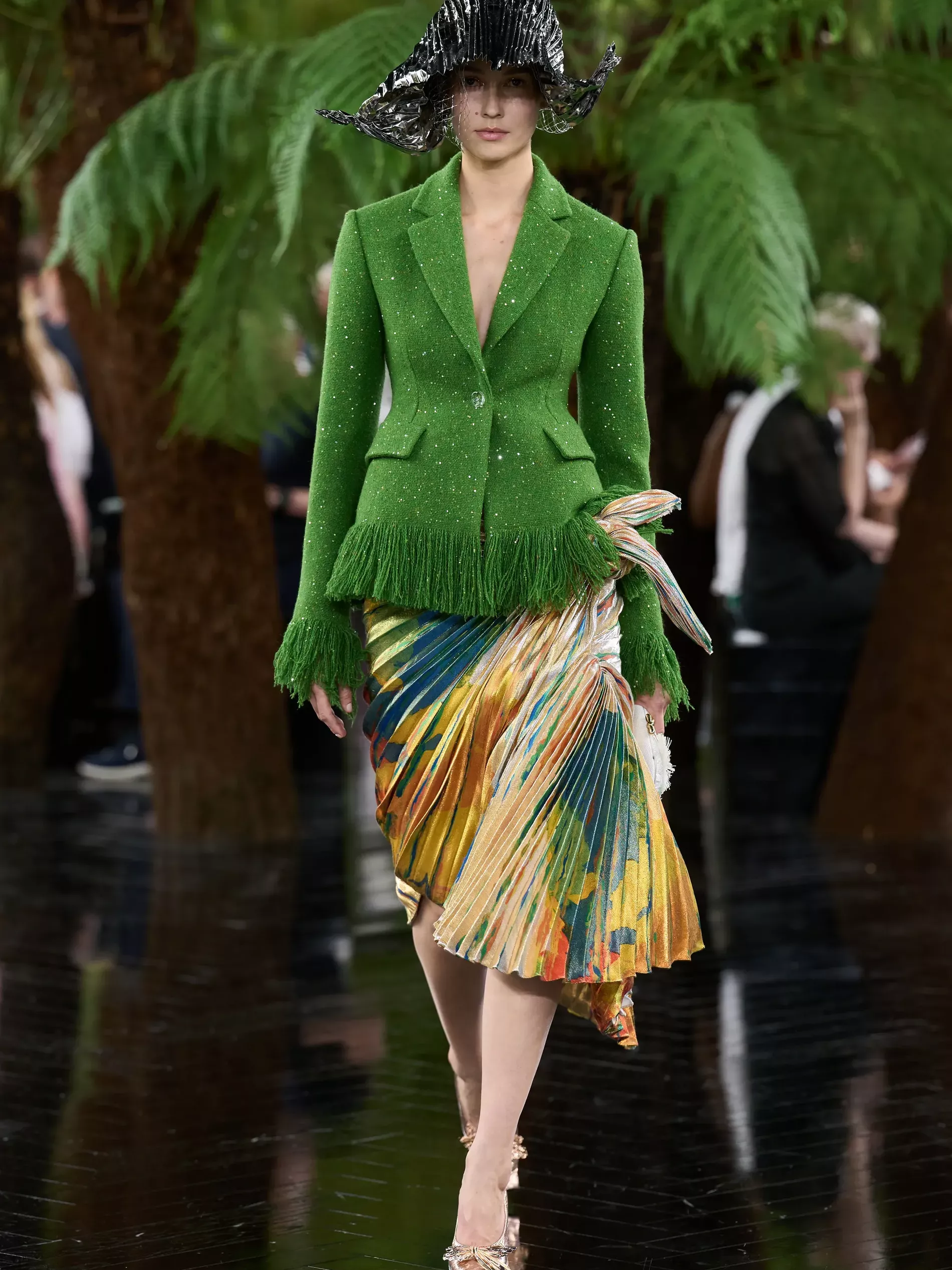
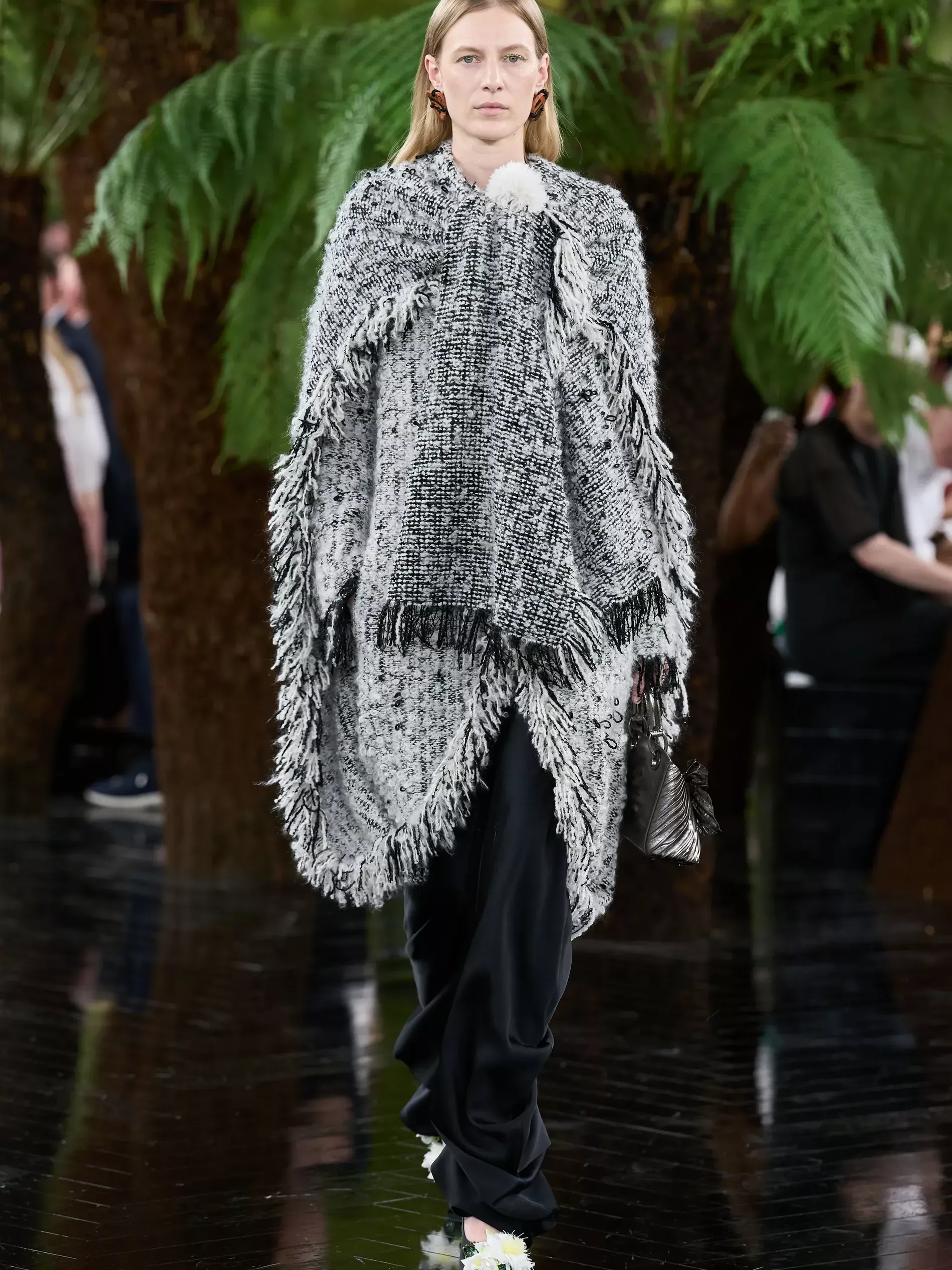
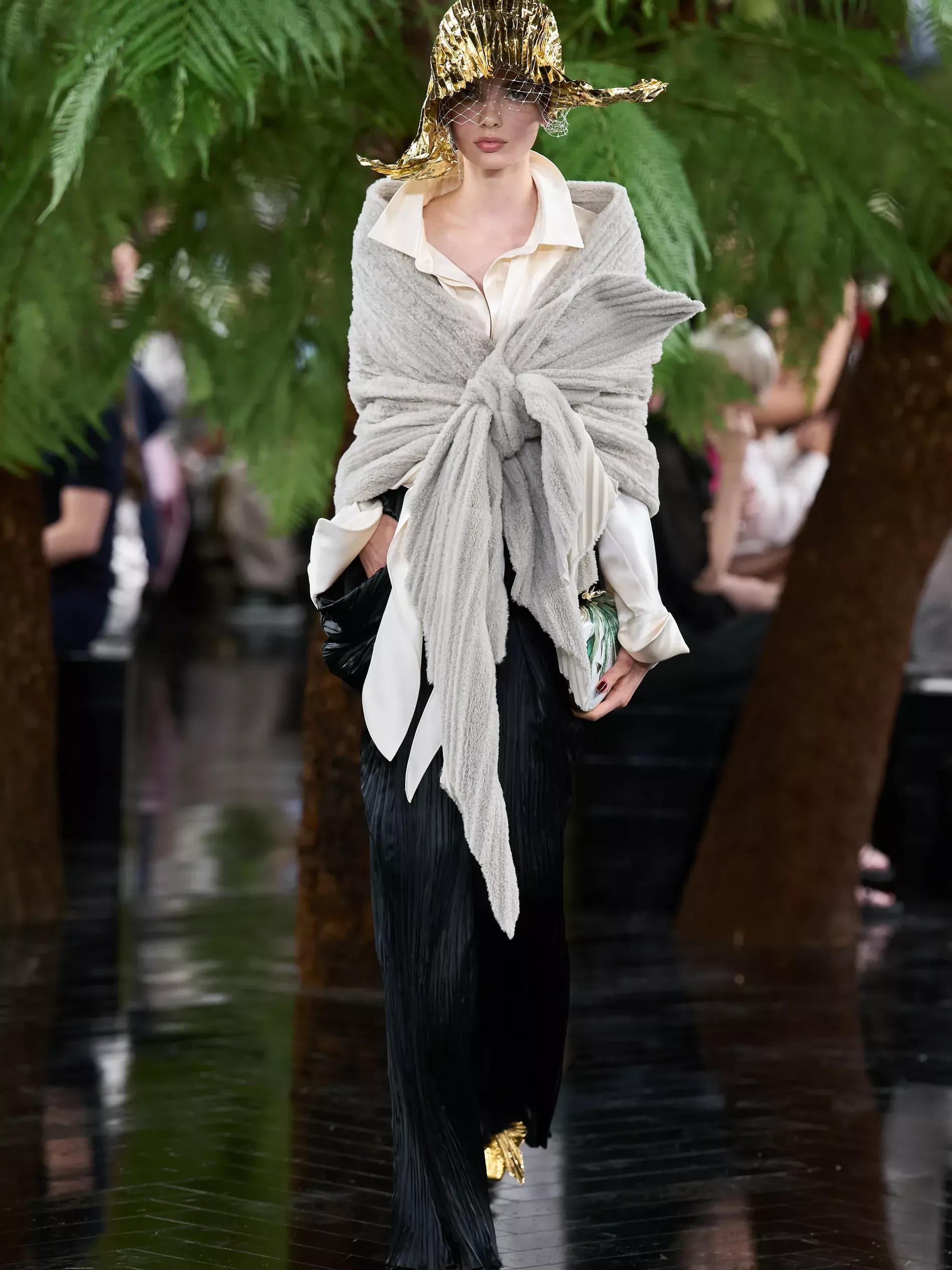
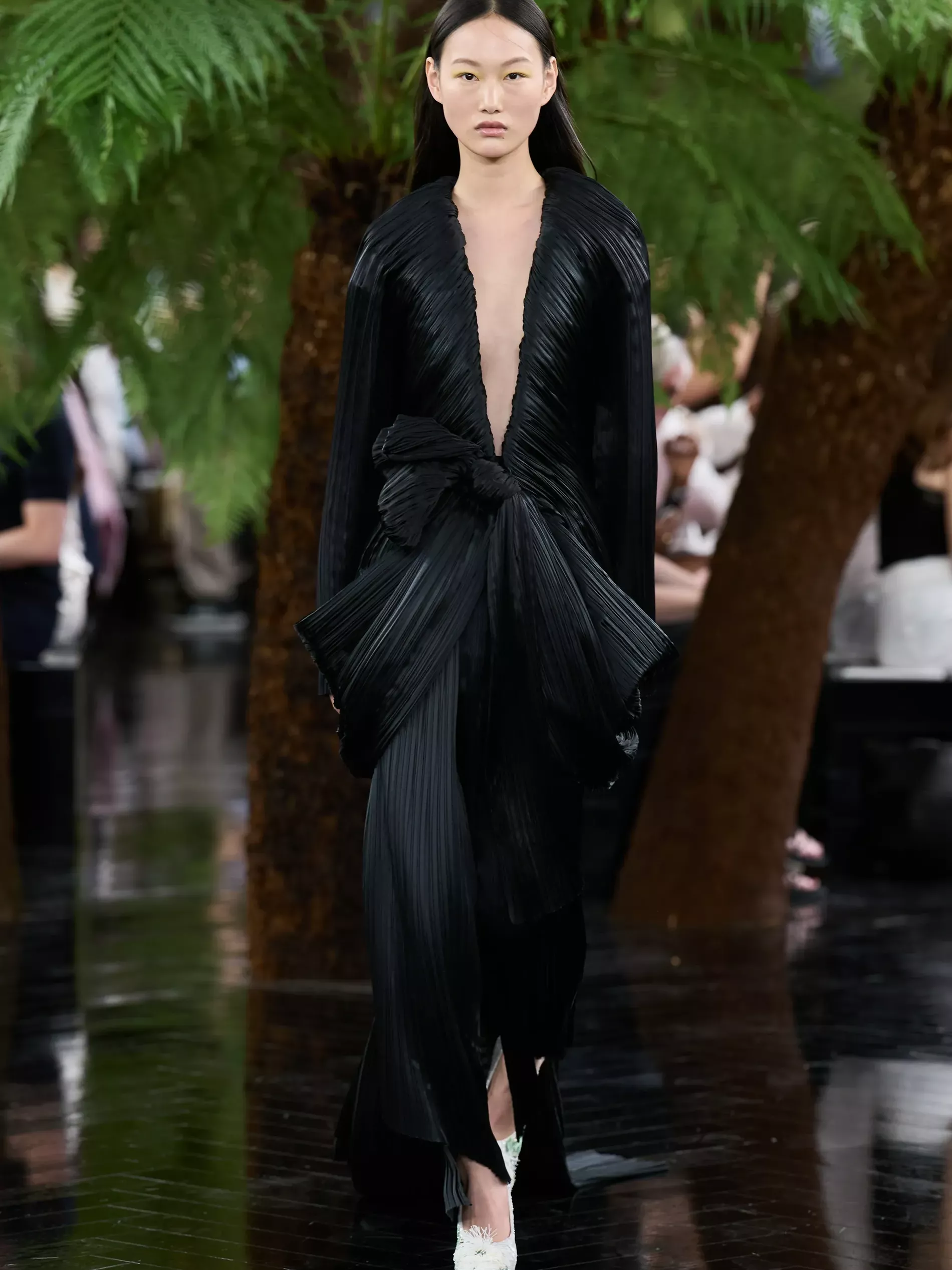
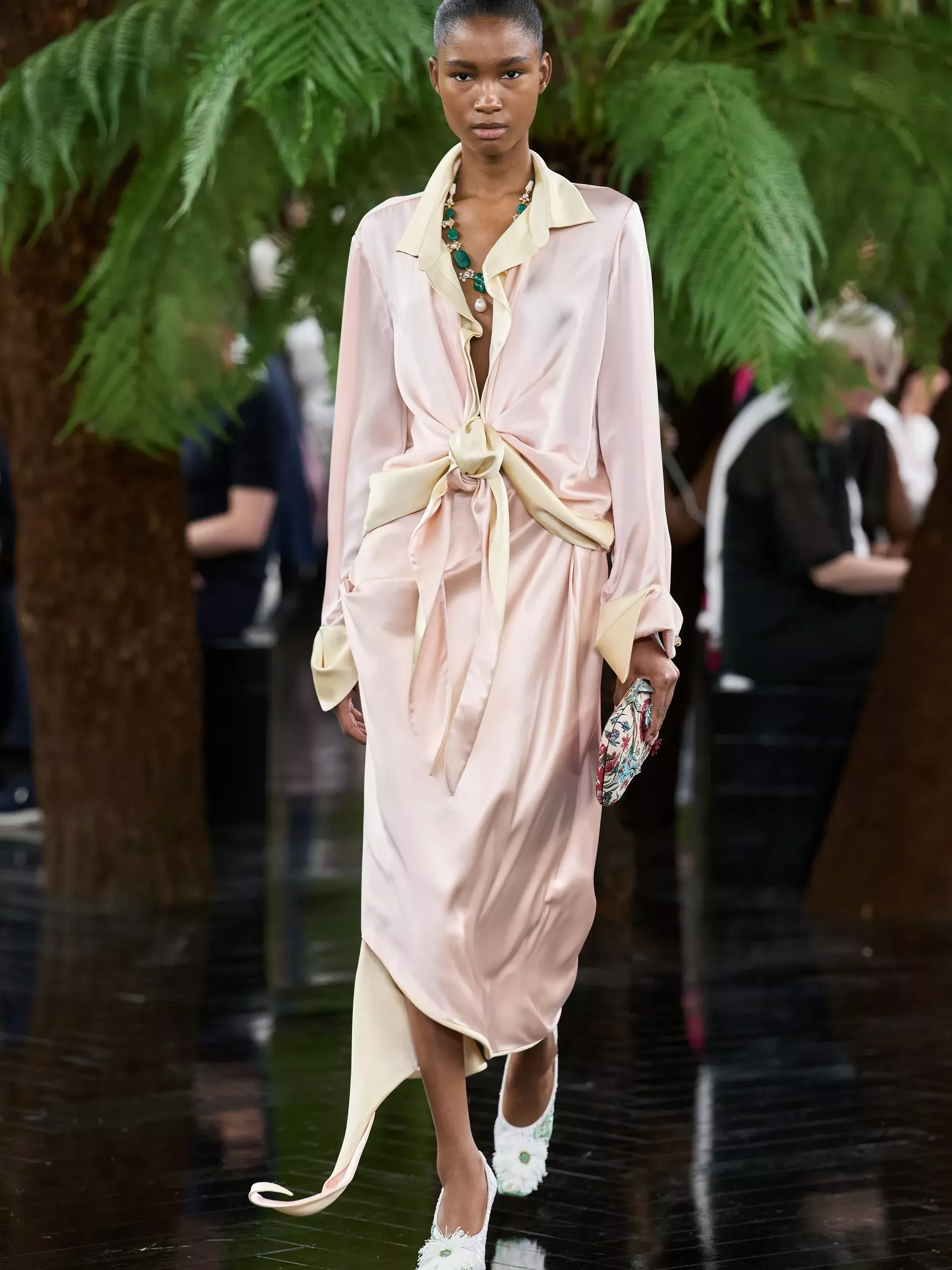
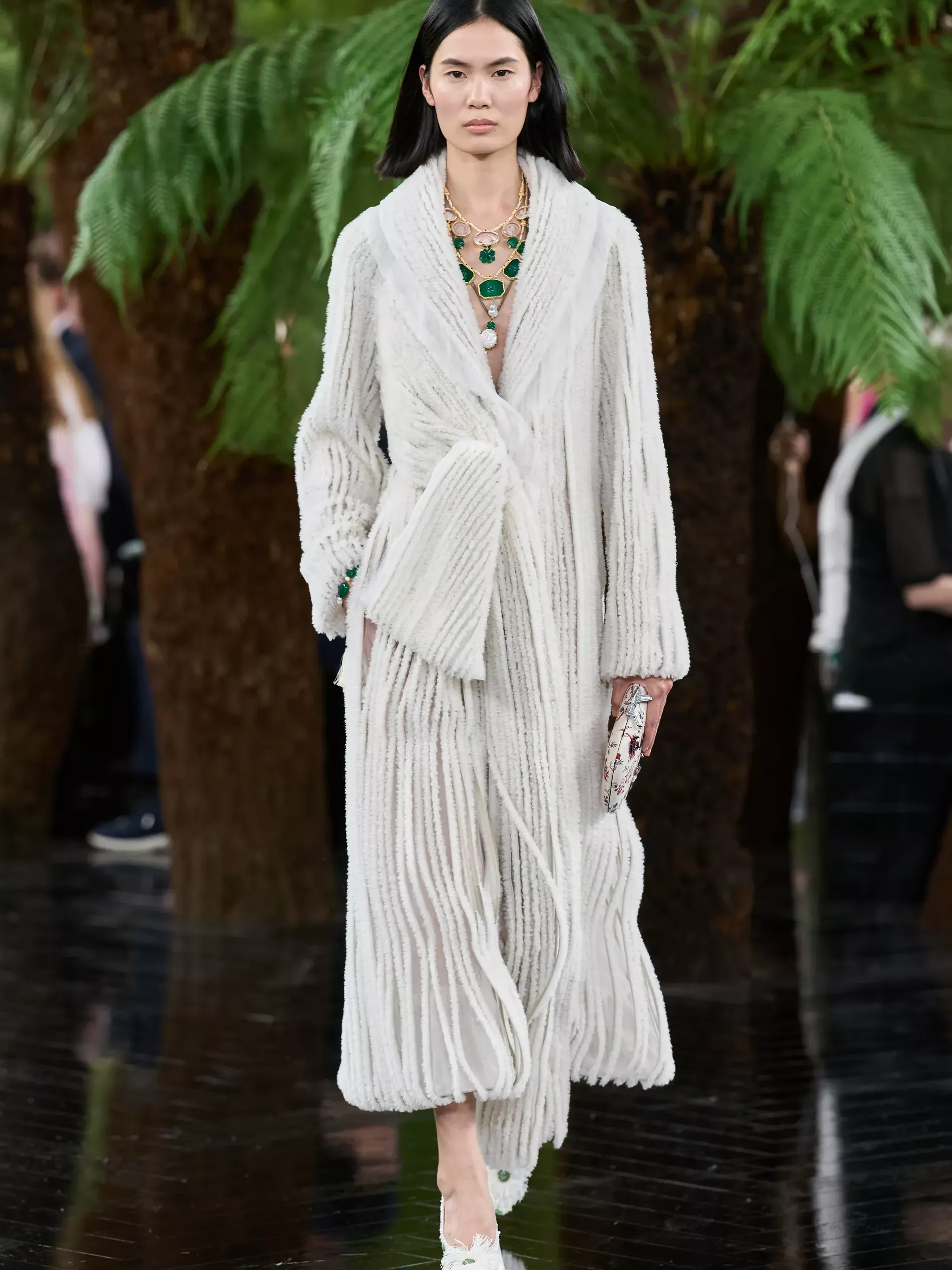
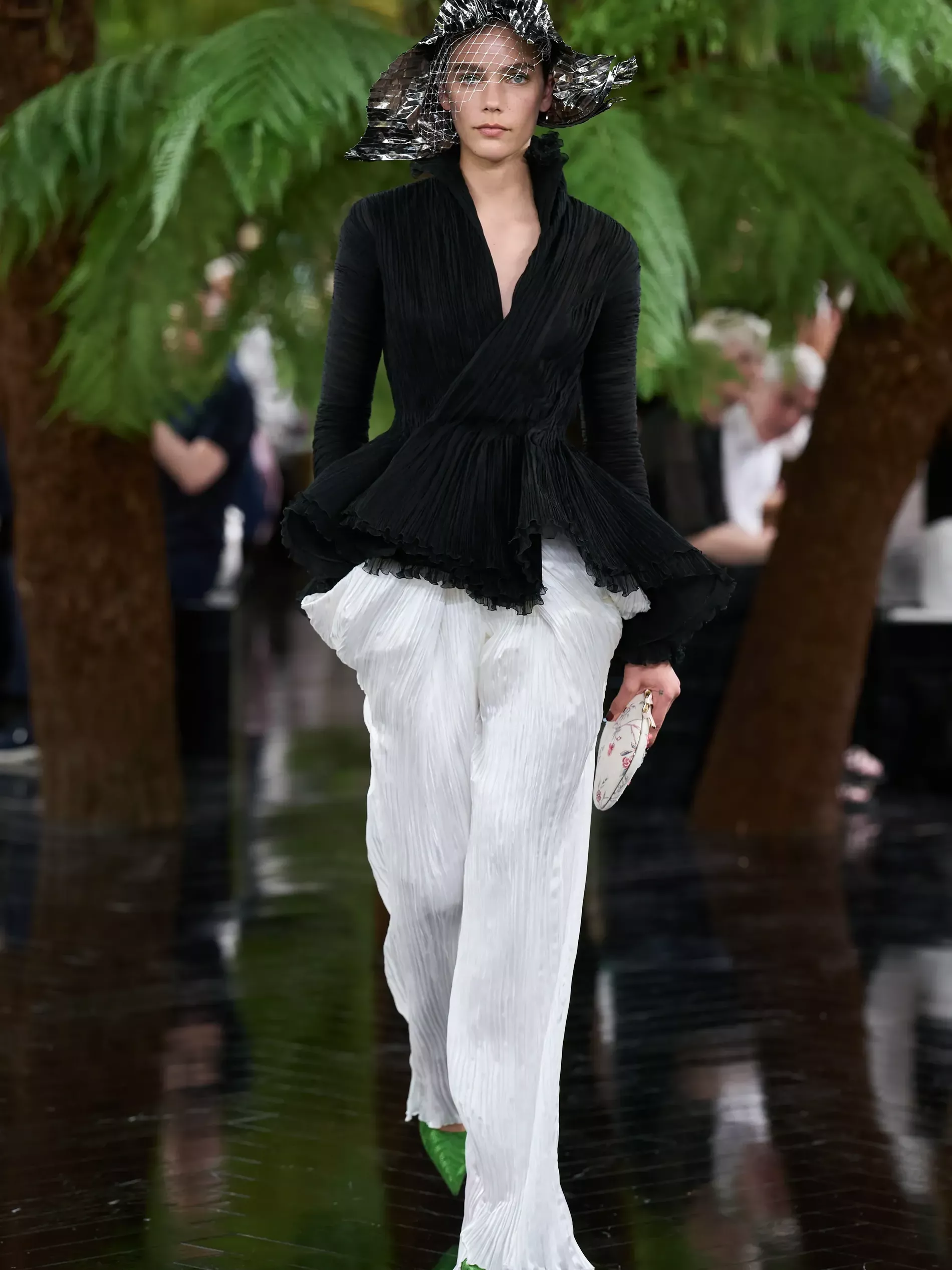
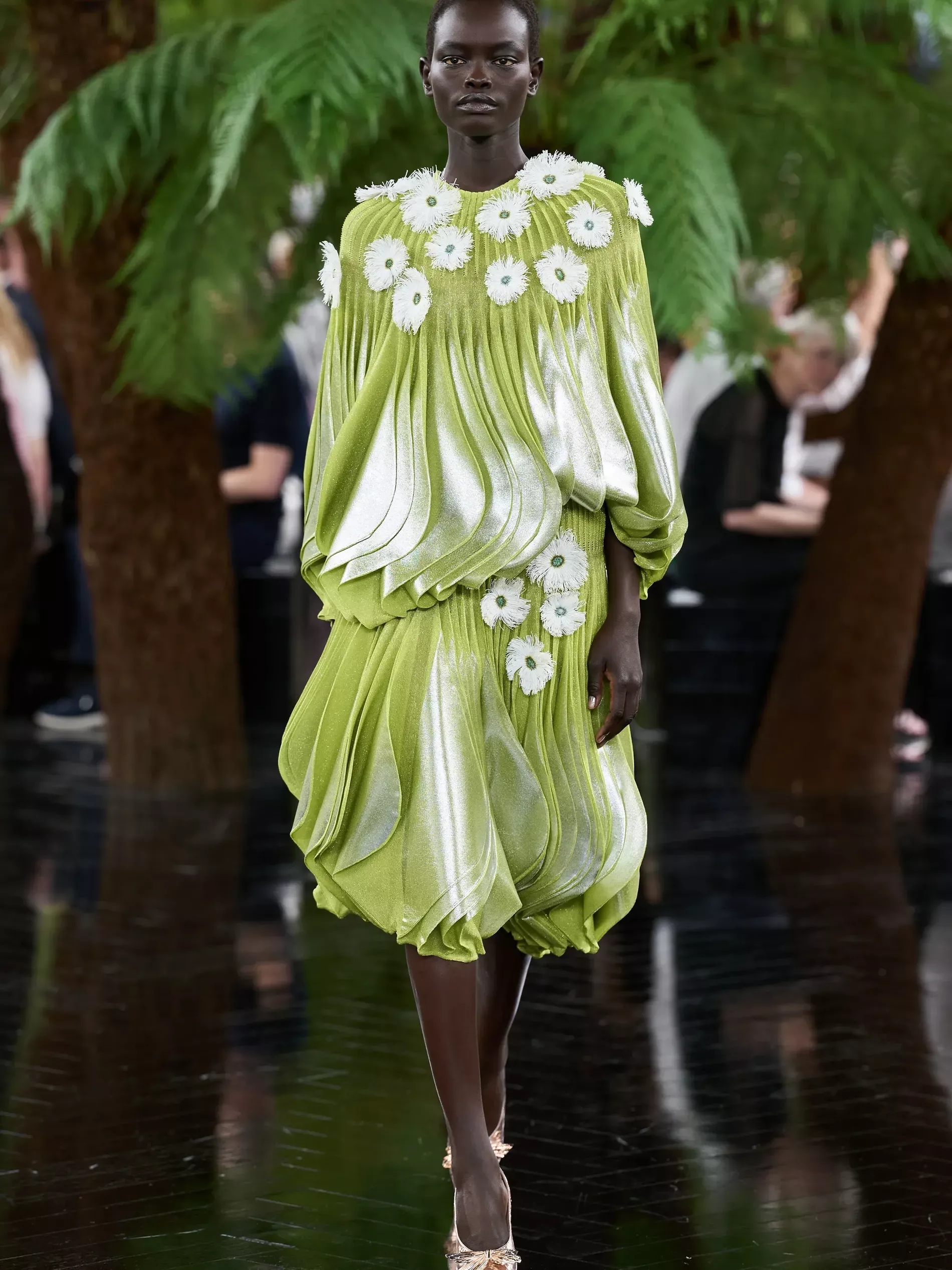
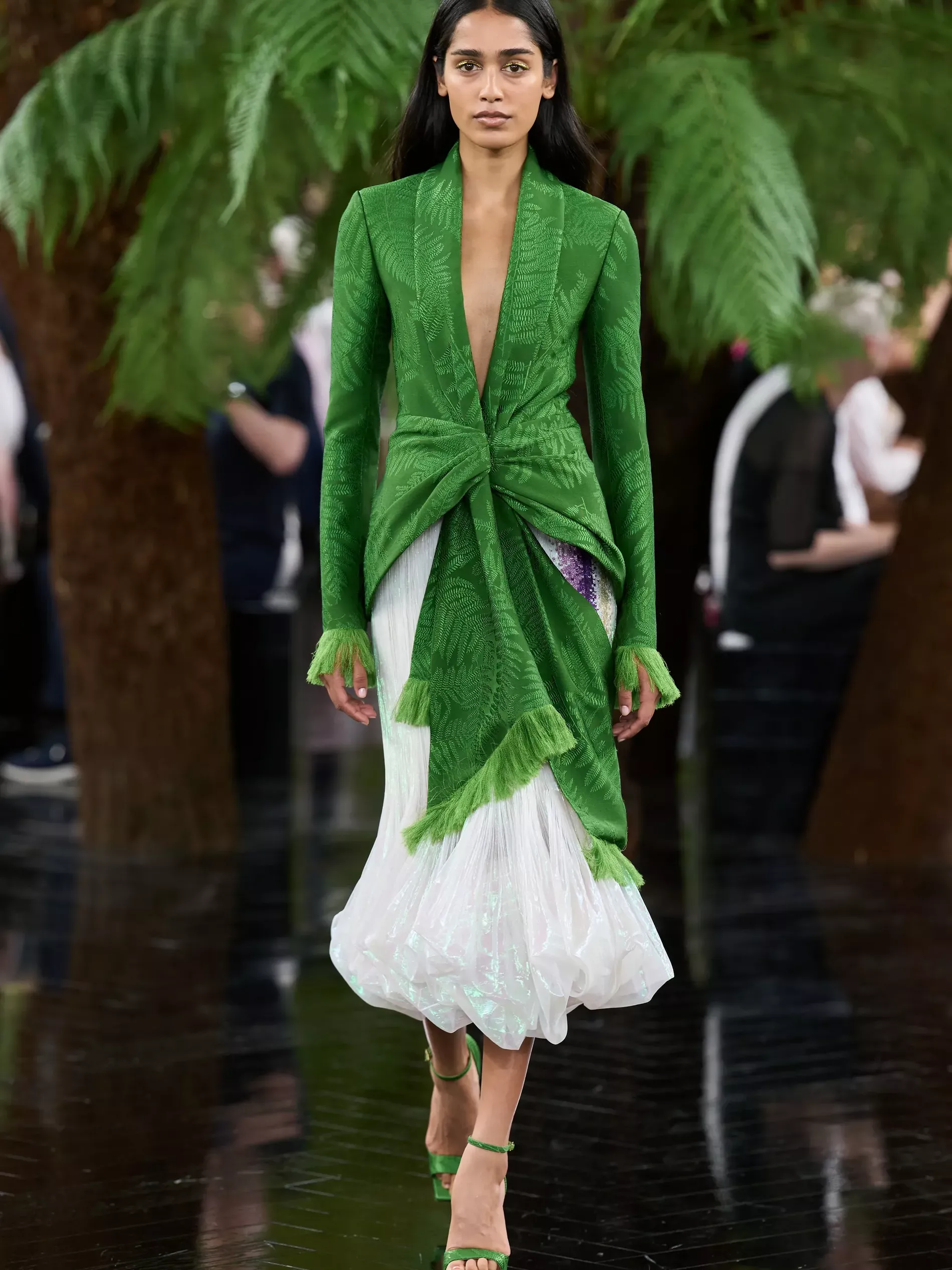
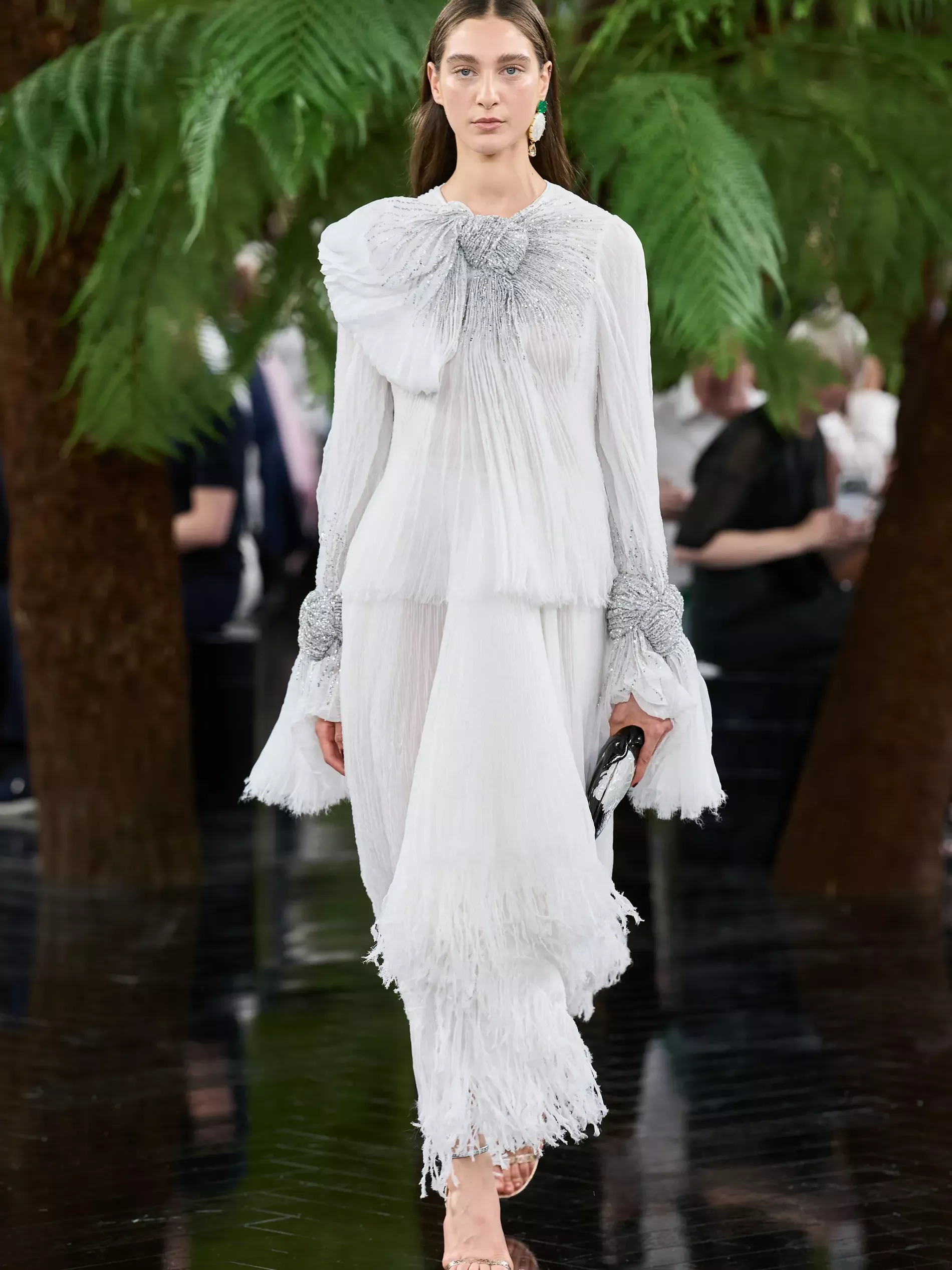
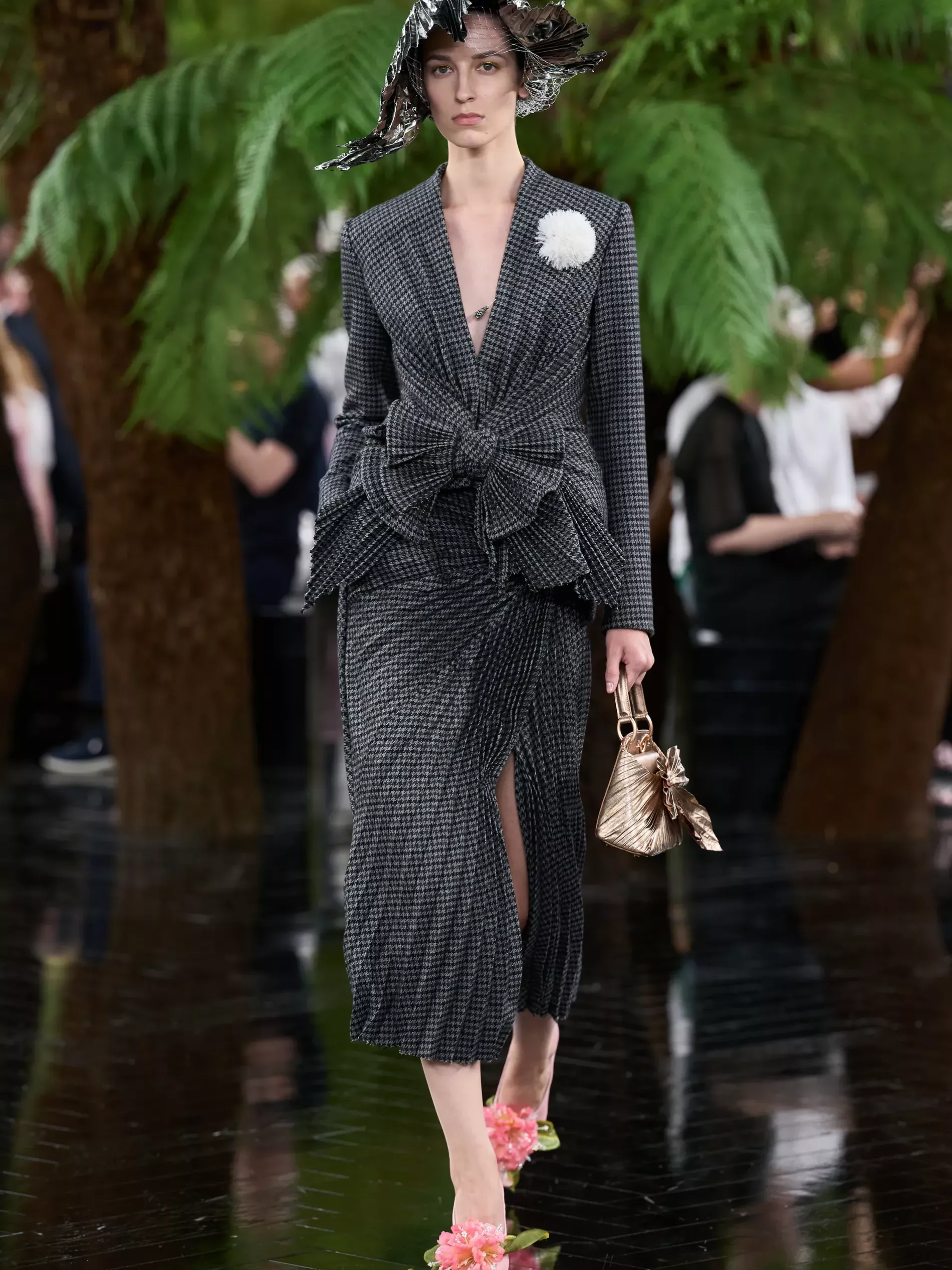
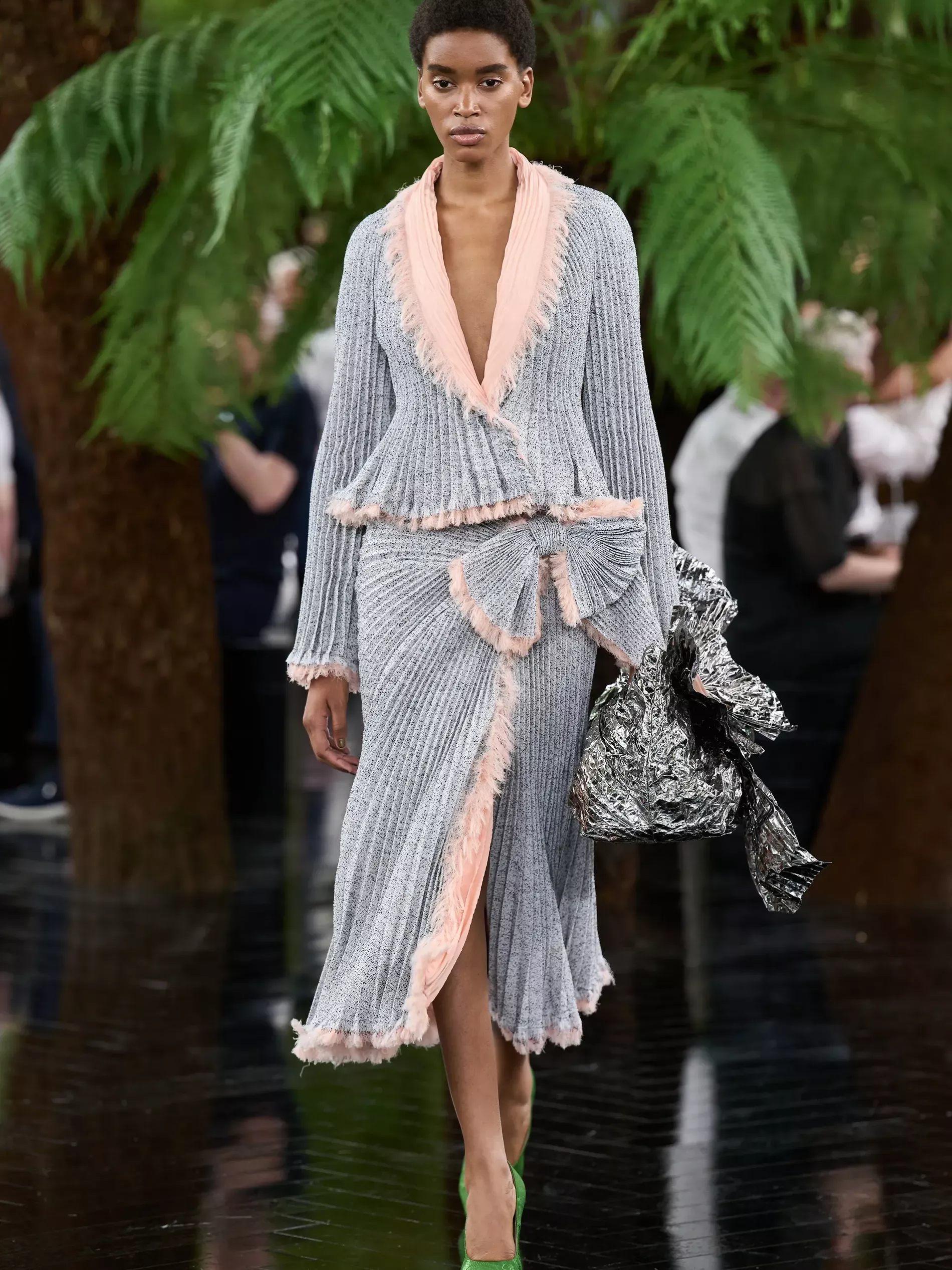
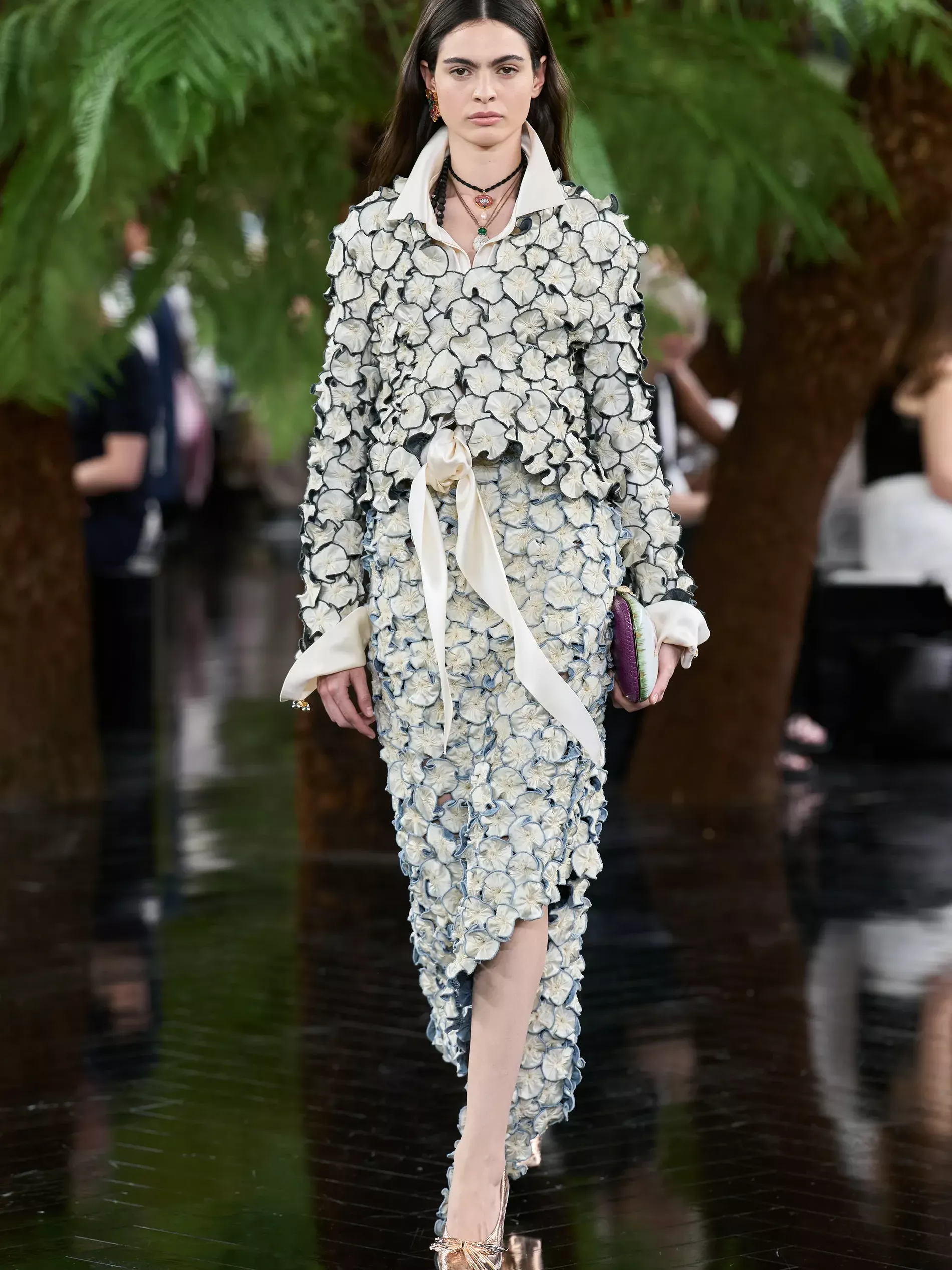
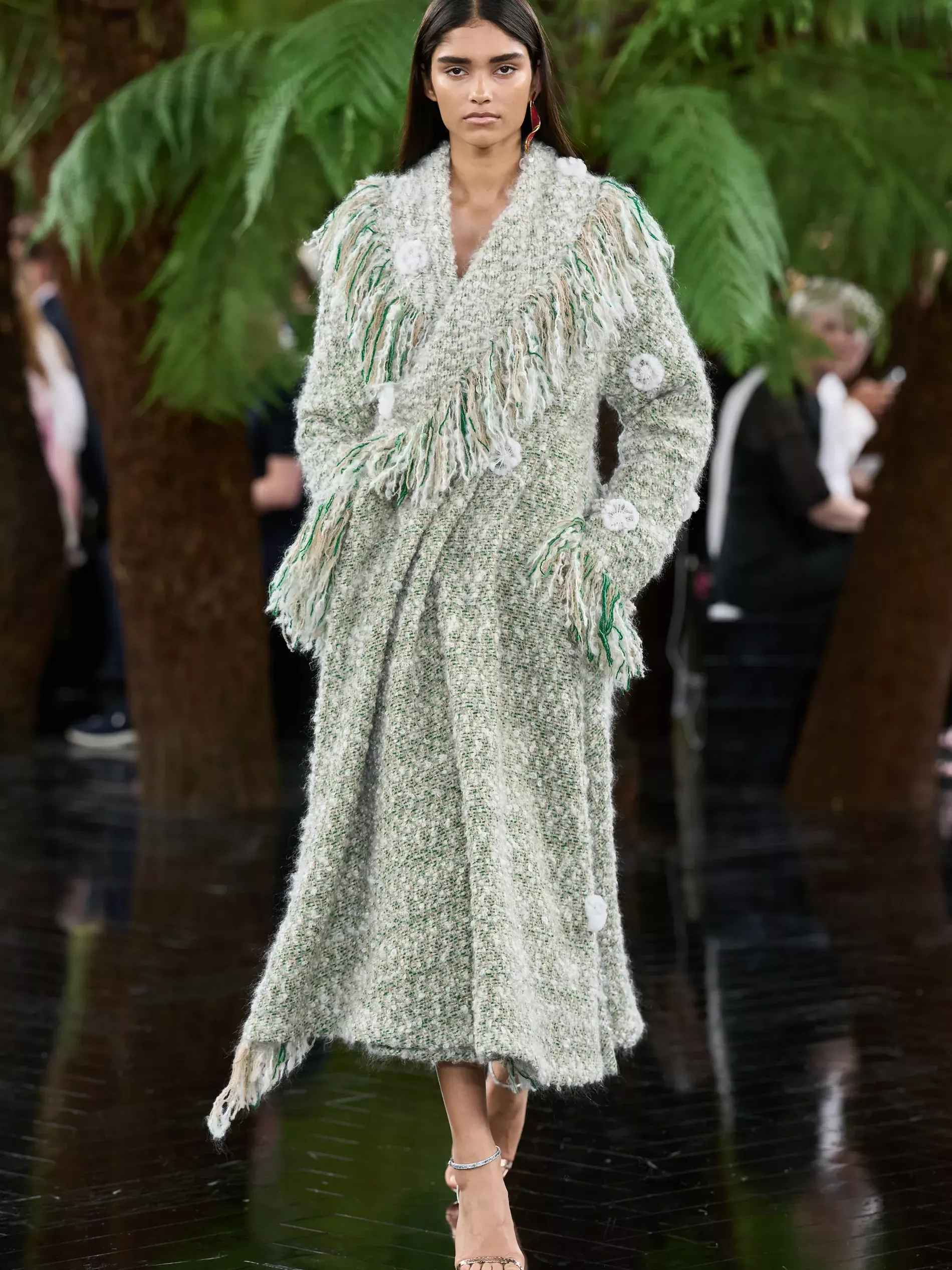
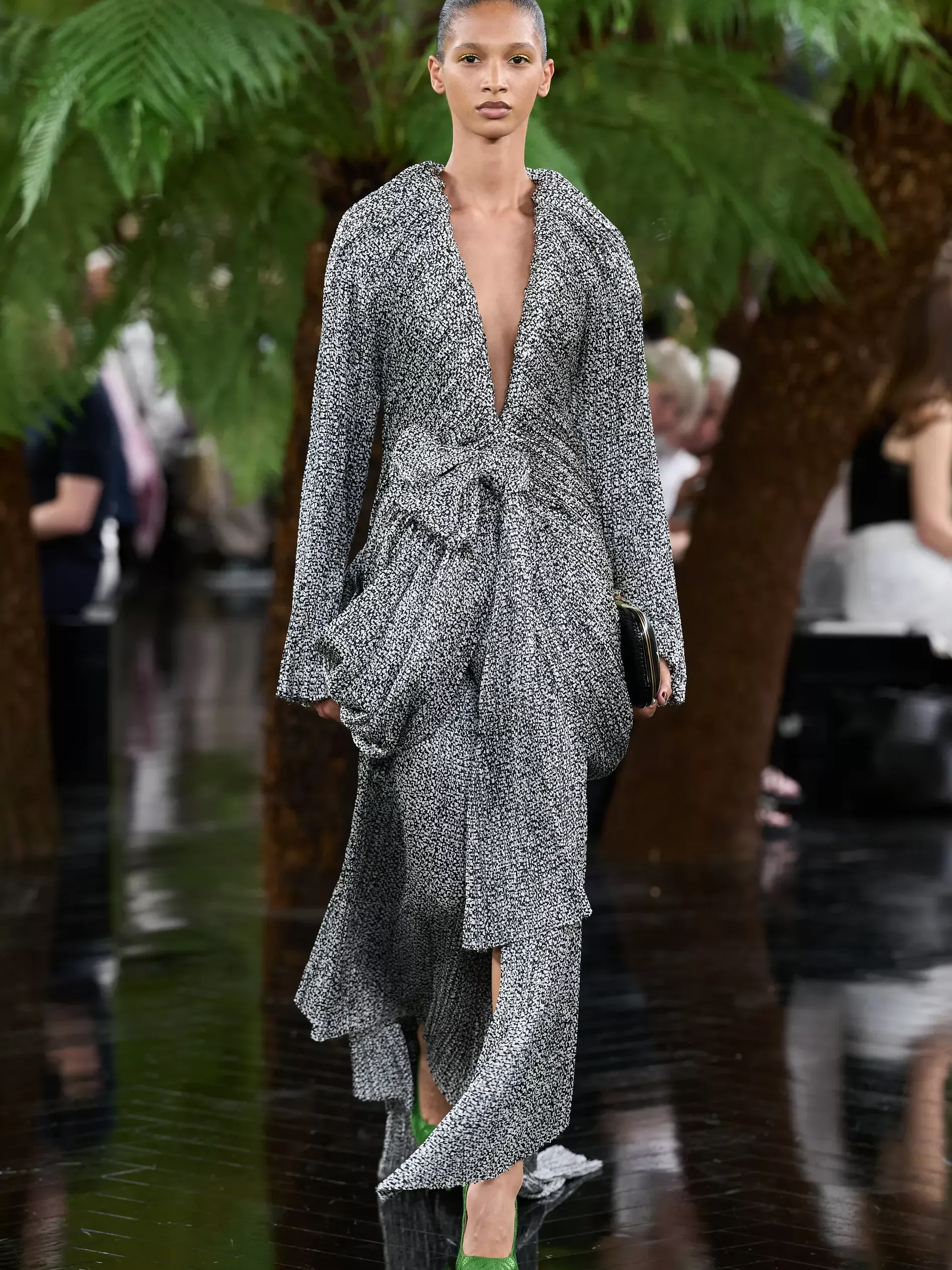
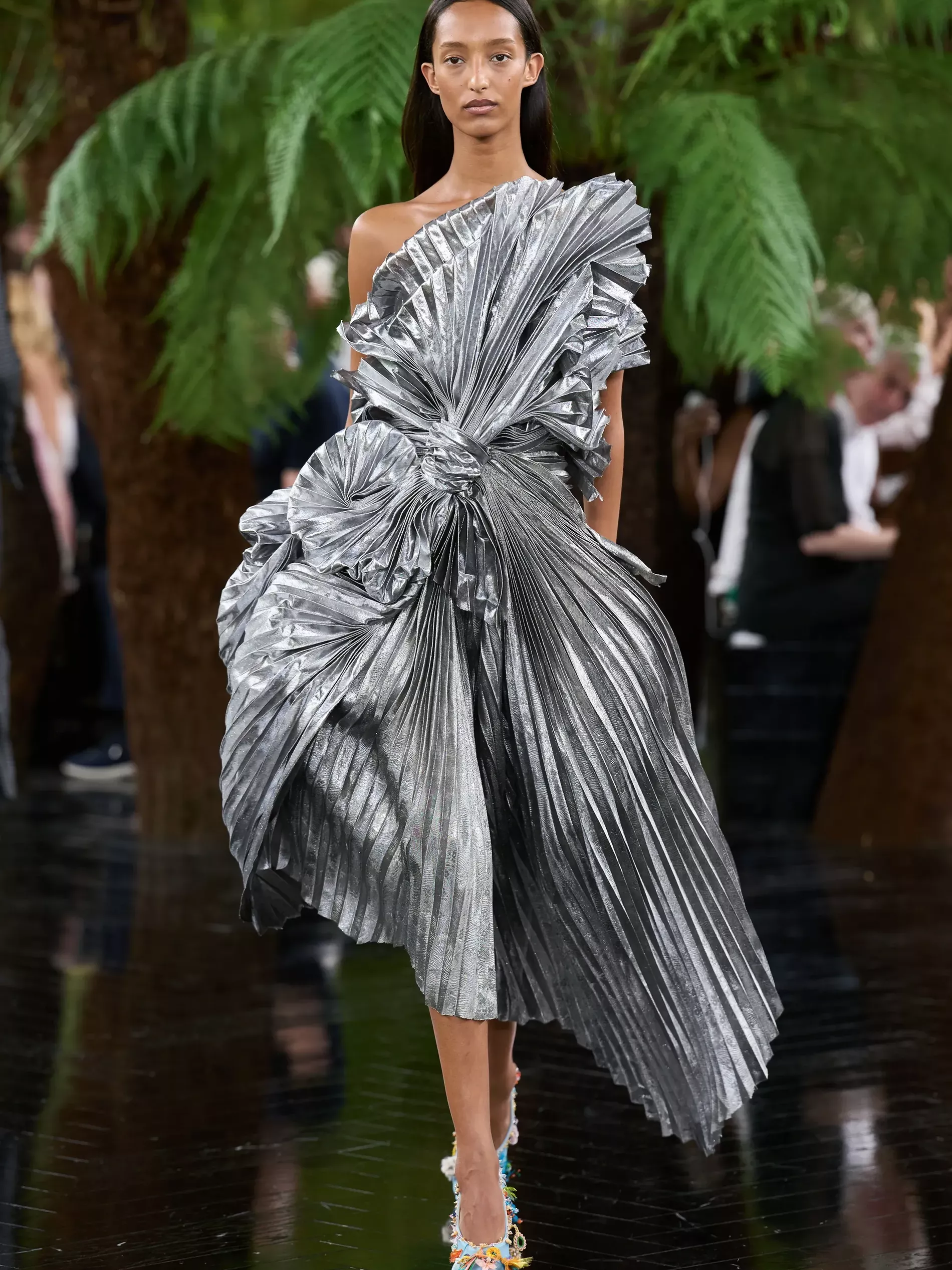
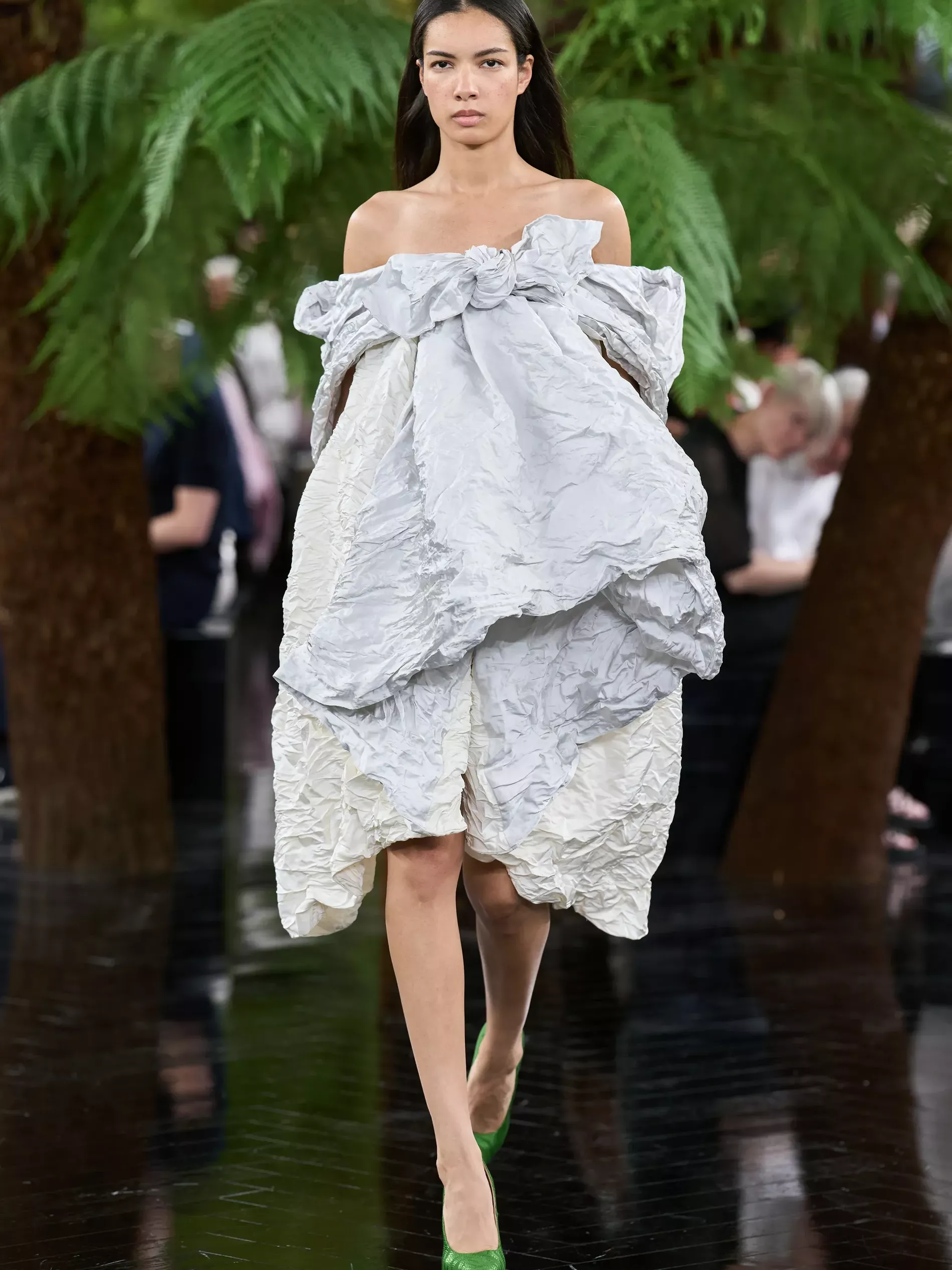
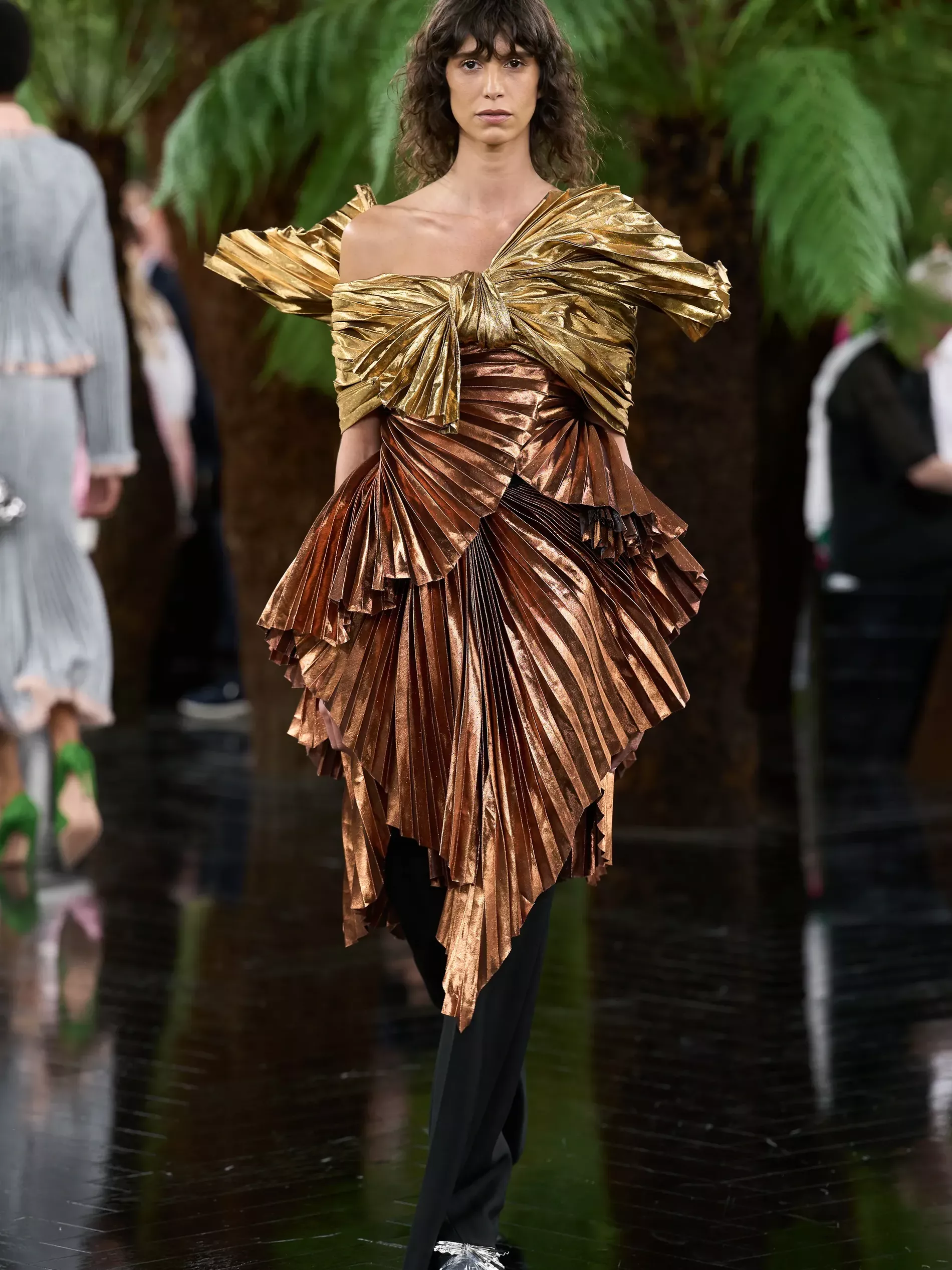
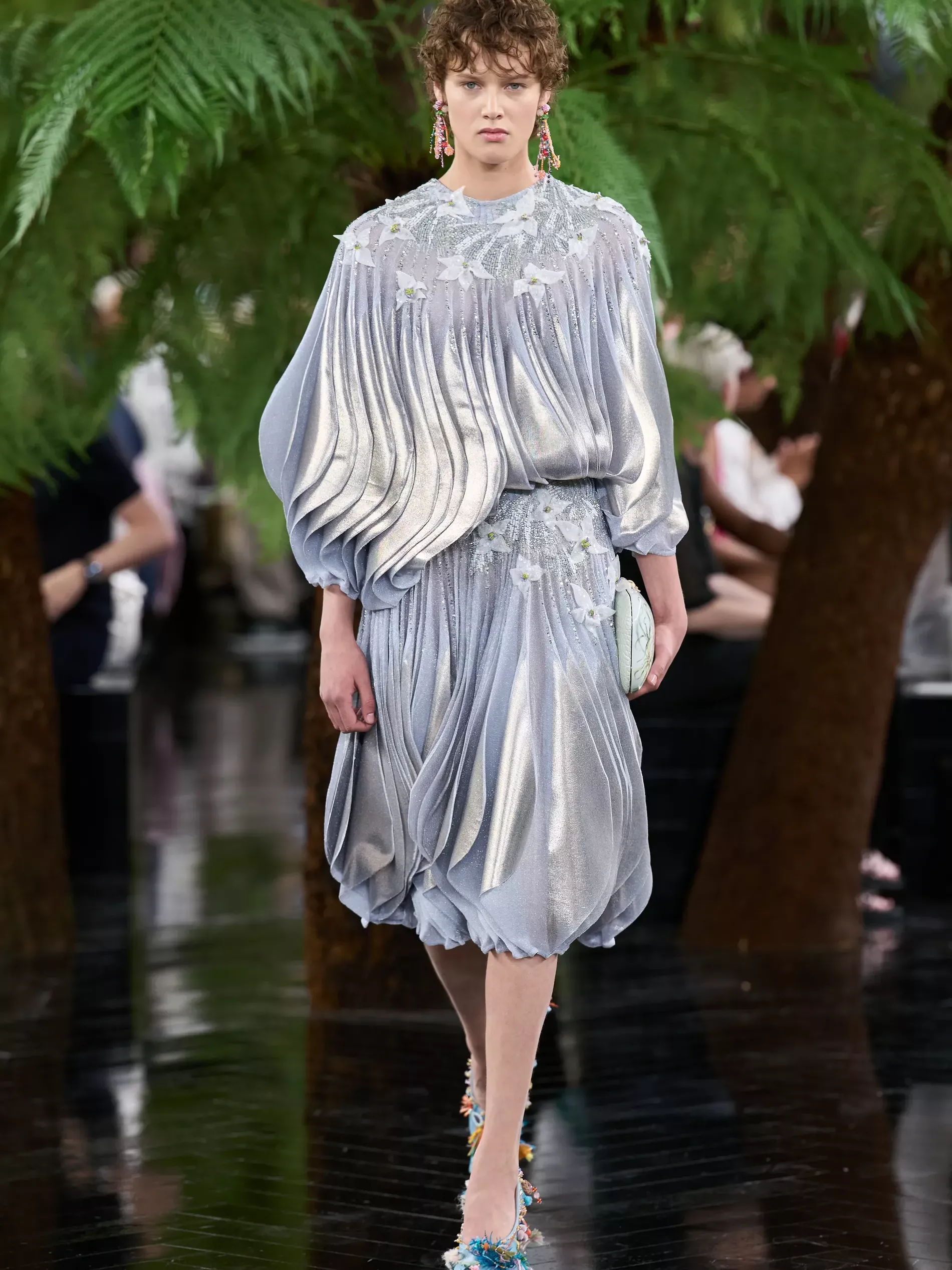
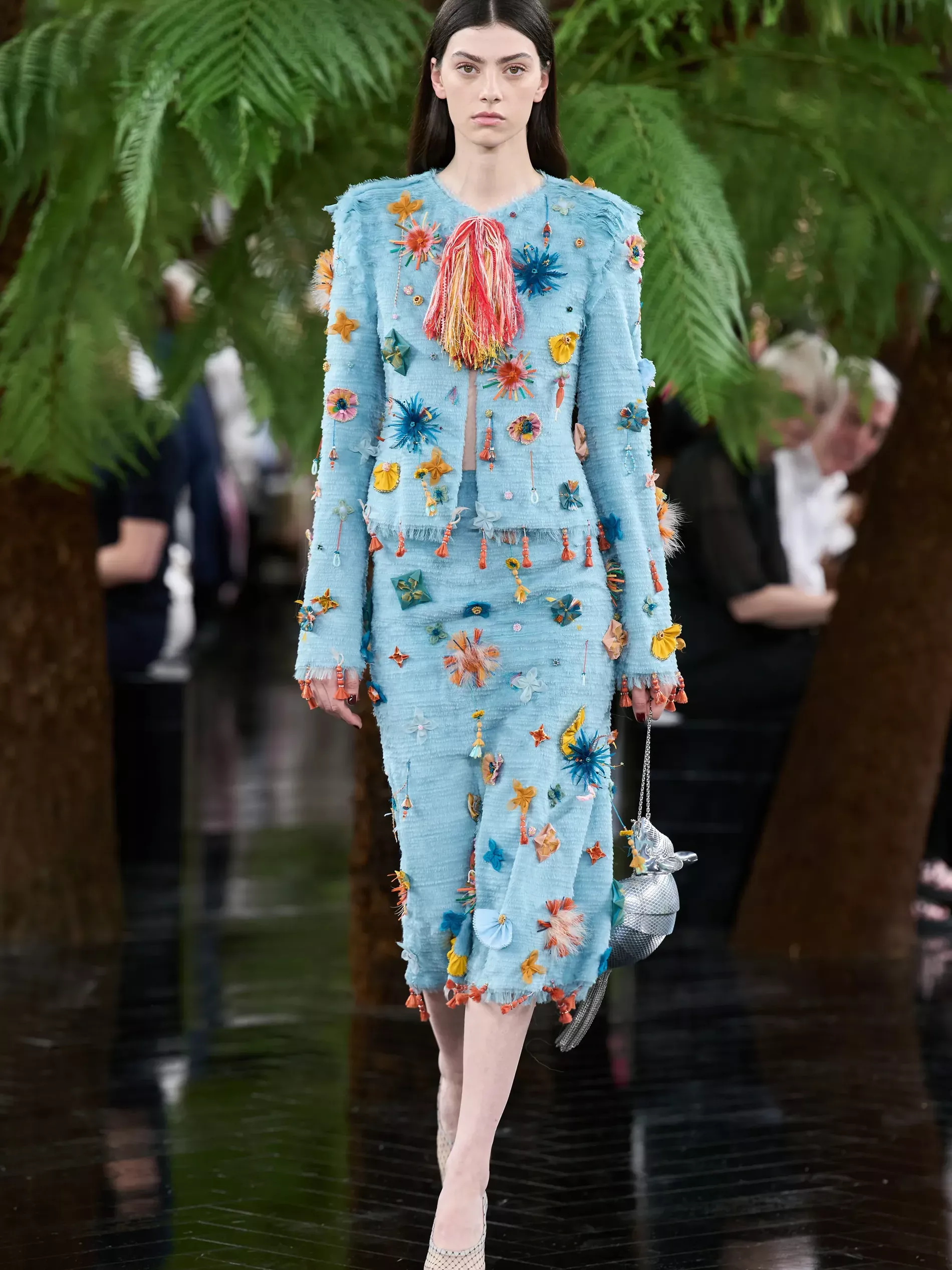
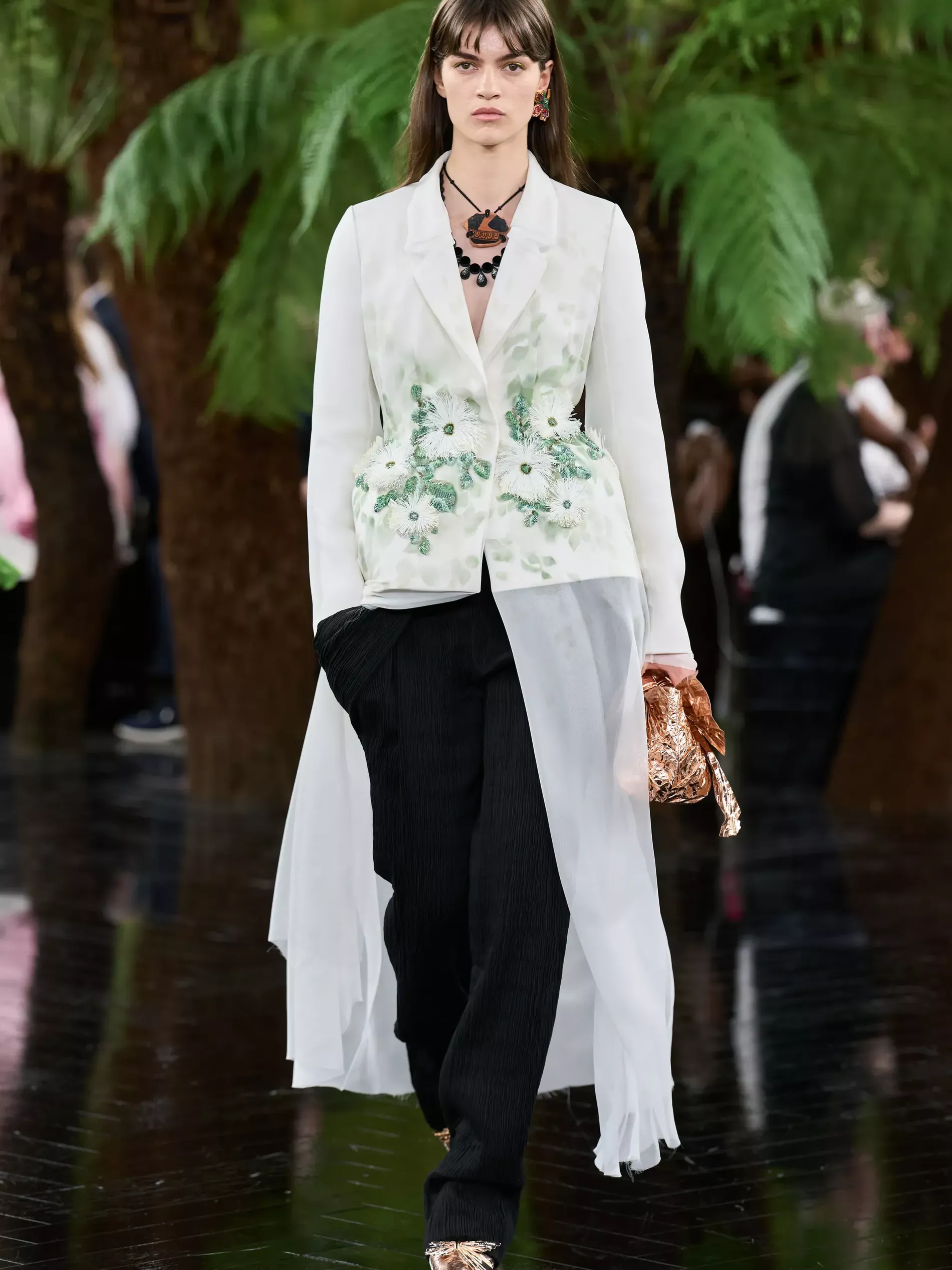
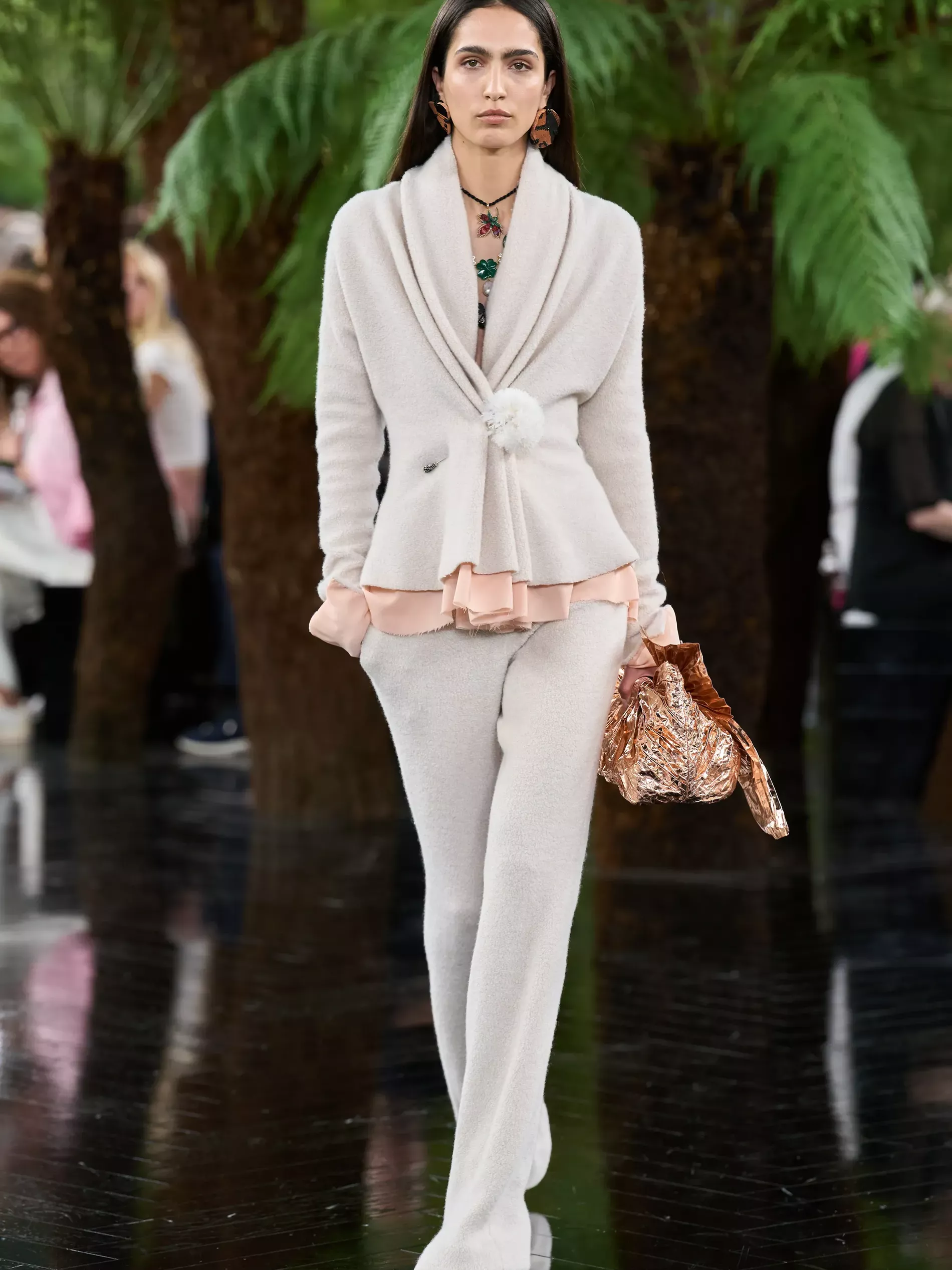
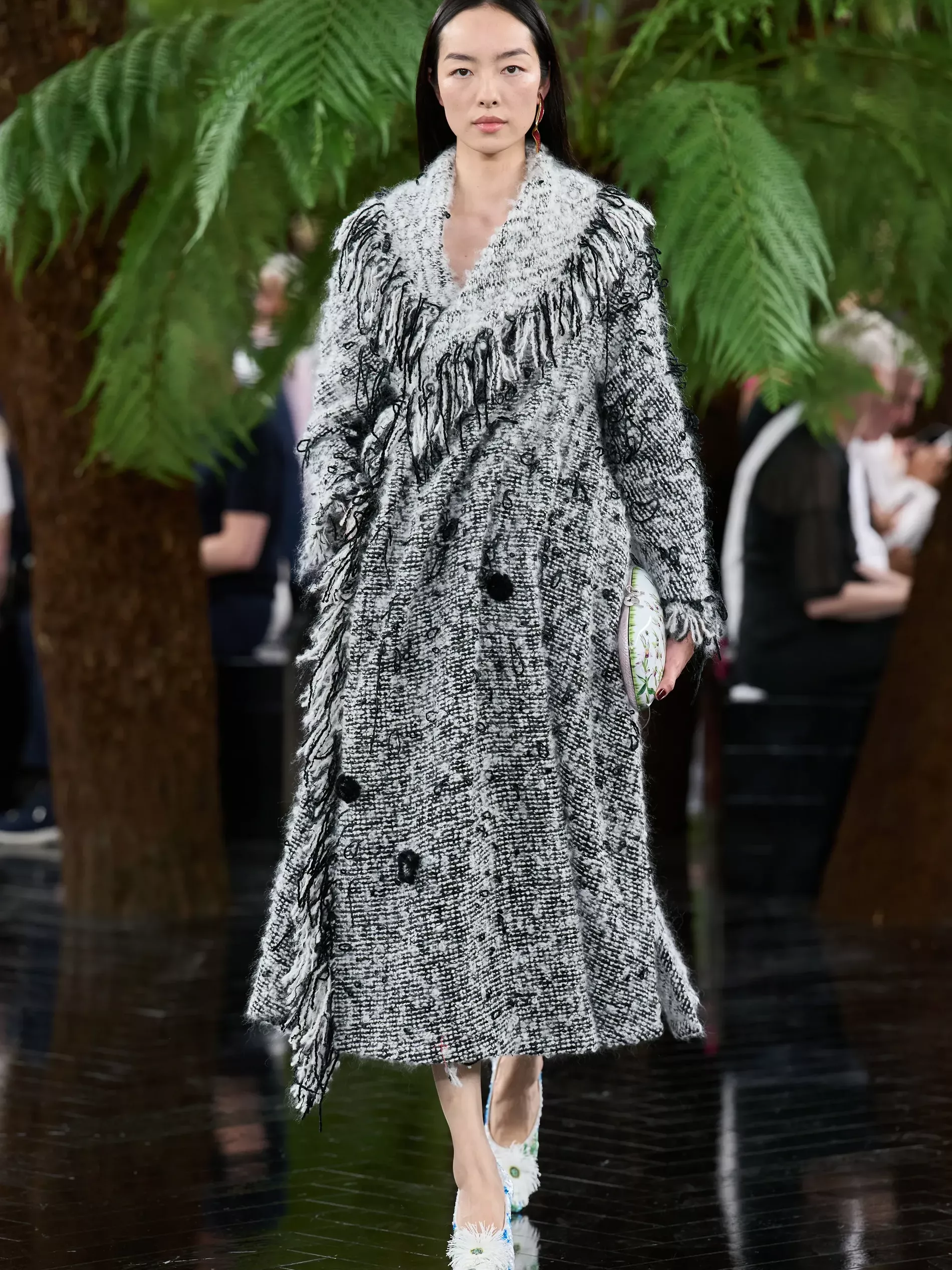
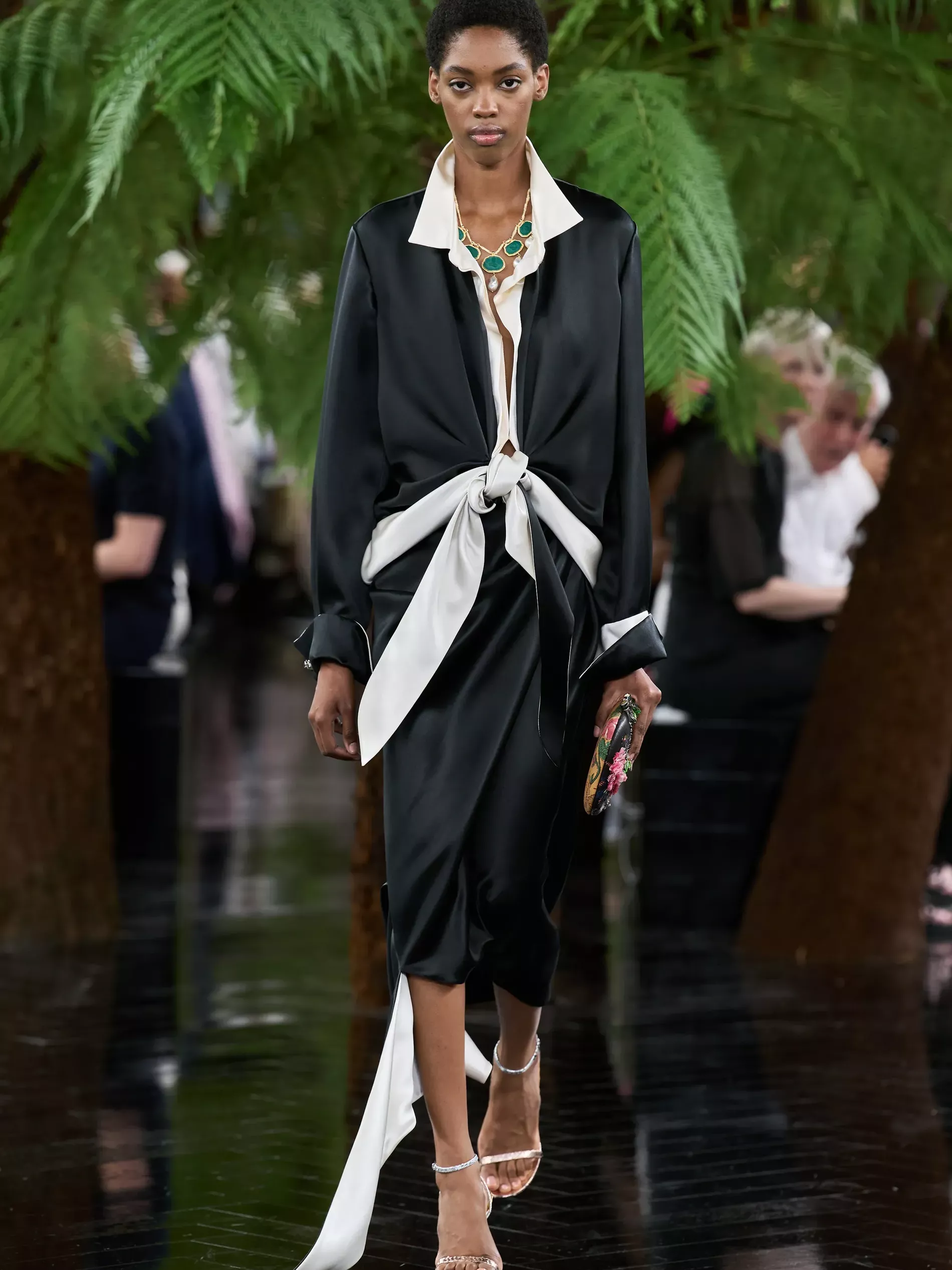
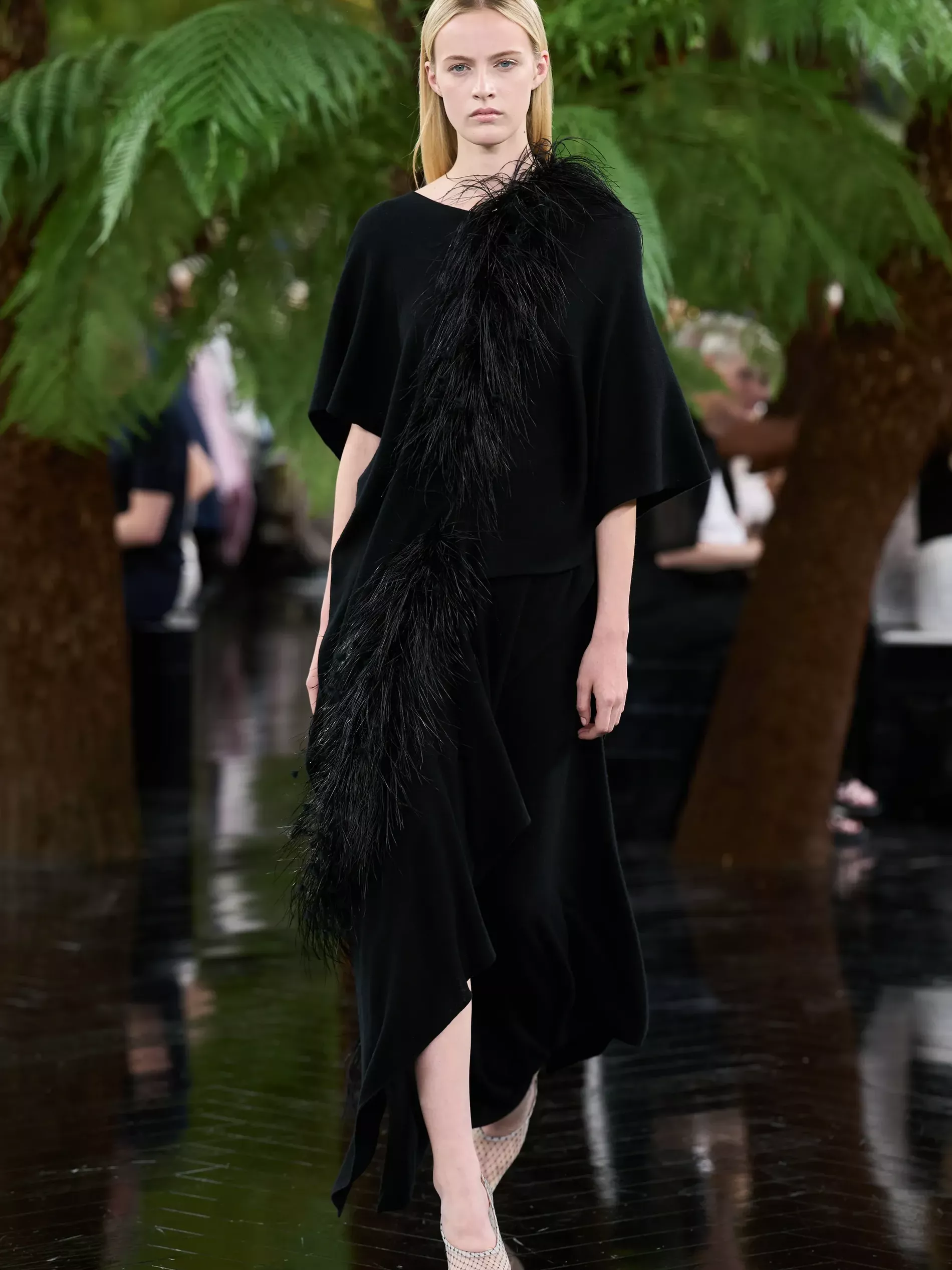
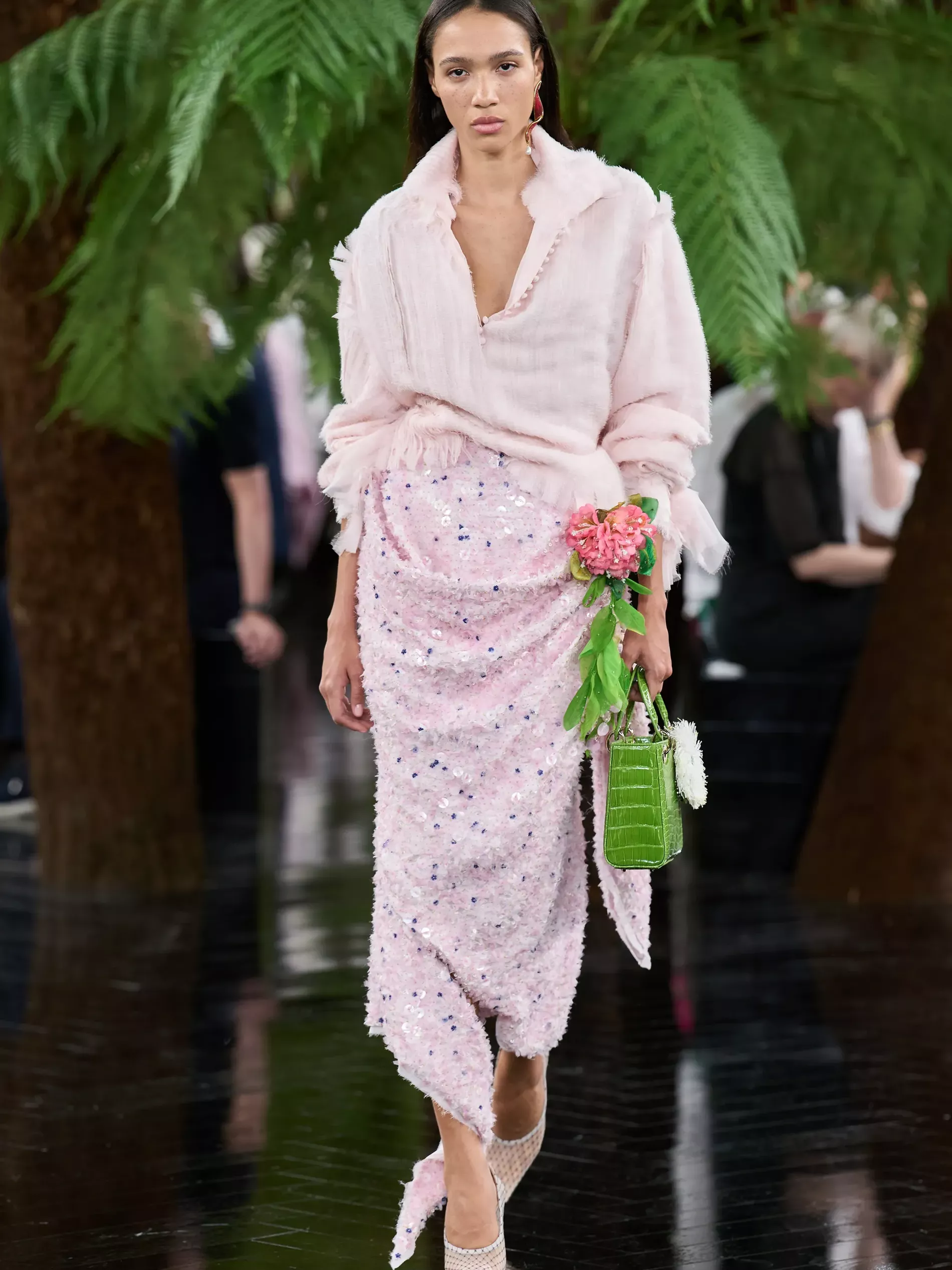
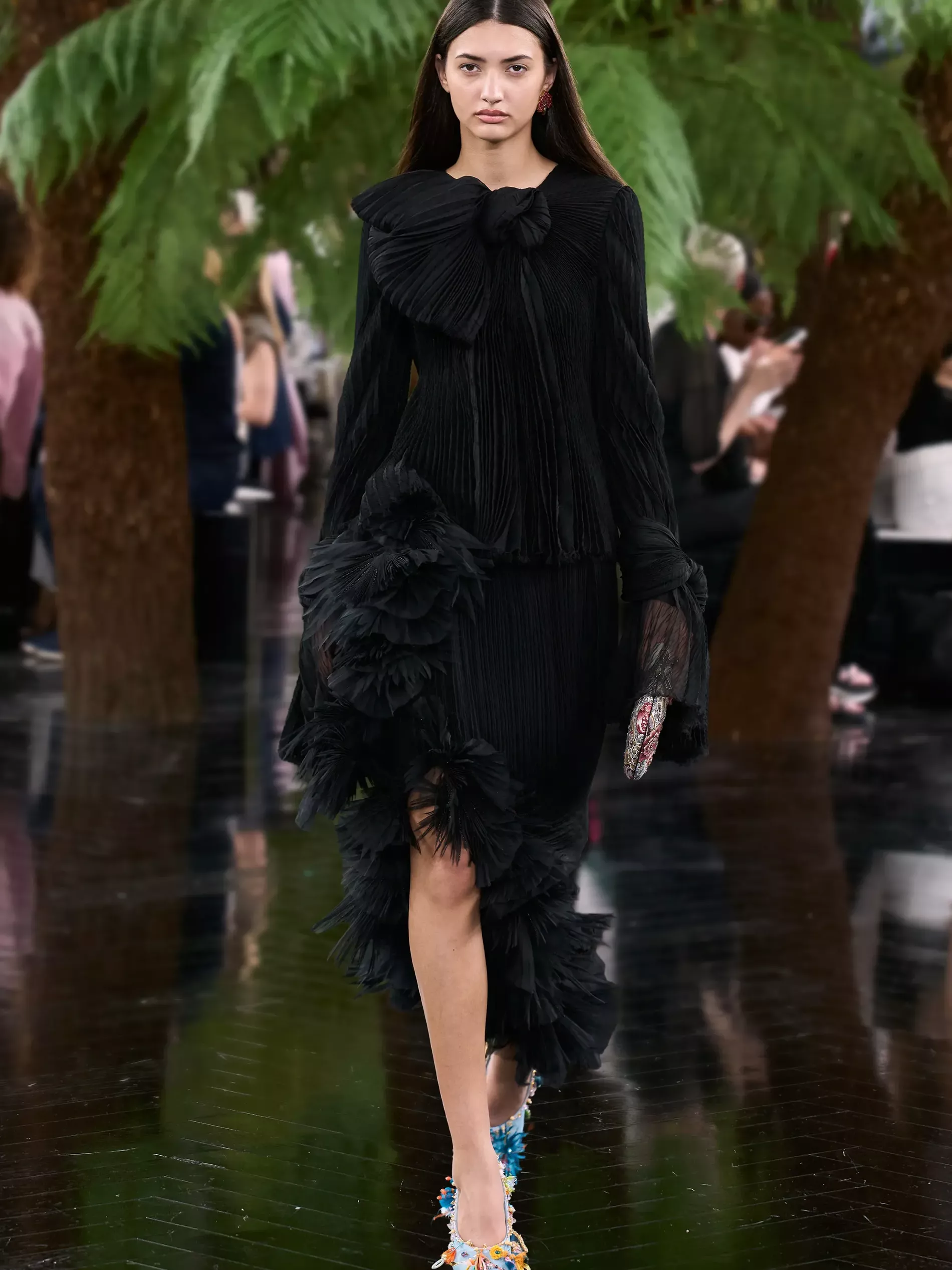
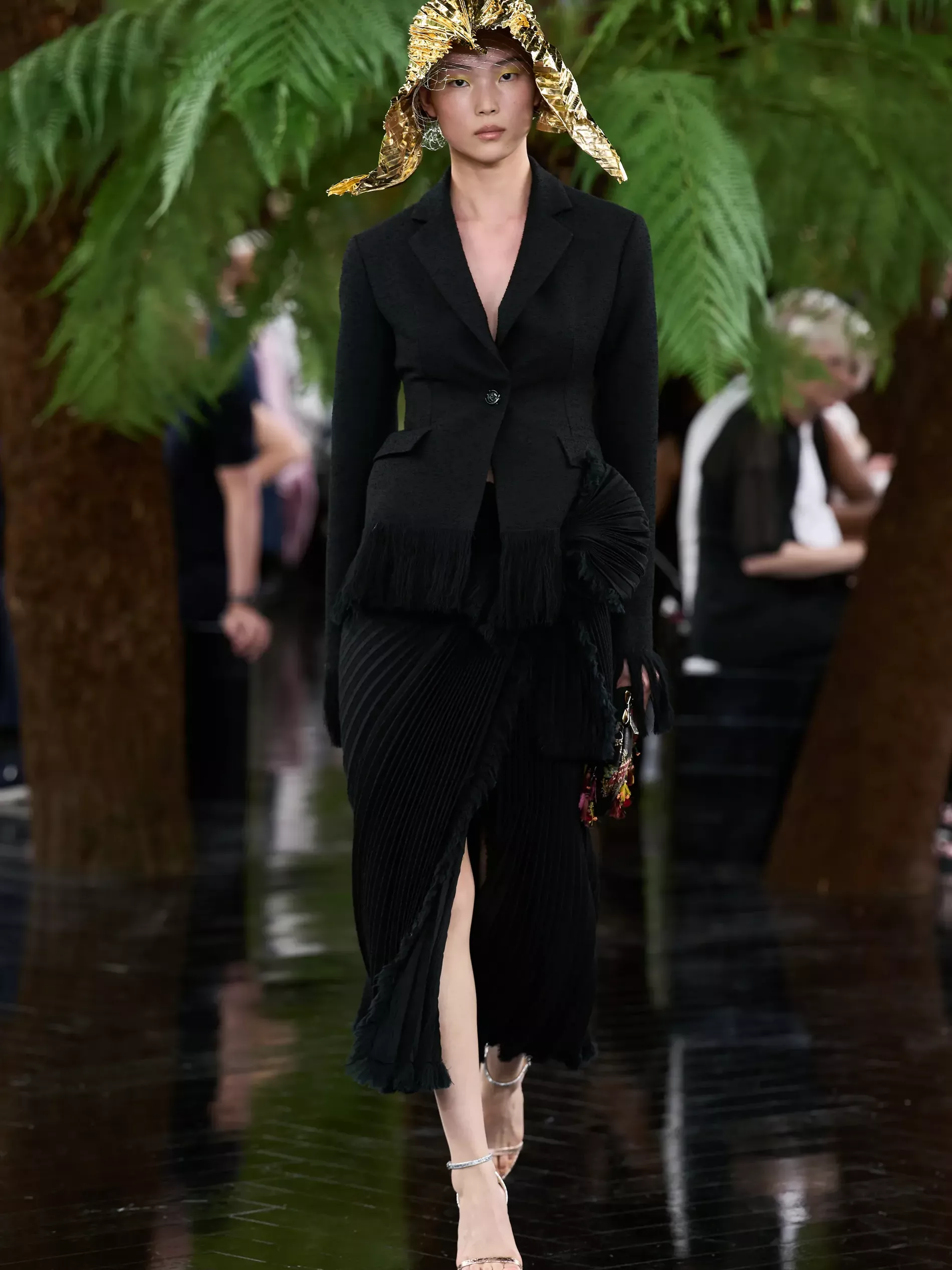
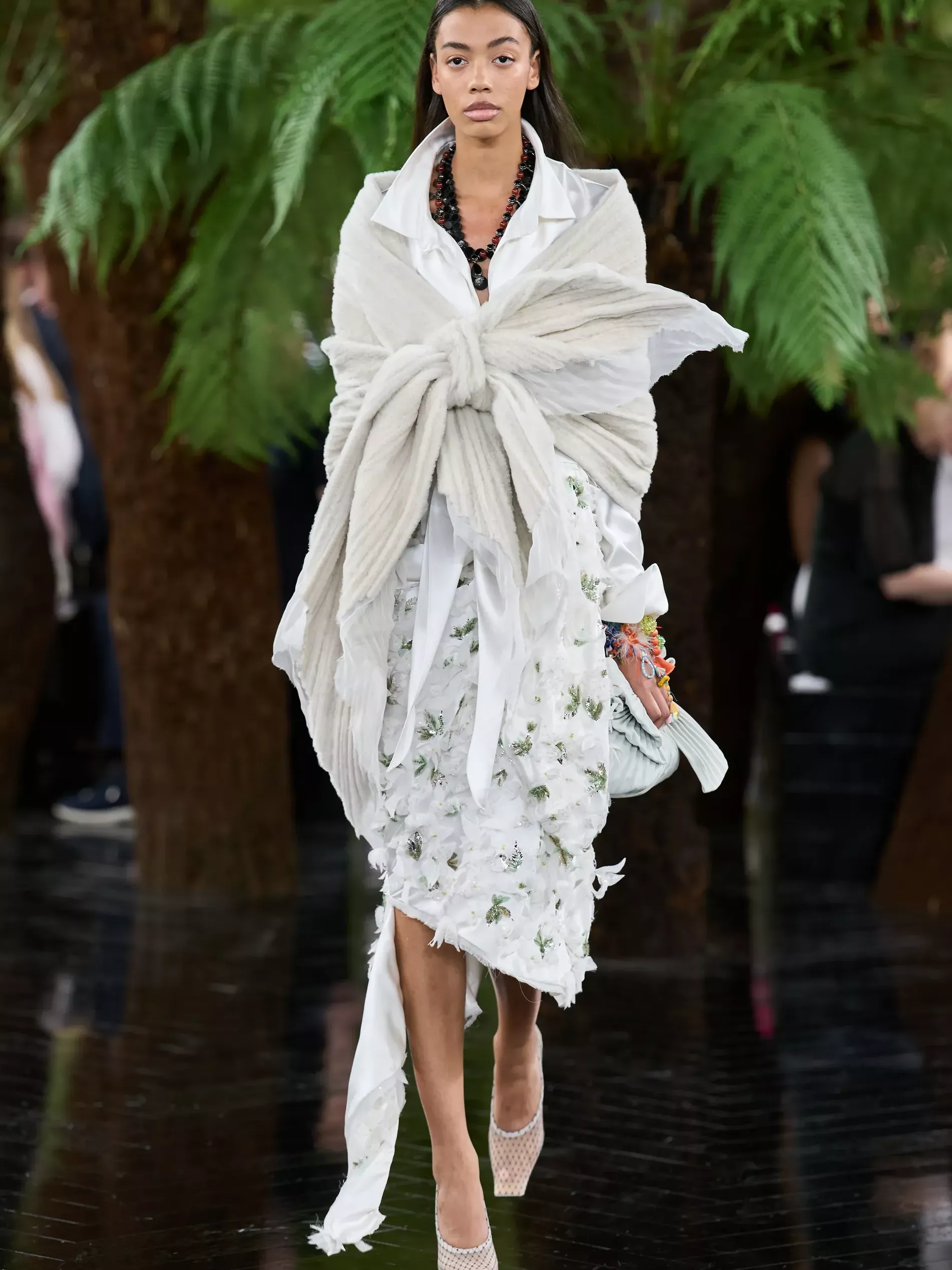
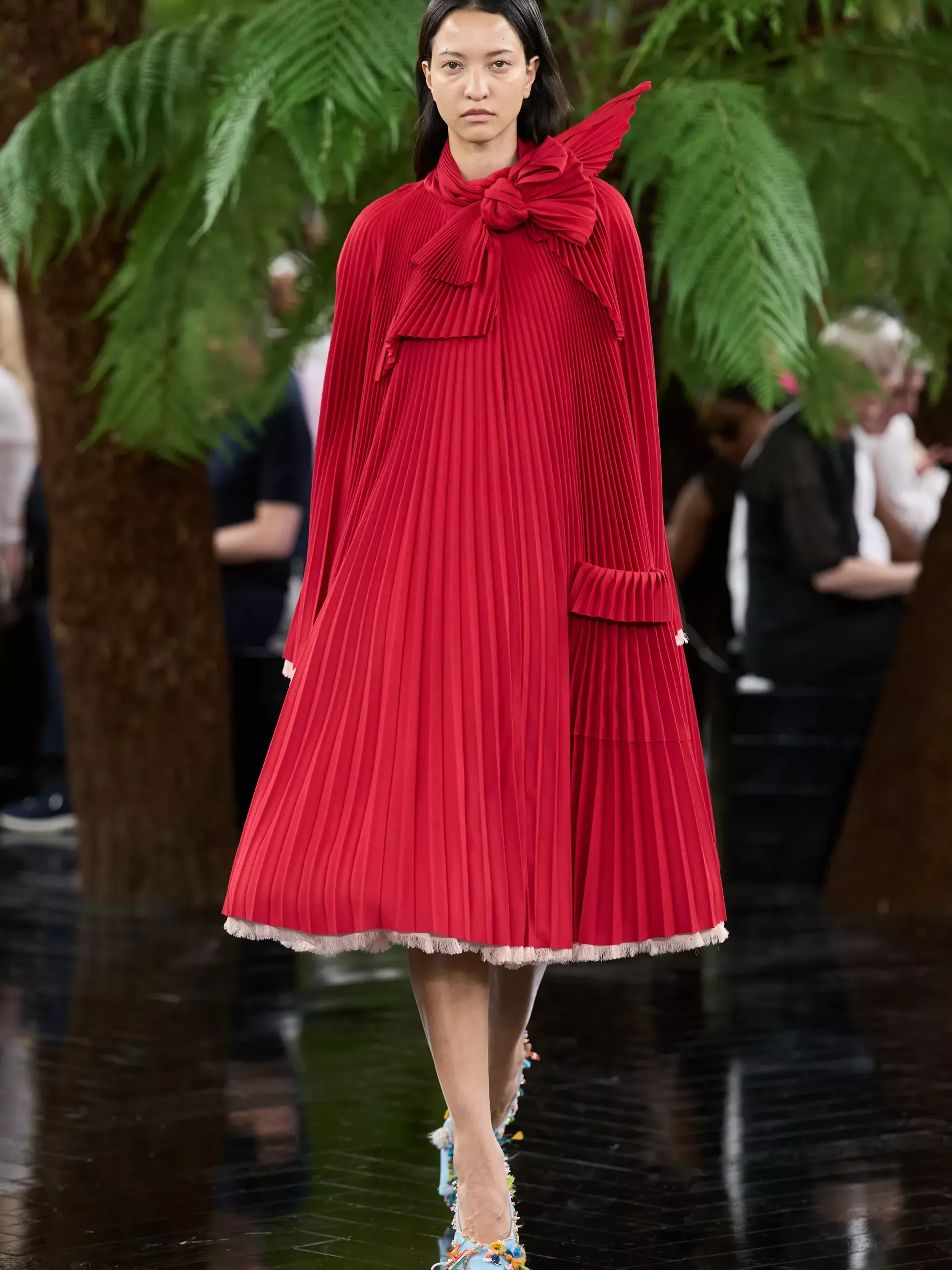
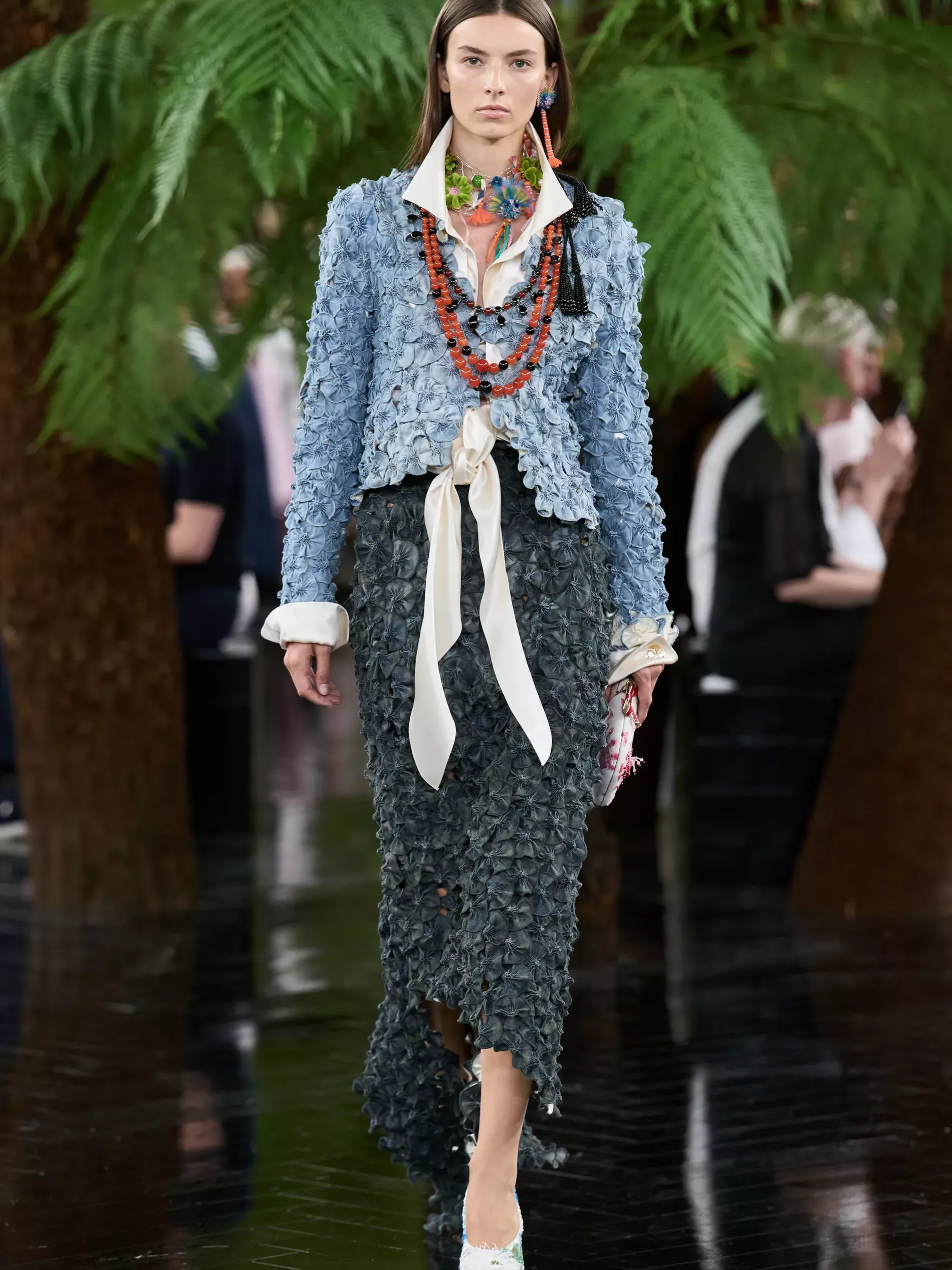
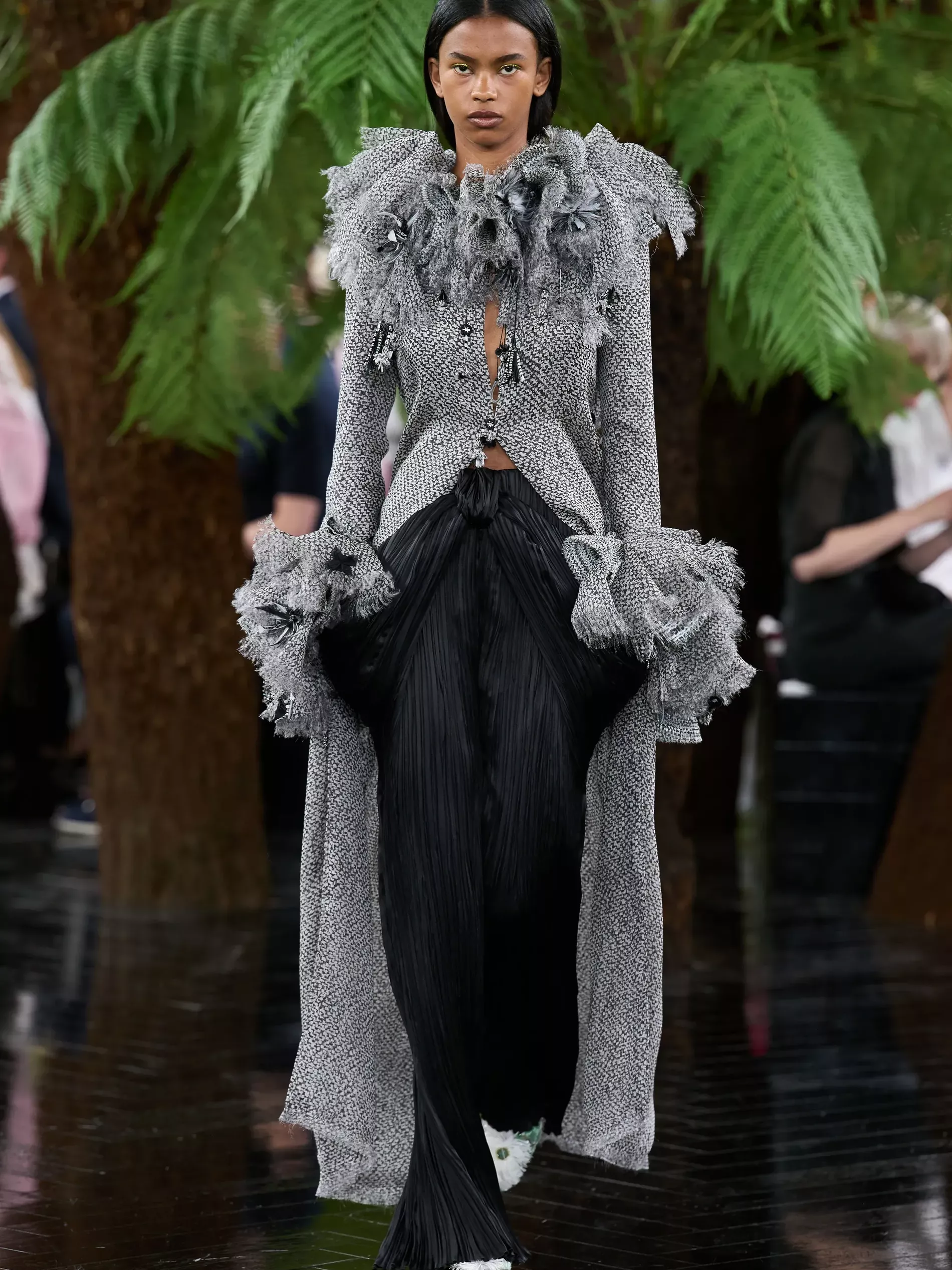
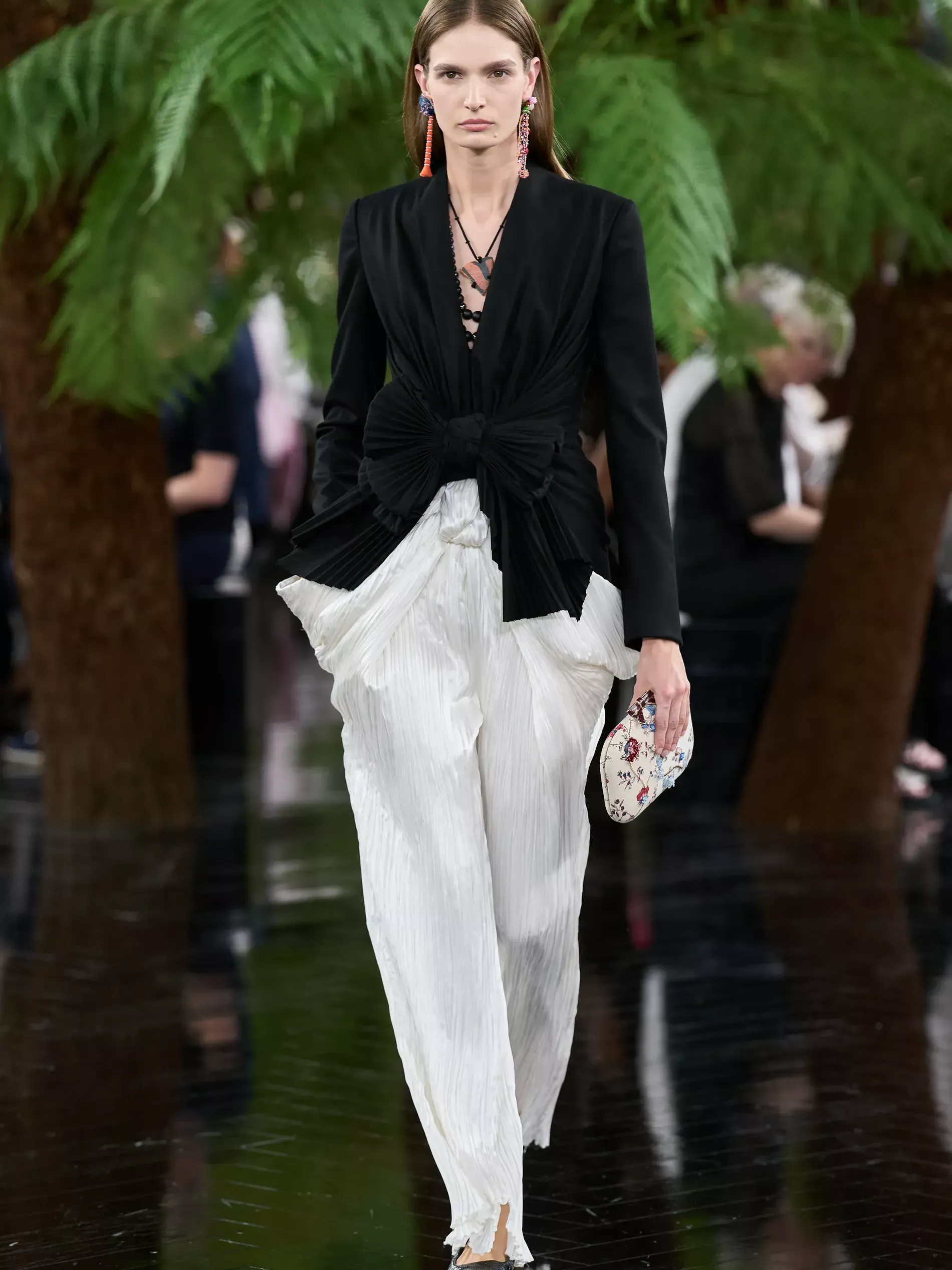
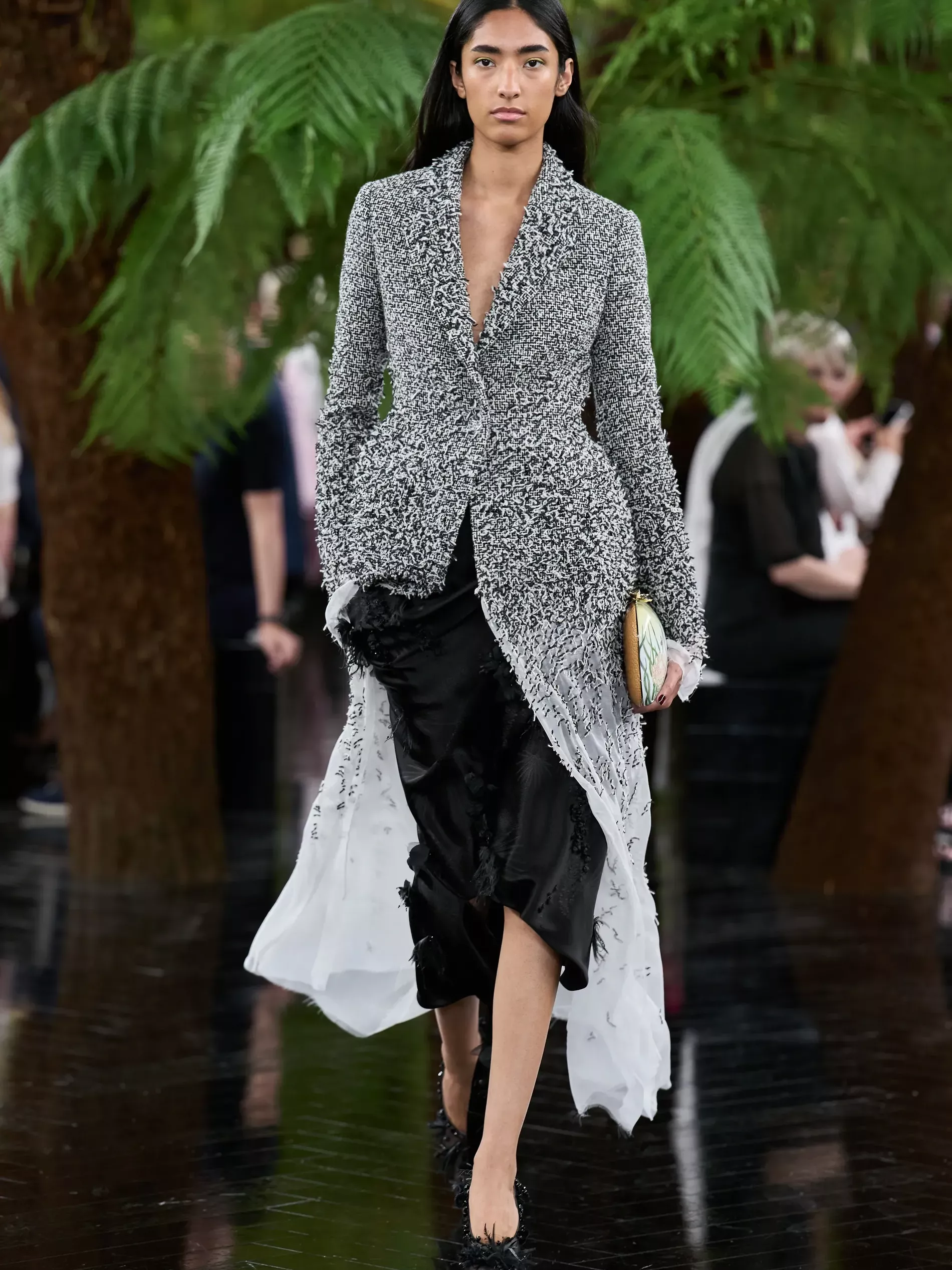
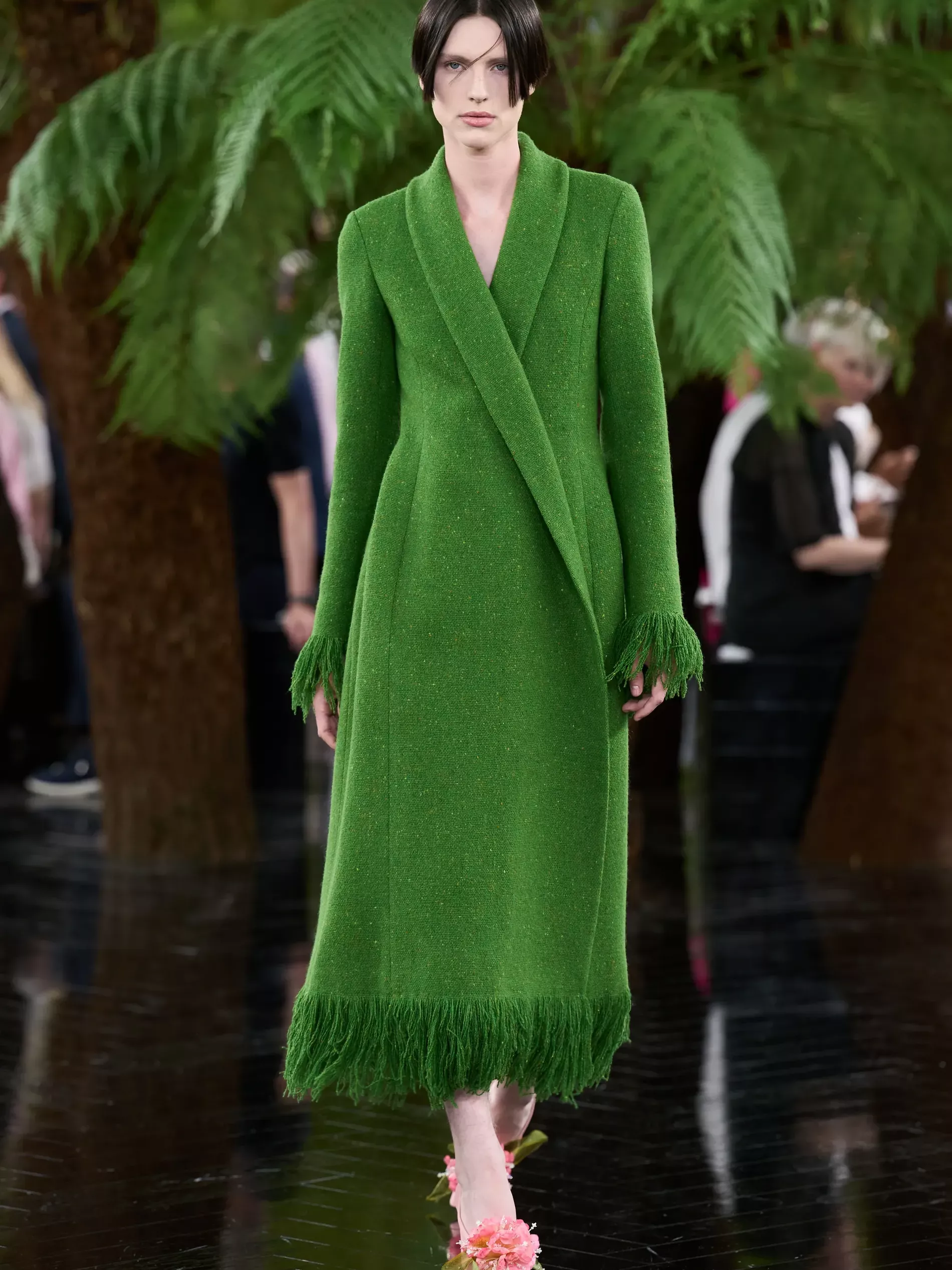
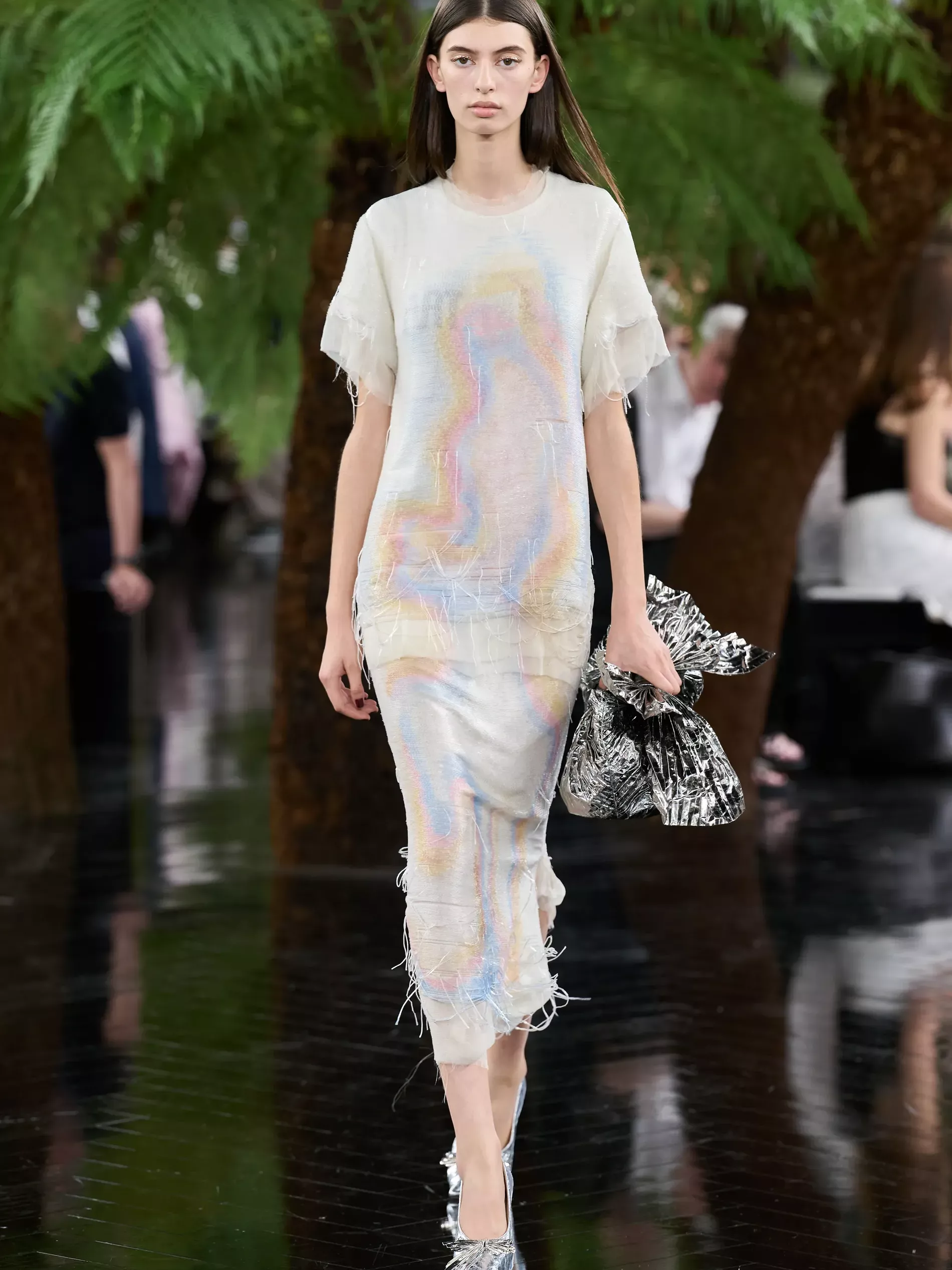
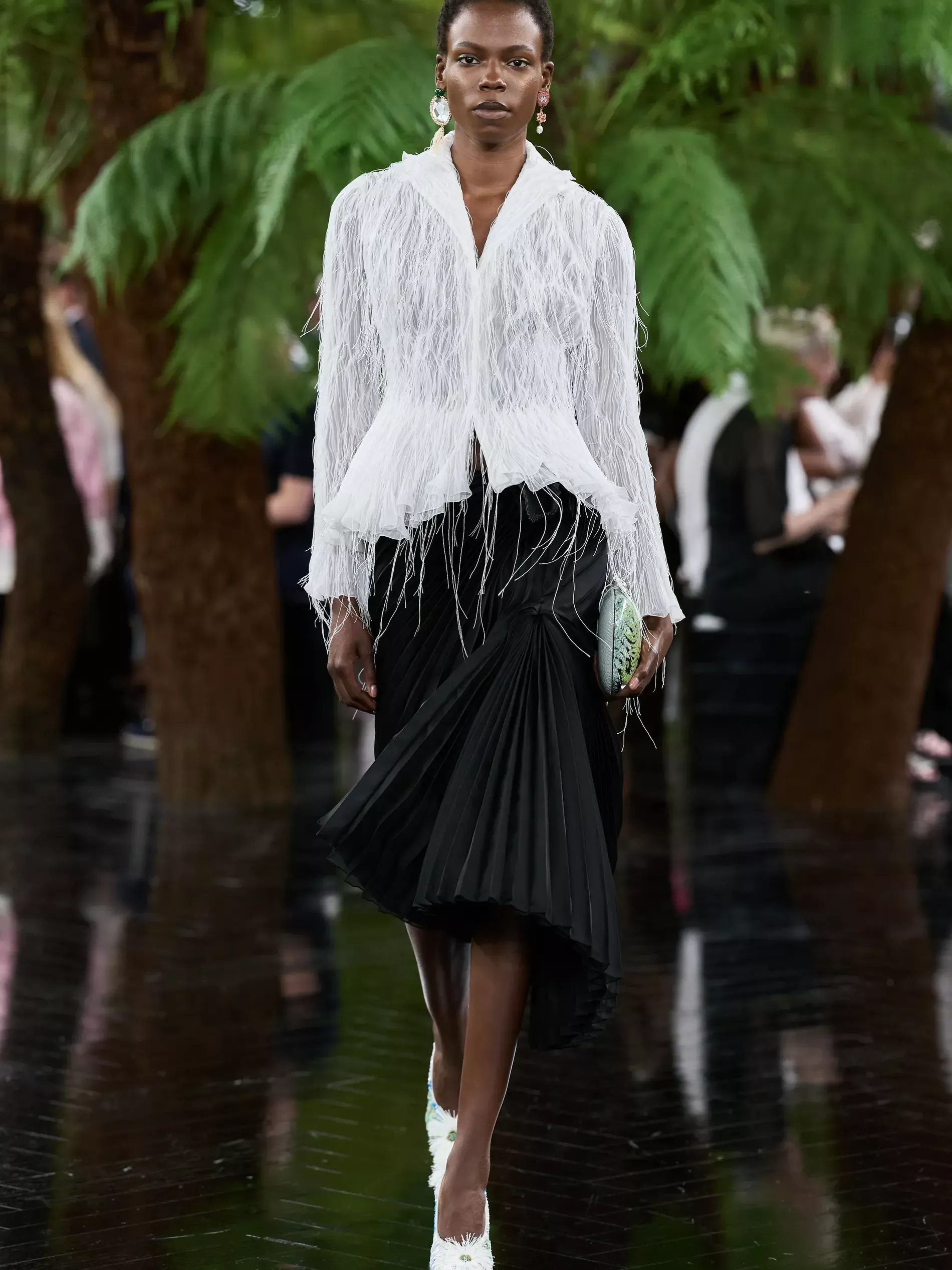
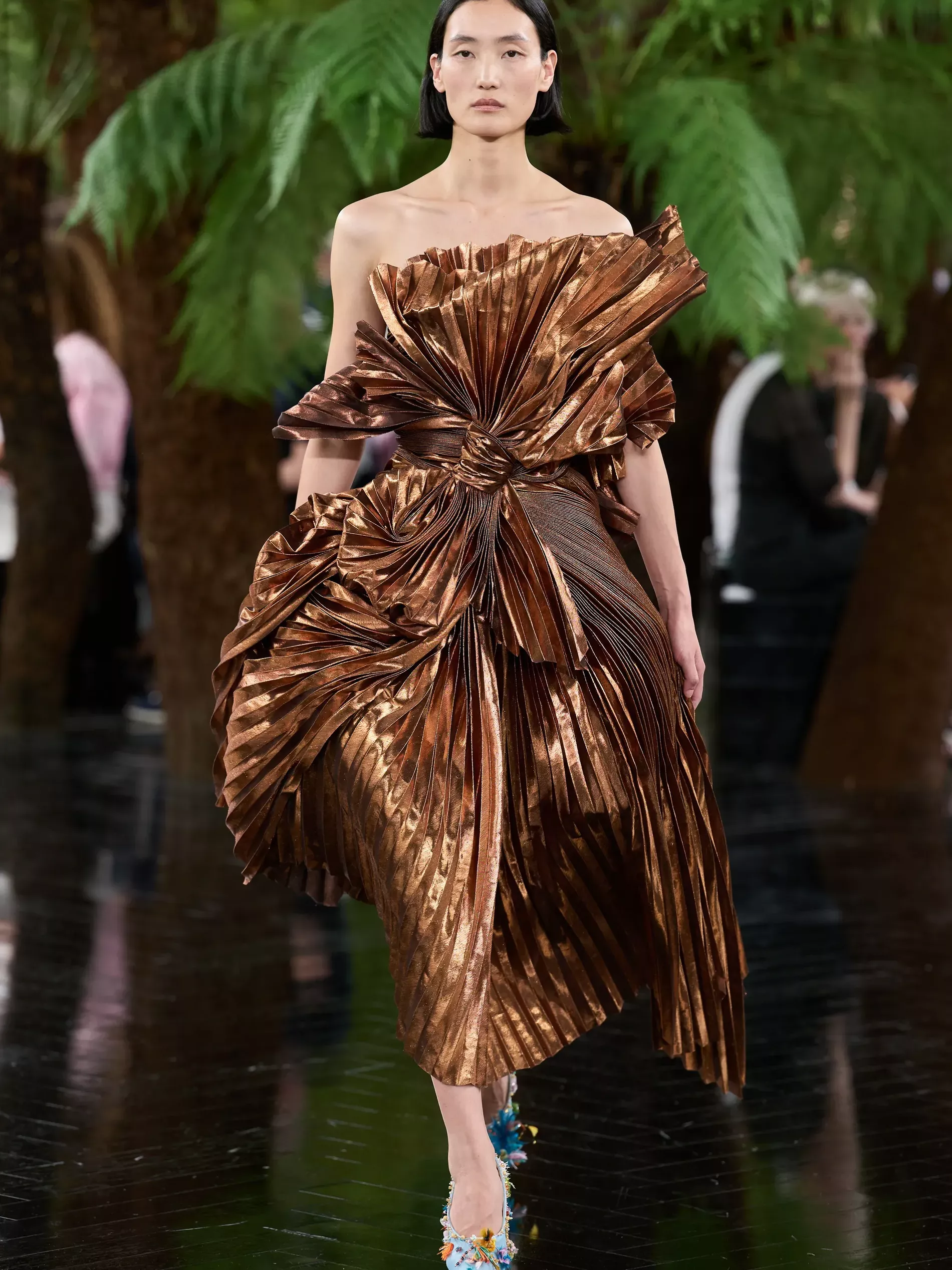
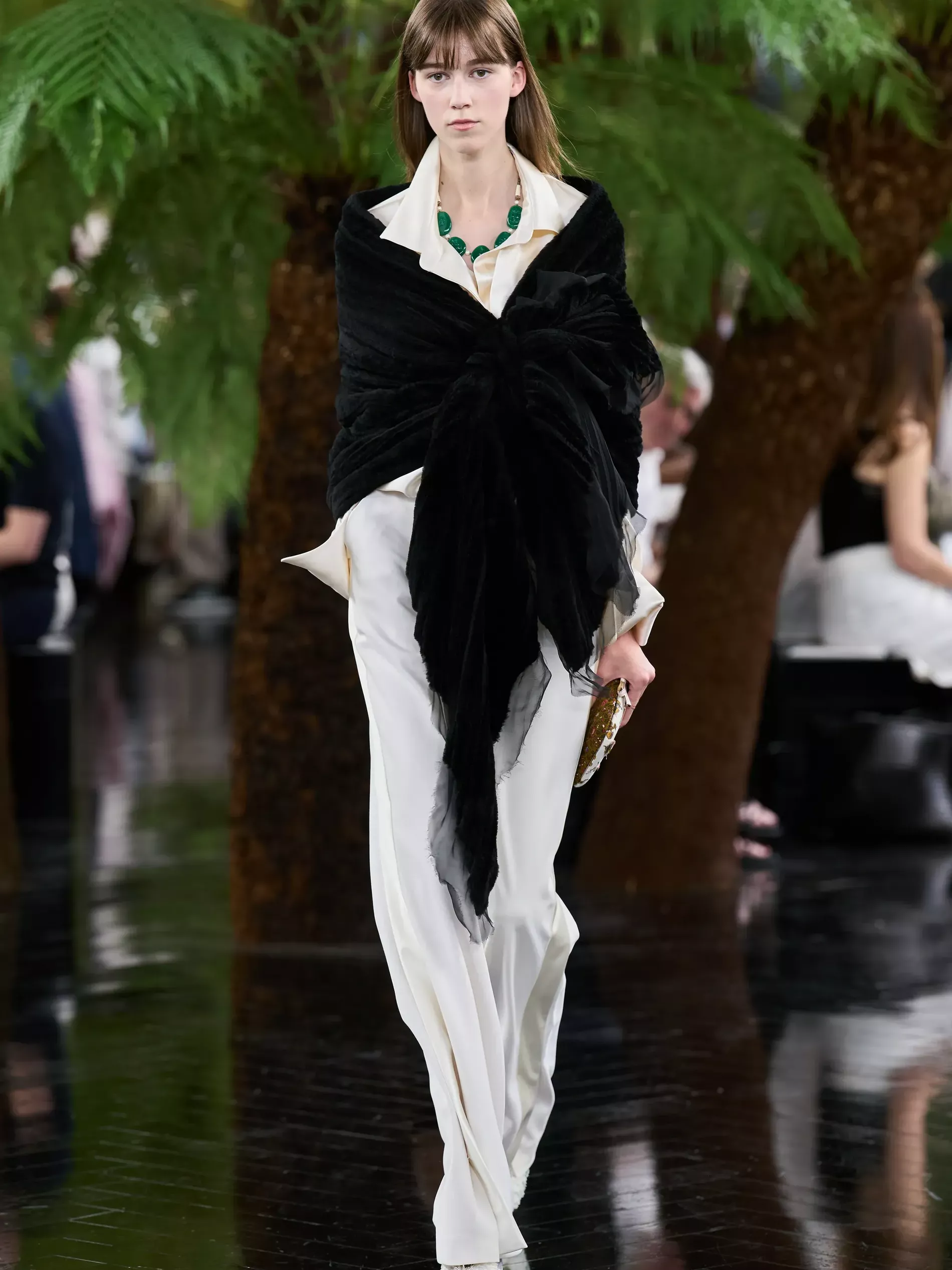
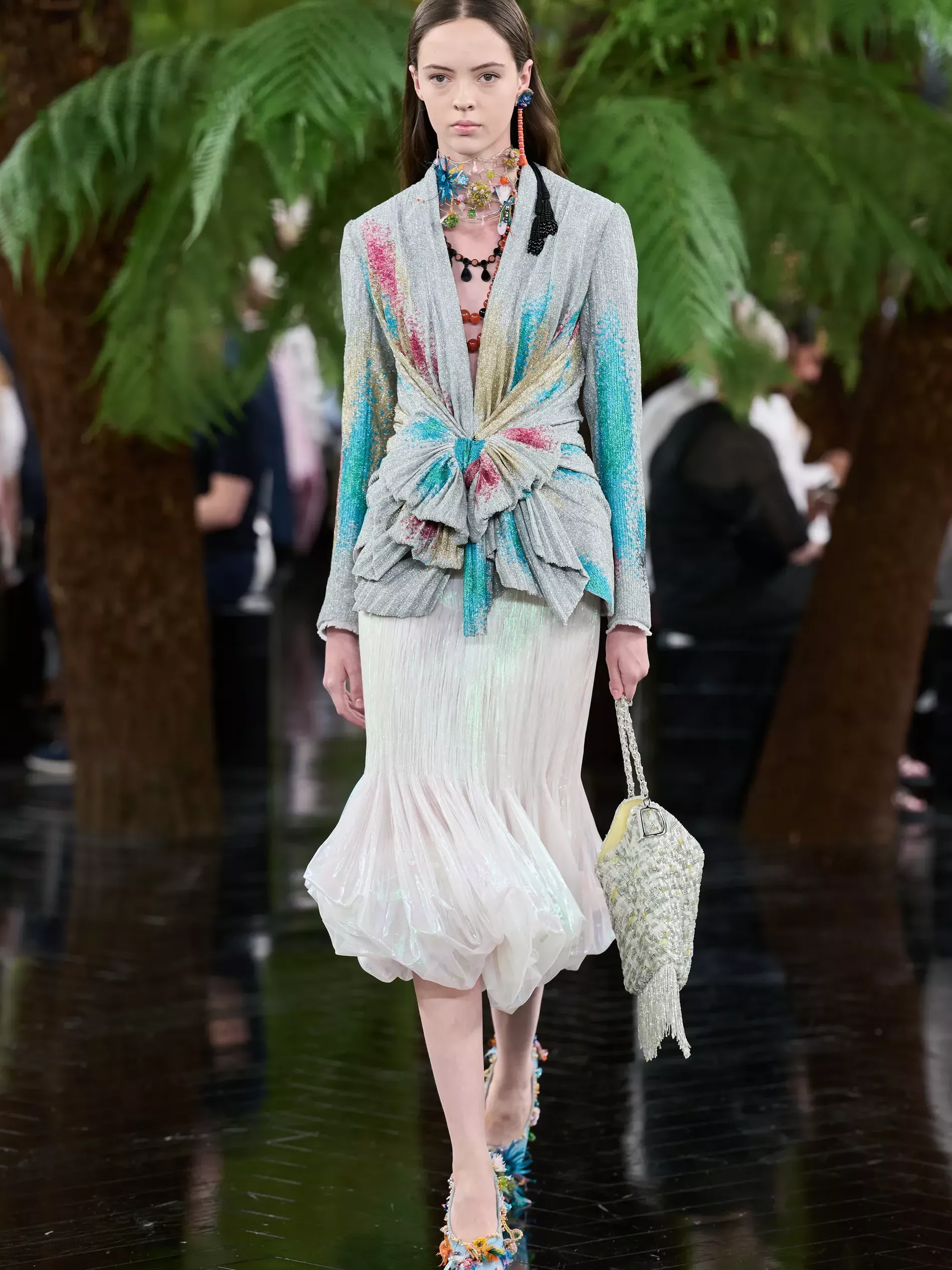
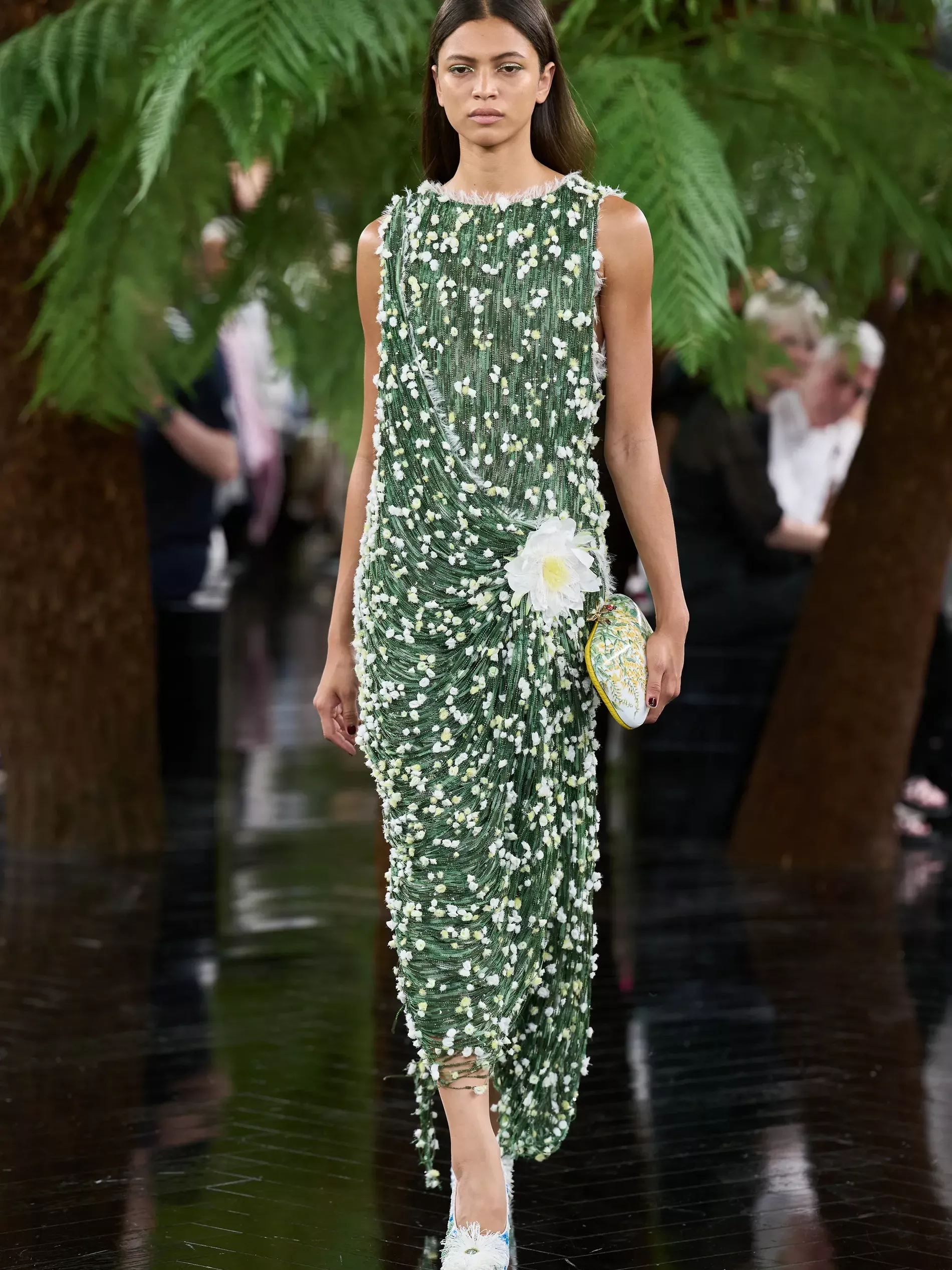
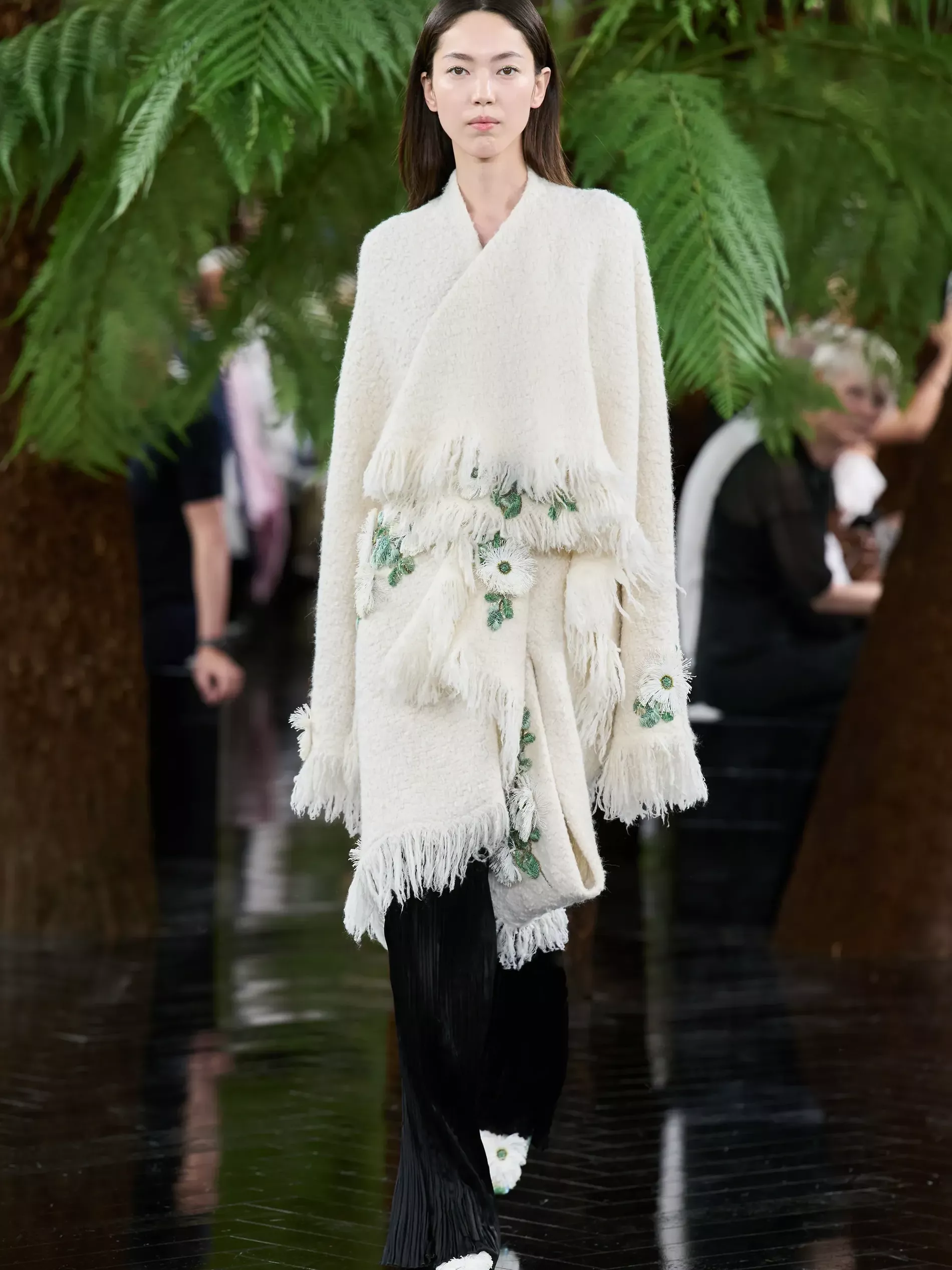
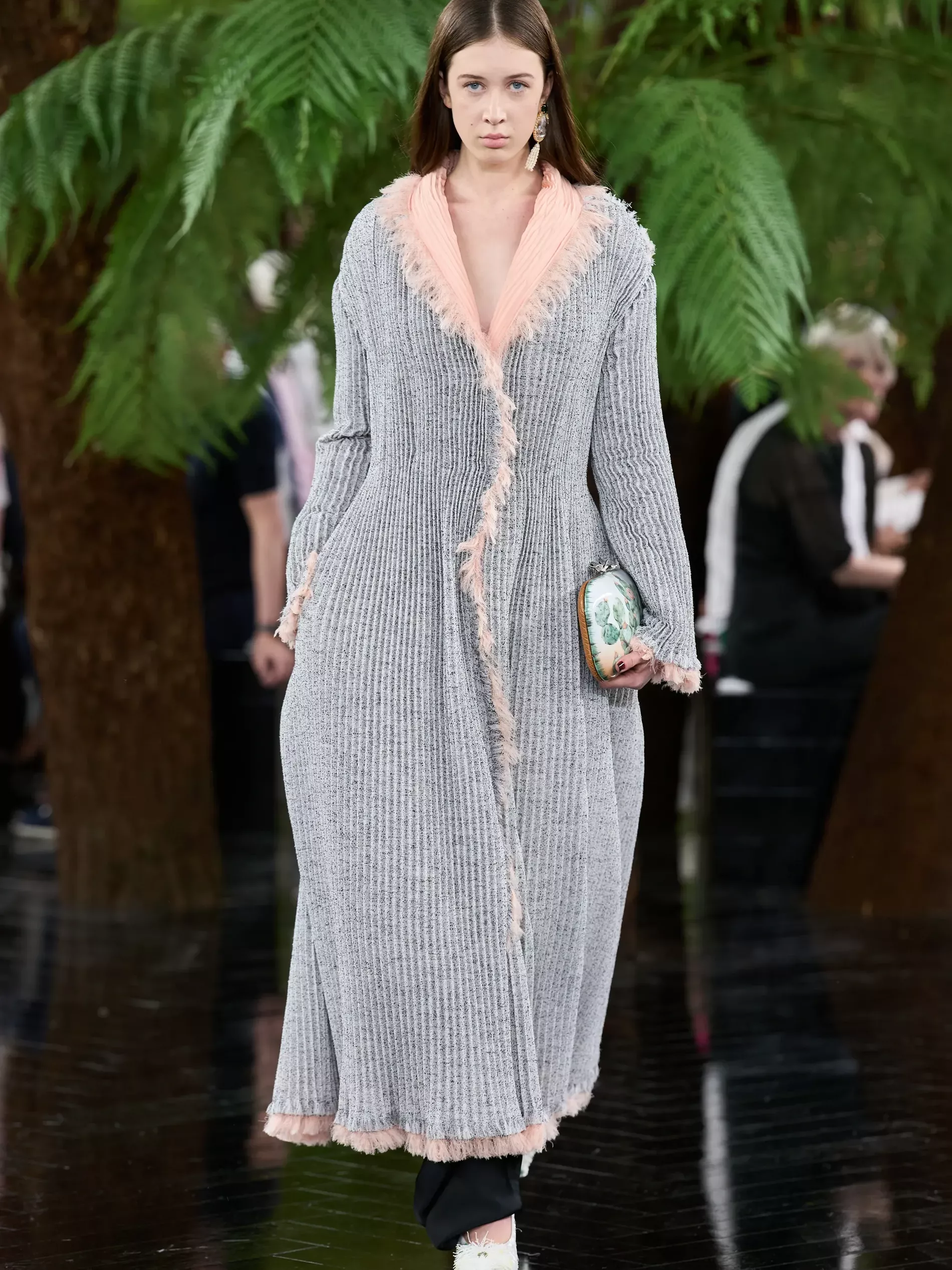
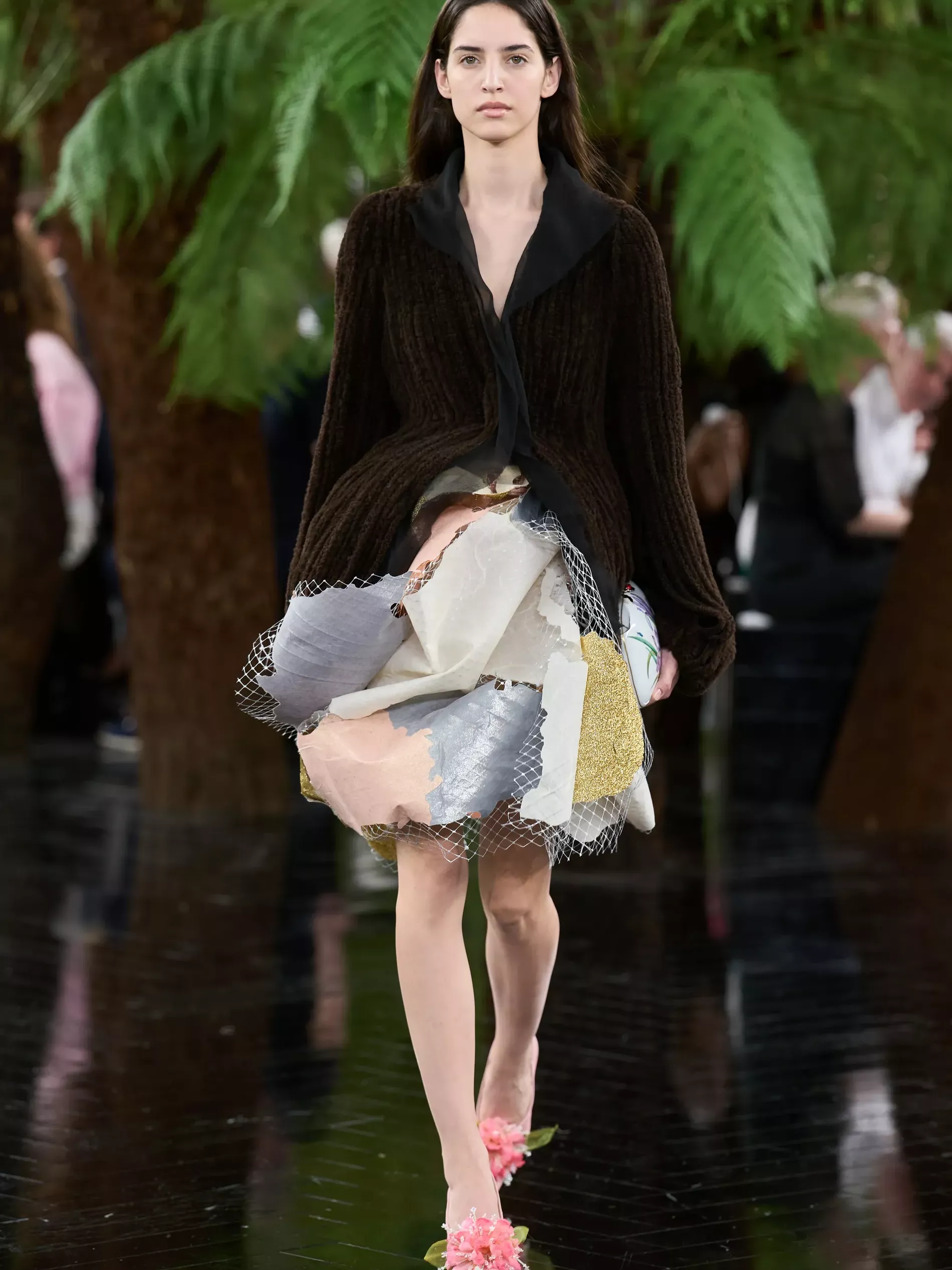
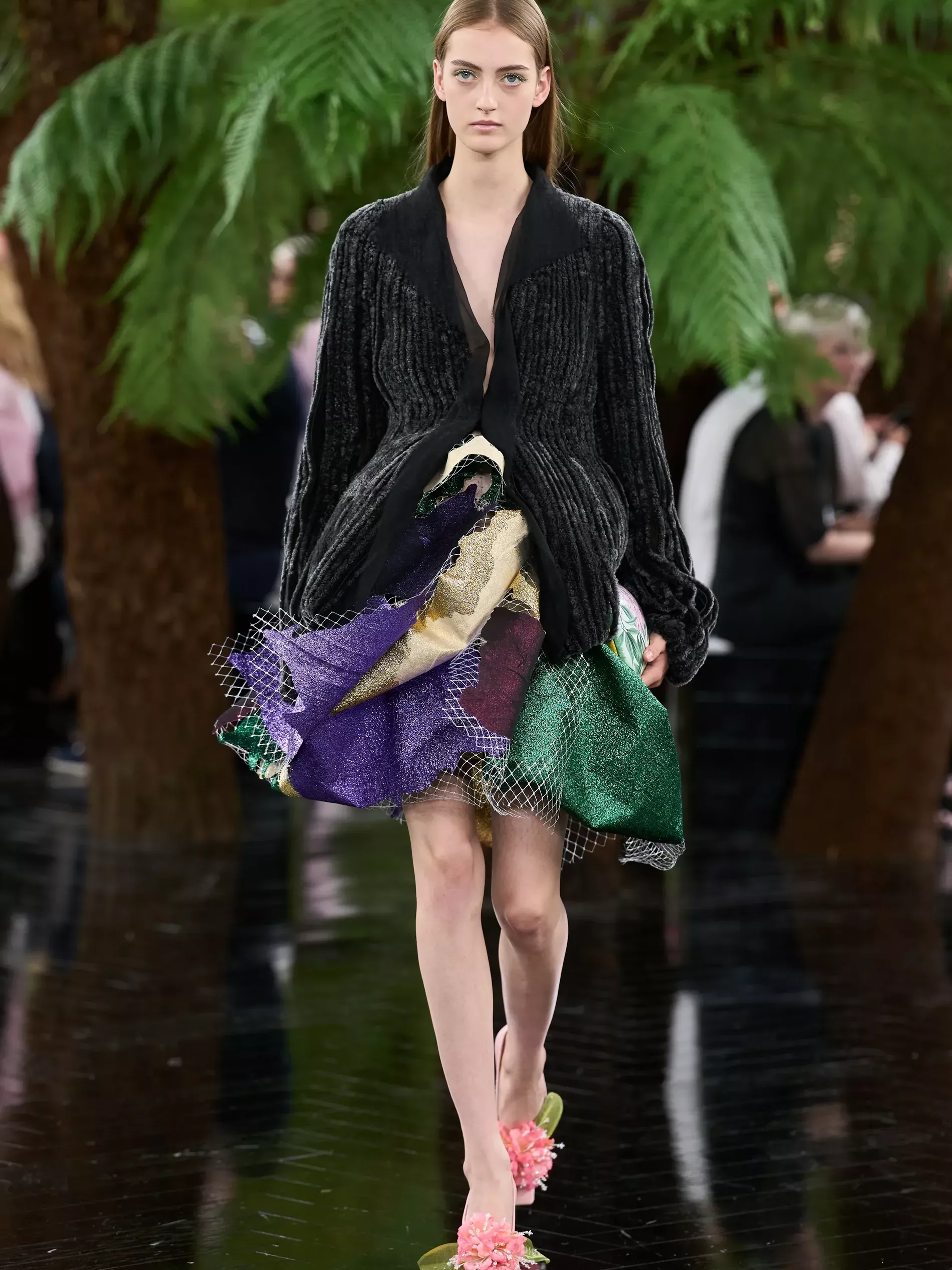
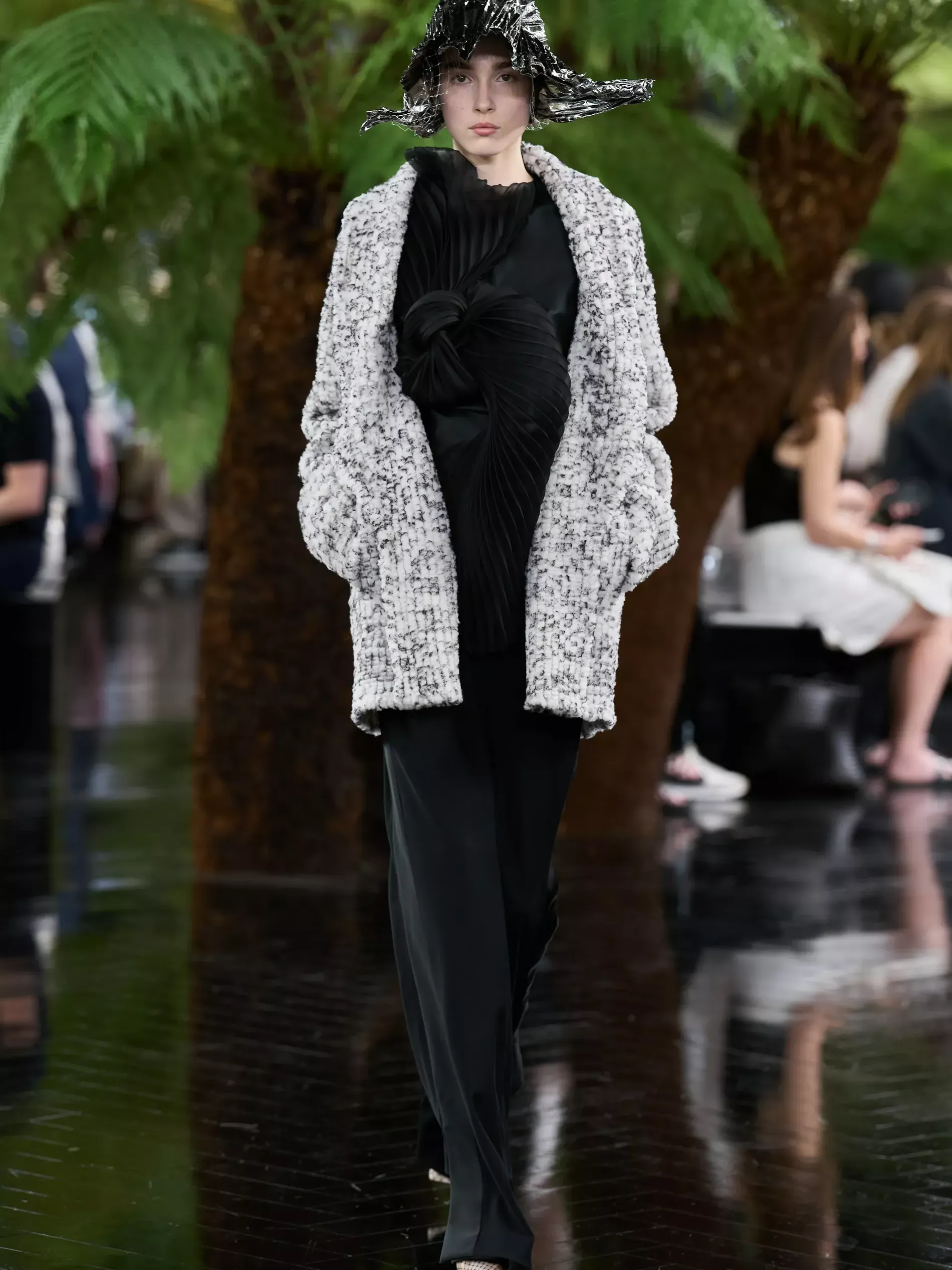
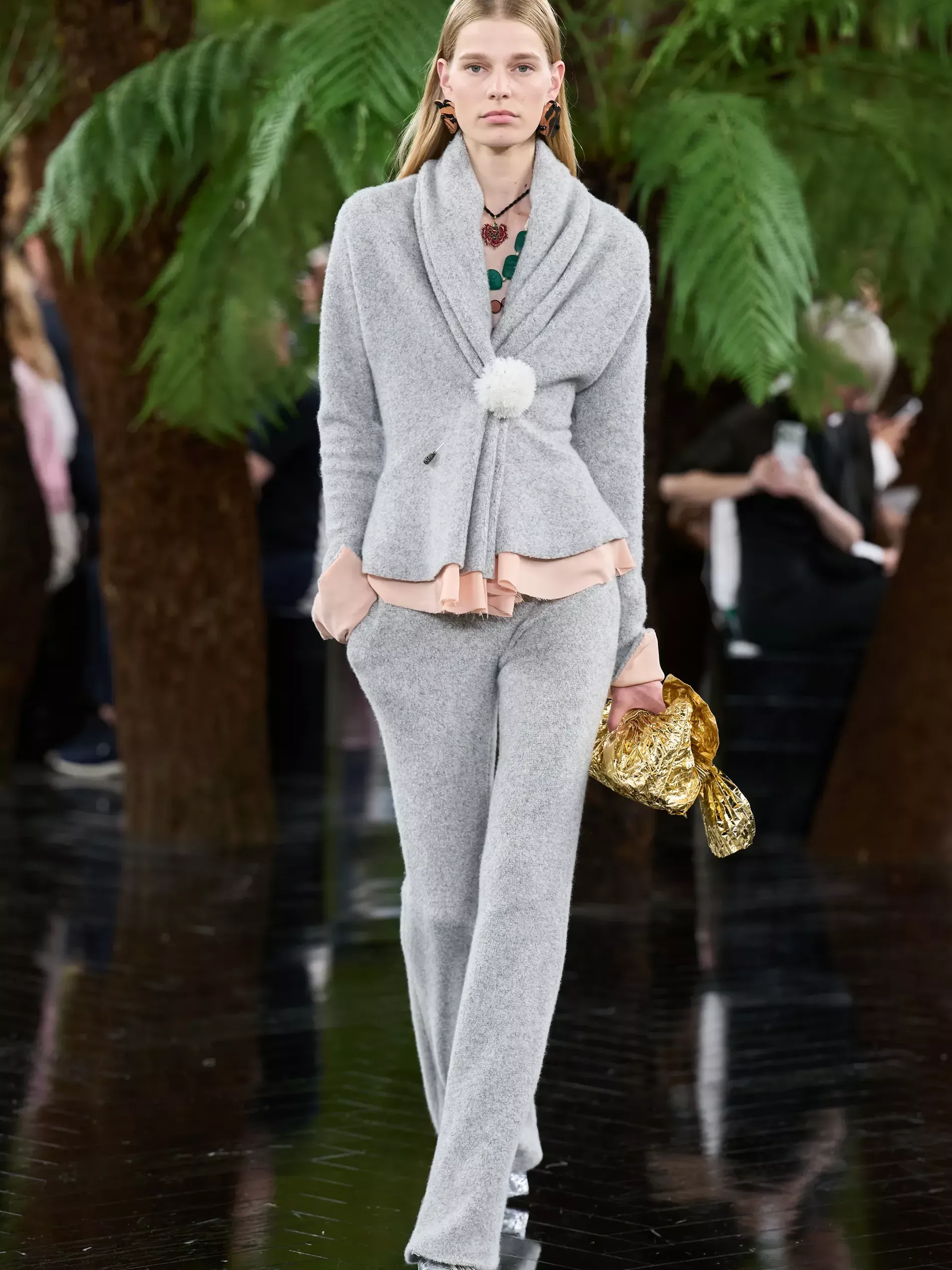
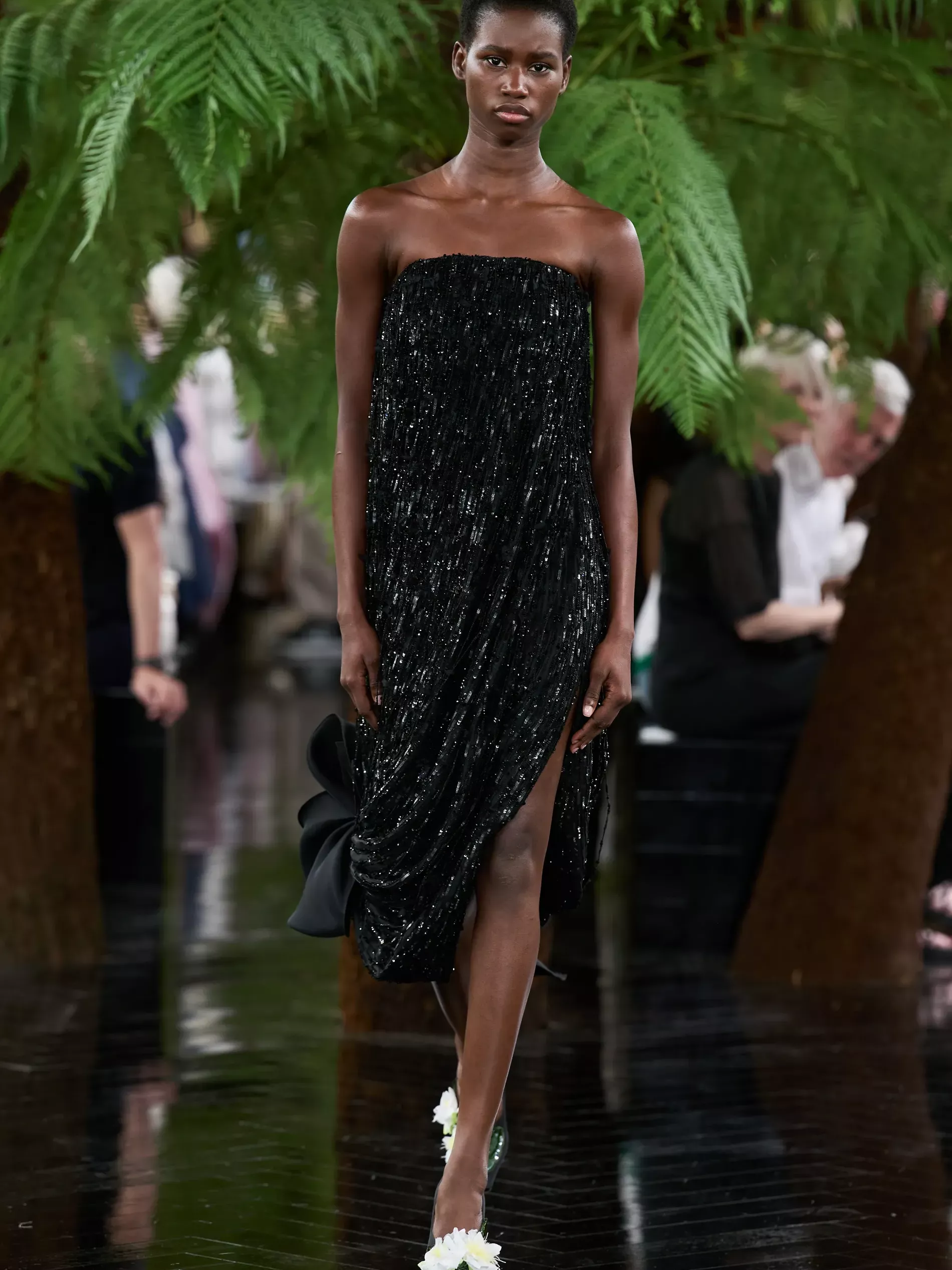
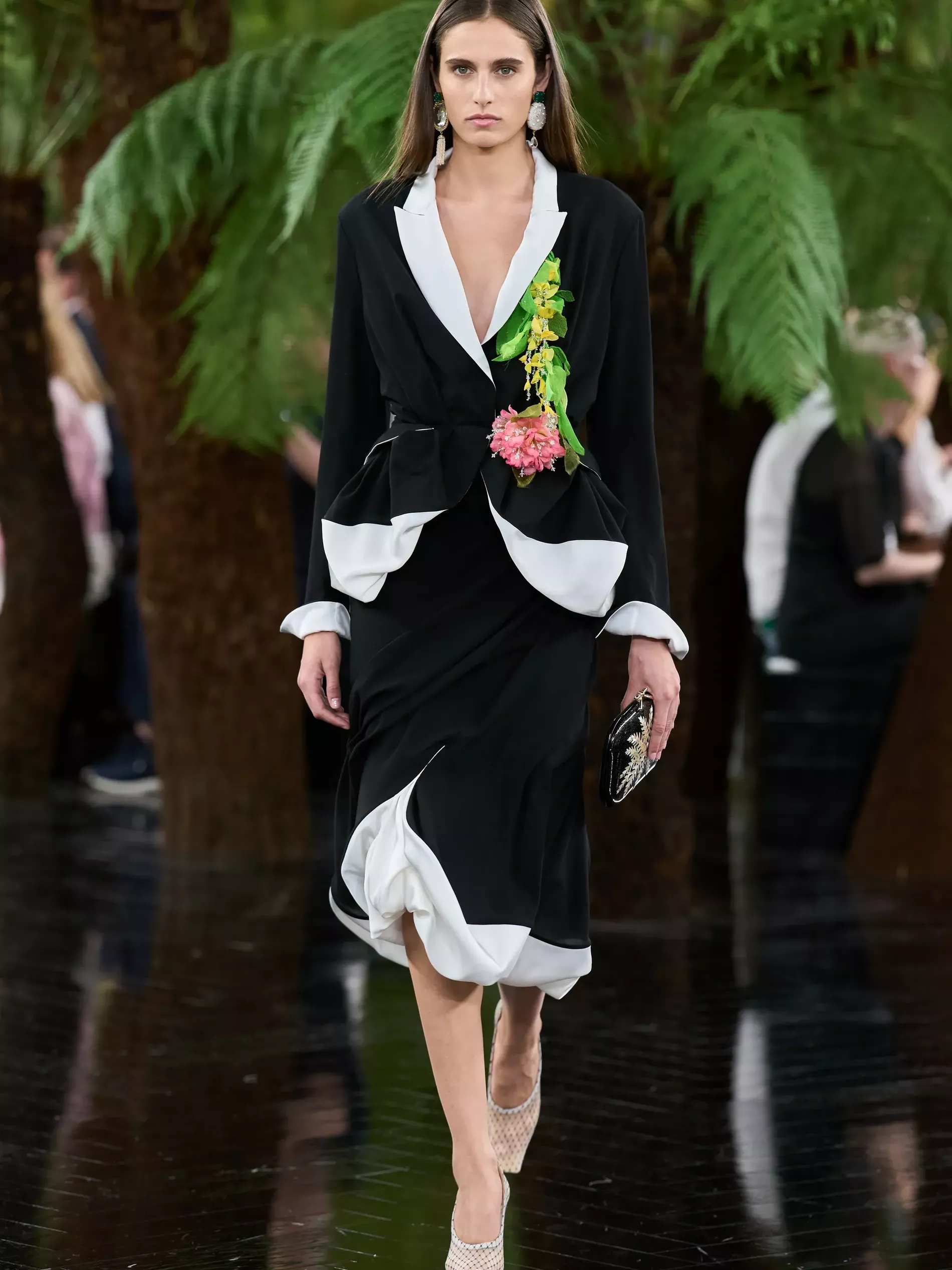
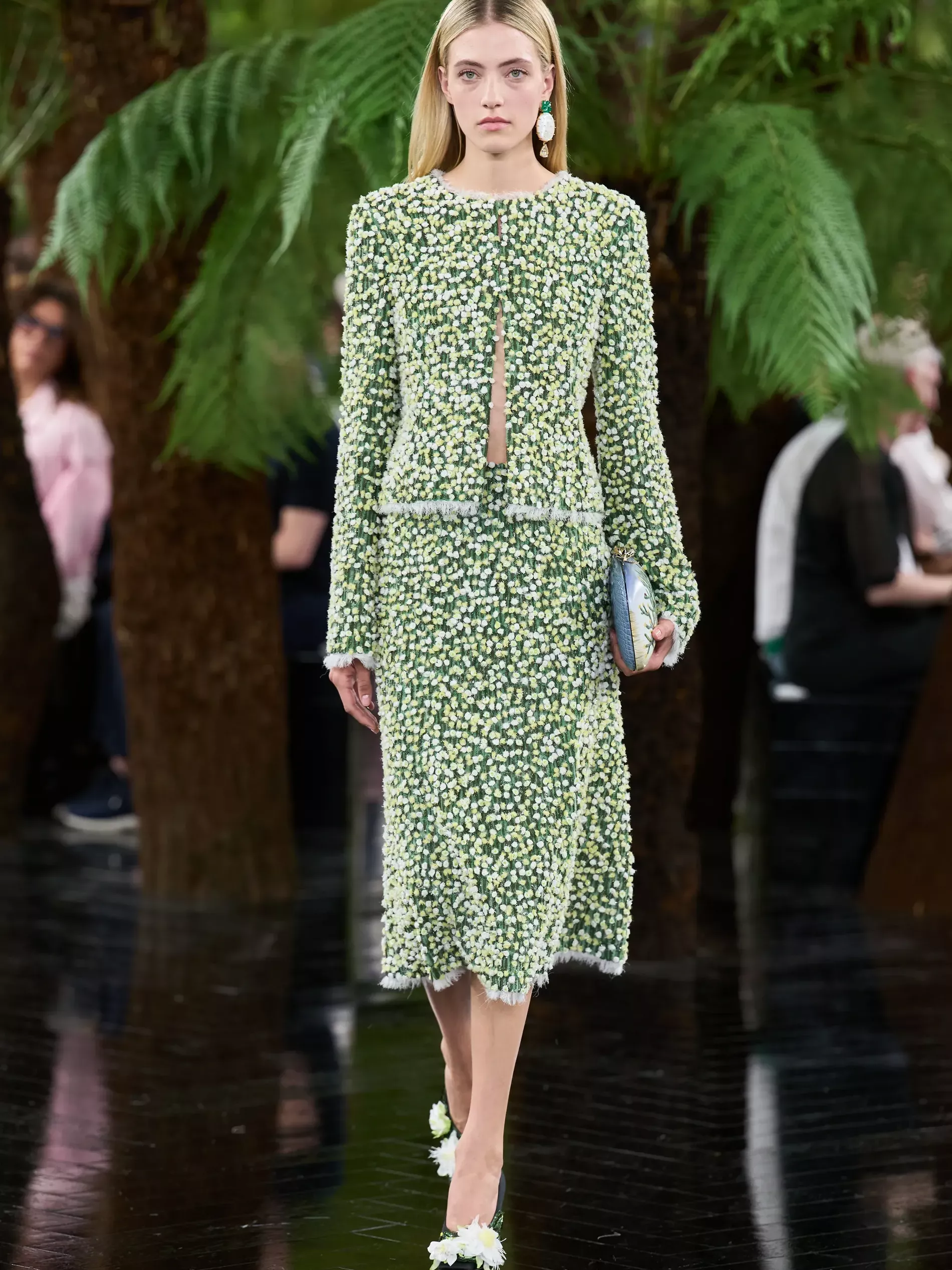
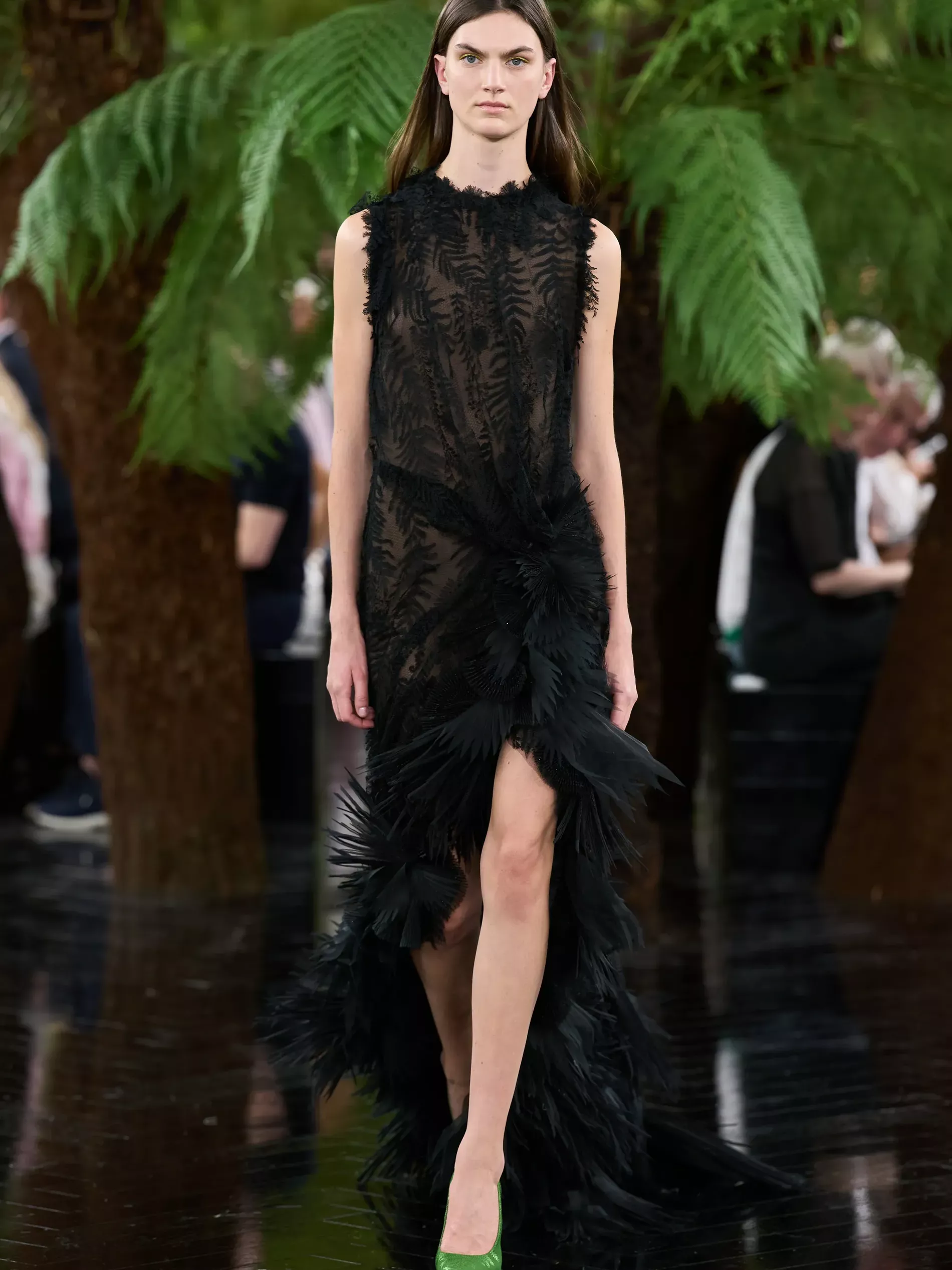
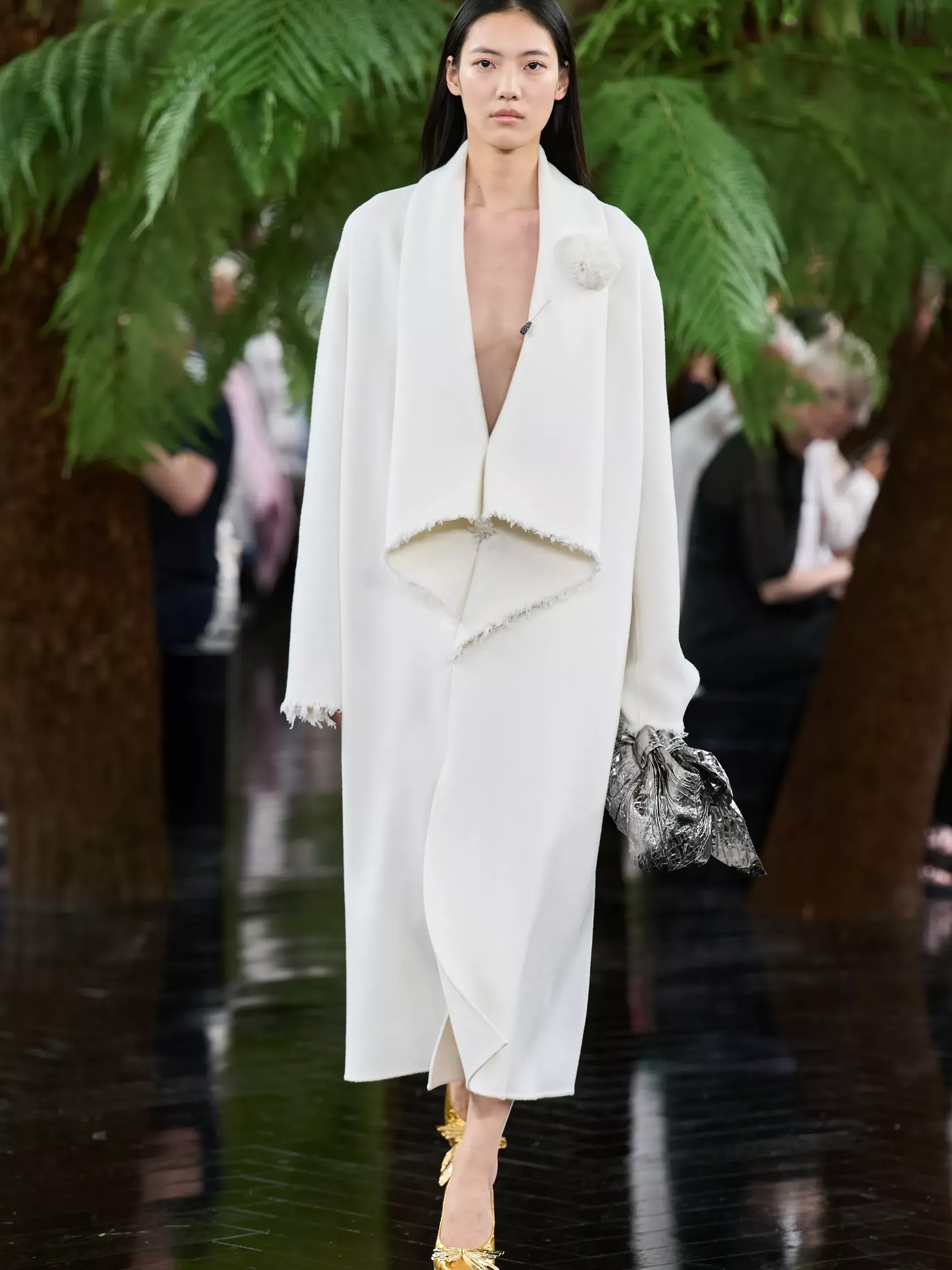
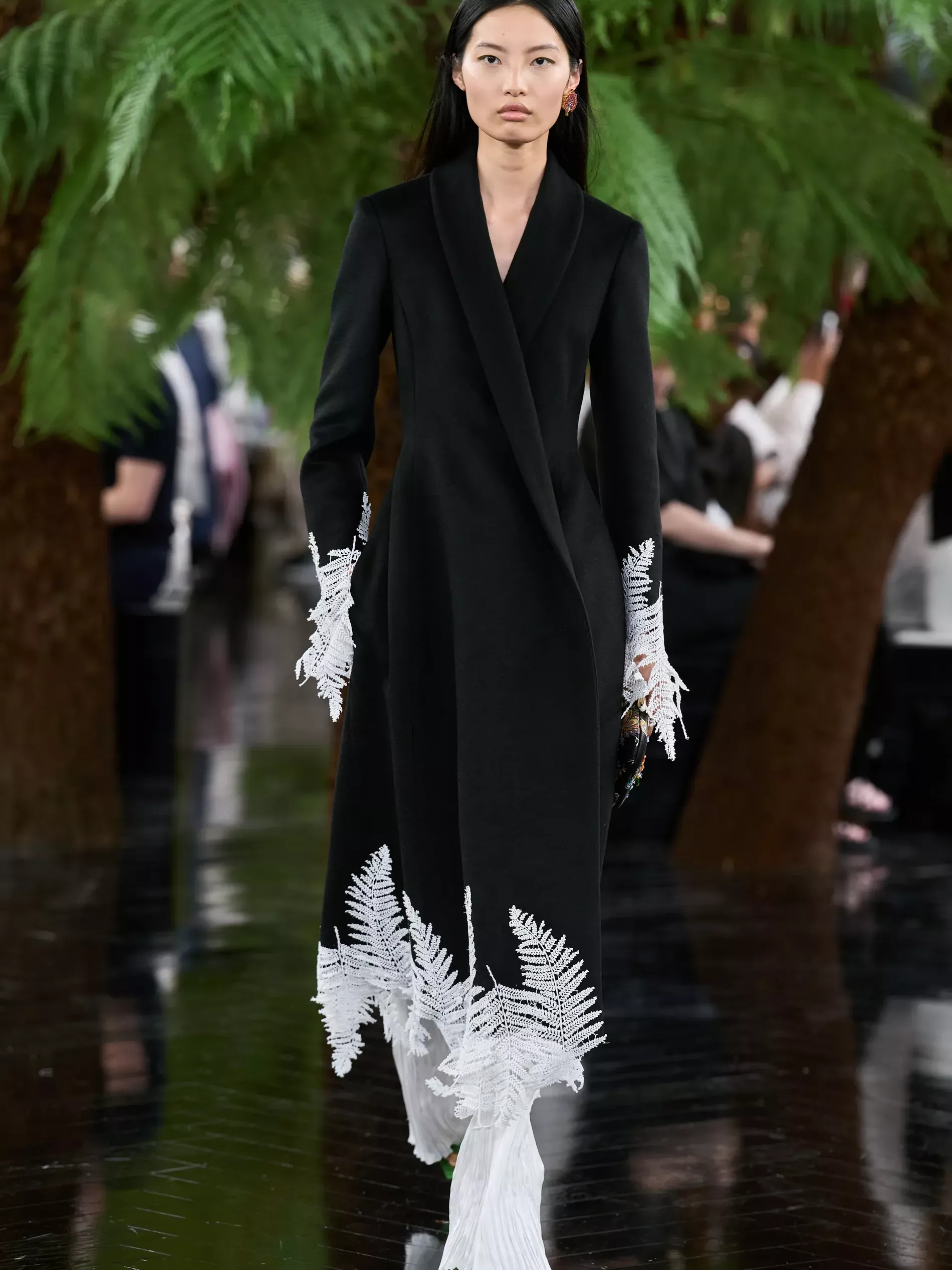
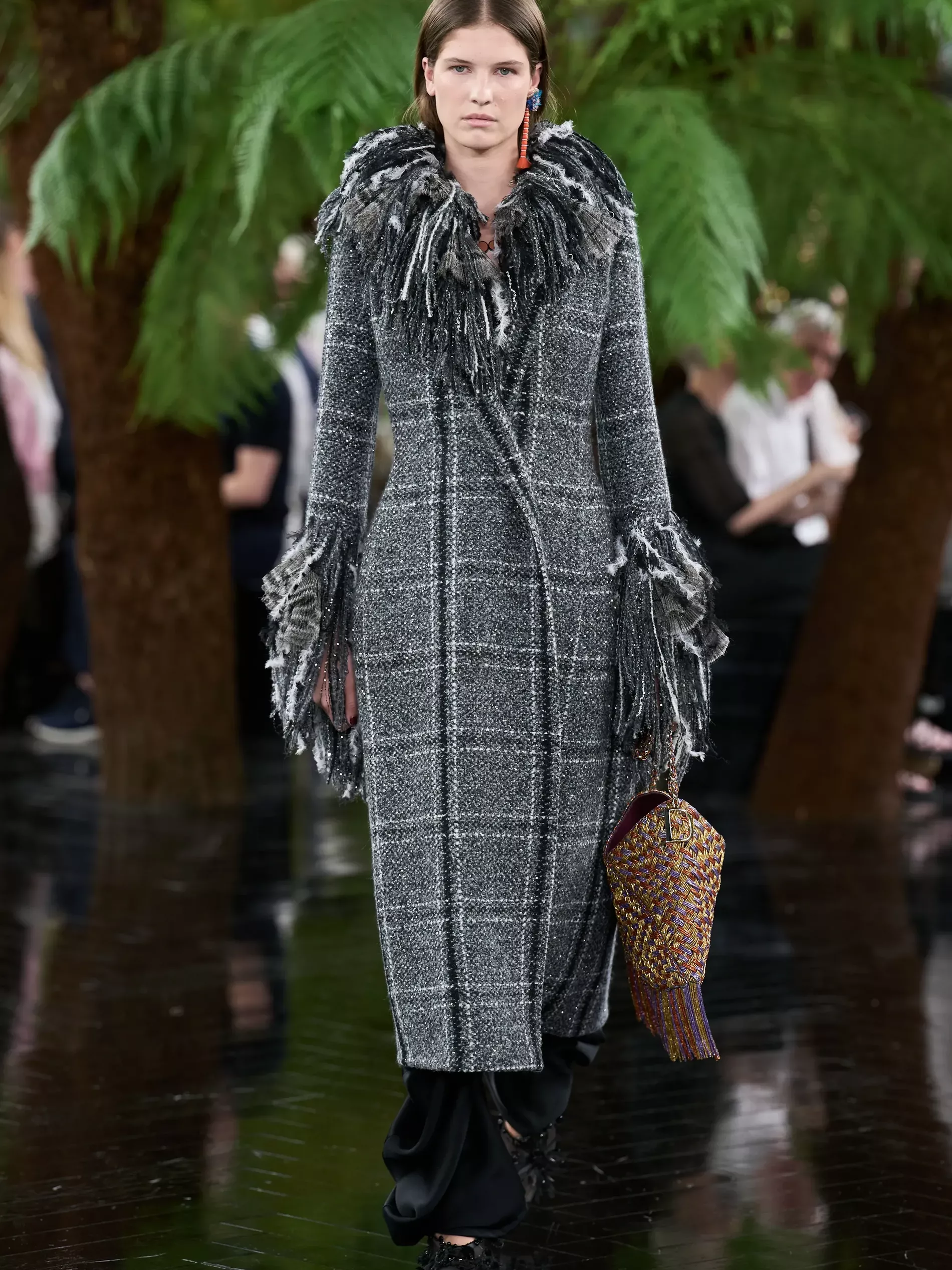
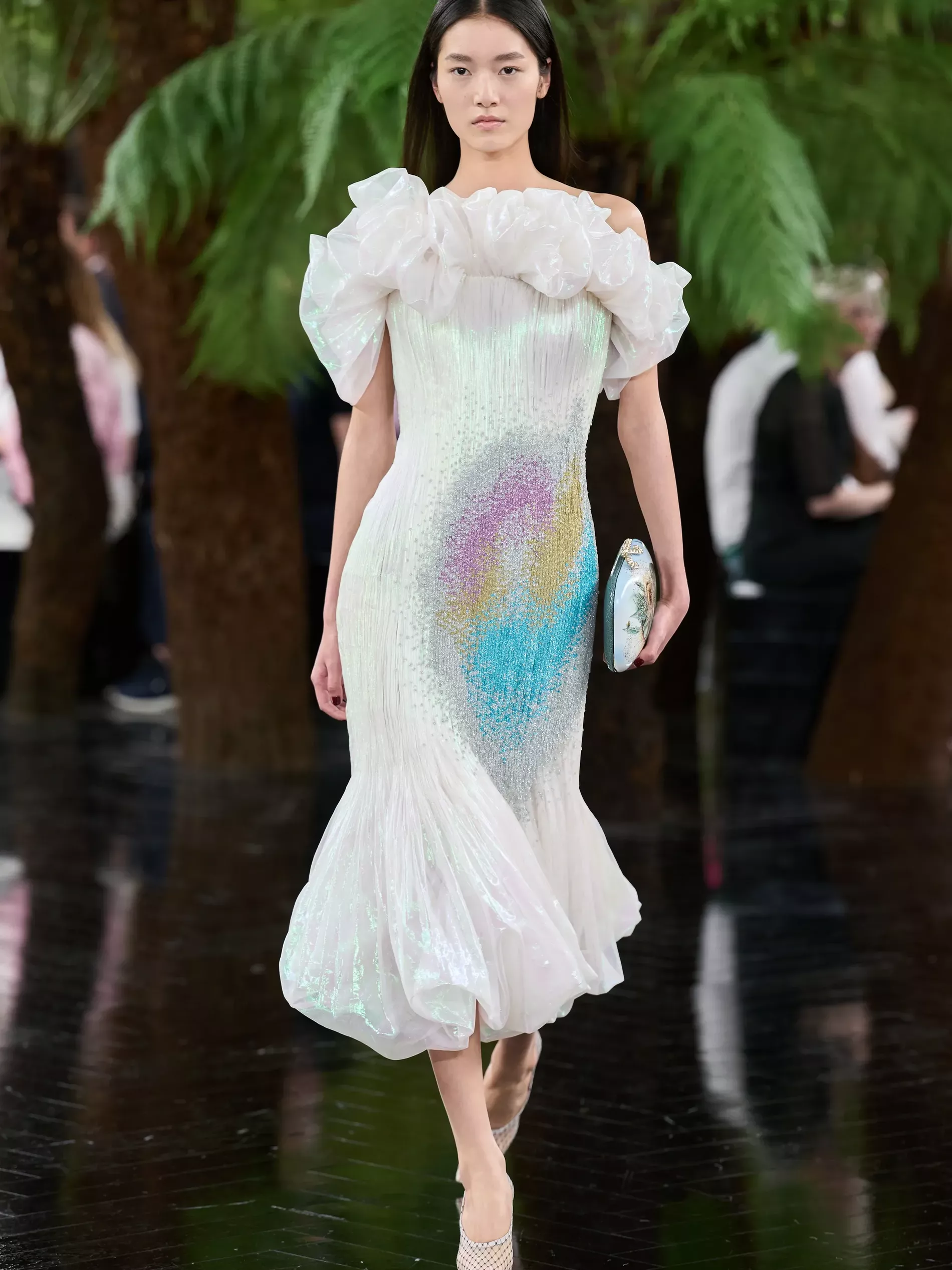
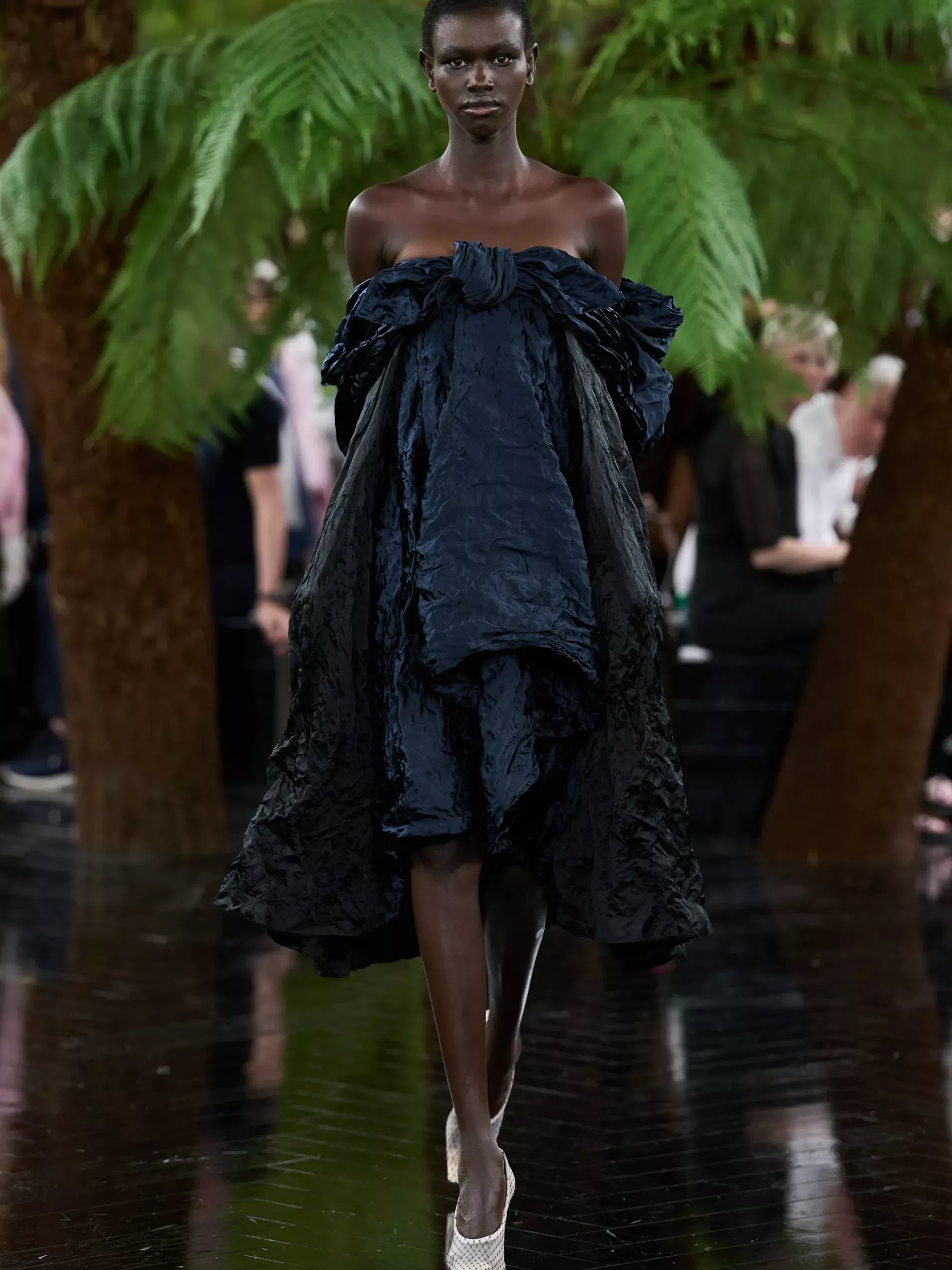
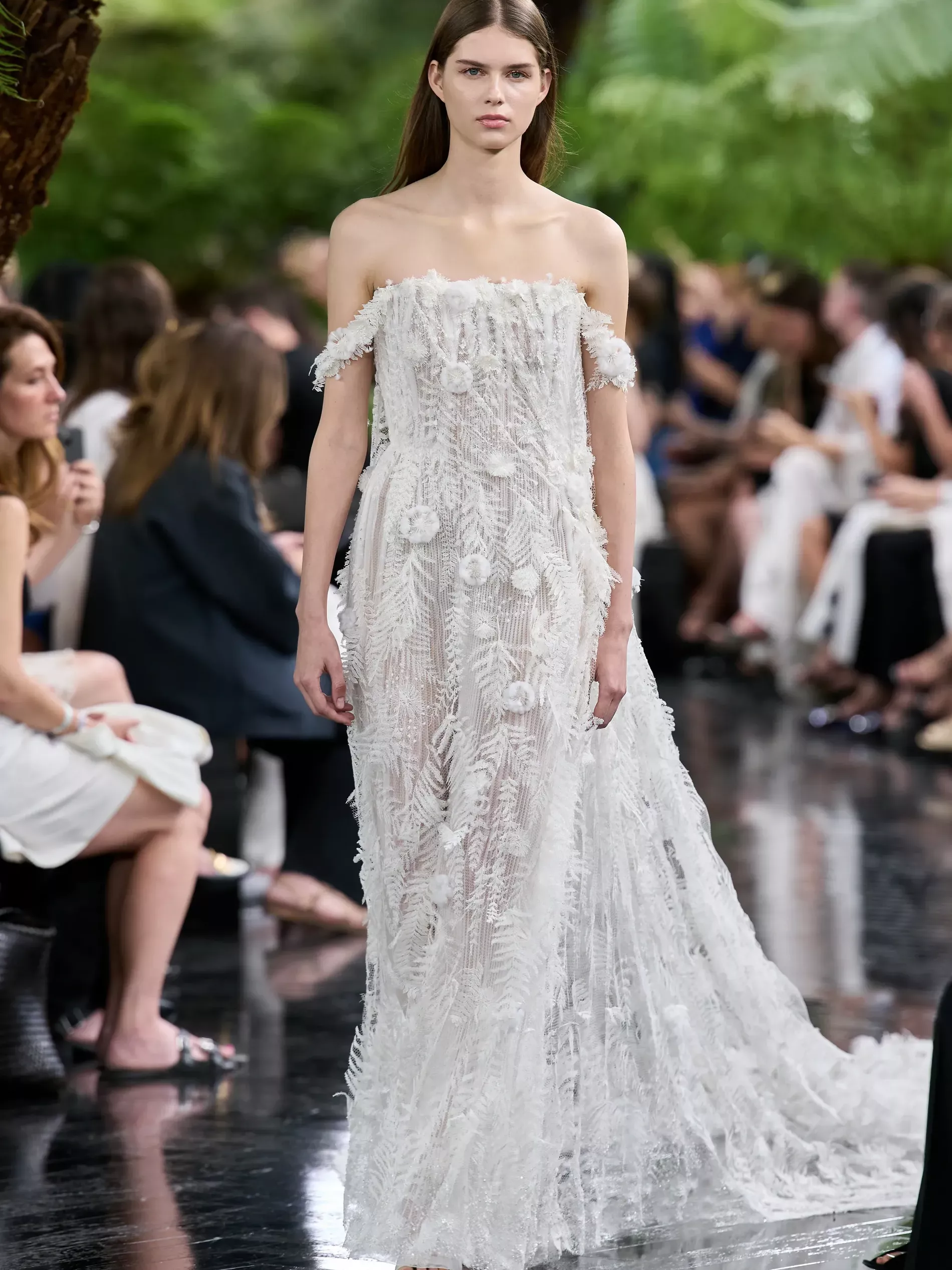
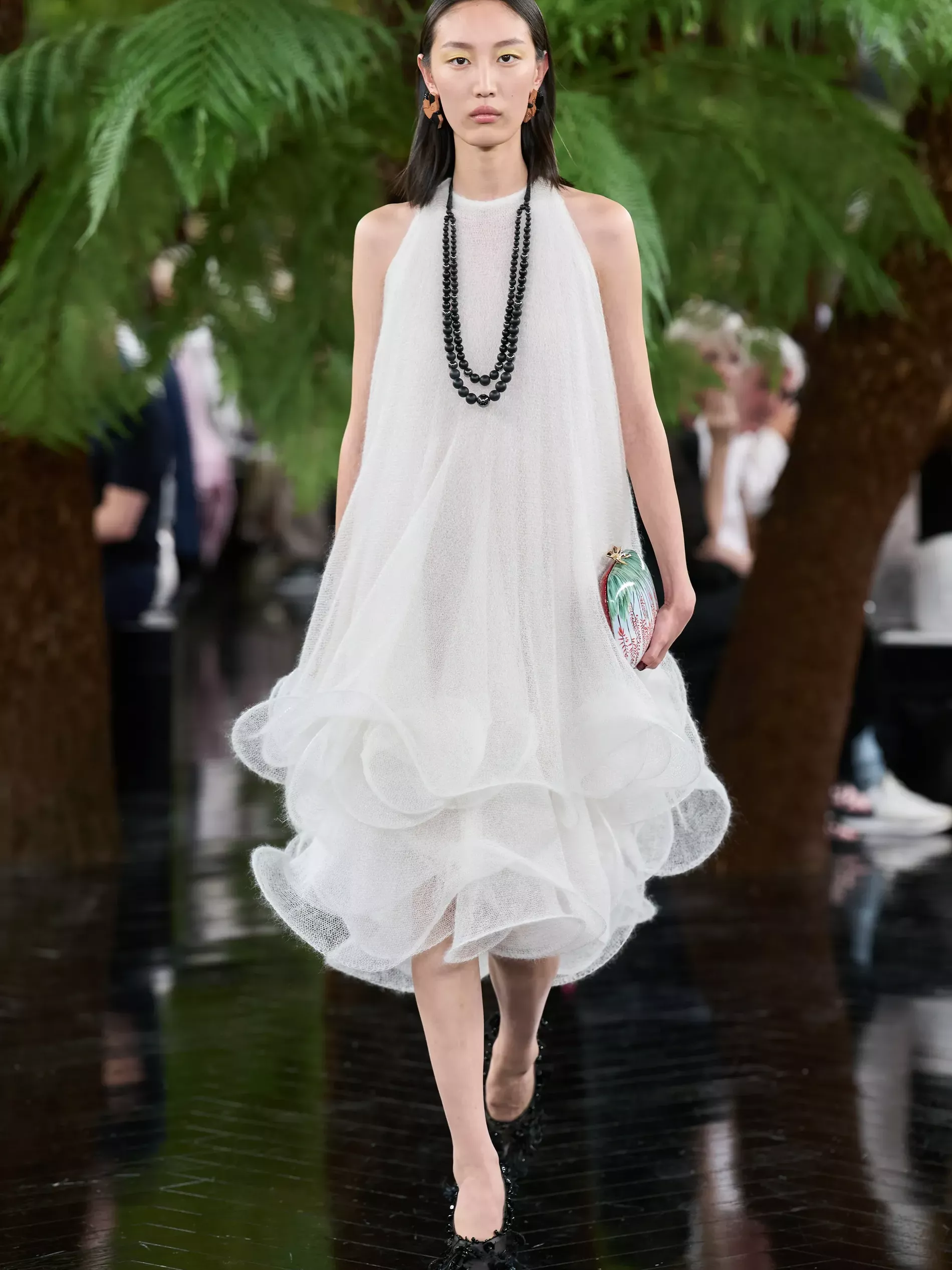
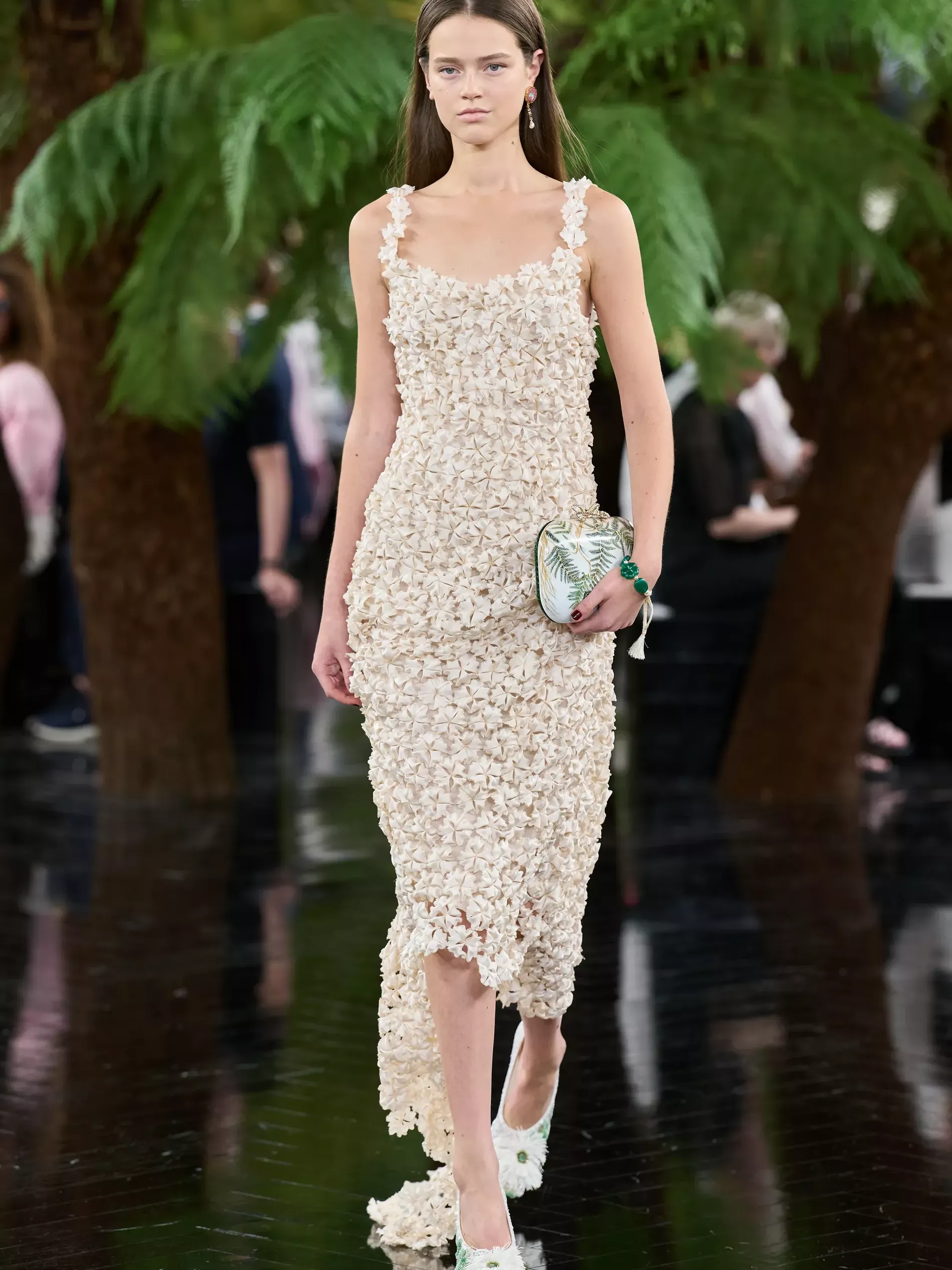
For its latest couture outing, Jonathan Anderson's Dior built its collection almost entirely from the physics of the fold. Inspired by American sculptor Lynda Benglis's tactile works, Anderson worked a vocabulary of pleats and plissés, multiplying and doubling back on themselves. No wonder we came away big fans
As per usual, Jonathan Anderson is minute in his world-building. Case in point, the invitations to Dior's autumn/winter '26 couture show in Paris: an anonymous black fan nestled in a white Dior box. While you'd be forgiven for assuming it was some last-minute reaction to the heatwave that has struck Europe, you'd need only take one look at the collection to stand corrected.
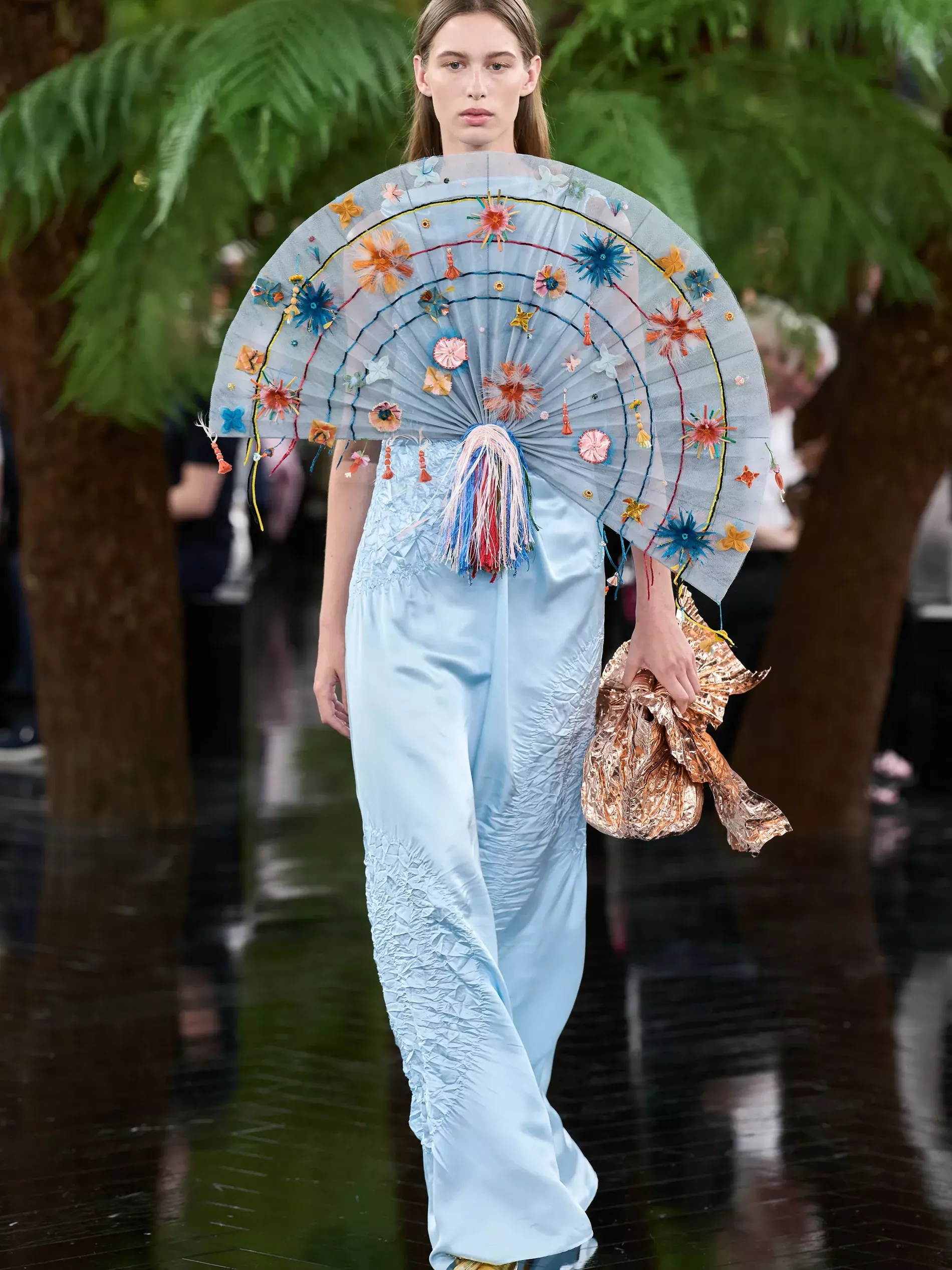
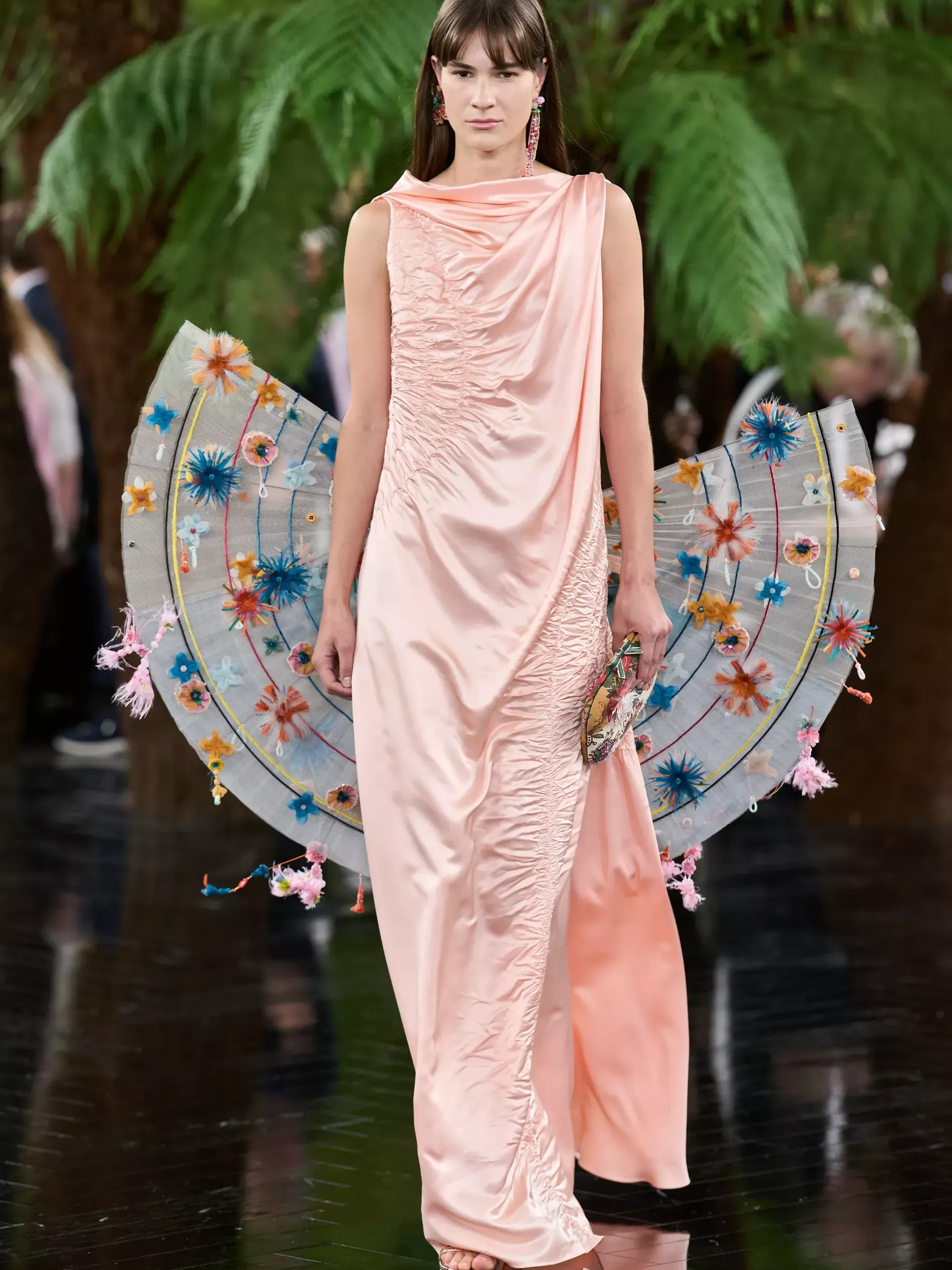
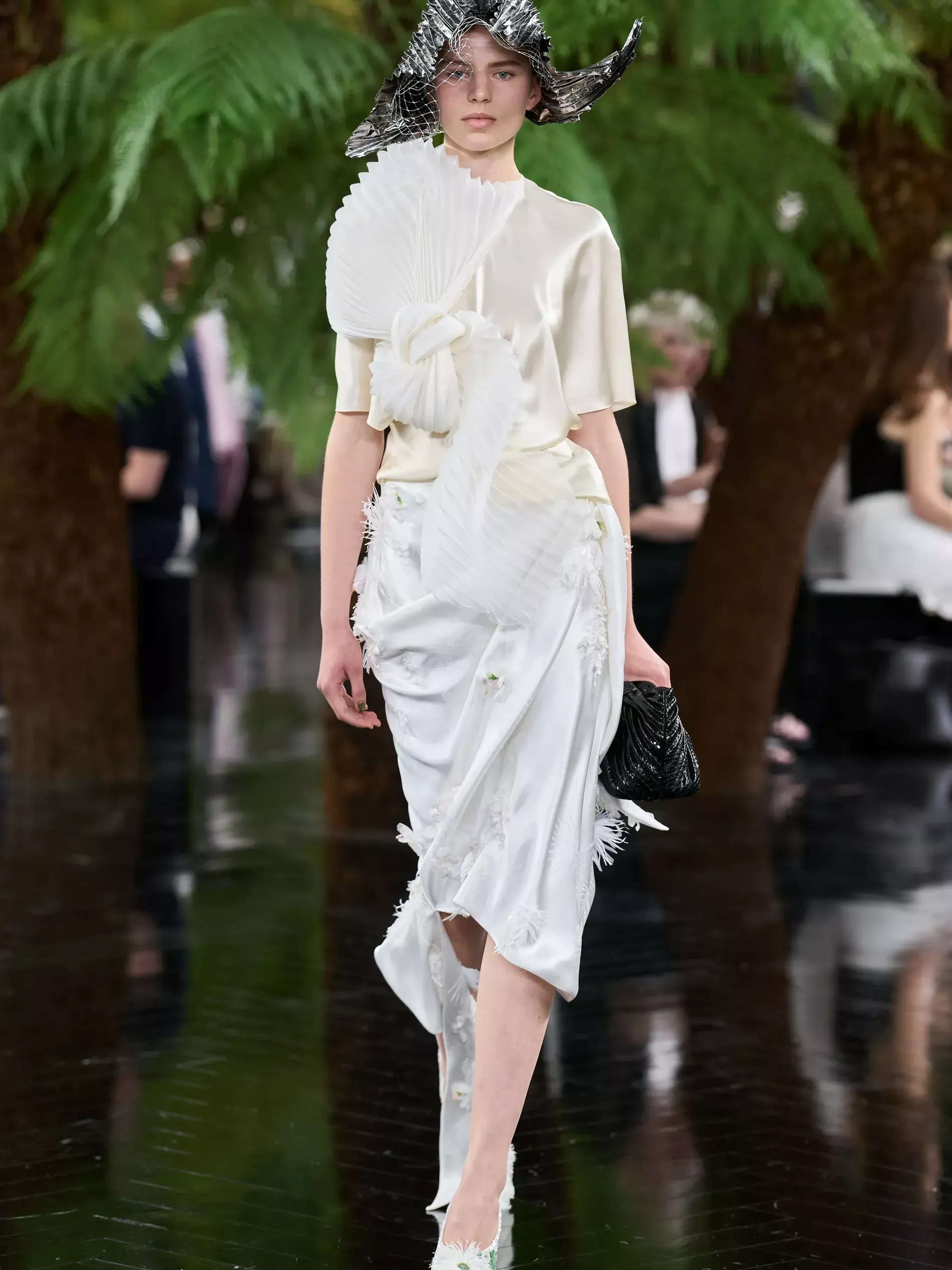
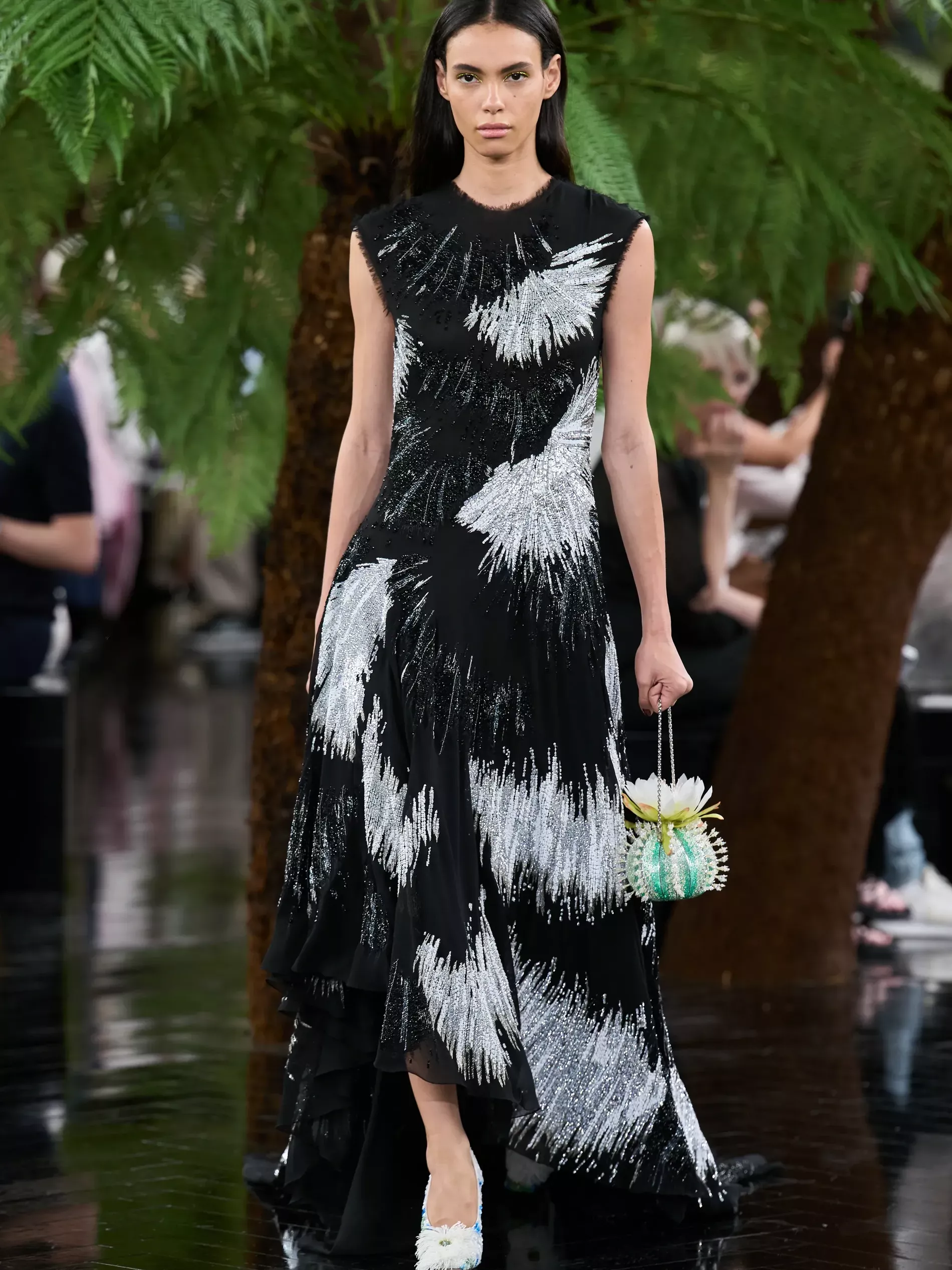
Fans proved to be a notable feature throughout the collection. Yes, there were the obvious fan-shaped constructions adorned with playful brooches and a plume of coloured tassels. But under closer inspection, even the smallest detail of his folded fabrics could be traced back to the folding fan. Sparkling silver embroidery exploding like fanned-out fireworks across a black evening gown. Or the pleats, fanning from a central knot on a silver dress.
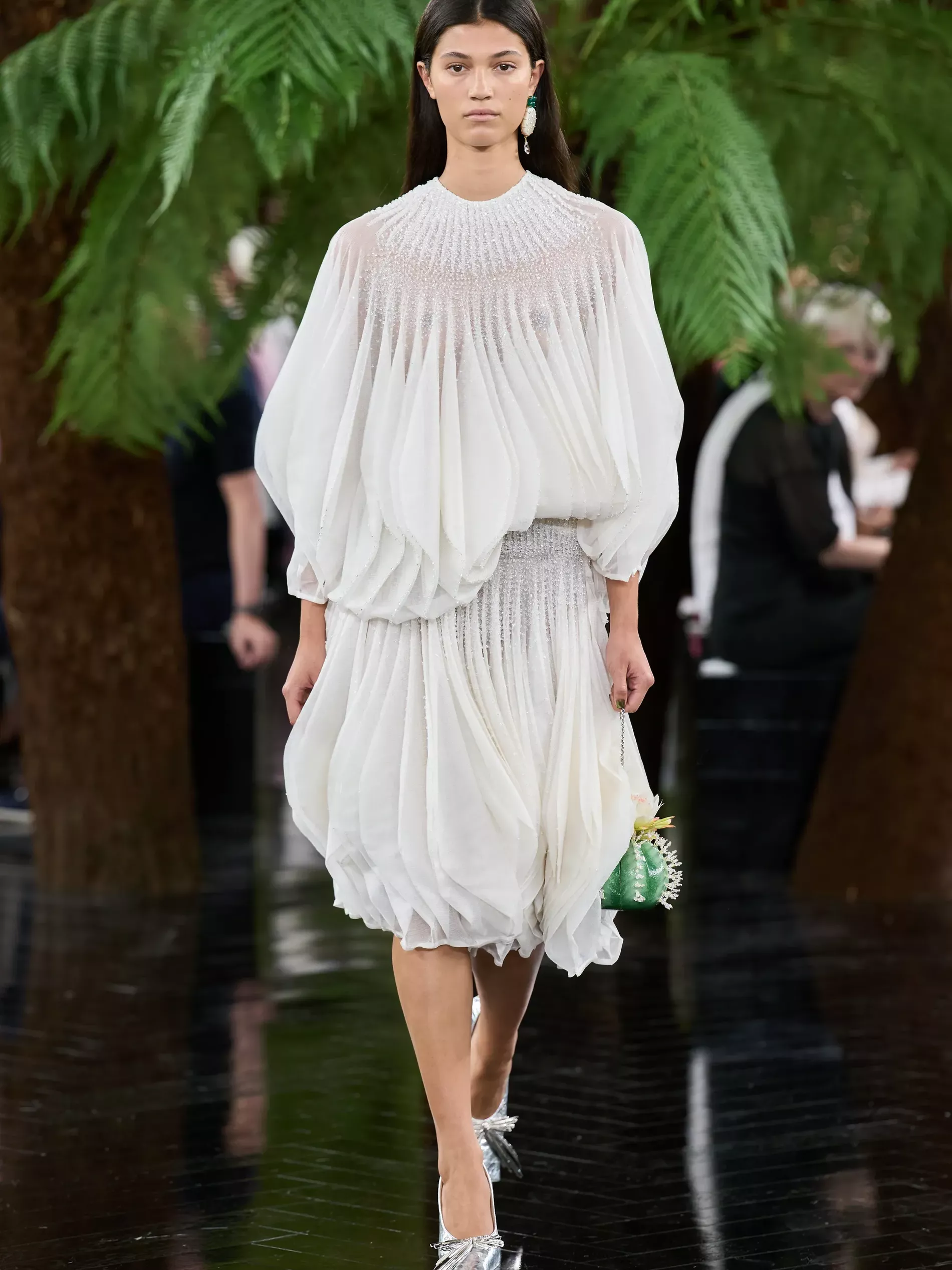
Pleats were, as it happens, another red thread throughout the collection. Gossamer petal pleats danced as models walked the runway. Structured Bar jackets with standing collars fanning out behind the neck were sculpted with waist-kissing folds. Hip-enhancing gathers graced skirts and tailored trousers. Everywhere on the runway, we could easily play a never-ending, and impossibly difficult, game of I Spy.
None of Dior's moulding and folding was purely decorative. It never is with Anderson. A fan, after all, is a piece of engineering that turns a flat plane into a three-dimensional gesture, and that transformation sits at the centre of couture itself. It's also, as it turns out, a response, in the language of couture, to the American sculptor Lynda Benglis. While many of her pieces begin in two-dimensional materials, they come to life when knotted, pleated or moulded into sculptural objet d'art. Anderson takes that shared mechanism as his starting point, elaborating on hand-plissé, weaving and draping throughout the collection.
Benglis's Peacock series, begun in the late 1970s after weeks spent watching the birds that wandered the grounds of the Sarabhai family estate in Ahmedabad, anchors much of this. The bird's brash tail first unfurled in Benglis's sculptures before becoming fan-fixtures on Anderson's runway. Elsewhere, the series resurfaced through embellishment: colour layered upon colour, beading built up until it seemed to mimic feathers.
The trail from Ahmedabad led Anderson further into Indian craft, and specifically to chintz, the hand-painted or block-printed cottons India exported to Europe from the 18th century onward. Actual fragments of it – antique chintz and indiennes, tracked down through a specialist dealer – now sit on the house's Petit Dîner and mini Lady Dior, small collaged panels of history stitched onto the bags. Benglis's own surfaces get comparable treatment elsewhere: metallic, iridescent, encrusted, and paper-like fabrics conjured by the ateliers, including, in one case, a passable illusion of chicken wire spun from soft silver netting.
Below, discover Dior's full autumn/winter '26 Haute Couture collection.