
As Robyn makes a long-awaited return to the stage, donning Acne Studios, the Swedish superstar reflects on the vulnerability of love, her new pop single 'Dopamine', and having confidence in her musical (and clothing) choices at this point in her career
It doesn’t rain much in Los Angeles, but last week at the Fonda Theatre – where the Swedish pop star Robyn performed new material for the first time in seven years – hundreds of fans still turned out after a record rainfall, lining up outside the venue for blocks to see her live.
Working together with Spotify, the Stockholm brand Acne Studios set the scene for Robyn’s big Hollywood bash. The event was open to her top Spotify listeners, as well as a slew of VIPs: Sky Ferreira, Adéla, Lykke Li, Kyle MacLachlan, Miranda July, Jordan Firstman, and Vivian Wilson among them. Before her set began, however, Robyn’s opening acts, DJ Brownskinhazel and singer Isabella Lovestory, treated fans to the bass-laden rhythms of reggaetón, which shook the walls of the near-century-old theatre.
By 10 p.m., the stage lights dimmed into a smouldering red. Sporting an oversized bomber jacket with a black lace bodysuit and nylon tights, Robyn emerged from a cloud of smoke singing her 2018 torch song 'Missing U', its lyrics heavy with meaning. (“All the love you gave, it still defines me,” she sang, her hands outstretched toward the crowd.)
Robyn would regale fans with 15 songs in total, including highlights from the catalog she’s honed for more than 30 years – dance-floor essentials like 'Call Your Girlfriend' and 'Dancing on My Own' – and her new single, 'Dopamine', a sparkling work of scientific, four-on-the-floor pop inspired by the human body’s neurochemical reaction to falling in love.
“When you’re in it, you know that you are being really stupid and just taken by the moment,” Robyn, 46, told me in her dressing room before the show. “It’s a very vulnerable place to be, but it’s also a very beautiful place to be.” Lounging in a nude Acne slip and patent-leather blazer, the hitmaker spoke candidly about her style, writing new music, and her thoughts on the state of pop today.
Vogue: How would you describe your style, in general?
Robyn: It’s kind of homemade. I always go back to what I used to wear as a teenager, like Doc Martens and hoodies. Acne is cool because they’re in Stockholm – I go there, and they can fit stuff to my body. Style is about your body and what feels good, [because] everybody looks so different. There’s nothing better than knowing you feel good.
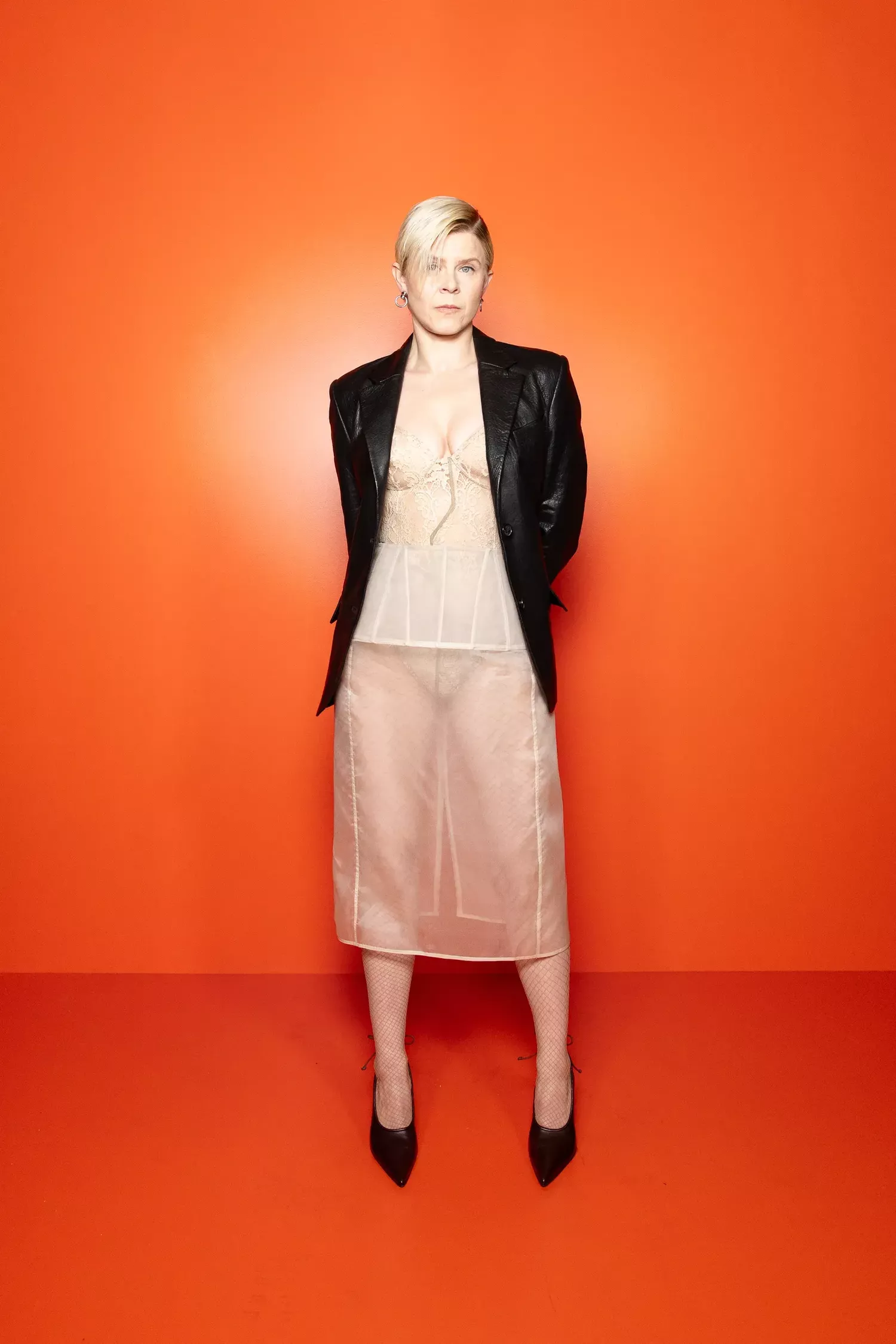
Photo: Jason Sean Weiss/BFA.com
You have a new record on the way, possibly next year. What has your life looked like during the seven years since you released your last album, Honey?
I just stayed in Sweden and buckled down. I was still doing shows [in 2020] when everything started to close down. Then it was locked down and I didn’t leave Sweden for, I don’t know, three years or something? So I started to make new music, [and] I usually make music with Swedes, so I didn’t really have to go anywhere. I was in the studio quite a bit in the beginning, then I had a baby.
Congratulations, by the way!
Thank you!
Let’s talk about your new song, 'Dopamine'. You actually wrote it 10 years ago. What needed to happen to make the song feel complete?
I don’t know exactly why it took so long. I wrote it together with Klas [Åhlund], who is my longtime collaborator. I kept it for a really long time. I even sent it to Daft Punk as an early demo to see if they wanted to produce it, before I even knew that I was making this [album] that I’m preparing to release.
Before Honey, I didn’t really know how to make a pop album, and I knew this was a pop song. What I was making before was much more nonlinear. It didn’t have choruses in the same way. It was referencing the way you listen to music in a club. ['Dopamine'] felt very different. It was one of the first things that I pulled out of my drawer when I went back into the studio in 2020, then Klas and I wrote these verses that were in a speaking tone. That’s when I knew that I was going to finish it.
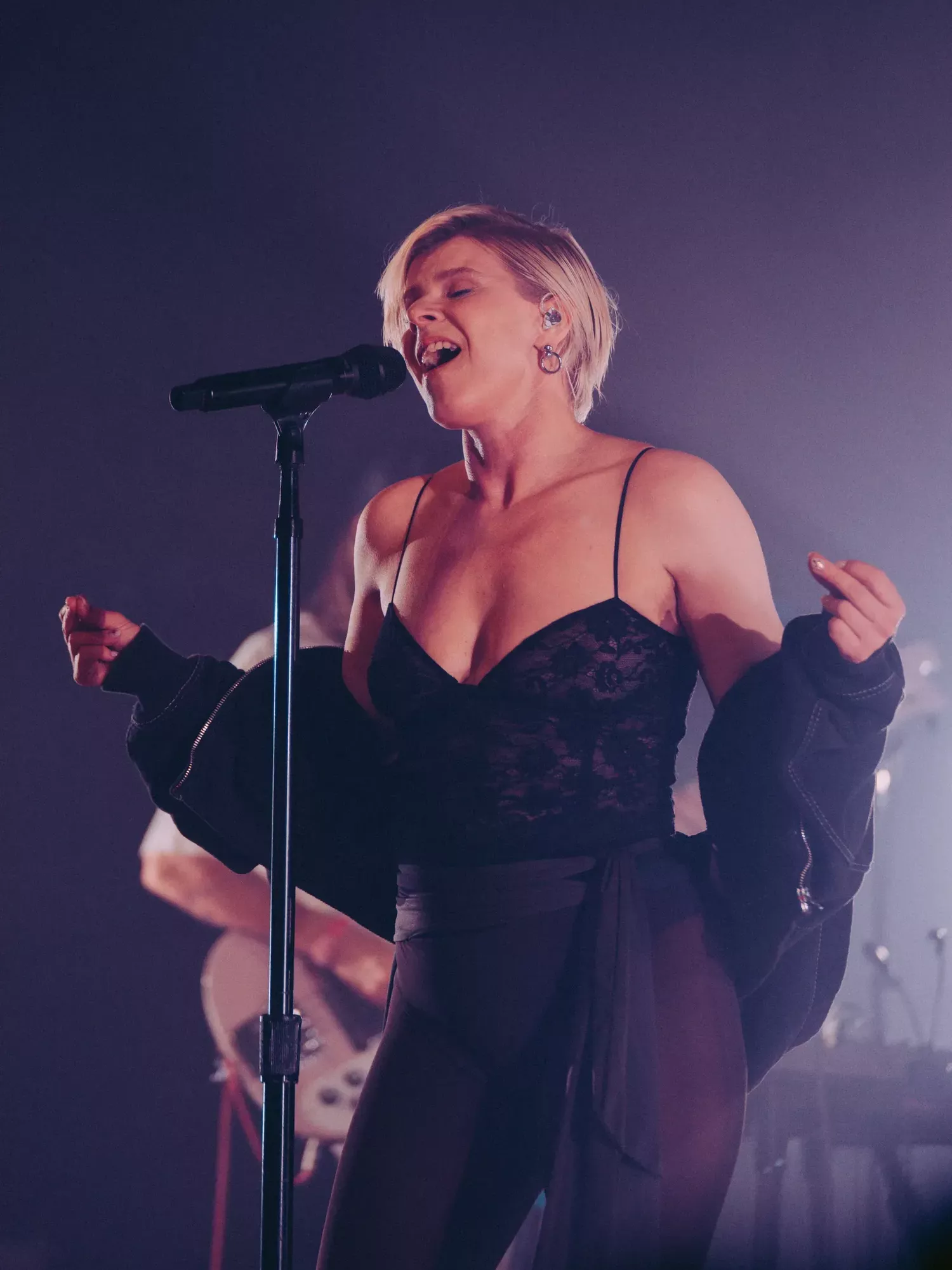
Photo: Courtesy of Acne Studios
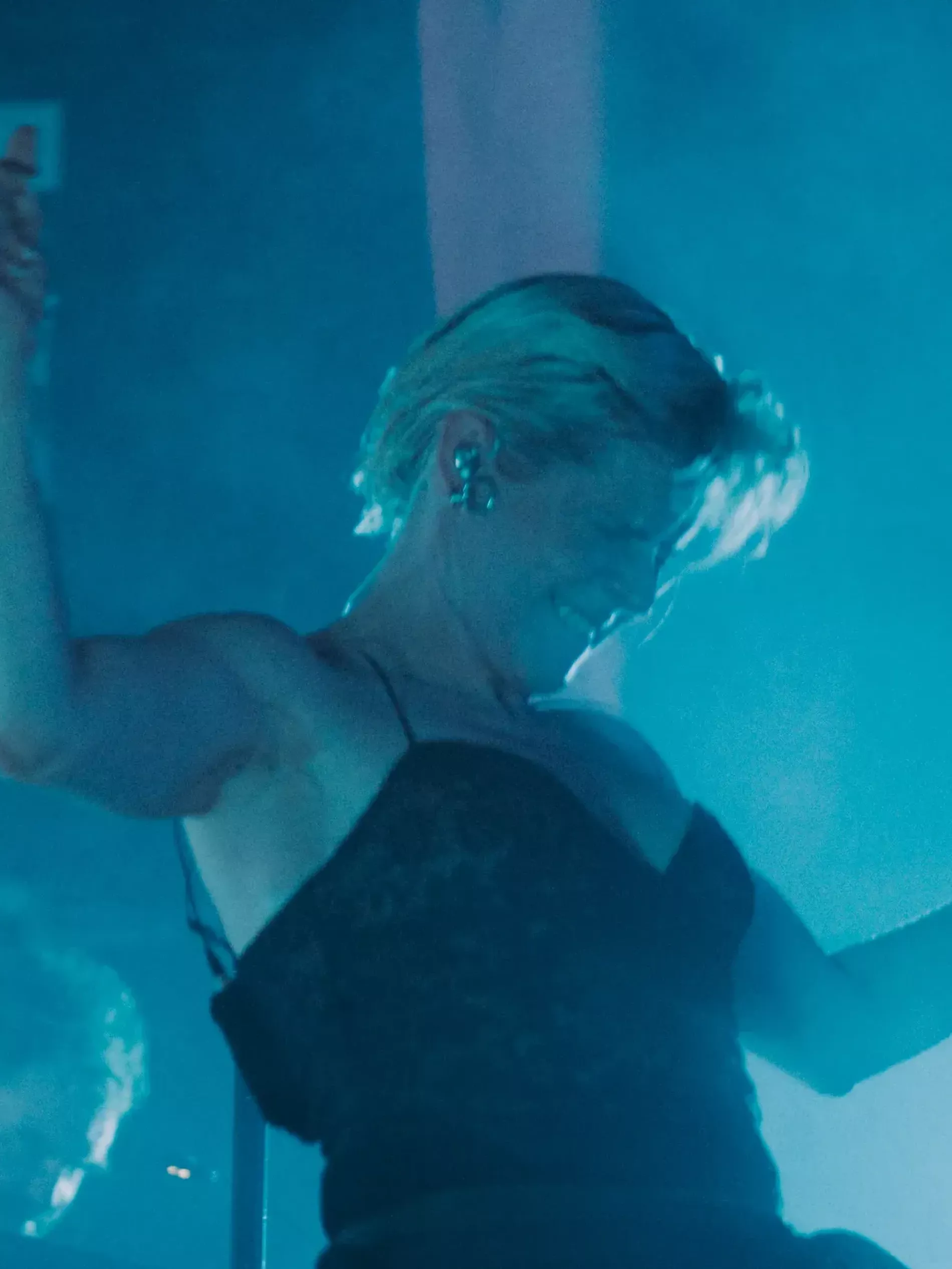
Photo: Courtesy of Acne Studios
Your music always felt like dance-pop medicine to me. What is your songwriting process like?
Klas and I always talk about emotions. He reads books, not academic science, but science that is more commercial…
Pop science?
Yeah, he reads pop-science books, and so do I. We both enjoy writing about the pure emotion of love and not complicating it so much – getting down to the science of it but also the way that it’s really uncontrollable. When you’re in it, you know that you are being really stupid and just taken by the moment. And it’s a very vulnerable place to be, but it’s also a very beautiful place. I think people are very – or I have been, at least – afraid of losing control. To be in that extreme emotion – to be vulnerable – is so beautiful.
A song titled “Dopamine” is so appropriate for today, when people’s lives are centered around chasing dopamine, especially online.
We’re trying to figure out how to dose it, right? But this song is trying to describe that feeling when you can’t control it. And it’s really a part of being human, I guess. Dopamine is really what drives popular culture nowadays, and it always has been. I mean, dopamine is like the rush you get from music as well. It’s not a bad thing, really!
I feel like people are trying to chase the dopamine of love, but in lower octaves: You go on a dating app, you go on Instagram, you post something, people like it, and you’re like, Yes, give me more!
Love is the crazy one. Love is the scariest. It frightens people, but that’s what we’re chasing at the end of the day. Human interaction is so different now. Physical meetings are not as common, so we get our dopamine from interacting on the internet. But the real meeting is something more precious.
On that subject, what keeps you and Klas working together after all of these years?
We have this stamina for being uncomfortable and working on things for a very long time. Sometimes when I work with other people, it drives them crazy, how long I want to work on things. I don’t think that you can overwork things – I just think you get to a new stage with things. And I really enjoy doing that with Klas because he’s as obsessive as I am. We understand each other, which is very crucial. You have to understand each other when you have that kind of relationship. It’s like an old marriage relationship. It has ups and downs, but we managed to work our way towards a whole new [level of] excitement this time. I’m really proud of us, actually!
You should be! Your studio sessions sound therapeutic.
We never went to therapy, but it’s like we went to therapy. We’ve talked about our emotions and our experiences for 20 years. We’ve done more work than most couples do. I love him. He’s one of my best friends.
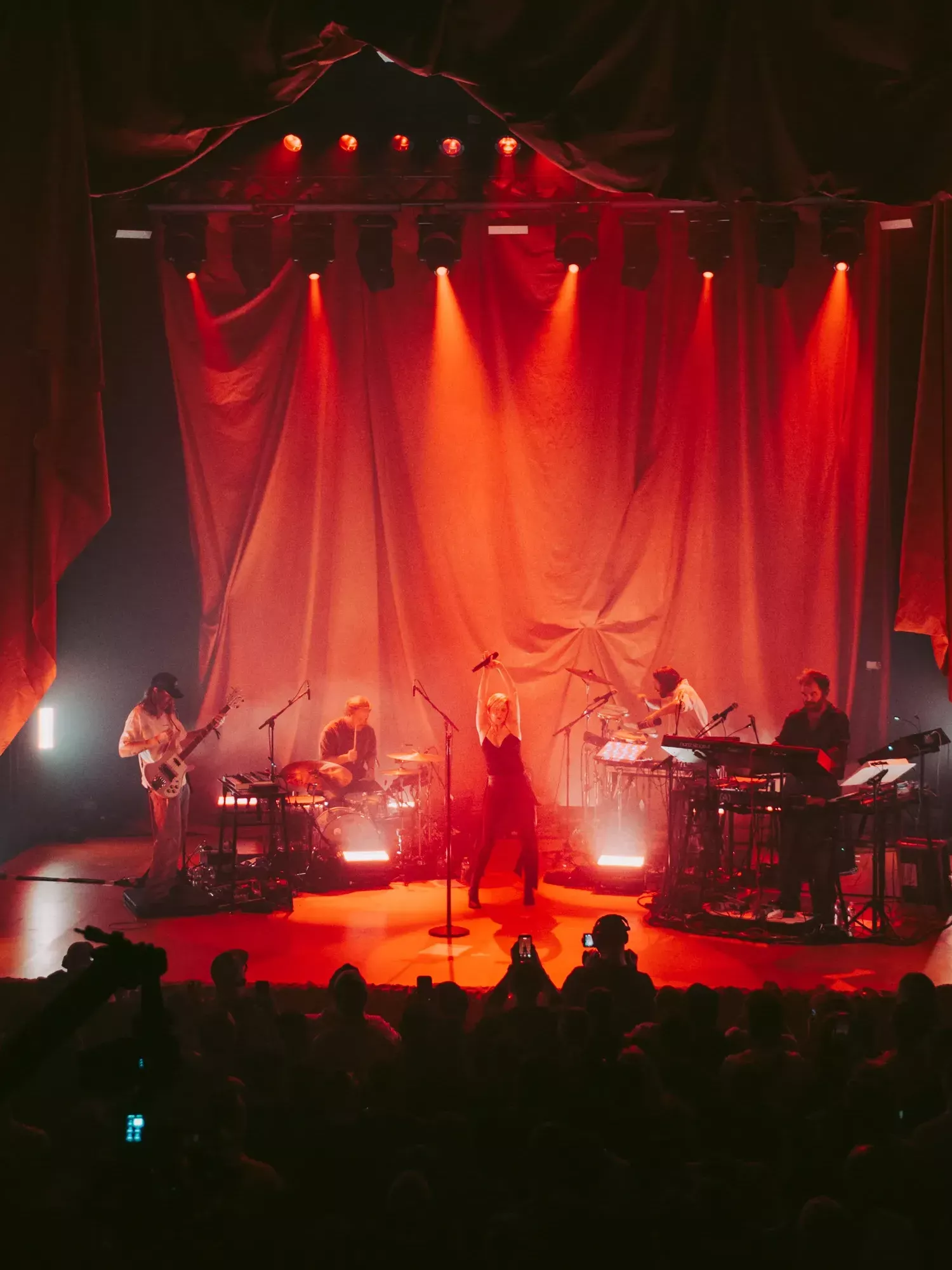
Photo: Nicole Busch, courtesy of Acne Studios
It’s been 30 years since you released your first album, Robyn Is Here. What has given you hope for pop music since then?
The music industry is so much better now than it was when I started. One of the most important things for me has been working with amazing songwriters the whole way through. Unfortunately, most of them have been men, and I’m trying to work with more women. But writing a good song is still what gets me off – like it’s a hobby or an obsession. It never had to do with the industry or having a career or trying to calculate where I’m going. It’s something I really love to do. When I started I [wanted] to make pop music in a way where you still felt like a person. It was a very different time, and people weren’t looking at pop music in that way. I just stuck to my ideas for as long as I had to and [brought] people with me.
You’ve done a great job of supporting new generations of women coming up in pop—I hear a lot of your music in Charli’s. How was it, teaming up with her on the “360” remix?
She asked me. She was like, “I made an album, it’s called Brat.” I was so happy she did that. We had dinner six months before she released that album and had time to talk about it before it all kind of went crazy.
In a way, I feel more connected to Charli’s age group in pop music than I did to the people that I started out with. There is this flexibility, a more fluid way of thinking about pop music that happened when she started working. I think it’s a great time for pop.
This interview first appeared on Vogue.com and has been condensed and edited for clarity