
After 15 years in the industry, model Hanna Juzon reflects on the pressures that left her body “a triumph of conformism” – and the journey to finally seeing it as her own masterpiece
Fashion allowed me to become someone else while searching for my true self. It also left my body crumbling under the relentless pressure to fit in. The pursuit of perfection – to look like my own retouched images, was unsustainable. In the prime of my youth, my body was a triumph of conformism. I was more for others than for myself. Only now, after living in six countries, having two abortions, signing up for a half-marathon (then choosing to go to a crayfish party instead), my first Botox, and countless disappointments, failures and rejections, do I get to enjoy a moment where I start to comprehend that I am in charge of my body – and I can finally see it as a masterpiece.
When we began shaping this story and photoshoot, my husband Pontus suggested photographing my body on pedestals, just like an art piece: cherished, unique, a masterwork. It was a way to flip the fashion industry’s objectifying narrative, reframing my body not as a product but as a celebration of all it has endured: resilience, perseverance, strength, independence, and the simple fact that my livelihood relies on it. Wearing The Row’s black scuba bodycon dress underscored that fragile duality of feeling powerful in your body. For me, it meant overcoming doubts and continually choosing the quest to feel better. the tension between doubt and the ongoing choice to feel powerful in my own skin.
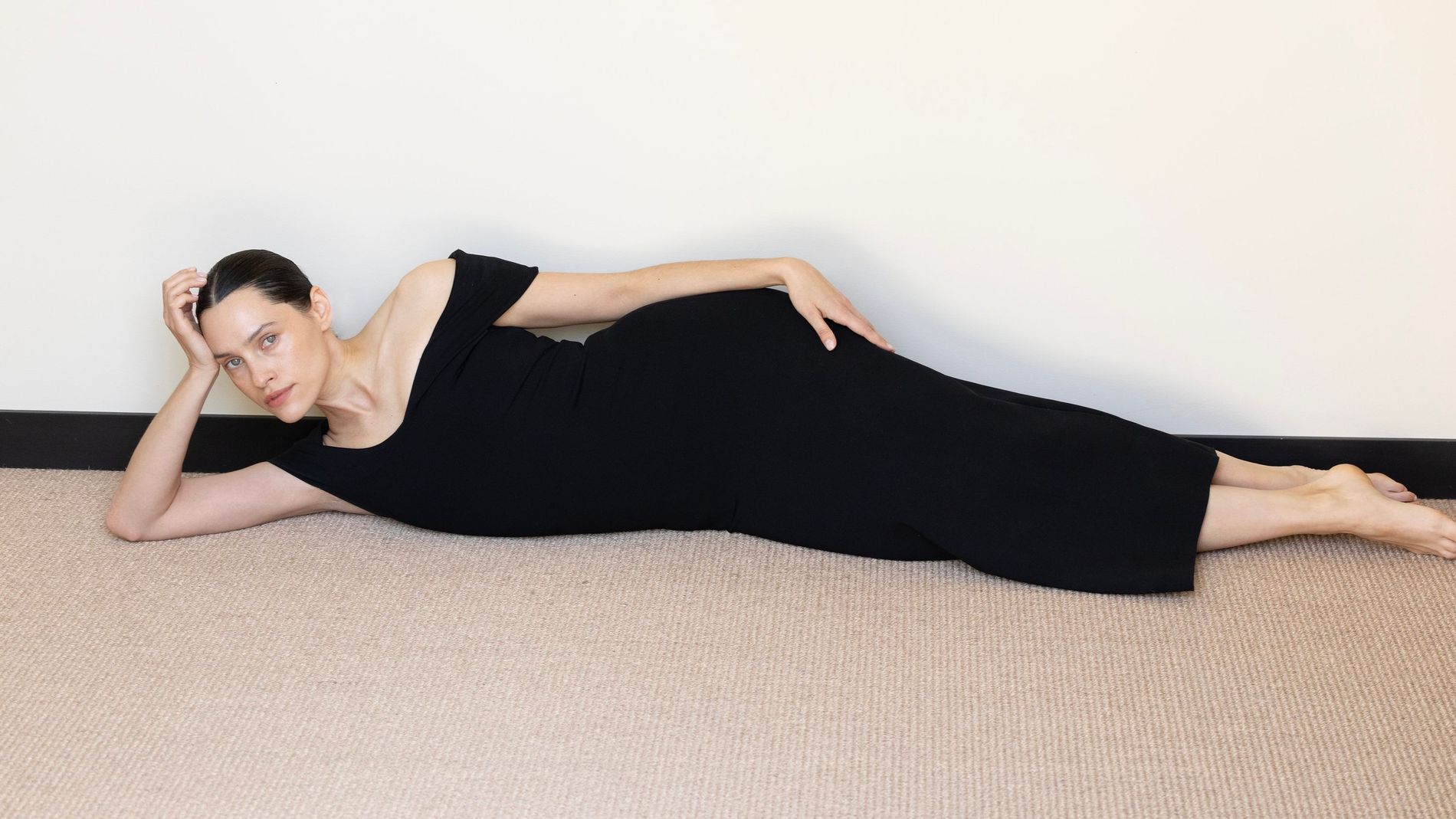
Wearing The Row's black scuba enhanced the feeling of both fragility and power in Hanna's relationship to her body. Photo: Marysia Eriksson
We played with wrapping my body with odd fabrics that distorted my features. Body dysmorphia is when one can’t stop thinking about, looking at, and concealing a particular unloved part of the body – experiencing profound shame and embarrassment about that feature, even though others most likely don’t even notice it. I feel conflicted about how the fashion industry neglects the youth whose hands are braided into technology. They are the ones who hold the potential to become a new, very loyal customer. Yet they simply imitate the screens, they look at perfect features, building their identities fearfully, copying a handful of very fashionable people. I suspect they are silencing their own needs and not loving their imperfect bodies that grow differently from what viral strangers show on screen.
To represent the vulnerability of youth, we photographed an embrace with J, my teenage stepdaughter. A friendly hug means more than words when a violent cocktail of emotions runs through her body (and not only then – friendly hugs are just the best). I hope she loves herself more than I did at her age, but just to be safe, I often tell her that her body is powerful, wise, and loved. We are wrapped in a blanket, a two-headed monster whose body is irrelevant.
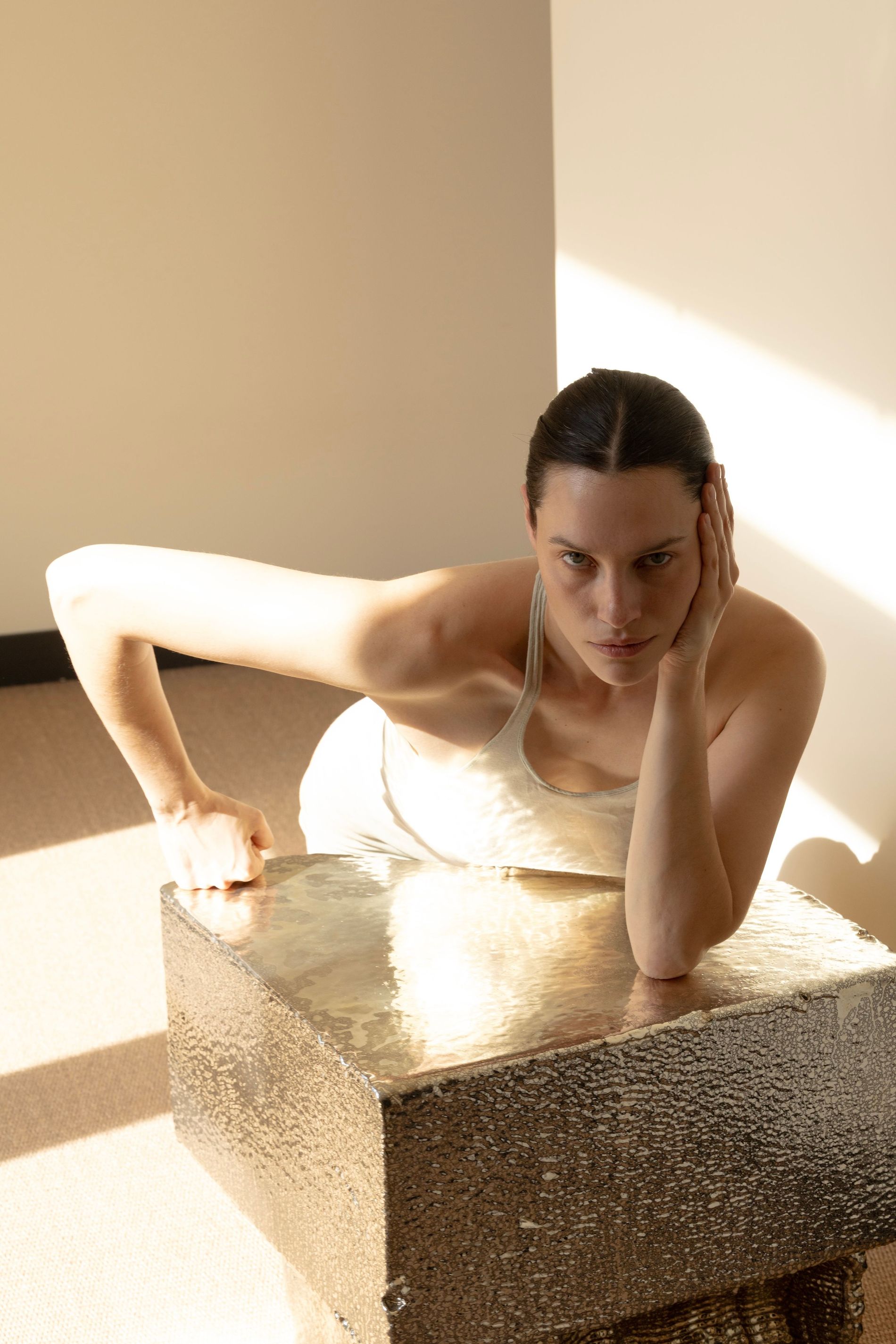
Rick Owens bodycon sheer dress. Photo: Marysia Eriksson
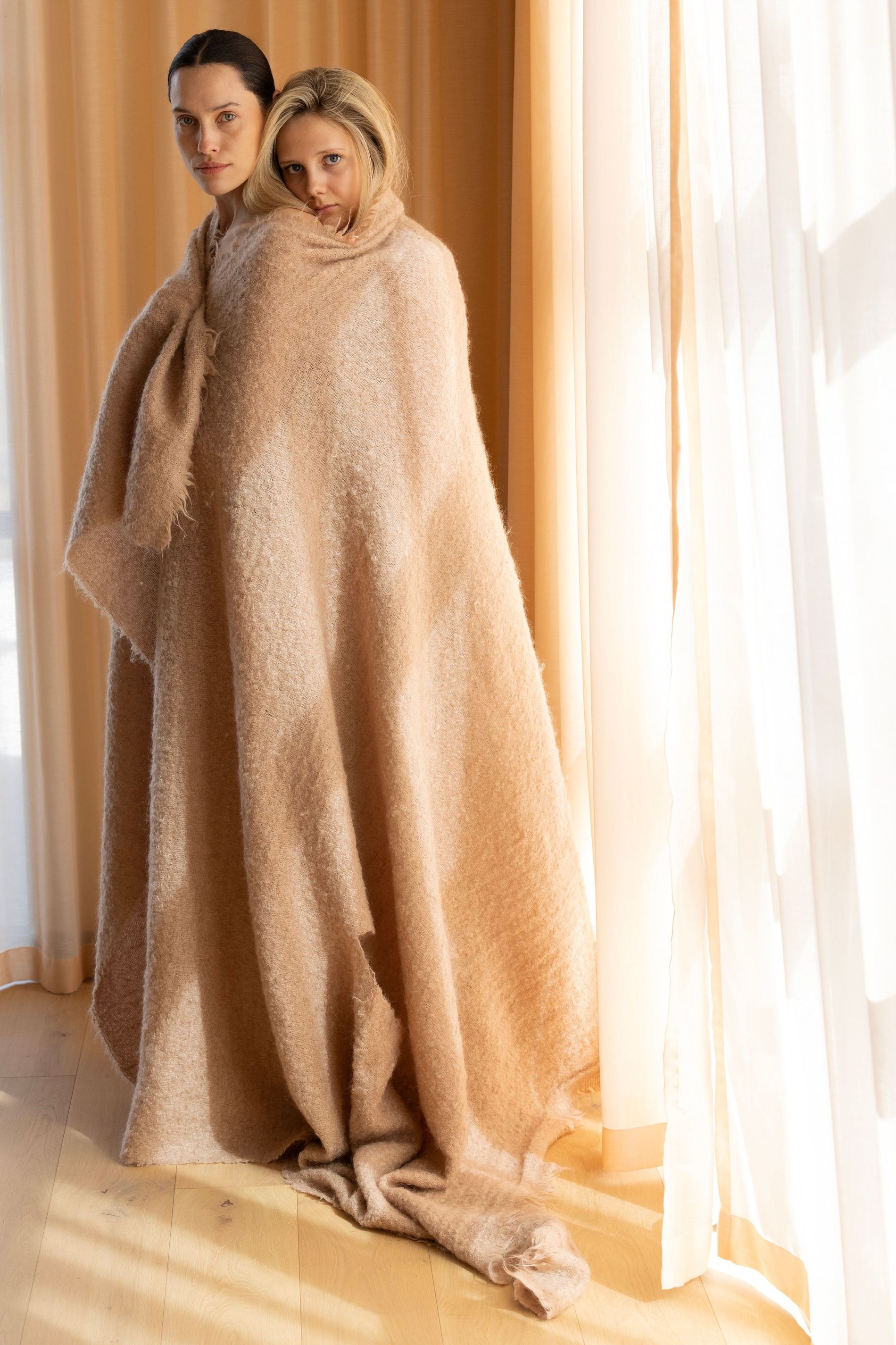
Hanna in an embrace with J, her teenage stepdaughter, to represent the vulnerability of youth with body image. Photo: Marysia Eriksson
My stint as a model has already lasted about 15 years. During this time, my body had to develop an ability to adapt to ever-changing environments, to serve different functions. Trusting talents around me was important – it was a balance between naively hoping that people are good by nature and remaining extra careful about preserving my inner boundaries. I had to accept the stare, being objectified for the commercial aspect of the job. At the end of the day, our job was to sell something – and sell a lot of it. My body was just a vessel. I needed to trust that those around me wouldn’t sexualise me, wouldn’t take advantage of me, and would, in some way, protect my body. I needed to learn not to feel exposed in front of the camera, and to allow myself to fully feel naked when my body was just for me.
My body was just a vessel. I needed to trust that those around me wouldn’t sexualise me, wouldn’t take advantage of me, and would, in some way, protect my body.
Hanna Juzon
To represent body dysmorphia, this shoot played with wrapping my body with odd fabrics that distorted Hanna's features. Photo: Marysia Eriksson
We did a series of images wearing shapewear and lingerie by SKIMS. It mirrors the plasticity of the body – the versatility in form and function. All fashion is carried on bodies; they serve such an important role in presentation, image, and strategy of a brand, yet very often the body remains neglected. Companies forget to pay buy-outs, people forget to say thank you – when the focus is on the product, humans often become secondary. We did one nude photograph to make sure the body stayed important. To me, my body is the most trustworthy judge of the situation and the most honest, strongest forever partner.
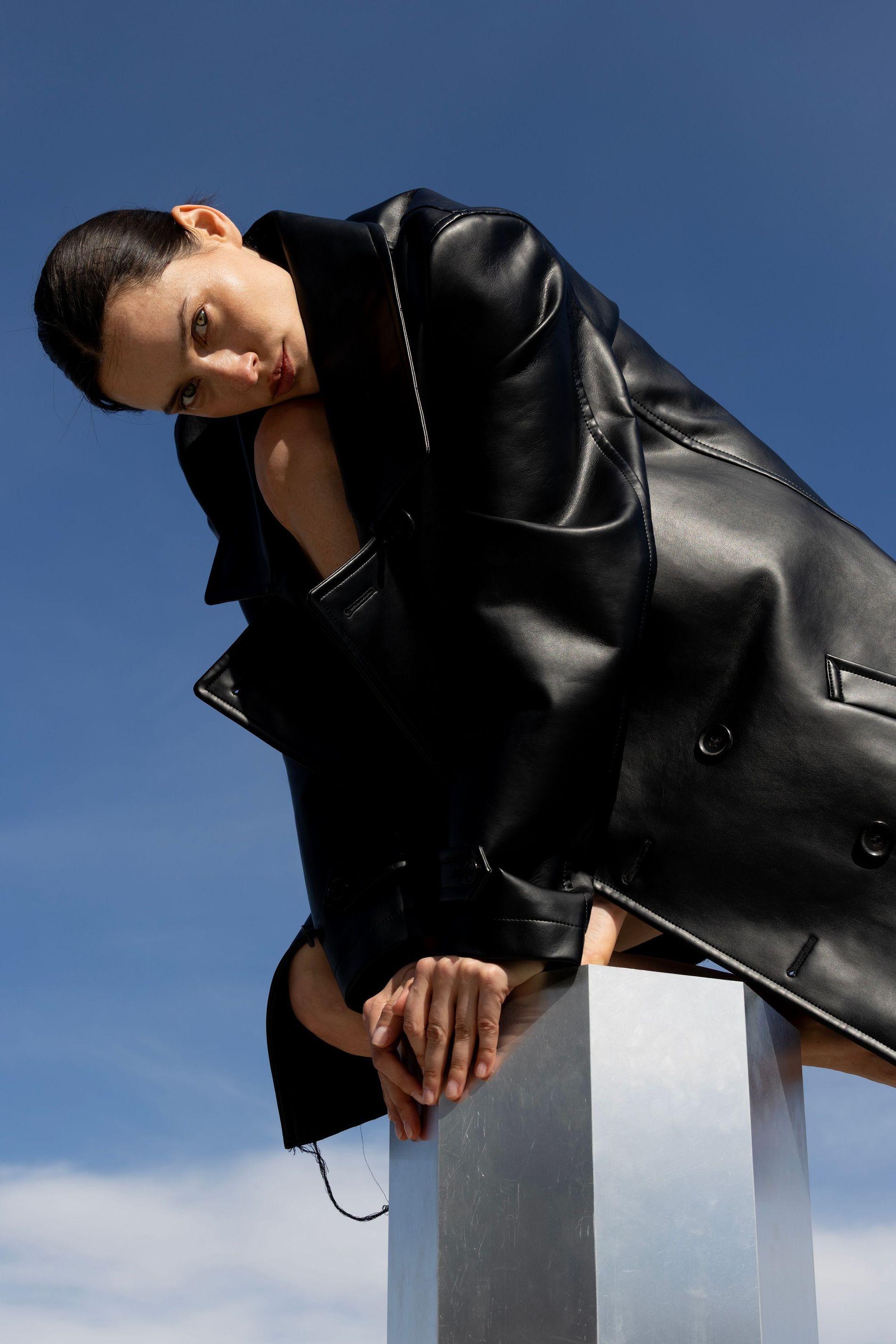
Hanna's husband, Pontus, suggested photographing her body on pedestals, just like an art piece. Hanna wears a Comme des Garçon. Photo: Marysia Eriksson
Clothes can feel like modern armour if chosen with care, instead of chosen with fear to fit in. We researched superhero poses when the idea of including a superhero landing into the story crossed our minds. I struggled to take these poses – that’s how unnatural it felt for me to embody strength. I tried it both on a silver sturdy pedestal in our garden, wearing a super-sleek Comme des Garçons jacket, and when climbing on top of a Max Lamb table, wearing a Rick Owens bodycon sheer dress. There is room to practice.
In the final image, I sat down among sculptures in our home. Both pieces – grey ceramics by Gabriella Gormley, yellow glass by Jesper Sundberg Örtegren – are about communication, pieces moulding into each other and forming new shapes that support the whole.
Dear Body, I love the whole of you.
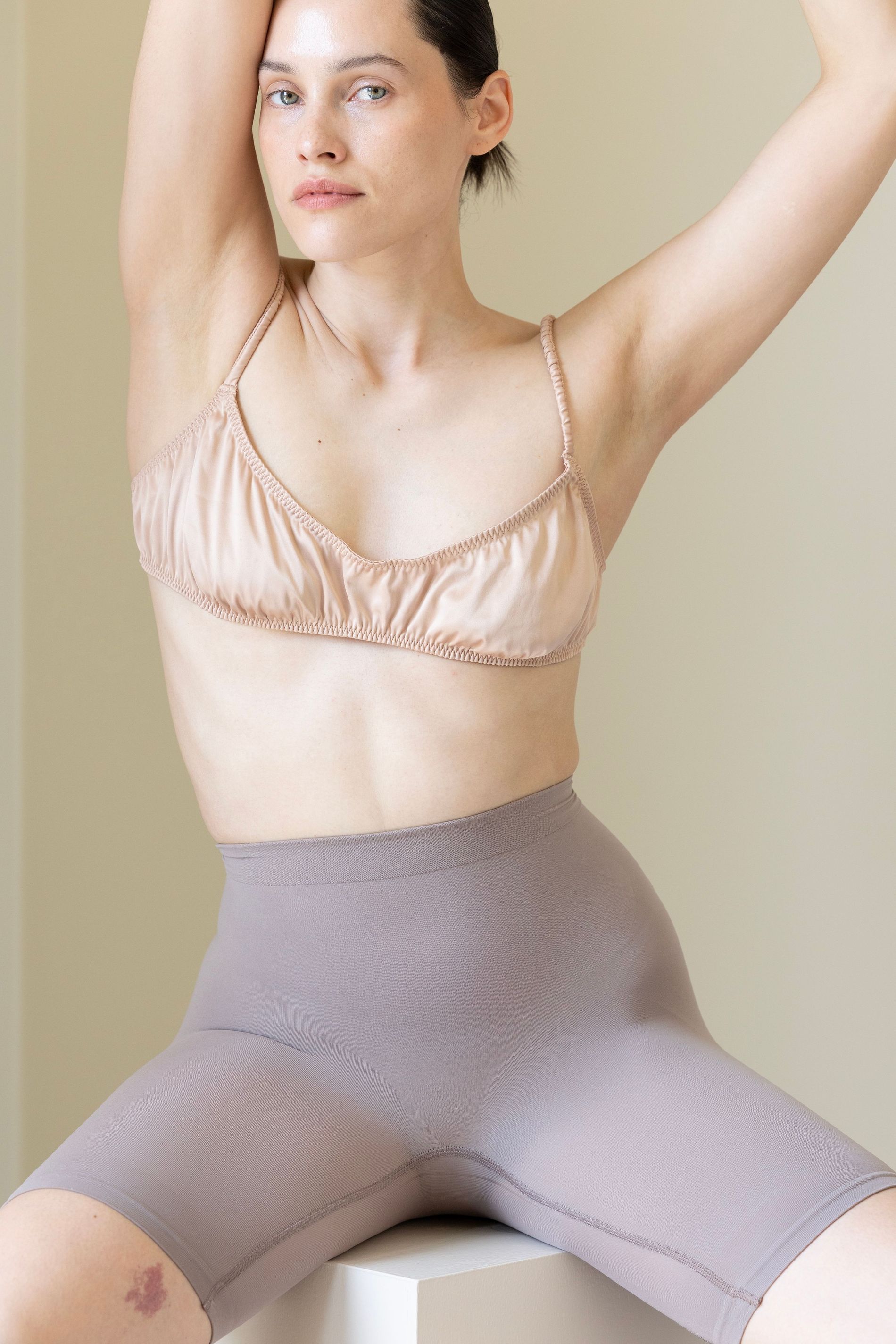
Photo: Marysia Eriksson