
In its latest stride toward broader representation, Mattel has unveiled its newest addition: Autistic Barbie
Beyond the infectious Aqua earworm, countless cinematic interpretations, and the 2023 'Barbiecore' trend, Barbie’s cultural footprint is undeniable. As an icon since the 1950s, the dolls have moved with the times, a fact never more apparent than today as Mattel ushers in a pivotal new era, moving beyond the classic, narrow image of a blonde, blue-eyed, and 'perfectly' unencumbered toy.
This profound evolution aims to ensure that a diverse generation of children, alongside nostalgic adults, can see a reflection of their own lives in the toys they choose. This commitment to inclusivity is already evident; Lila Moss fronted the campaign for Diabetes Barbie in 2025, joining groundbreaking predecessors such as Blind Barbie and Barbie with Down syndrome. Now, in 2026, Mattel is further broadening its horizon, preparing to welcome a Barbie that represents autistic people.
With 1 in 100 children globally on the autistic spectrum, Mattel, alongside the Autistic Self Advocacy Network (ASAN), unveils its newest doll, which aims to give those with the disorder a toy they feel aligns with them.
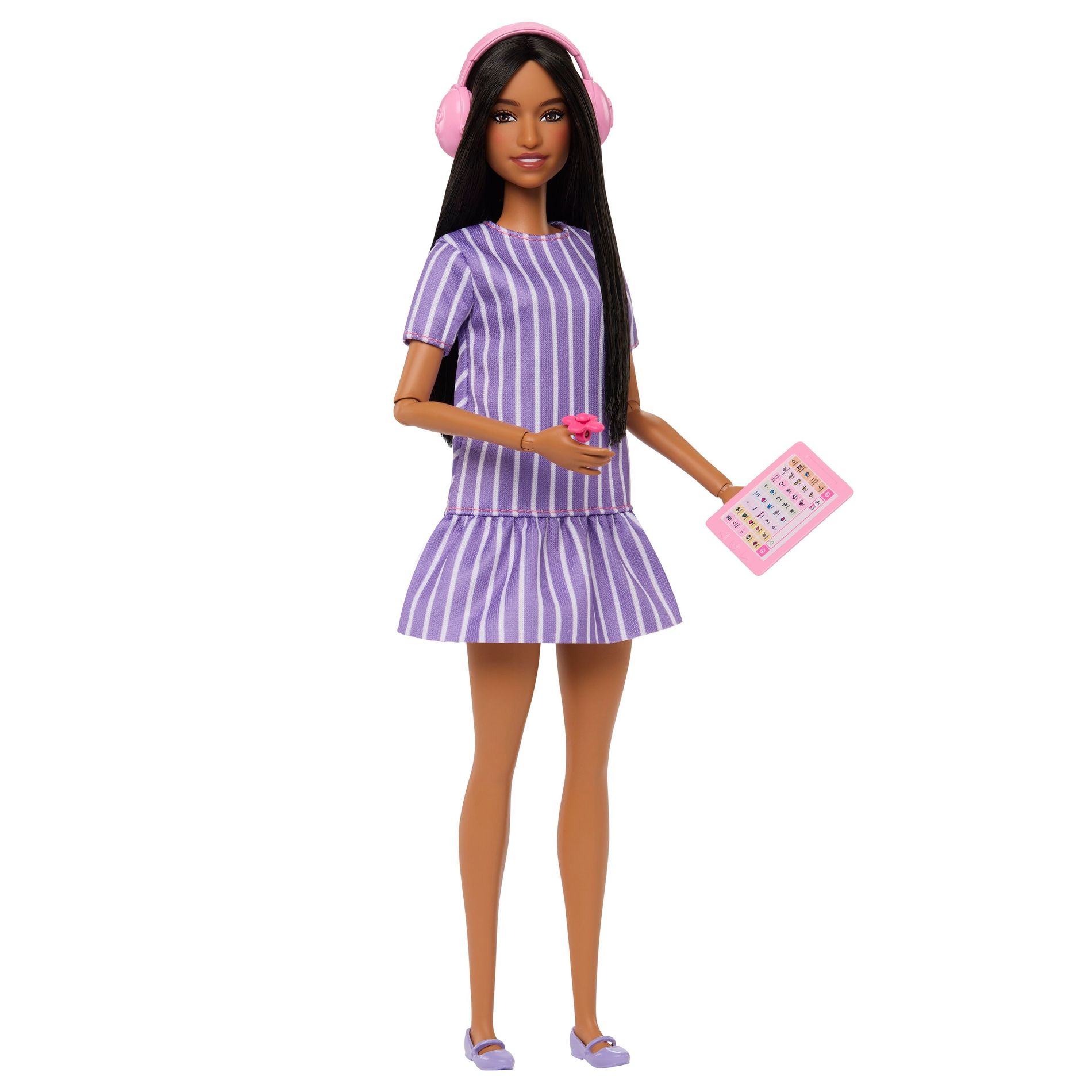
Photo: Mattel
Reflecting the lived experiences of many on the autism spectrum, several of the doll's design elements subtly reference stimming –repetitive movements, sounds, or actions used for self-regulation and processing sensory input. Furthermore, acknowledging that autism can affect fine motor skills, this Barbie's design prioritises a soft, less restrictive sensory experience. Her hair is styled loosely, and she wears a comfortable, A-line dress. Importantly, departing from the typical model's high-heel ready feet, this iteration is designed with flat feet and shoes, offering greater stability and comfort.
Being able to see yourself reflected in toys and to feel seen matters. This doll can bring joy, pride, and recognition
Karina Bundgaard, Chair of the Danish Autism Association
This particular Barbie doll also features a subtly averted gaze, a deliberate design choice that reflects a common coping mechanism for managing sensory overload. Her articulated wrist and elbow joints allow for a range of motion, enabling her to perform repetitive stimming movements. Furthermore, she comes equipped with accessories crucial for navigating stimuli-sensitive environments, including headphones and a fidget spinner. In her hand, she holds a tablet displaying symbol-based Augmentative and Alternative Communication, acknowledging its vital role as a widely used tool for individuals with verbal impairments.
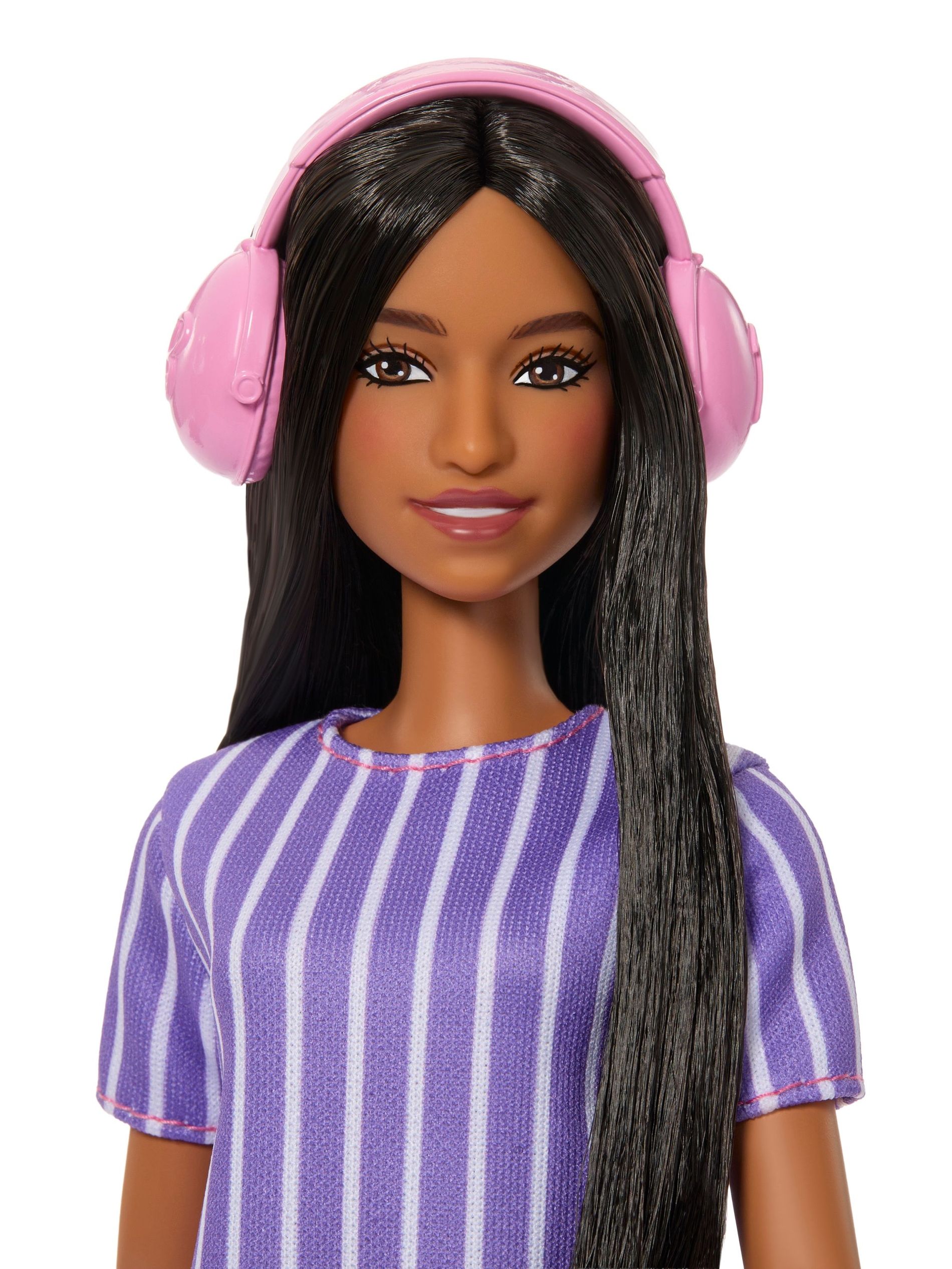
Photo: Mattel
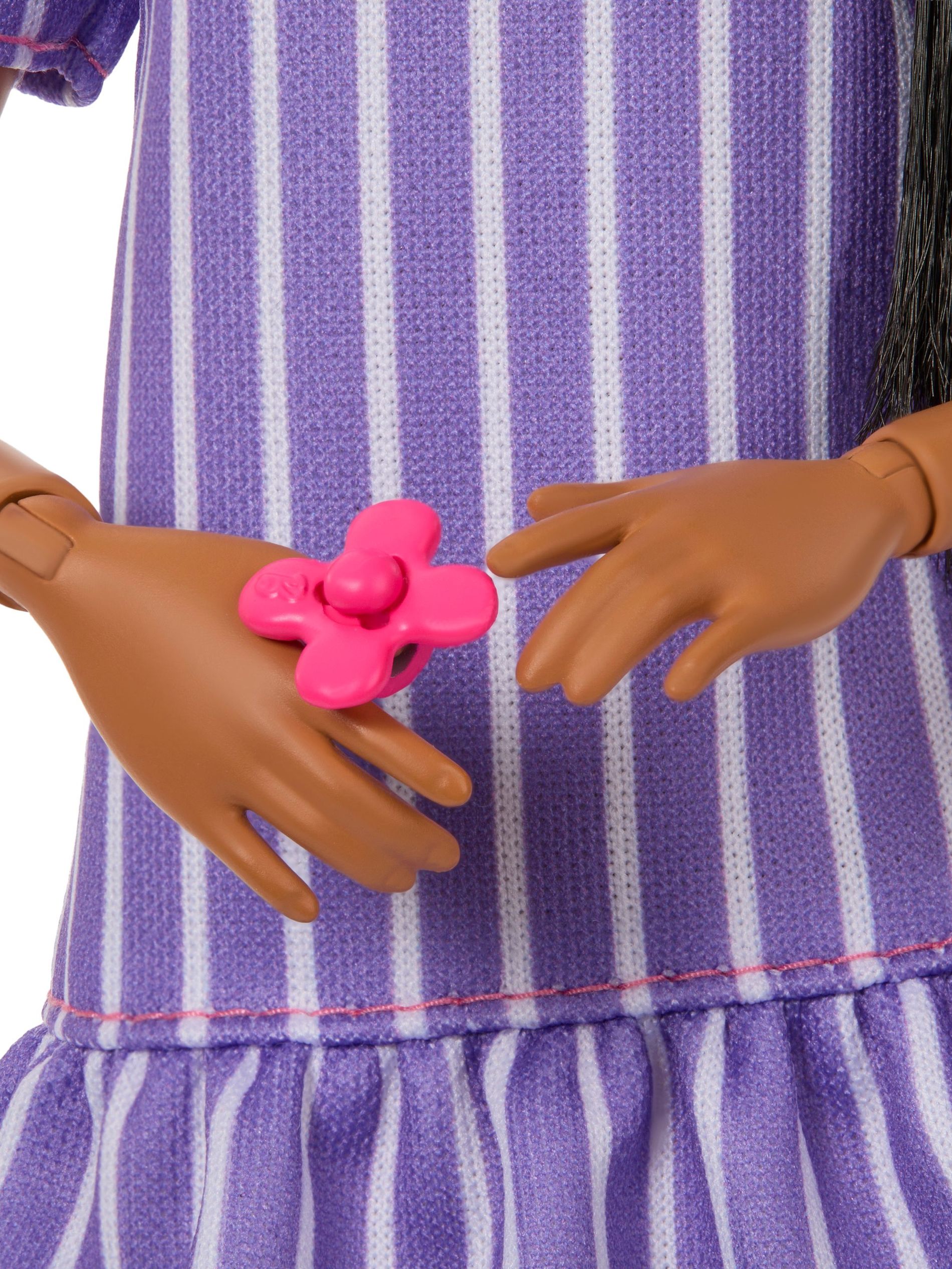
Photo: Mattel
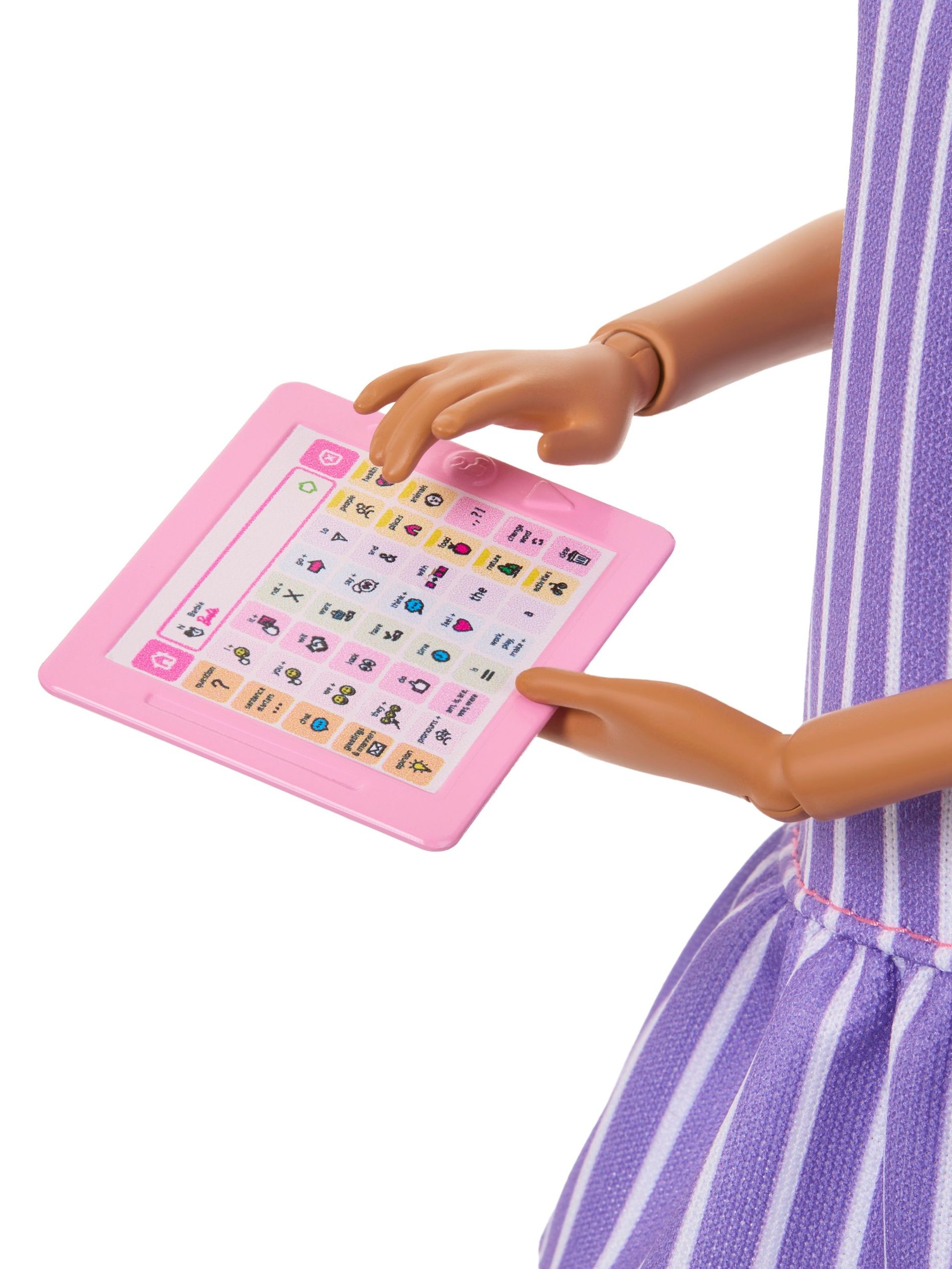
Photo: Mattel
The introduction of a Barbie doll representing Autistic people has been met with significant acclaim. "We are truly delighted – actually beyond excited – that there is now a Barbie representing Autistic people," says Karina Bundgaard, Chair of the Danish Autism Association. She emphasises the profound impact of this visibility, stating, "Being able to see yourself reflected in toys and to feel seen matters. This doll can bring joy, pride, and recognition."
Bundgaard, however, thoughtfully reminds us that autism is a broad spectrum, and this is merely one depiction of how autism can manifest. "Not all autistic people use fidget spinners, wear noise-cancelling headphones, or avoid eye contact," she notes. Yet, it is clear that the toy's overarching benefits are invaluable. "When the doll becomes part of children’s play, it increases curiosity about understanding autism, breaks down prejudice, and helps create a society with more room for differences," she says. "Diversity doesn’t just make us wiser—it makes us richer.”
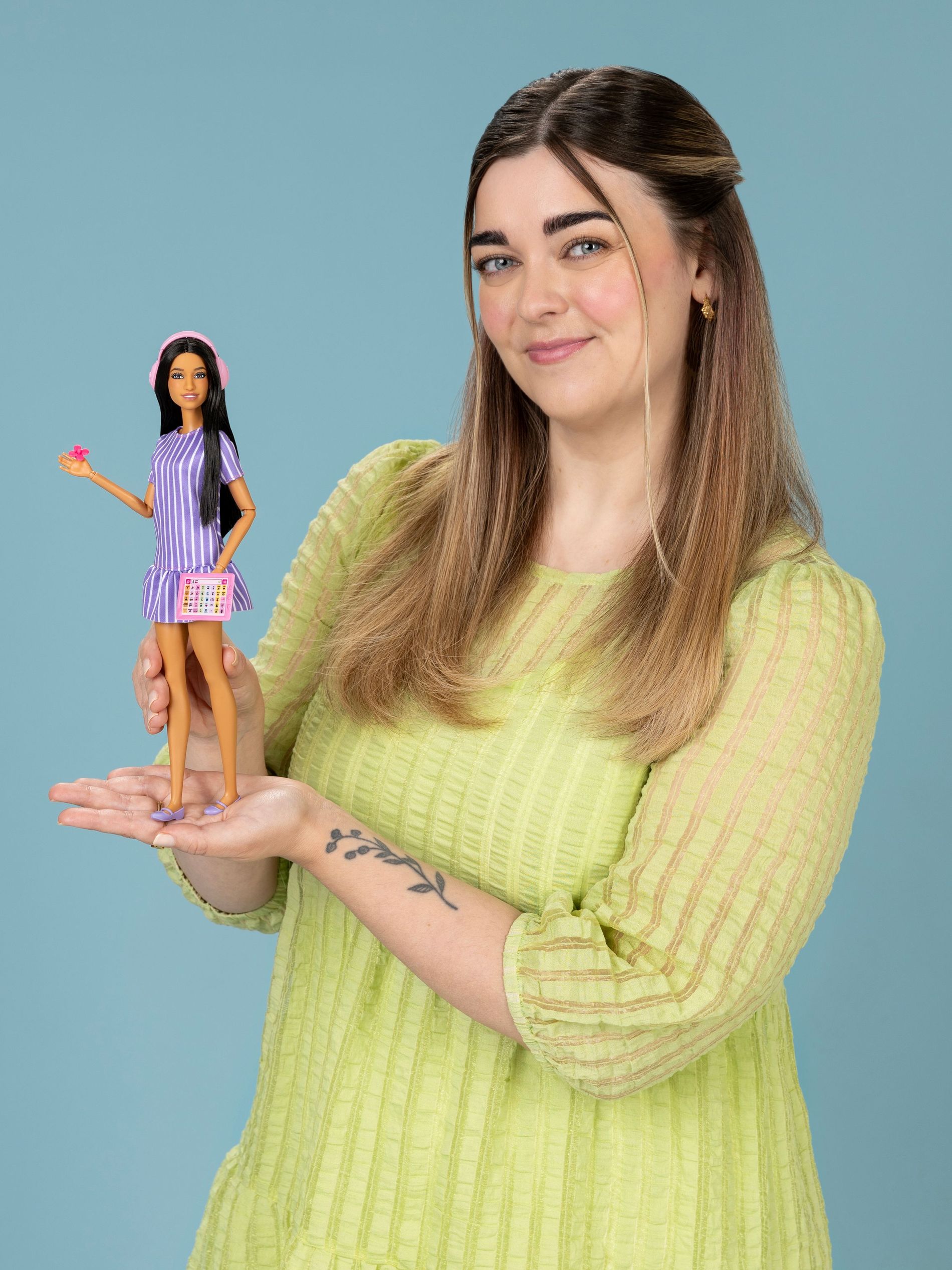
Sonja Lovdal. Photo: Mattel
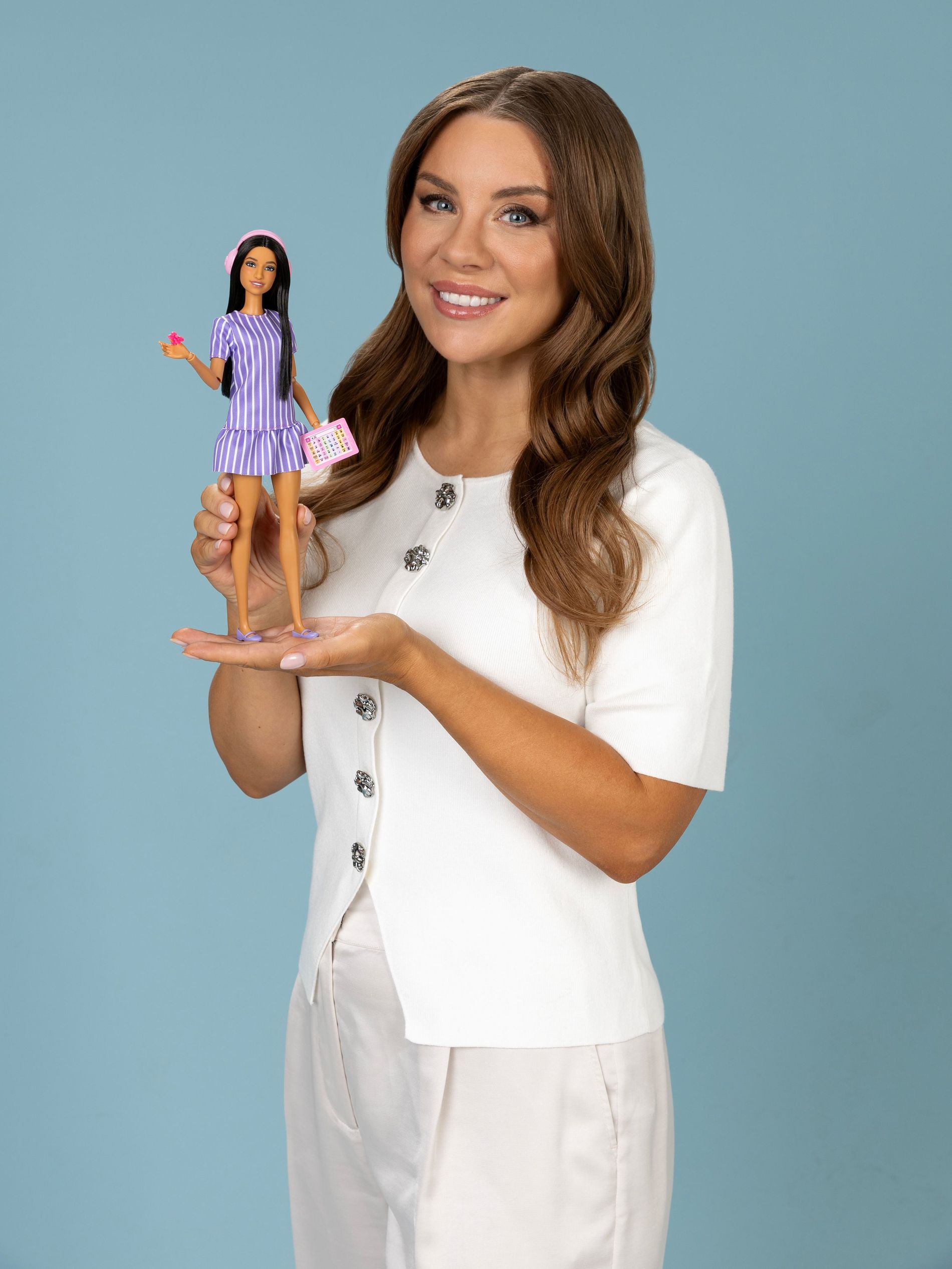
Therése Lindgren. Photo: Mattel
The sentiment of personal recognition is shared by influential figures within the Autistic community. "I never thought that a Barbie with Autism could exist, because for me Autism can be quite an invisible disability," says Sonja Lovdal, the Danish ambassador for Autistic Barbie. Upon seeing the doll, she experienced a powerful revelation: "When I saw the doll for the first time, I was reminded that Autism doesn't only show on the inside. Barbie proudly shows the things that I myself used to hide. It's incredibly moving to see myself reflected in a doll in that way."
This validation resonates with Swedish ambassador and influencer Therése Lindgren. "An Autistic Barbie can open the door to conversation, curiosity, and empathy, both for children who have autism and for those around them," she explains. She reflects on her own childhood, where such visibility was absent. "There were very few things that showed that there are many different ways of functioning. That Barbie now highlights neurodiversity through this doll is important because recognition and representation can make a big difference."