
Barbie has long since outgrown her blonde-haired, blue-eyed beginnings. Today, the iconic doll comes in a spectrum of skin tones, haircolours, body types and disabilities – reflecting a far more inclusive world. Now, Mattel expands the line even further with the introduction of a Barbie living with Type 1 Diabetes
Barbie is a name that stirs nostalgia for countless people. Once stereotypically buxom and blonde, she’s a cultural icon many remember twisting into gravity-defying splits, imagined as a veterinarian, doctor or astronaut. Created by Ruth Handler in 1959 and brought to life by Mattel, Barbie has always stood for possibility – inspiring children to dream beyond the limits of their surroundings, a message that feels more vital than ever today.
As the world has evolved, so too has Barbie. No longer confined to the stereotypical image as portrayed by Margot Robbie, today's Barbie comes in over 175 different looks. Known as the Barbie Fashionistas, this diverse line offers dolls in a wide range of skin tones, eye colours, hair styles and textures, body types, and fashions. The goal is simple yet powerful: to reflect the richness of real-world diversity and give every child the chance to see themselves in the stories they create through play.
This spirit of inclusion has extended to showcasing a broad array of illnesses and disabilities. Among the top ten most popular dolls are a Blind Barbie and a Black Barbie with Down Syndrome – powerful symbols of inclusion. The range also features dolls with no hair, hearing aids, prosthetic limbs, wheelchairs, and vitiligo. Now, Mattel takes another meaningful step forward with the launch of its latest addition: Barbie with Type 1 Diabetes (T1D)
Created to more accurately reflect the world children live in, and to foster empathy and understanding for those whose experiences differ from their own, this new Barbie was created in close collaboration with Breakthrough T1D – a research and advocacy organisation dedicated to curing, preventing and treating Type 1 Diabetes. "Introducing a Barbie doll with Type 1 Diabetes marks an important step in our commitment to inclusivity and representation," says Krista Berger, Senior Vice President of Barbie and Global Head of Dolls. "Barbie helps shape children's early perceptions of the world and by reflecting medical conditions like T1D, we ensure more kids can see themselves in the stories they imagine and the dolls they love."
"We were thrilled when Barbie approached us to collaborate on the development of the Barbie doll with Type 1 Diabetes," adds Aaron J. Kowalski, Ph.D., CEO of Breakthrough T1D. "I have lived with T1D since I was 13, and my brother since he was 3, so this partnership is deeply personal - it means the world to be part of bringing greater visibility to a condition that affects so many families," Kowalski says.
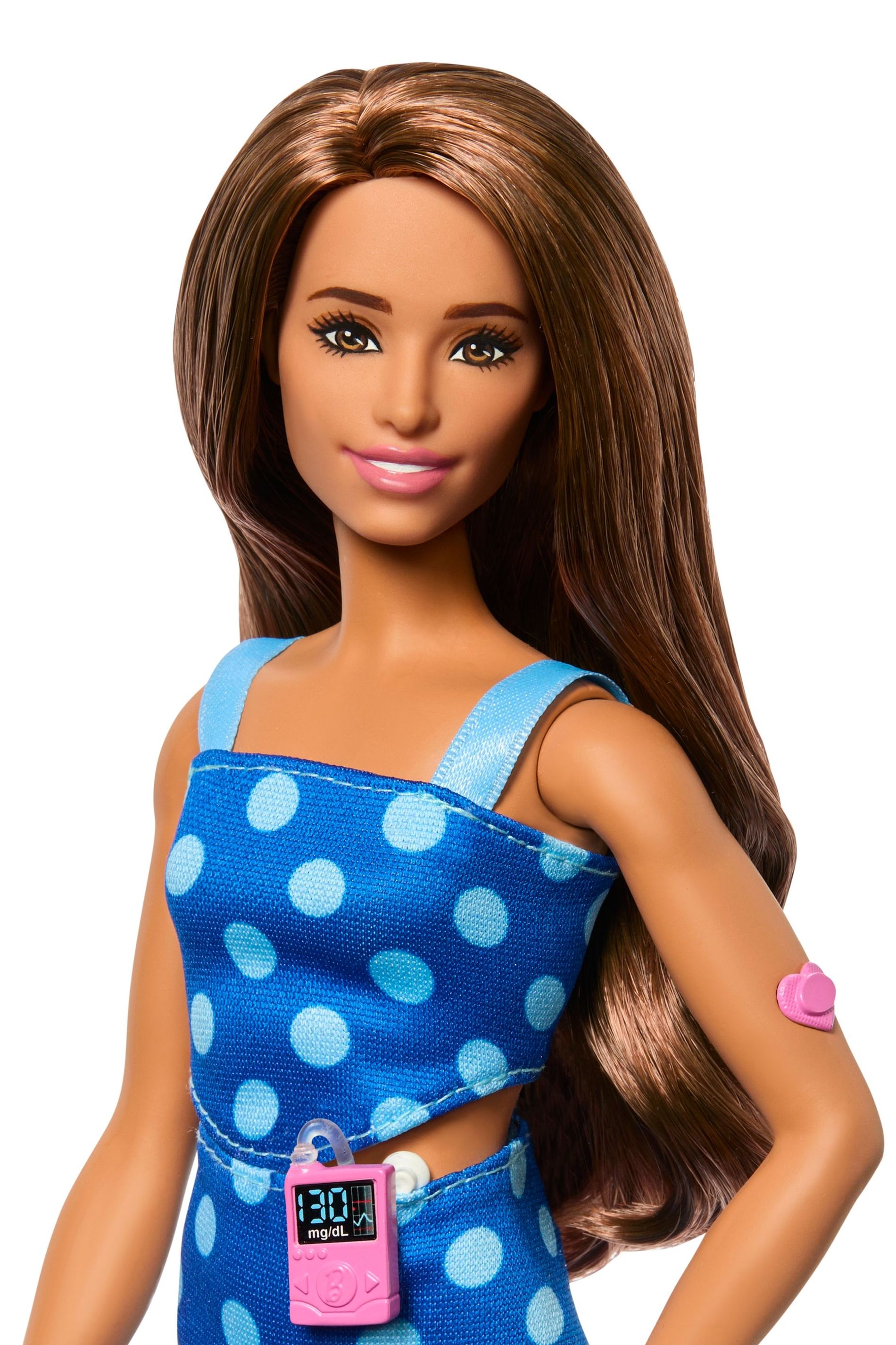
The new Barbie wears a blue polka-dot two-piece – a subtle nod to the globally recognised colour of diabetes awareness – with a Continuous Glucose Monitor at her arm and an insulin pump around her waist. .
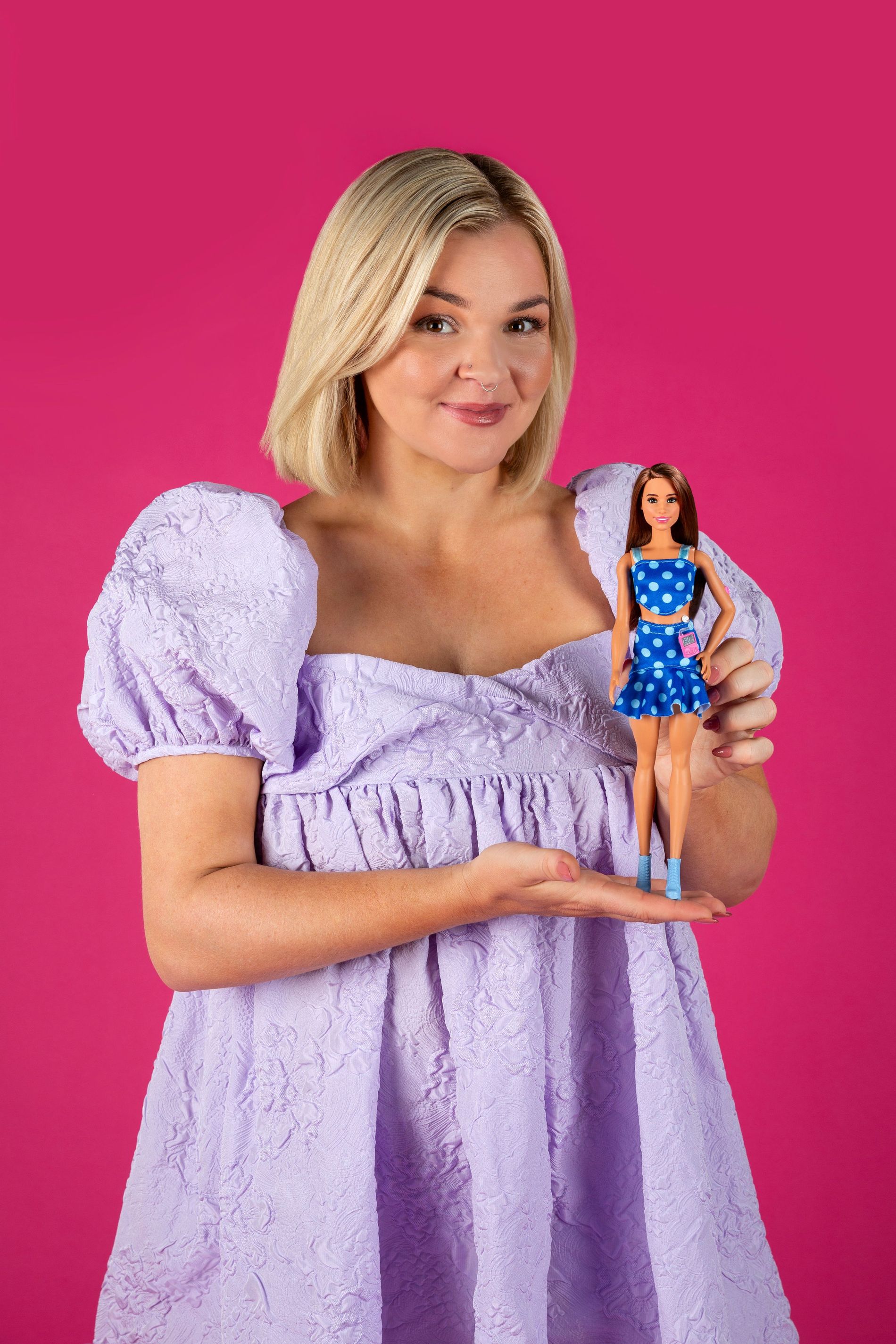
Liv Martine with the new Type 1 Diabetes Barbie.
Wearing a blue polka-dot two-piece – a subtle nod to the globally-recognised colour of diabetes awareness – this Barbie is thoughtfully equipped with the tools someone with Type 1 Diabetes might use. On her right arm, she wears a Continuous Glucose Monitor, secured with Barbie-pink, heart-shaped medical tape. She monitors her blood sugar via a smartphone, which neatly tucks into her pastel blue purse - perfectly sized for essentials, diabetic supplies, or snacks for managing low blood sugar on the go. Around her waist, an insulin pump provides a continuous, life-sustaining flow of insulin, further enhancing the doll's realism and educational value.
To bring greater visibility to this launch, Mattel has partnered with two Scandinavian influencers who live with Type 1 Diabetes: Domino Stålvant and Liv Martine. Both women were diagnosed as adults. "I didn't know anything about diabetes," says Stålvant, who shares her experiences and love of cooking with over 80,000 followers. "I knew that there were a few different types, but I thought that you could only get Type 1 either when you're a kid or you need someone in your family to have it. I had neither of those."
Barbie helps shape children's early perceptions of the world and by reflecting medical conditions like T1D, we ensure more kids can see themselves in the stories they imagine and the dolls they love.
Krista Berger, Senior Vice President of Barbie and Global Head of Dolls
The same was true for Martine, who rose to fame after winning the Danish reality baking series Den Store Bagedyst 10 years ago, and now works full-time as an influencer. She shared that she began suspecting her diagnosis after teaching a girl with Type 1 Diabetes. "I was following her symptoms and noticed I got a lot of those symptoms myself," Martine explained. "I remember driving to the doctor and saying to my mum, 'I think I have diabetes,' and she couldn't believe it."
For both influencers, whilst the lifestyle changes brought on by diabetes were a challenge – but accepting the finality of the diagnosis proved to be the hardest part. "I like to have solutions," says Martine. "If there is a problem, I will fix it, and yet this time I couldn't fix the problem – it's something that is going to be a part of my life forever. So I found it hard to accept the illness." Stålvant echoed the sentiment. "I realised that it's not my fault. I haven't done anything wrong, but my biggest challenge has been acceptance, which is something I'm still struggling with."
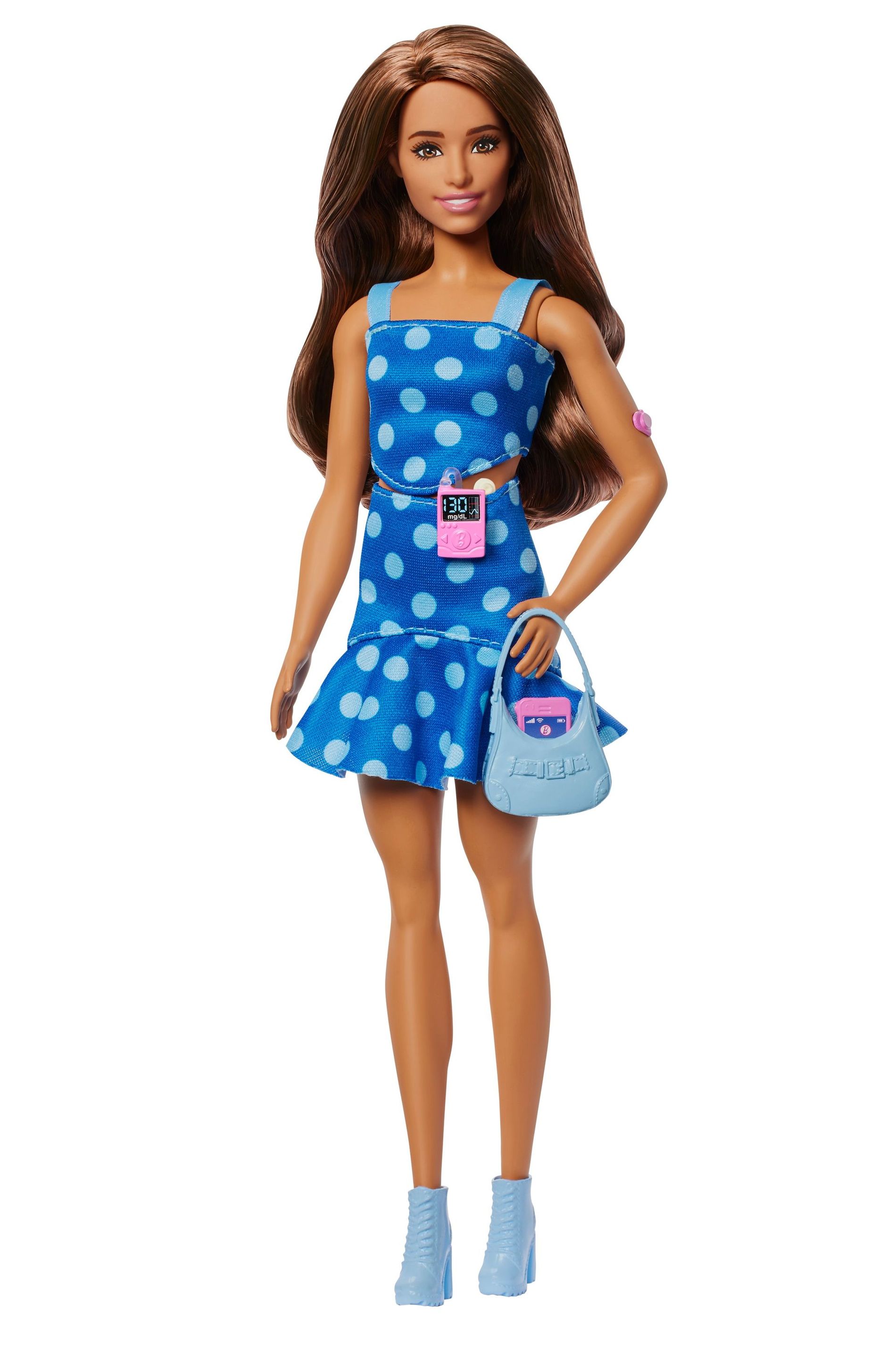
The doll also carries via a smartphone for monitoring her blood sugar, which neatly tucks into her pastel blue purse - perfectly sized for essentials, diabetic supplies, or necessary snacks,.
What does it mean to them to have a Barbie that represents their condition? Whilst both women are well beyond the age of playing make-believe, the release of this doll signifies something much deeper than a toy. It's about recognition, visibility, and telling children – every child – that their reality matters.
"I am so touched and feel very emotional when I look at her," expressed Stålvant. "She's beautiful and the blue details are so meaningful as it's the diabetes colour which is a small detail to some people, but for me, it shows they've done their research." Looking at the doll, the influencer makes another keen observation. "I just realised today that the Barbie and I have our gadgets in the same place at the moment," Stålvant adds. "To me, it means a lot, and I hope the same for children."
Barbie was a part of everyone's childhood. I think this will make for a really natural way to talk about Type 1 Diabetes.
Liv Martine
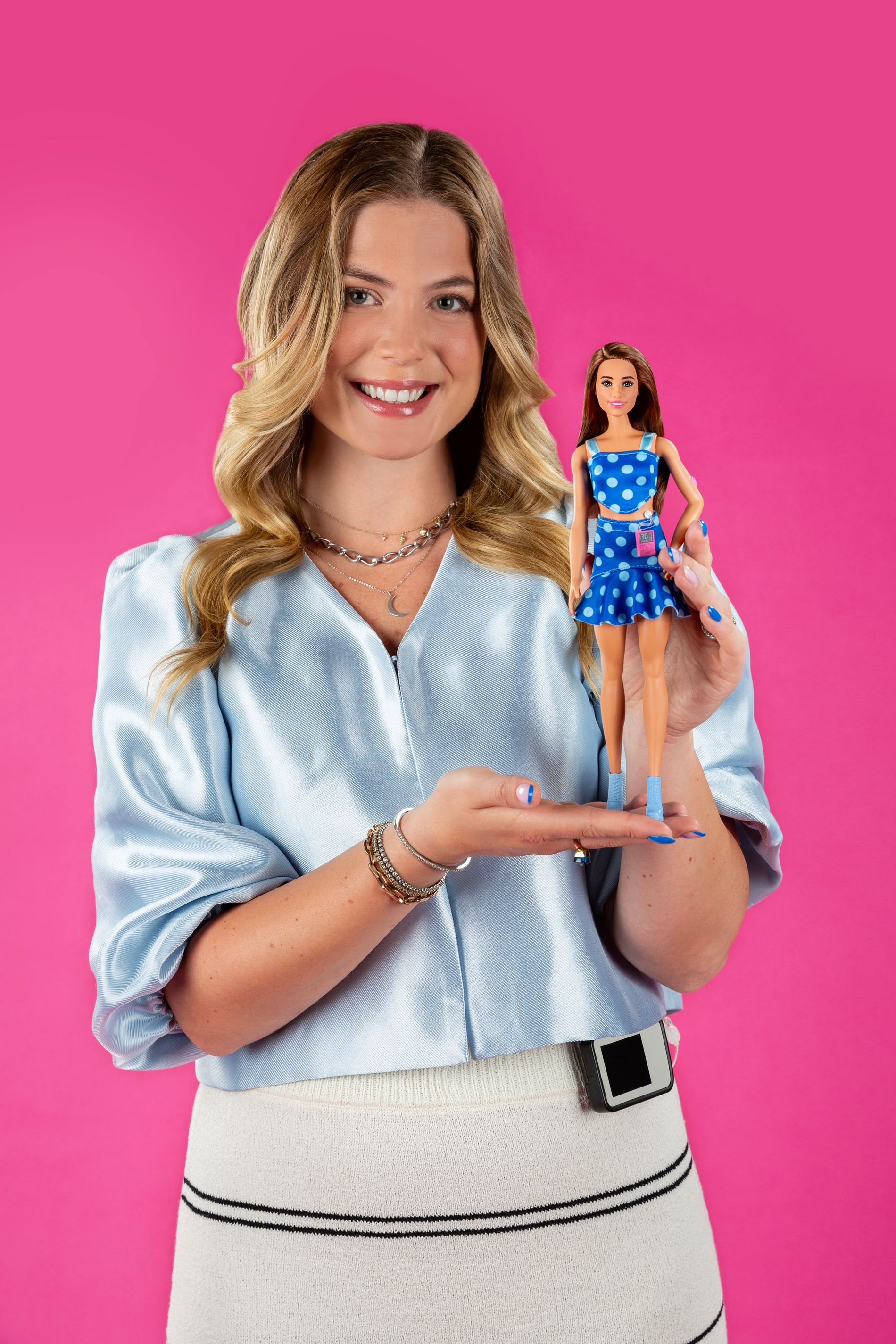
Domino Stålvant with the new Type 1 Diabetes Barbie.
"I remember when I was a kid, everyone was playing with Barbie, even boys!" says Martine. "It was a part of everyone's childhood. I think this will make for a really natural way to talk about Type 1 Diabetes. Maybe it will allow those who have it not to be embarrassed about it as it shows it's okay to show off your blood sugar monitor or insulin pump. I really hope that this can bring some more awareness to the sickness and allow adults and kids to feel better in their illness."
"I have two kids, and the eldest is always talking about my diabetes," adds Martine. "I think talking more about it makes it less dangerous and embarrassing. People tend to hide it from kids, but they need to know it's not dangerous if you take care of yourself. This Barbie can show that."
"I hope it will bring awareness," says Stålvant. "Sweden and Finland have the most Type 1 Diabetics in the world, but still, on a daily basis people ask me what my sensor is on my body. Maybe this will normalise it a bit more and open up room for questions. I think this is going to mean a lot for everyone. It doesn't matter what age you are."