
Since 2004, Swedish grooming retailer Gents has had a habit of arriving early. First to wet shaving, then to beards, now to niche perfume with its own fragrance line, Question of Time. Here, founder Jenny Rydhström explains how owning a factory lets her launch scents ten bottles at a time, kill her darlings, and occasionally be surprised about who, exactly, wears her perfume
When the perfume ‘Wolf in Cashmere’ launched, Jenny Rydhström thought she knew exactly who it was for. A salty citrus-aromatic scent of black coffee and mineral salt. Described like sharp tailoring in a bottle, it was built for the modern yuppie. "We made it for a man in his career who appreciates hard work, competence, character, strength and drive," she says. "That was the target group we wanted." Then the sales data came in. "It's been a big misjudgement on my part. A lot of men buy it, but a lot of women buy it too. That surprised me."
For most fragrance houses, discovering your new flagship scent has found an audience you never designed for would be a slow, expensive problem to solve. For Gents, the Swedish retailer behind the fragrance line Question of Time [QOT] – maker of ‘Wolf in Cashmere’ – it's a cake walk. Because Gents, from the start, has always accounted for the unexpected. How? It owns its own factory in Sweden.
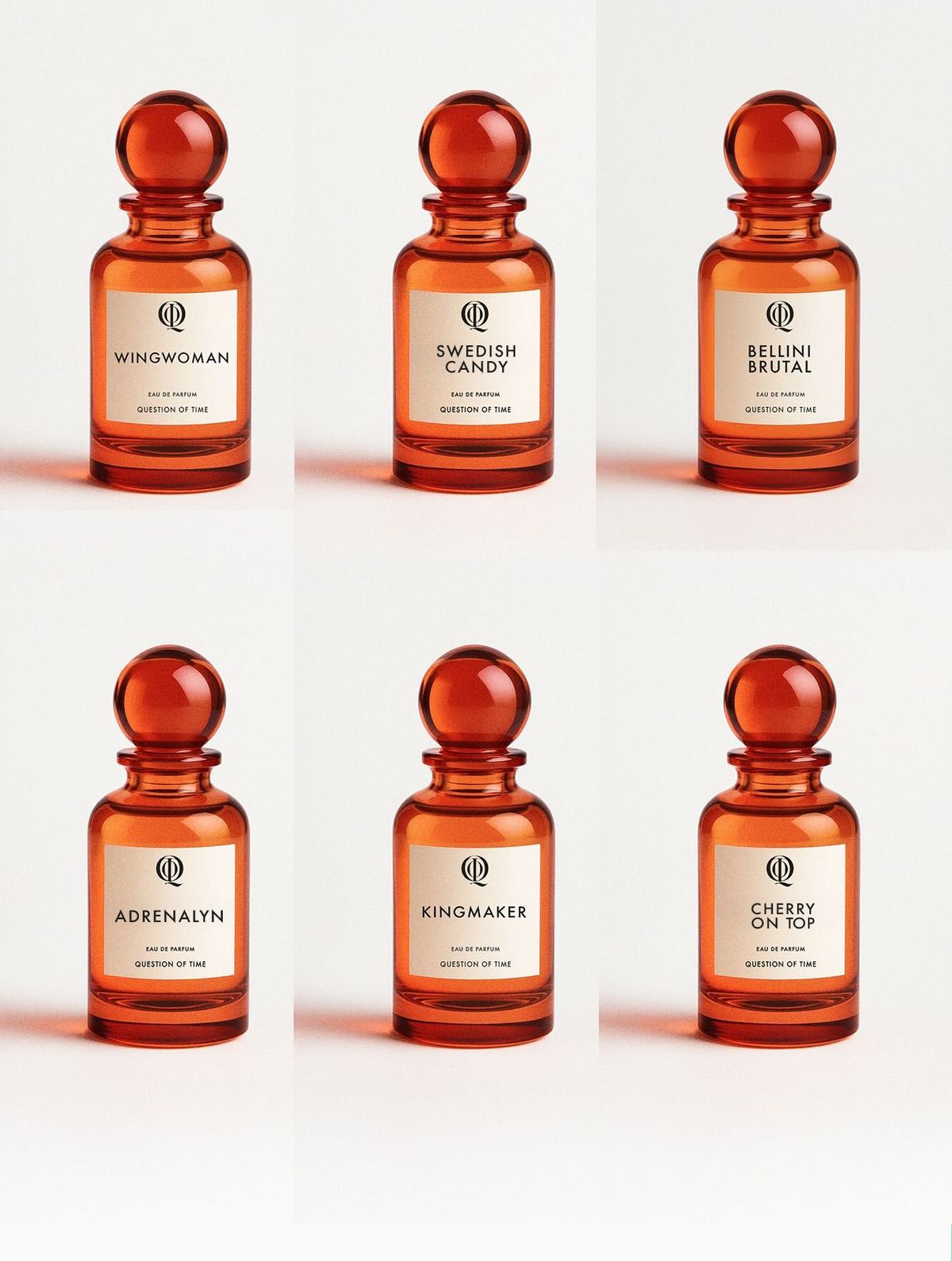
Six of QOT's full line up of fragrances, spanning 14 and about to expand further. Photo: Courtesy of QOT
That agility is key to not only QOT’s success, but to its parent company Gents. Rydhström co-founded Gents in 2004 on a hunch about a customer nobody was serving: men who care about grooming. “It's a customer who hasn't had much love, historically," she says. Her assumption about the entry point, however, proved wrong at first. "We thought the way in was skincare for men. It turned out not to be skincare at all. We discovered quite quickly that the way into a man's skincare was shaving." From there she watched the same customer evolve through a decade of grooming trends and stayed a step ahead at each turn "The wet-shaving trend was incredibly hot around 2006, 2007, 2008. Then we moved into the beard trend, and it peaked in 2015. After that it moved into fragrance. Our customer just switched over to being very interested in niche perfume." The luck, she's careful to say, has been about being early: "We've had the good fortune to be early in the trends every time, and to have a full range long before they peaked."
Reading the shifting trends early is one thing. Being able to act on it is another, and it's why Gents built its own perfume factory in Sweden when they launched QOT in 2025. "When you work with external producers, you'd have to make an order of maybe 2,000 bottles per scent," Rydhström explains. In an industry where only a fraction of launches succeed, that's untenable. "Most perfume brands have two or three bestsellers and the rest don't sell. You still have to hold that stock. It's completely unsustainable from a business perspective."
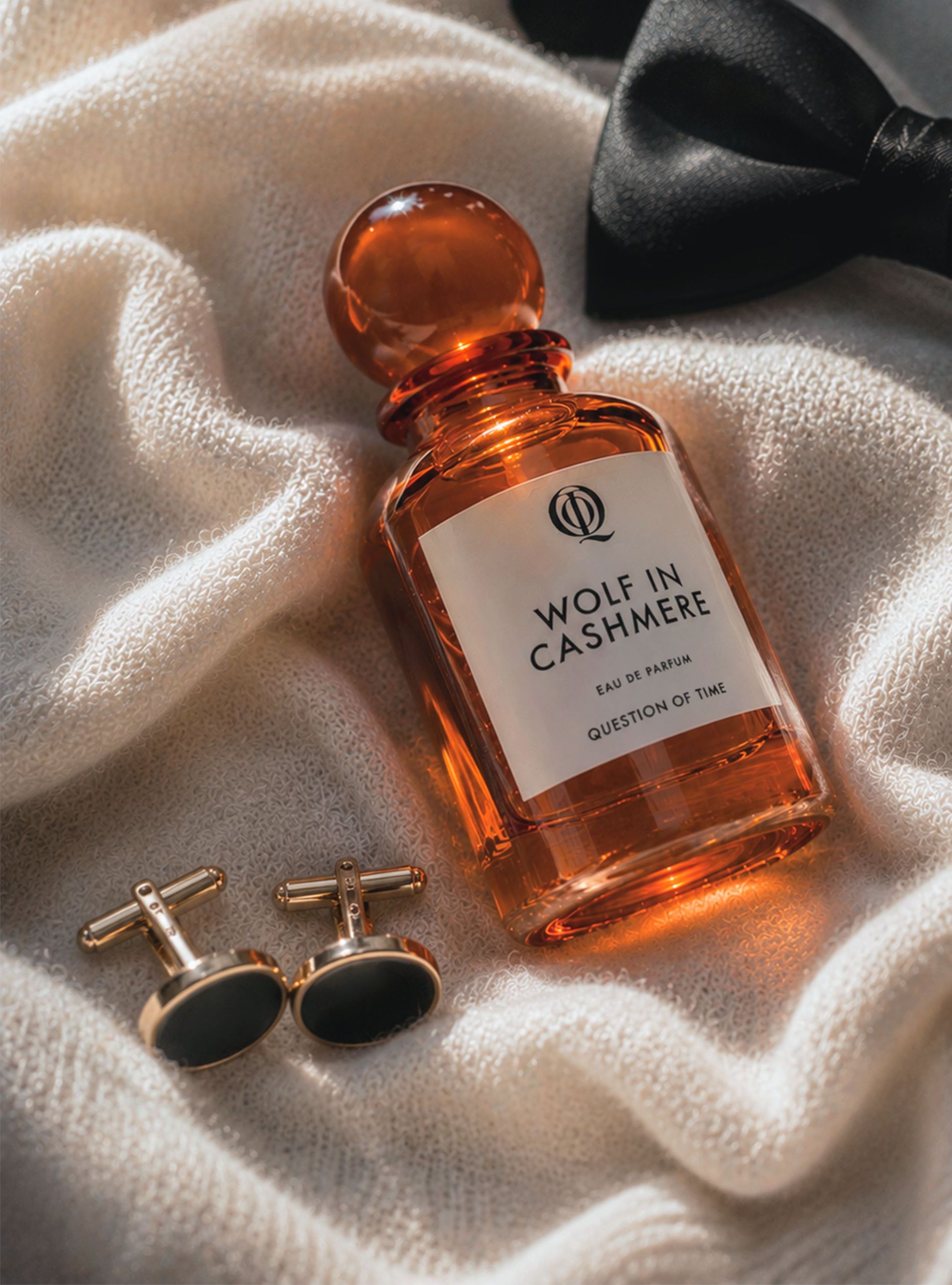
QOT's latest fragrance launch, 'Wolf in Cashmere'. Photo: Courtesy of QOT
Owning production flips the model. "When we launch something we usually make ten or twenty [bottles] and send them out to the stores. Then we measure how the customer interacts with the perfume. If it doesn't sell, we don't produce it. But if ten bottles sell out in two days, we put it into production immediately." It also buys Gents freedom to fail. "We experiment all the time. We have ten experiments running constantly. Then we kill them afterwards if they don't work." The line-up bears this out: from a launch of six or eight a year ago to fourteen today, with six more coming and three already retired.
What emerges from all this is a philosophy that treats a fragrance as a whole, not just a bottle of juice. "The perfumer often thinks it's only about the scent itself. Absolutely not," she says. "It's about the bottle. Is it beautiful in the bathroom cabinet? Is it Instagram-friendly? The juice has to be good, but the bottle, the label, the name, the box, the marketing – those are the factors that decide whether it succeeds." And what about those names? They come from Rydhström’s list, currently running two thousand names deep. "I collect them all the time while watching a film, listening to a song, reading an article. Then, boom, that's a good name."
Which brings us back to ‘Wolf in Cashmere'. When I comment on what an excellent name it is for a scent that plays on the concept of '80s Wall Street hustle culture, Rydhström lights up. "You nailed it. That's exactly what we're after." She doesn't consider it an '80s perfume, though. "It's a completely new DNA. Our creative brain here says this will explode in a year. We're a year early with it." Early, as ever, it seems.