It’s soon Fettisdagen - that special day of the year when the only bun on a Swede’s mind is the delectable semla bun. Here, we break down how this particular bun became so popular, and share some of the best places to find one in Stockholm
Few countries in the world take their coffee breaks as seriously as we do here in Sweden.
The country’s relationship with the exotic brew is not without controversy, however: in 1794, for instance, Baron Reuterholm decided to ban coffee. Today, however, the popular drink is very much a part of everyday life and a key factor in one of Sweden’s most established – and untranslatable – rituals: ‘fika'. Essentially meaning to take a break to chat with friends or colleagues over a hot drink (usually coffee) and an accompanying treat, fika is a uniquely Swedish social phenomenon that rests on the pillars of caffeine and baked goods.
While common characters in the fika rotation include staples such as kanelbullar (cinnamon buns) and kardemummabullar (cardamom buns), special times of the year call for special buns. At Christmas, for example, the Lussekatt - an S-shaped wheat bun with raisins that gets its golden tones from the infusion of saffron - has its moment in the fika sun. And with the Easter holiday approaching, now is the time for the fika table to be rounded out with a bun that has its roots in Lenten sacrifice: the semla.
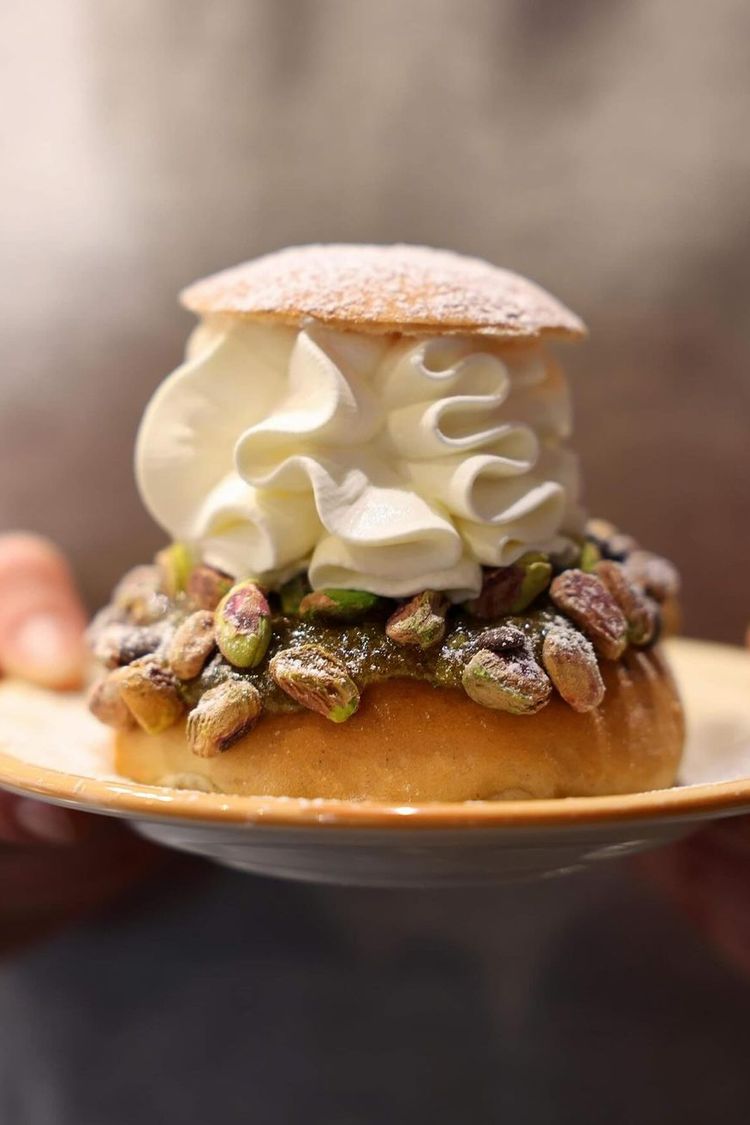
Photo: @brodochsalt
The semla started out in the 1600s as a bun soaked in a bowl of hot milk (known as hetvägg) which was to be eaten on Shrove Tuesday. Also known as Fat Tuesday or Mardi Gras, this day of feasting in the Christian calendar is seen as the last chance for indulgence before 40 days of fasting begin. From these humble beginnings, the semla has evolved to become the decadent bundle of goodness that we know today.
So what exactly is a semla?
Essentially, it’s a small, wheat flour bun that has been flavoured with ground cardamom. Its top is cut off so that a filling of almond paste and whipped cream can be piped in, after which the bun’s hat is put back in place and dusted with powdered sugar.
Semlor (plural) are also appropriately called fettisdagsbullar - literally fat Tuesday buns, with varieties existing in Norway and Denmark (fastelavnsboller), in Swedish-speaking parts of Finland (fastlagsbullar), and in Iceland, a variation is known as a bolla. But it is in Sweden that semla appreciation reaches the greatest of heights: to meet anticipated demand, bakeries have started making the buns long before Shrove Tuesday, which this year falls on 21 February. And one can understand the reason for the impatience - rich, indulgent and luxurious, semlor are the perfect antidote to the stark, Scandinavian winter darkness.
But don’t be fooled by the semla’s seemingly sweet constitution. This small bun packs a powerful punch, as shown by the cautionary tale of Swedish King Adolf Fredrik. Legend has it that in 1771, after an already rich meal, he ate 14 of these delicacies and washed them down with champagne, causing him to meet an early, digestion-related death.
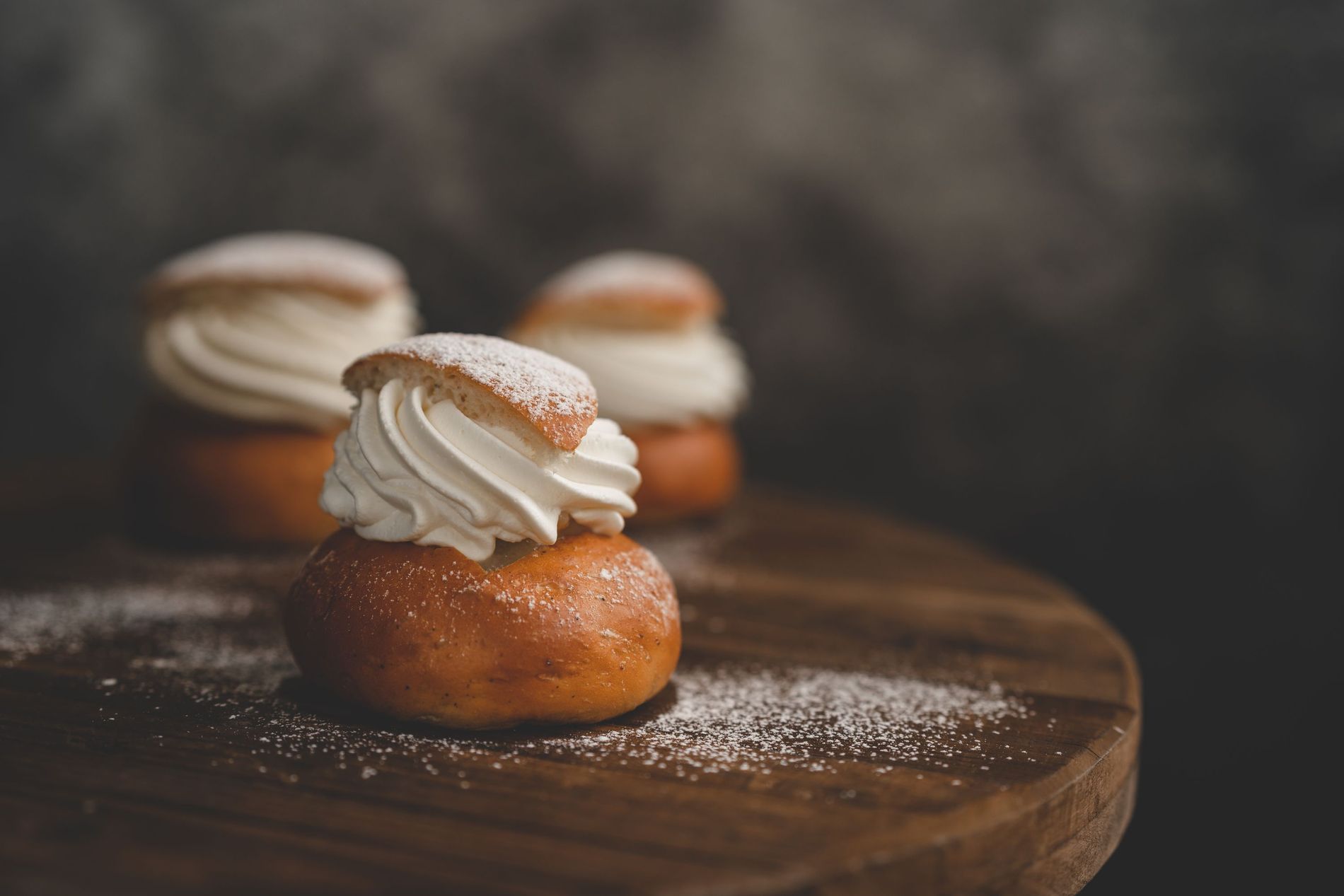
Photo: Getty
The best places to find semlor in Stockholm
Thankfully, a single semla is enough for most, and we have rounded up some of the best places to find semlor in Stockholm - both in classic form, and in stylish interpretations that push both the culinary and creative boundaries of this fika favourite.