
Two decades after their era-defining first collaboration, the Japanese artist returns to Louis Vuitton with 11 fantastical interpretations of the Capucines, complete with smiles, flowers and tentacles. Here, Murakami speak to Vogue Scandinavia about fantasy, craft and the shifting line between art and fashion
This year’s Art Basel Paris was swallowed whole by a creature of Murakami’s making. During the unmissable event in the art world's calendar, Louis Vuitton unveiled Artycapucines VII – the latest instalment in its artist-led handbag series – within an eight-metre-high octopus installation designed by Takashi Murakami himself. From the Grand Palais’s Balcon d’Honneur, the tentacles of this fantastical beast will curled around 11 new Capucines bags, each a different doorway into Murakami’s candy-bright universe.
The collection marks a full-circle moment for both the Maison and the artist. “Over the past 20 years, from my first collaboration to this 2025 project, I believe Louis Vuitton’s atelier has made remarkable technological advancements,” Murakami tells Vogue Scandinavia. He recalls a time when “denim was not an option” and marvels at the brand’s evolution in three-dimensional modelling and metalwork. “The pursuit of high-end savoir-faire at Louis Vuitton is extraordinary,” he says, “reaching heights even artists’ studios like mine cannot attain.”
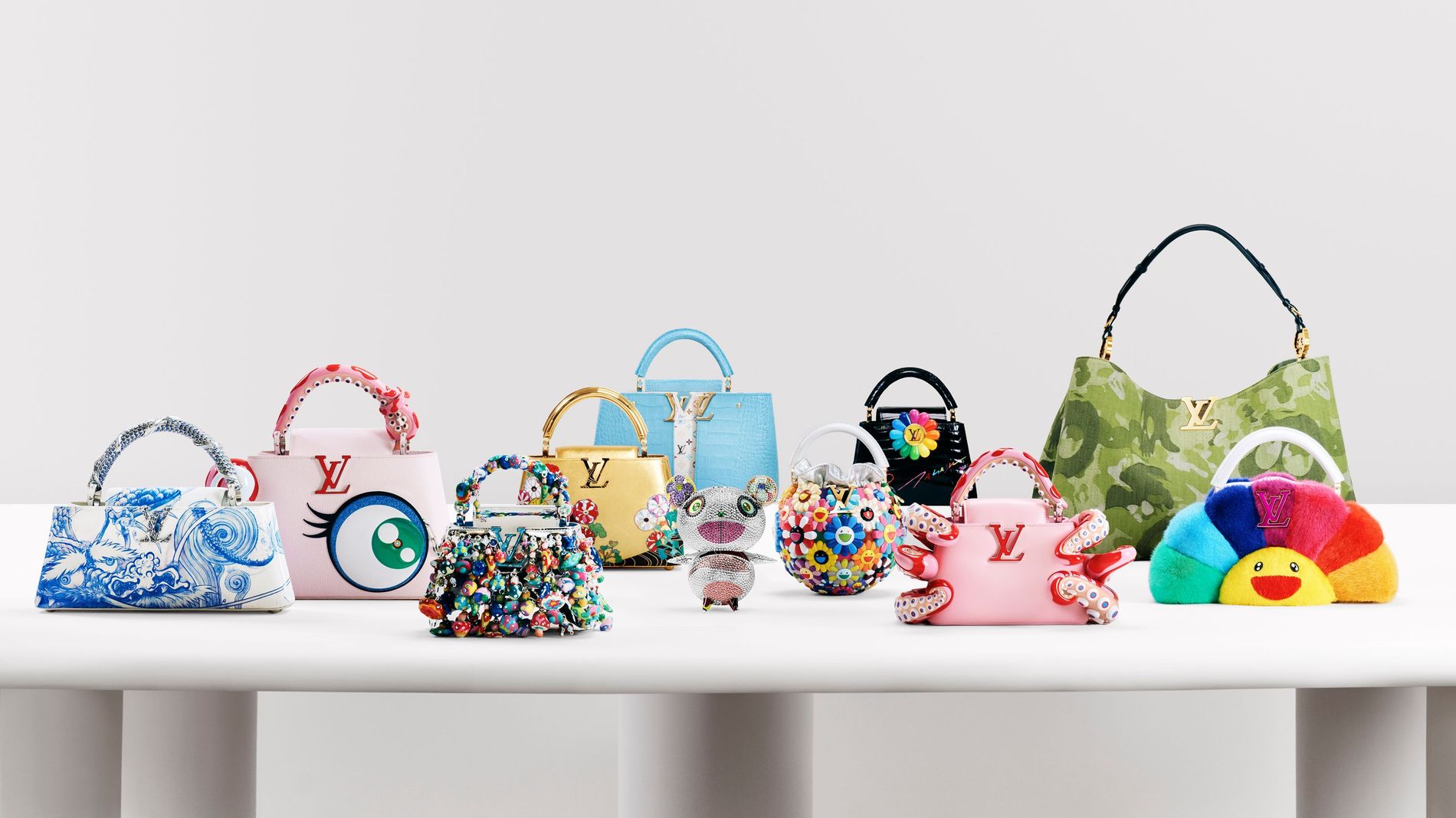
Photo: Rodrigo Carmuega
Since its inception in 2019, Artycapucines has invited leading contemporary artists – from Beatriz Milhazes to Henry Taylor – to treat the Louis Vuitton Capucines bag as a blank canvas. But Murakami’s latest return feels especially resonant. His name is already stitched into the Maison’s lore: his early-2000s collaborations gave birth to pop-cultural icons like the Monogram Multicolore and the cheeky Cherry Blossom print. Now, two decades later, he reclaims that dialogue, stretching it to the outer edges of both art and craft.
Working alongside Louis Vuitton’s design team, Murakami reimagines the Capucines as a set of sculptural micro-universes. “Without being fixated on my distinctive characters,” he explains, “Louis Vuitton incorporated motifs ranging from the classic to the majestic – like the dragon.” From the Capucines EW Rainbow, shaped like his kaleidoscopic Flower motif, to the Capucines Mini Mushroom, embroidered with a hundred hand-polished fungi, each piece embodies the collision of precision engineering and playful absurdity. The Mini Tentacle – an octopus homage to his alter ego, Mr. DOB – anchors the collection’s centrepiece installation, while the EW Dragon channels one of Murakami’s monumental canvases, Dragon in Clouds Indigo Blue (2011), onto supple leather and gold leaf.
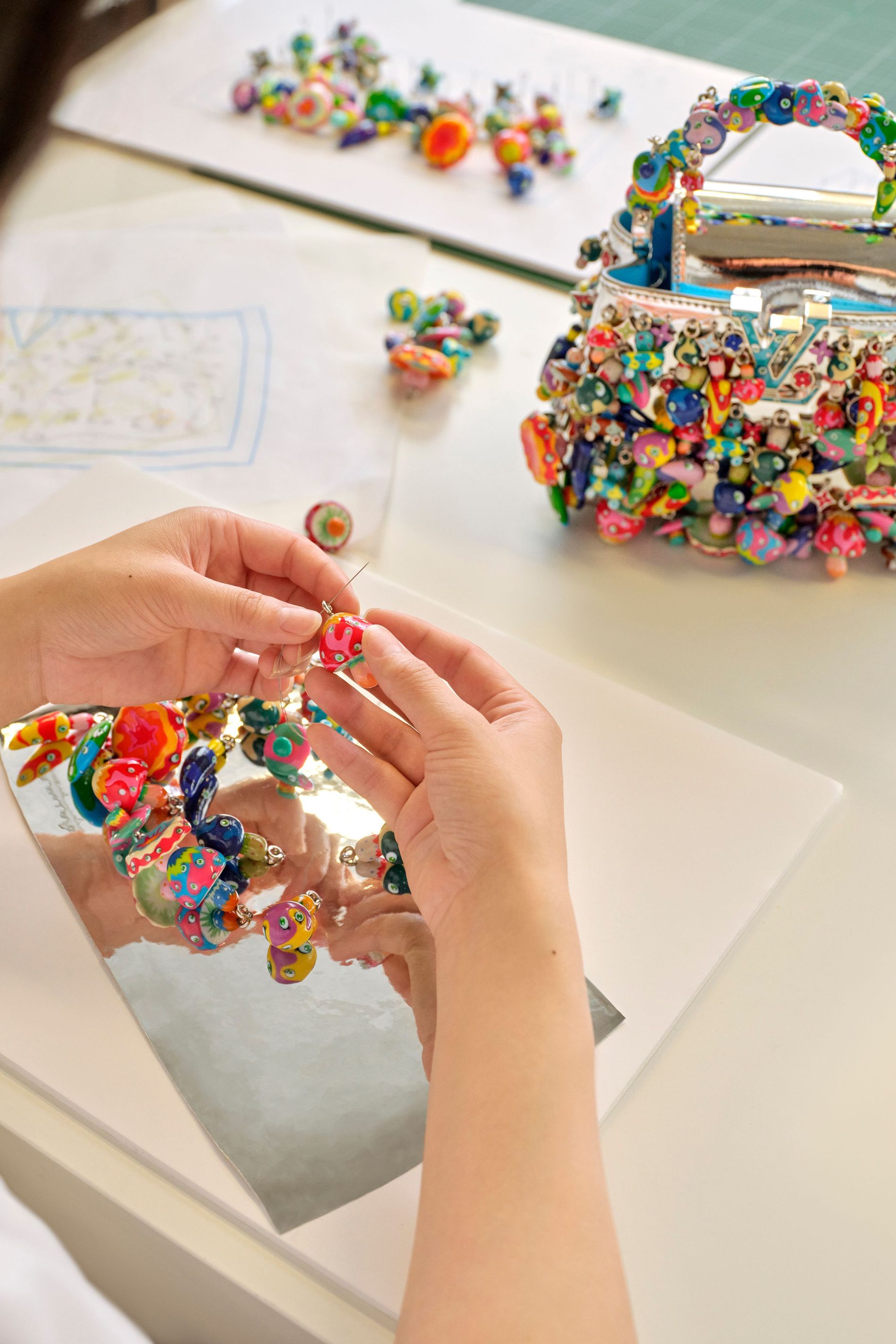
Photo: Rodrigo Carmuega
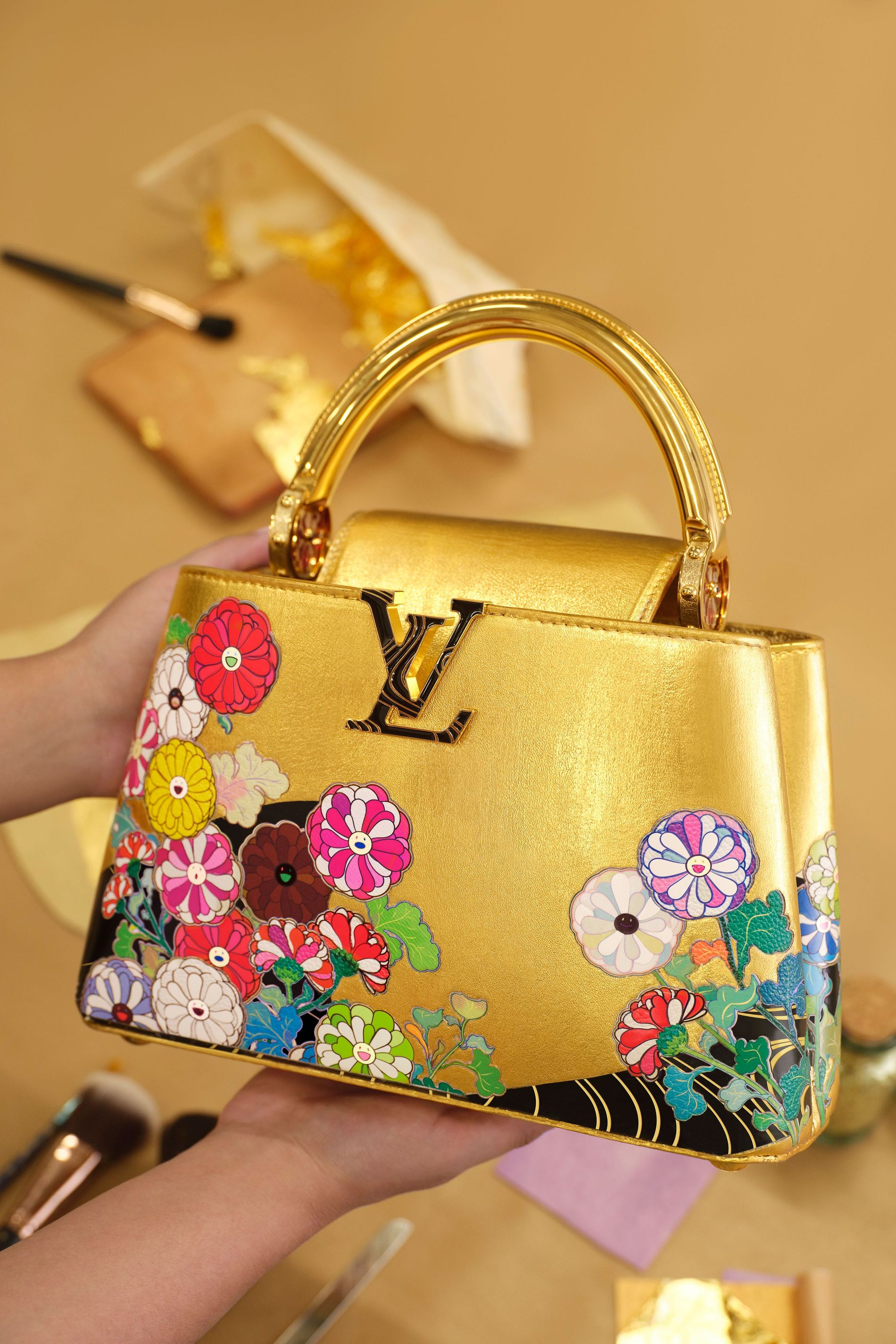
This exquisitely crafted interpretation of Louis Vuitton’s modern classic Capucines bag draws direct inspiration from Takashi Murakami’s artwork Ogata Kōrin's Flowers (2024). Photo: Rodrigo Carmuega
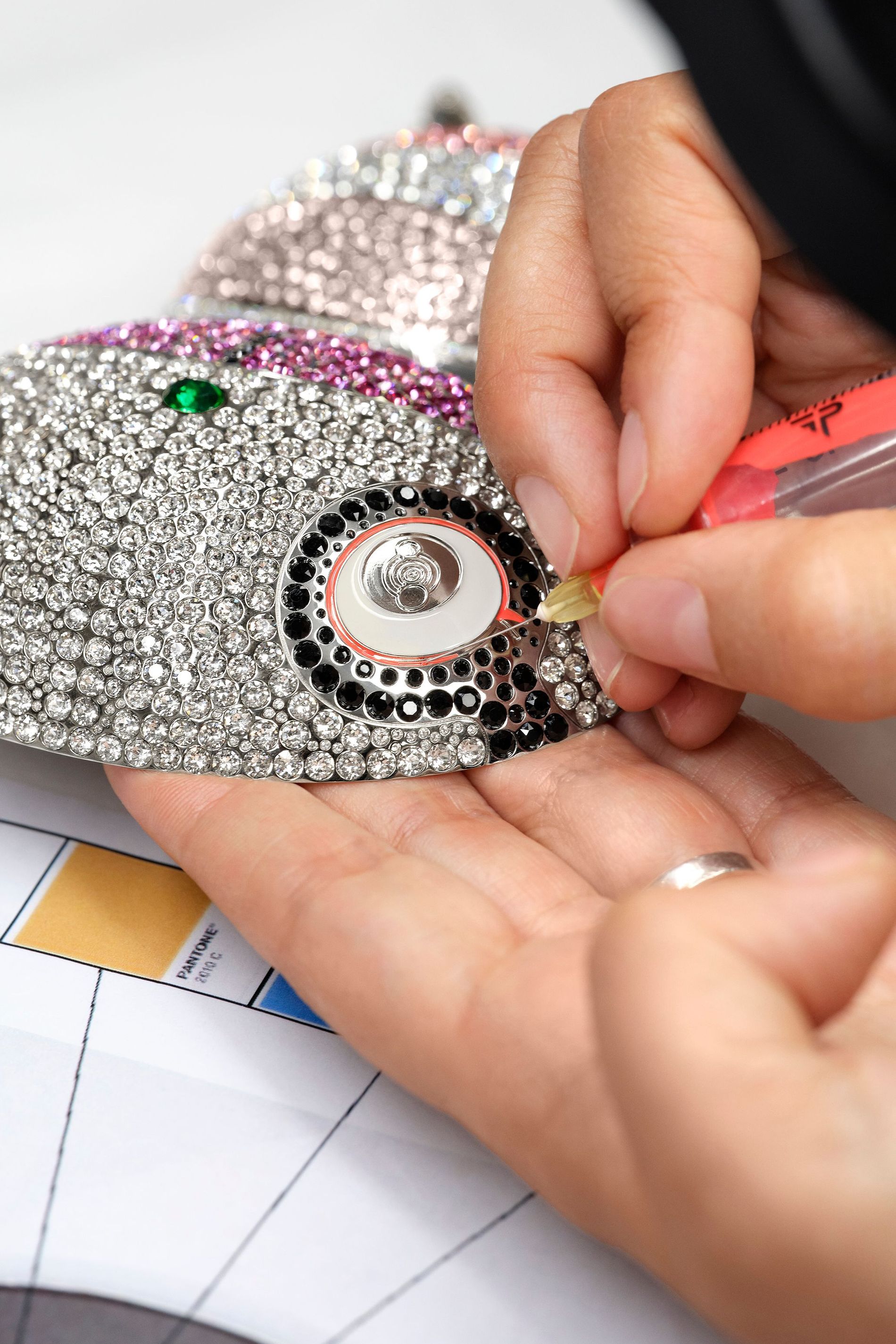
Photo: Rodrigo Carmuega
The result is a capsule that feels simultaneously collectible and alive. Every bag brims with Murakami’s signature joy, that ecstatic, psychedelic innocence that first blurred the boundaries between Tokyo subculture and Western fine art. Yet beneath the surface gleam lies something more conceptual. “European high-end culture exceeds the realm of cultural comprehension,” he reflects. “In modern Japanese society, the kind of social hierarchy it implies doesn’t exist. We can relate to such sensibilities of refinement through the lens of fantasy – stories, animation, games – where palace unfolds in breathtaking splendour.”
For Murakami, this “fantasy point of view” is not escapism but translation. It’s how Japanese pop art metabolises Western luxury, refracting it through imagination. “I believe Artycapucines sits very close to that spirit,” he says, “possessing a kind of fantasy point of view.”
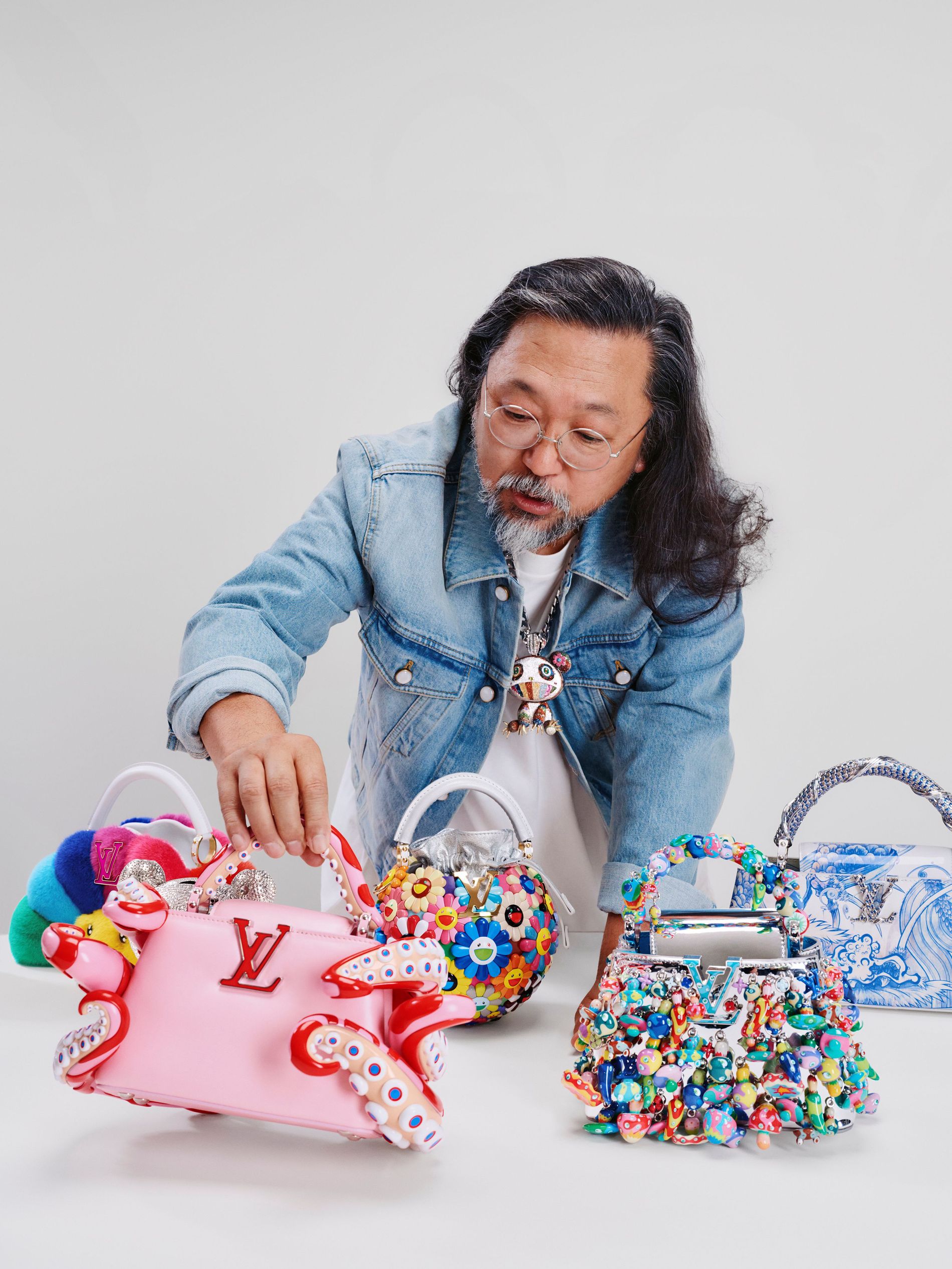
Entangled by tentacles, the Capucines Mini Tentacle (front) draws inspiration from Takashi Murakami’s 2017 sculptural work DOBtobus, which transformed the artist’s iconic ‘alter ego’ Mr. DOB into a playful octopus. . Photo: Rodrigo Carmuega
That notion of fantasy – shimmering, excessive, a little irreverent – threads through every detail of the collaboration. The Panda Clutch, for instance, is forged entirely from silver-tone brass and set with 6,250 strass stones, making it less a handbag than a jewel-box creature. The Golden Garden glows with gold-leaf-covered leather marquetry. Even the collection’s name evokes metamorphosis: Artycapucines is not a “line” but a living experiment in how far a fashion house can stretch its craftsmanship into the realm of art.
In Murakami’s view, that boundary is already dissolving. “Compared to 20 years ago, fashion today delves into deeply artistic and conceptual territories,” he observes. “Fashion has become more artistic than before, and art, in turn, must assert even deeper conceptual meaning to keep up.” It’s a creative chase – and Artycapucines VII stands as vivid evidence.
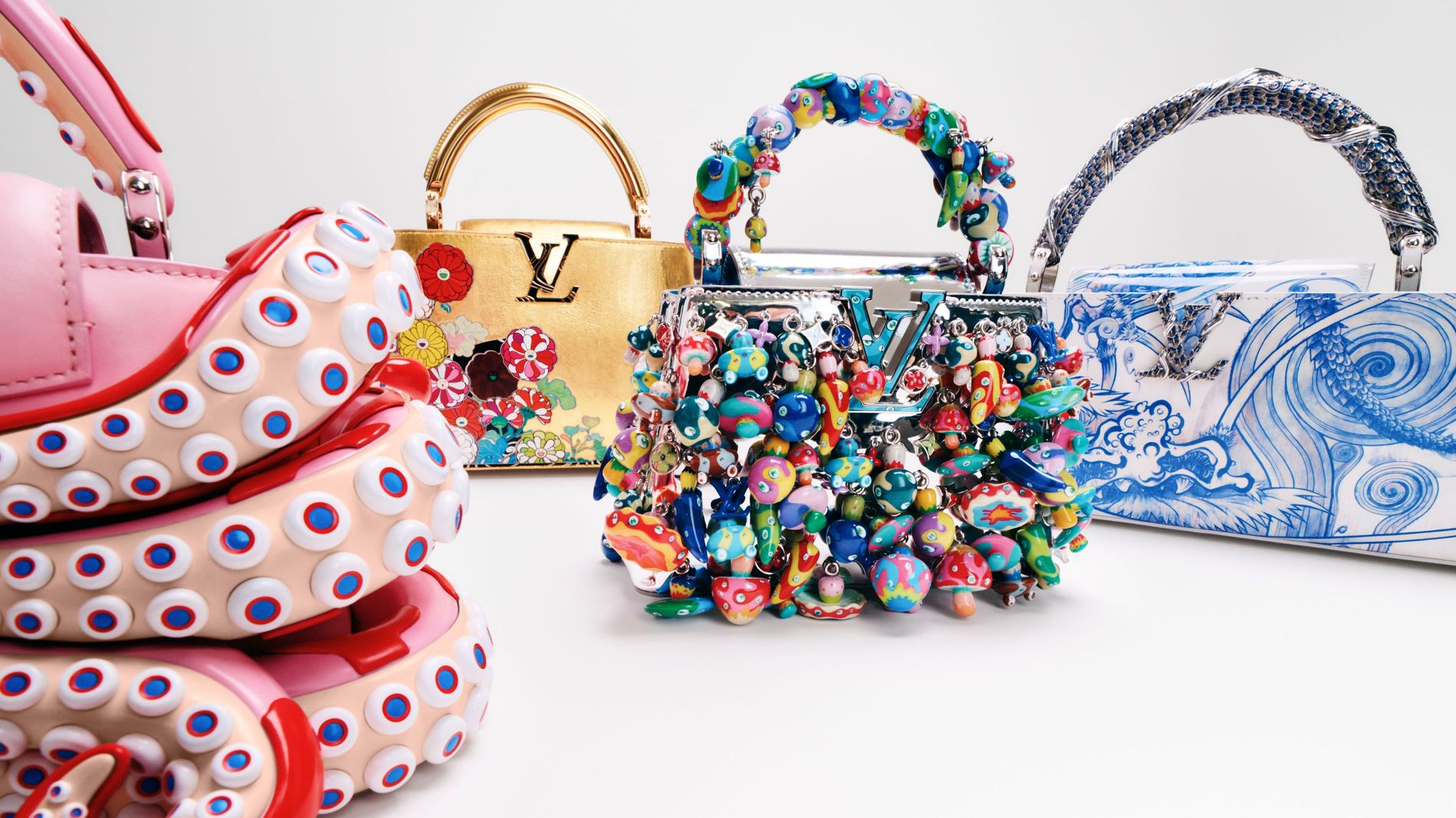
The wild abundance of the Capucines Mini Mushroom (centre) pays tribute to the surrealand psychedelic elements of Takashi Murakami’s captivating oeuvre, as seen notably in his artwork DOB in The Strange Forest (1999) which playfully depicts a panoply of multicolour mushrooms characters. Photo: Rodrigo Carmuega
Now unveiled, the collection is available only in highly limited editions worldwide. Despite the scarcity, Murakami’s spectacle has impact in the ever-tightening orbit between fashion and art, and how, in Murakami’s words, “both are constantly challenging and redefining each other.”