For a decade, the “fragrance wardrobe” ruled: a different scent for every mood, every room, every version of yourself. Now the pendulum is swinging back toward something more singular. But in an age that prizes individuality above all else, how do we trade our ever-rotating cast of fragrances for one all-encompassing, identity-defining whiff?
When Gabrielle Chanel proclaimed that “a woman who doesn’t wear perfume has no future,” the designer touched on a topic that transcends trends. Namely, finding a soul-defining signature scent. Today, that task is unnervingly similar to taking one of those self-reflective personality tests. What’s your olfactory Rorschach? Aromatic Enneagram? Your ‘Eau De Self’. Add to that the fact that our sense of smell is the one most strongly linked to the limbic system – the part of our brain that is primarily responsible for regulating our emotions, memory, and basic drives – and no wonder that the primal urge to find a personal perfume feels pseudo-Proustian in nature.
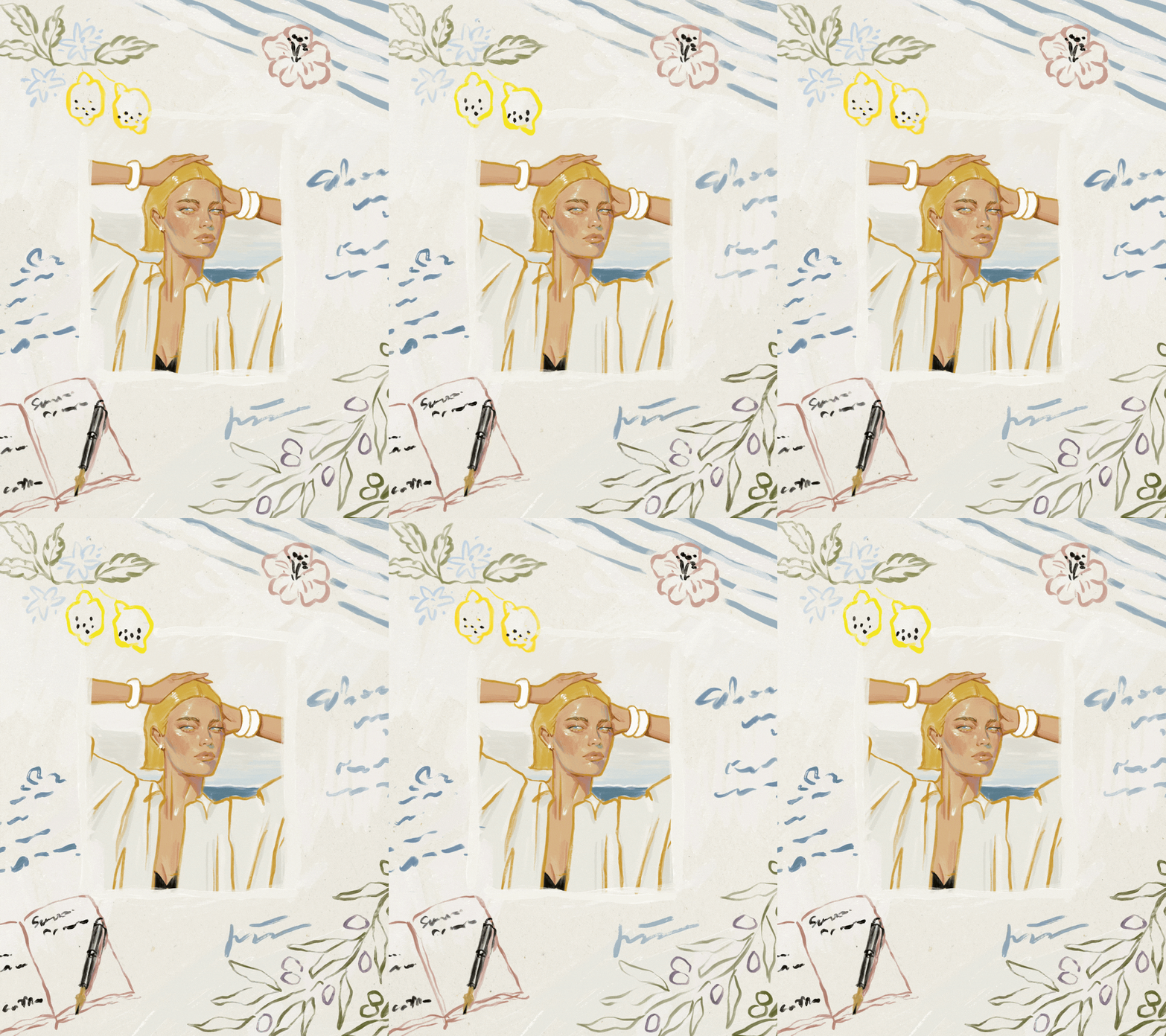
The Minimalist Aquatic perfumes came to define the 1990s, building on the freshness of sea and citrus. Here, that freshness becomes the unseen accessory of The Minimalist. Photo: Haojing Simota
Looking back at the latter half of the past century your options were limited. “So perhaps it wasn’t surprising that people would stick to one fragrance for many years,” says Dariush Alavi, the independent perfume critic behind Persolaise. “Now, more than 3,000 new perfumes are released each year, and so it was inevitable that people would start wondering why they should stick to just one,” he says. Enter the “scent wardrobe” – a rotating cast of fragrances for any and every occasion. “Considering that the 21st century has been a time of hyper-individualism, it logically follows that people would want to assert their own identities through perfume too, by ‘curating’ their own personal scent wardrobes, and thereby trying to be different from everyone else,” says Alavi.