
Swedish-Syrian artist Jwan Yosef’s suggestive works – oft depicting closely cropped scenes of queer encounters – have gained him a loyal audience in the queer community and beyond. Now, he’s compiled a selection of these works into his very first monograph: Intimacies
Jwan Yosef knows some things are better left to the imagination. His sensual works – paintings and sculptures, often rendered in black, white and grey – make gentle suggestions, allowing the viewer to fill in the blanks. “I want to leave space for the audience to develop their own thoughts and their own fantasies,” says Yosef. “I’ve always been drawn more to a whisper, rather than a scream.”
Now, the Swedish-Syrian artist has compiled a handful of these whispers into his very first book. Dubbed Intimacies, the monograph, which releases later this summer via Baron (it is available now for pre-order), is a carefully curated selection of works that explore, as the artist puts it, “the heart and desire”. “I didn’t want to do a whole massive review of my work,” says Yosef, who’s been working steadily for the past two decades (he’s 40, but you wouldn’t know it to look at him). “I wanted it to be a bit more focused – more curated – and intimacy has always been a thorough theme in my practice.” Though it started as a working title, as the book continued to take shape, it became clear it was the only appropriate name. On the cover, we find his painting ‘A Study for Touch 1’ (2021), which depicts a man’s face closely cropped, his eyes closed, his mouth just out of frame.
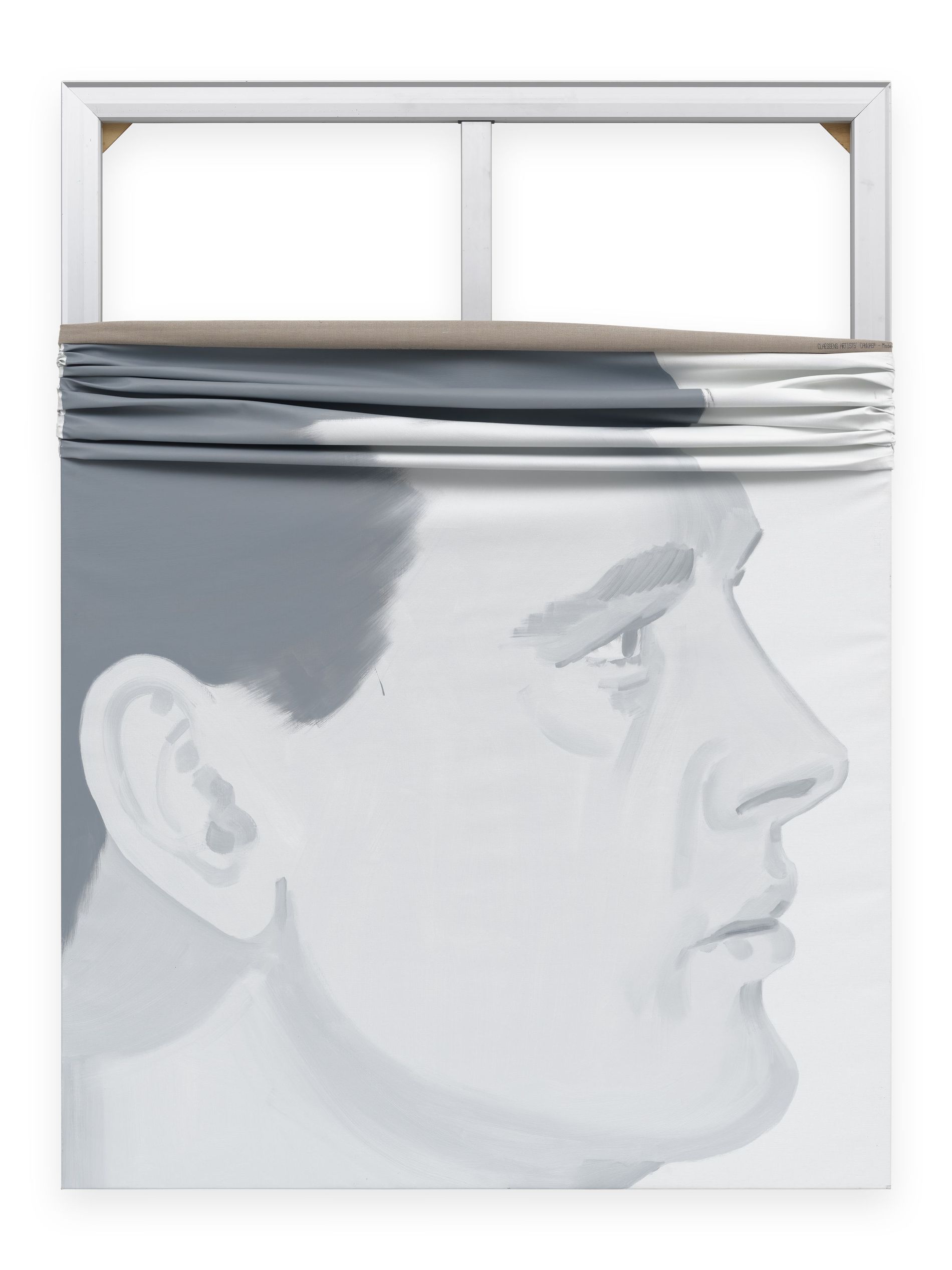
Rock 1, 2018, Oil on Linen, 72 x 54 inches. Photo: Jwan Yosef
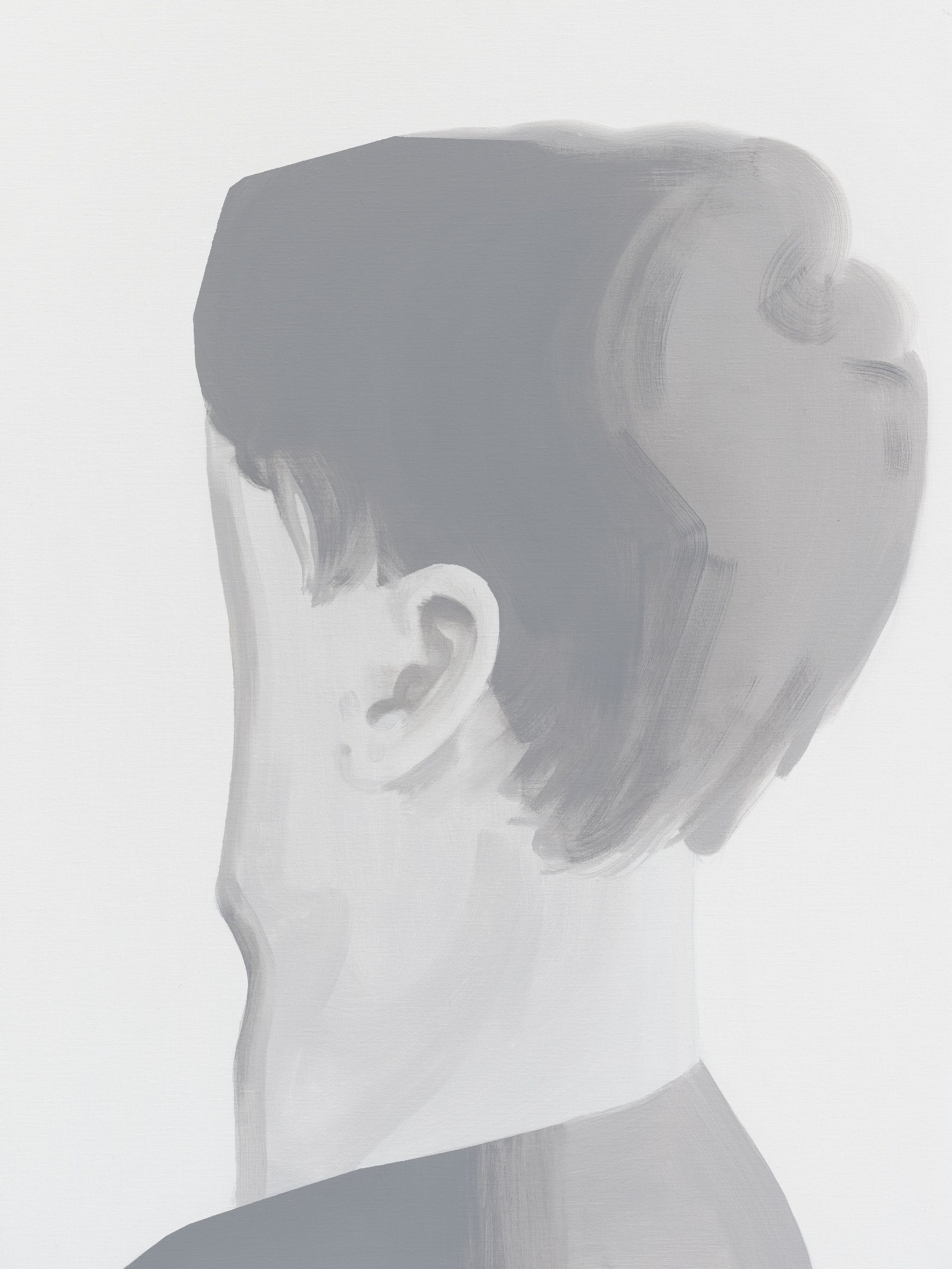
Head, 2023, Oil on Linen, 40 x 30 inches. Photo: Jwan Yosef
There’s something else vital in the intimate moments depicted in Yosef’s work; the subjects are always men. Queerness and queer sexuality has been integral to the artist’s work from the time he was studying at Konstfack University College of Arts in Stockholm (born in Syria, he moved to Stockholm when he was two. He tells me he’s been painting and drawing from “the moment I could hold a pen”. He’d go on to earn an MFA at Central Saint Martins in London). “I think I was the queer quota at Konstfack,” he says, with a laugh. “Being a queer man and having these tools to express that in a contemporary way… It was also super fun. I was really encouraged by my peers. And I’ve stayed within that framework.”
There was another Scandinavian artist who depicted queer sexuality in a palette of black, white and grey: Tom of Finland. When I tell Yosef his work exists within this lineage (albeit much less overtly) he laughs and says “totally”. Yet by playing with suggestions rather than declarations, Yosef aims to reach a broader audience. “It’s been important for me to be a queer artist, but I also want a full audience. The work is to, ideally, entice everybody,” he says. “Whether you’re queer or not or young or old, there is a play in trying to create a universal language that effectively isn’t as raunchy as Tom of Finland, but is a whisper of Scandinavian bliss.”
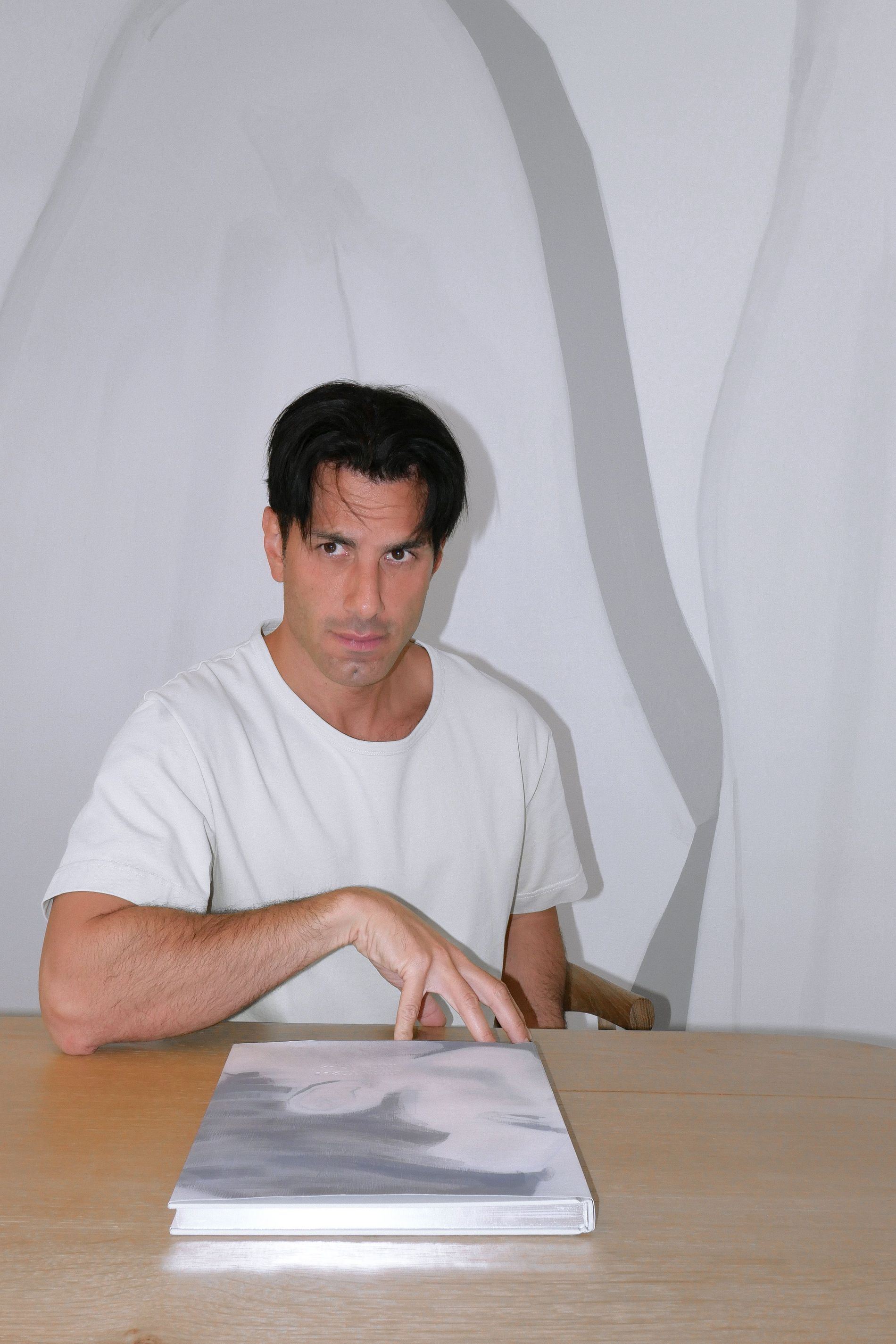
Photo: Studio Jwan Yosef
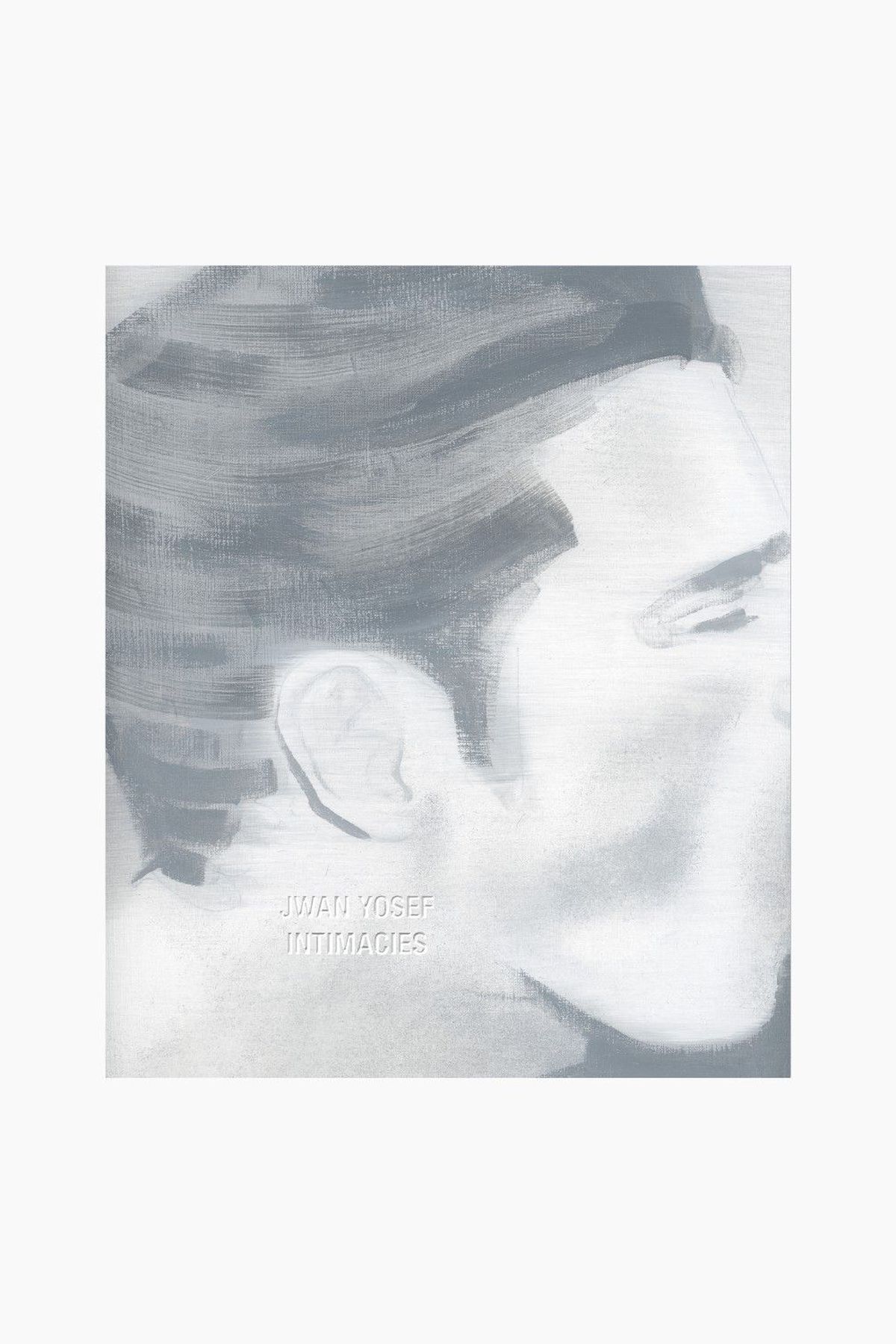
Photo: Jwan Yosef, Intimacies (Baron)
Given that Yosef’s work explores his own identity, it tracks that sometimes he depicts himself, too. There are the self-portraits on canvas, which he ultimately scrunches down, bringing half the canvas off the frame (he describes this as a rejection of the permanence of works on canvas. “I claim the rights to dismantle and destroy my own darlings,” he says). His most notable self portrait, however, was a massive site-specific project on the sands beside the Pyramids of Giza in Egypt. Dubbed ‘Vital Sands’, the work, which was part of a 2022 group exhibition arranged by Art D’Égypte, rendered the artist’s nose, lips and distinctive cleft chin in limestone. “We sourced the same limestone that was used to cover the pyramids back in the days when they were completely smooth,” he says. “The nose alone was seven tonnes.” It’s worth noting Yosef has a face that translates well to marble.
These days Yosef lives and works in Los Angeles (he was previously married to the singer Ricky Martin, with whom he shares two young children). Balancing art and fatherhood has impacted his practise, both in practical ways (his days in the studio are bookended by school pick-up and drop-off) and in more abstract ways. “This is the most American thing I’ll say, but I want my kids to feel a sense of pride,” he says. “And it’s the sweetest things, but they’re my biggest fans. I wish the world saw what they see.” Sometimes his kids will hang out in the studio, painting their own artworks in the corner or applying a thumbprint to one of their dad’s works. “There’s another layer,” says Yosef. “It’s not just me and my own desires and goals. It’s including them in the process.”
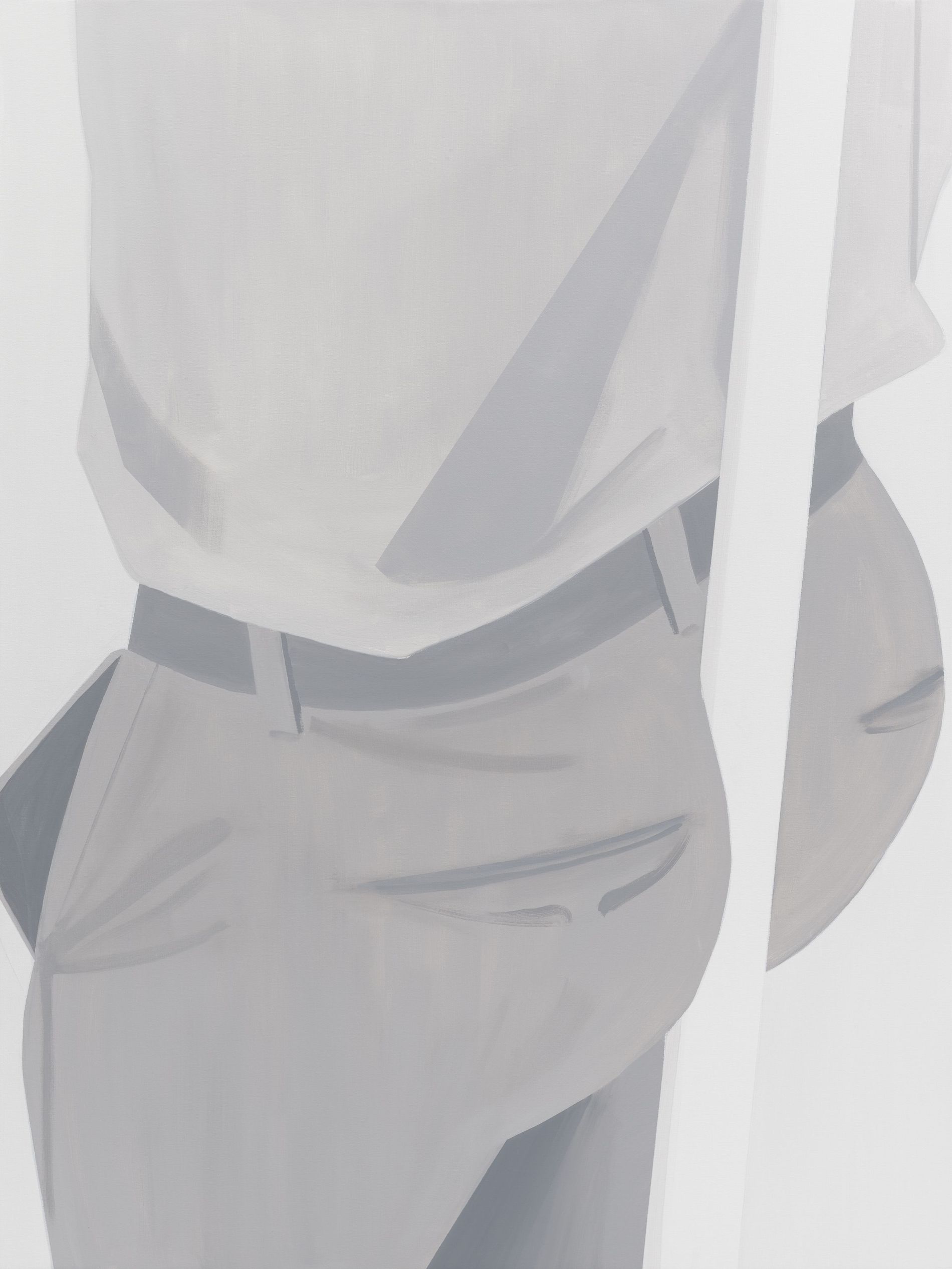
Pole, 2023, Oil on Linen, 72 x 54 inches. Photo: Jwan Yosef
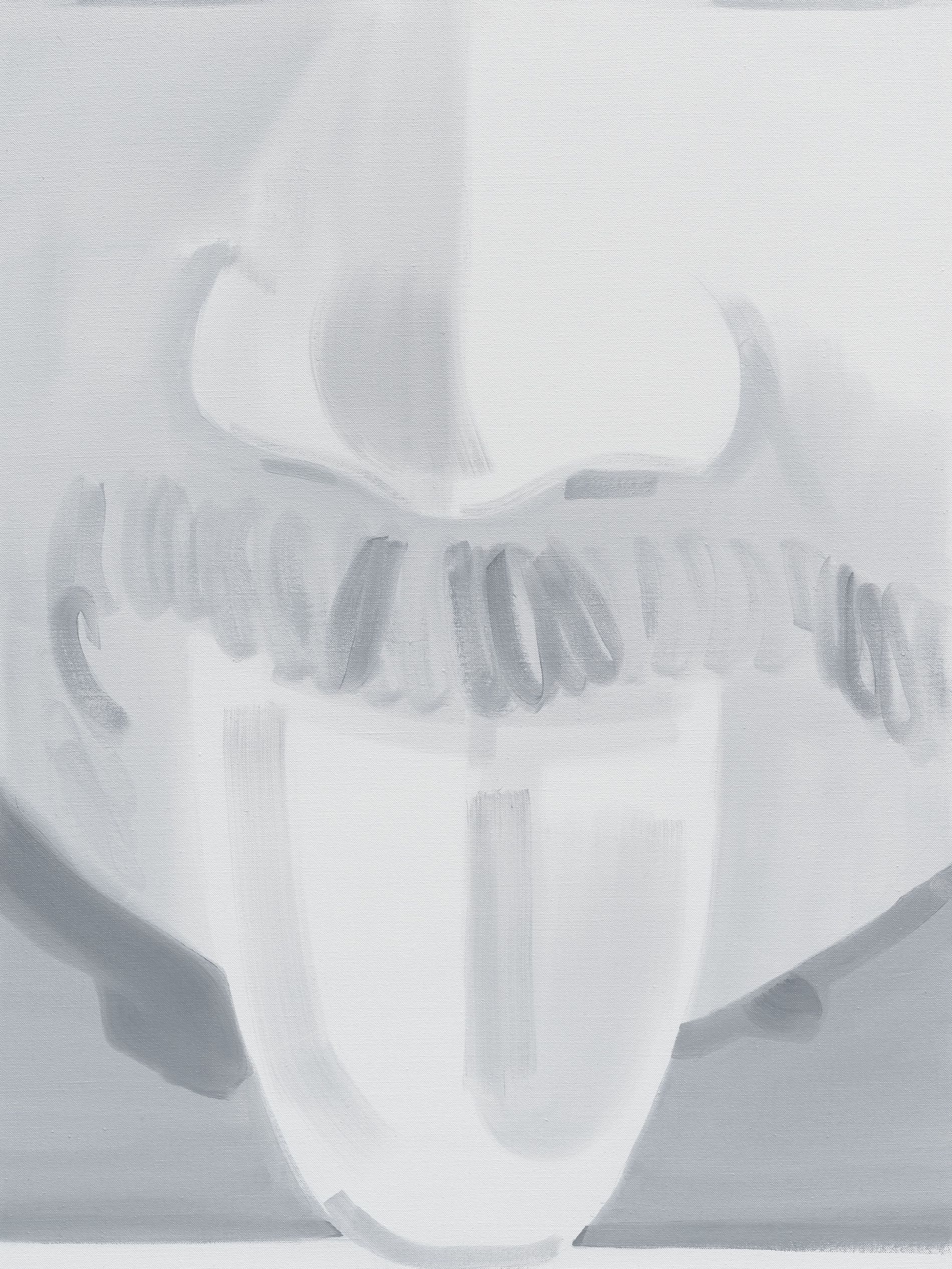
Lick 2, 2021, Oil on Linen, 40 x 30 inches . Photo: Jwan Yosef
While Yosef’s work, with its considered, minimal brushstrokes and monochromatic palette, is undeniably rooted in a Scandinavian aesthetic (when we meet for coffee, Yosef himself is dressed in all black, but he assures me it’s just his plane outfit – he was heading to Paris in a couple of hours), Los Angeles has impacted his practise in one specific way. “It was the most American thing,” he says, laughing. “In my studio visits for the first six months, I kept getting, ‘I love this, but can you make it bigger?’” And if that isn’t a Yosef-appropriate suggestion – a whisper – I don’t know what is.