
As the second-hand market for engagement rings booms and personalisation becomes more popular than ever, what should a bride-to-be consider when buying a wedding band? How much should the engagement ring cost? And how on earth do you pick a piece of jewellery you're meant to wear forever? We asked industry experts to guide us through the jewellery jungle
The engagement ring has a long history of reinvention. Ancient Egyptians preferred braided reeds; Romans opted for iron bands. In 1477, the Italian Archduke Maximilian commissioned the first recorded diamond engagement ring in history. Colourful gemstones and intricate settings dominated the Victorian and Edwardian eras, before De Beers' "A Diamond is Forever" campaign cemented diamonds as the go-to symbol of love in the 20th century. Today, engagement rings and wedding bands are as diverse as the couples who wear them, but how do you find your forever fit among the labyrinth of metals, gemstones, cuts, and settings?
Below, we asked Nordic jewellery experts to guide us through the most important jewellery decision of your life and listed some of our favourite brands for a starting point.
Our favourite Nordic brands for engagement rings
The best jeweller for a traditional engagement ring: A.P. Shaps
Everything at this family-run Stockholm house is made by hand in their own Strandvägen atelier, and it shows. A.P. Shaps has built its reputation on exceptionally sourced diamonds and a goldsmithing standard that puts craftsmanship front and centre. Their engagement ring collection runs from clean solitaires to trilogy settings, all with the kind of considered detail that makes a ring look as good in forty years as it does today. The store is open by appointment only, which suits them well. This is a place that takes its time.
The best jeweller for a custom engagement ring: Aurum
Guðbjörg Kristín Ingvarsdóttir has been designing out of Reykjavík since 2003, drawing on Icelandic landscape, mythology and her own distinctive eye. The stones she reaches for tend to be coloured (deep sapphires, moody garnets, pale aquamarines) which makes her pieces perfect if you're after something unconventional. Aurum is also one of the studios in the region that treats the custom process as a truly collaborative one, often incorporating inherited gemstones into entirely new pieces.
The best jeweller for a modern engagement ring: Engelbert 1920
Stockholm's Engelbert has been a reference point for understated Swedish fine jewellery for over a century, and their engagement ring collection is exactly what you would expect: refined, confident, and built to wear for life. Their Signature b remains a bestseller for a reason.
The best jeweller for an unconventional engagement ring: Ole Lynggaard
The Copenhagen house founded by Ole Lynggaard in 1963 has always done things at its own pace and on its own terms. Three generations of the Lynggaard family have since added their own voices to the archive, and the engagement ring collection reflects that accumulated confidence: organic shapes, unexpected textures, stones chosen for character rather than convention. If you want something that would never be mistaken for anyone else's ring, start here.
The best jeweller for a paired set: Sophie Bille Brahe
Most jewellers will tell you the wedding band is something to think about later. Sophie Bille Brahe disagrees. The Copenhagen designer builds her entire bridal collection around the idea that the two rings should be conceived together from the start, creating one seamless shape on the finger rather than two rings that happen to coexist. The references are celestial (she is a descendant of the astronomer Tycho Brahe), the aesthetic is distinctly Copenhagen, and the diamonds are set to be worn every day, scratches and all.
The best jeweller for a handcrafted engagement ring: David-Andersen
Norway's oldest jeweller has been at this since 1876, and the handcrafted engagement ring collection is where that history is most legible. Every ring is made by the house's own goldsmiths, who work with classical techniques and each diamond and gemstone is hand-picked by an in-house gemologist. The range runs from clean solitaires to more characterful multi-stone and rosette designs, including some with coloured stones for those who want something beyond the standard.
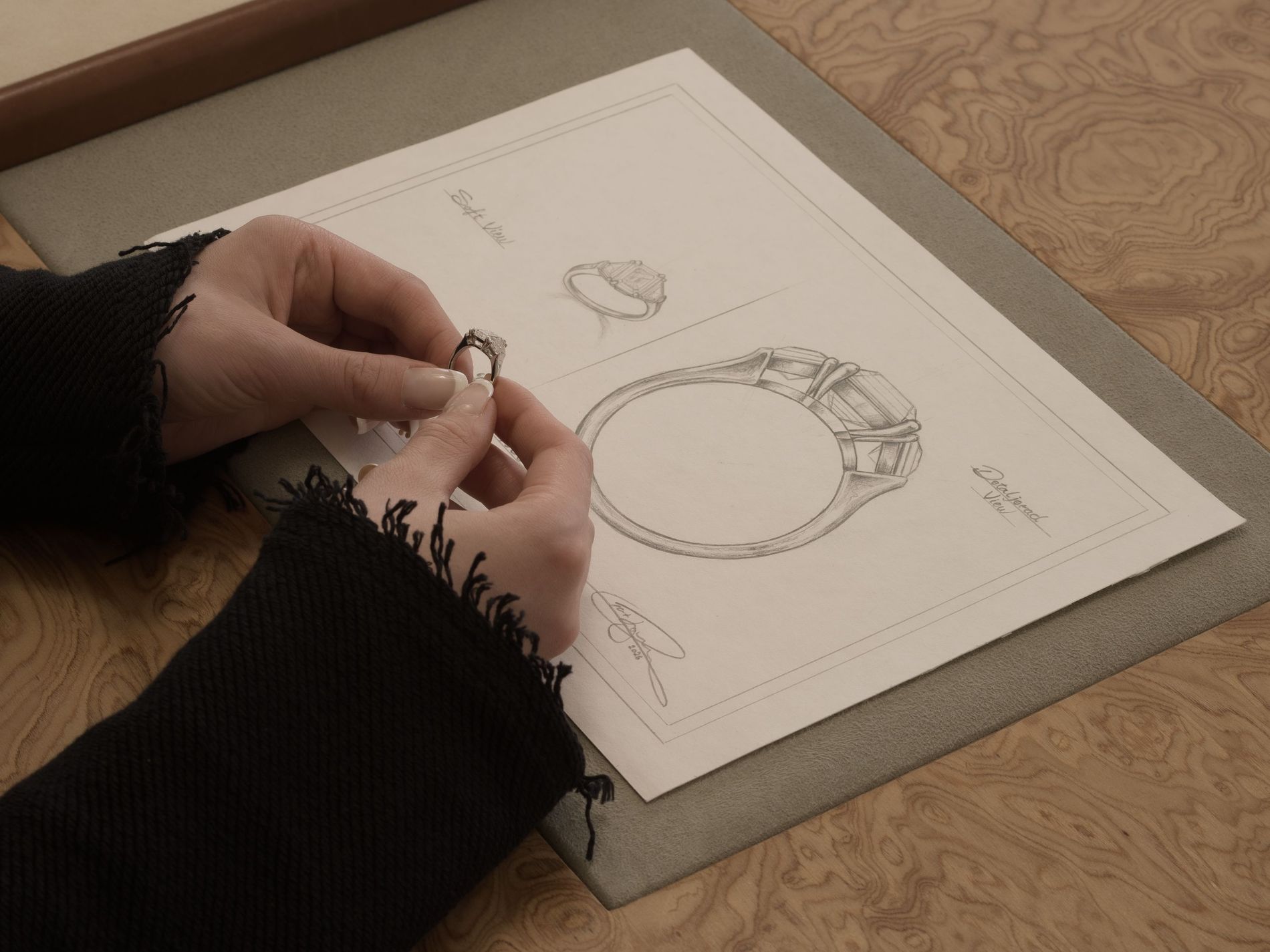
Photo: Courtesy of A.P. Shaps
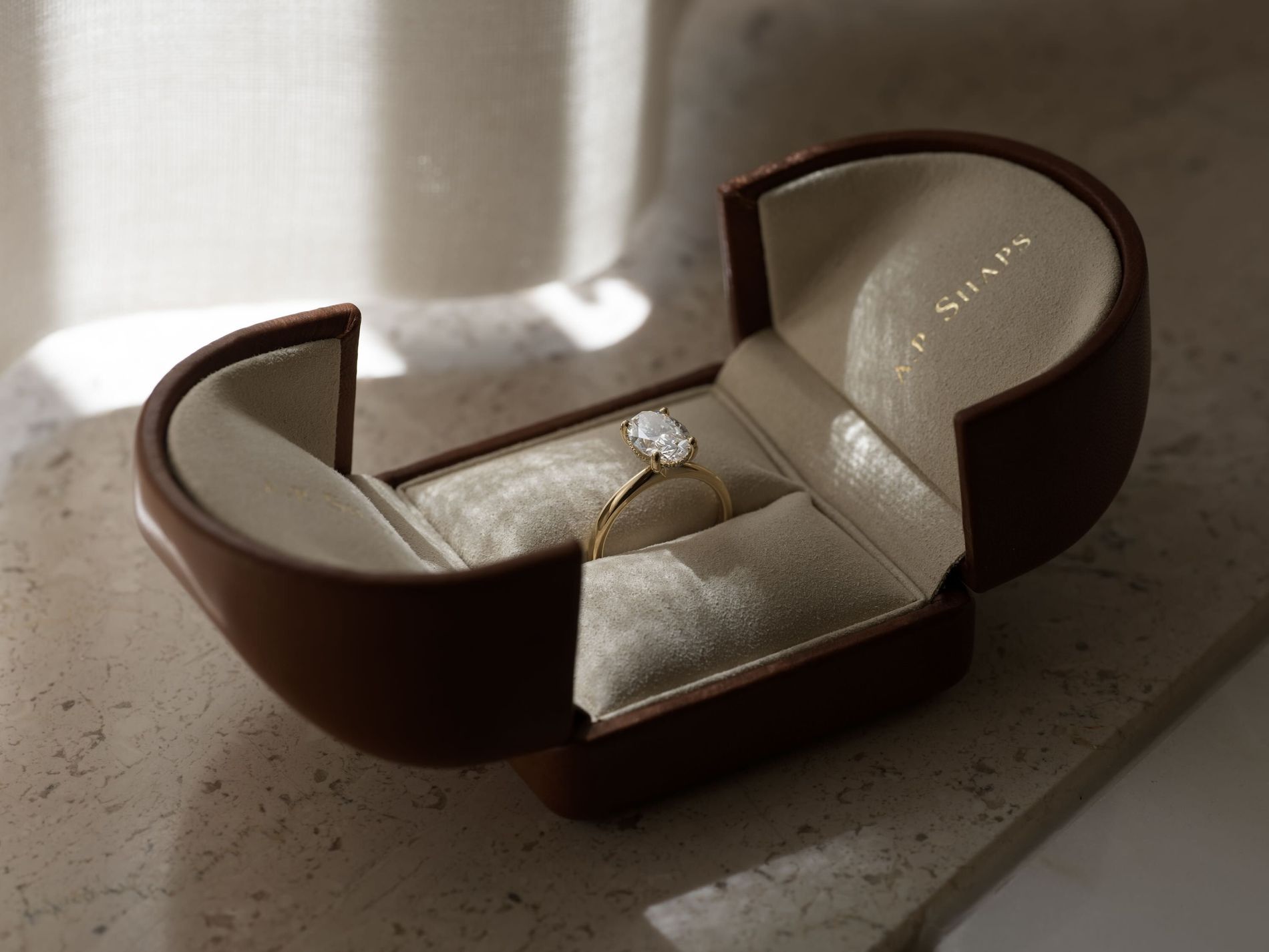
Photo: Courtesy of A.P. Shaps
Is an engagement ring the same as a wedding band?
Not quite, though the two are increasingly designed to work as one. An engagement ring is typically given at the proposal; the wedding band is exchanged at the ceremony. The difference is more symbolic than stylistic, and plenty of people choose to wear both, stack them, or swap between the two depending on the occasion. "There aren't really any rules anymore. It is all about finding a combination that you love," says Kajsa Schuterman, brand manager at Swedish fine jewellery house Engelbert.
Copenhagen-based designer Sophie Bille Brahe's (whose work has been worn by Camille Charrière and whose rings marked the marriage of her own brother Frederik and wife Caroline Brasch Nielsen) entire bridal collection is built on the idea that the two should never be an afterthought to each other. "They are like two lovers holding hands, or like a letter fitting into an envelope," she says of her paired Chere and Cher rings, named for the affectionate shorthand couples use in handwritten notes. She started by designing her dream engagement rings, then fashioned the wedding band to fit perfectly against them.
Schuterman's practical advice follows the same logic. "The one thing I'd consider is how the rings lie next to one another, so they don't wear on each other."
How much should an engagement ring cost?
The old three-months-salary rule was a marketing invention, not a measure of love. The more useful starting point, according to Schuterman, is simply deciding on a number before you start looking. "Deciding on a budget is the first step," she says. "Next, you need to consider your lifestyle and your personal preferences. That way, you can narrow down your options."
The market has also never offered more at every price point. Lab-grown diamonds, alternative gemstones, and a booming second-hand market mean there is something genuinely beautiful at most budgets. And if your taste changes down the line? "There's always the possibility to upgrade your rings later on in life," says Schuterman. "I know many who swap their rings around, wearing them separately on different occasions. Just take Victoria Beckham, she has 14."
On deciding between different engagement ring styles
This is where most people get lost, and where the decision becomes properly personal. "Choose a jeweller where craftsmanship and passion are at the heart of everything, and where every engagement ring is made by hand to be worn through life and generations," says Nathalie Haugeberg at A.P. Shaps. A few things worth knowing before you start:
On cut: Emerald, oval, marquise, pear, cushion, princess, brilliant cut... Each has a distinct personality. Emerald cuts are graphic and architectural while ovals lengthen the finger and solitaires are the definition of staying power. Schuterman's own pre-proposal advice to her husband was characteristically direct: "If he didn't know what engagement ring to pick, just opt for a simple gold band. It is so simple, yet beautiful and symbolic. And it easily pairs with the wedding ring, whether you choose an eternity band or a solitaire."
On gemstones: Diamonds are still the default, but coloured stones are having a real moment. Sapphires in particular have seen a surge of interest – Princess Diana's oval sapphire, now worn by Catherine, Princess of Wales, remains the most referenced engagement ring in history. Vintage and antique rings are rising for similar reasons: the craftsmanship of the Victorian and Edwardian eras is increasingly sought after, and a pre-owned ring carries a history that a new one cannot replicate. "Selecting the stone for your partner is one of the most personal declarations of love you can give," says Haugeberg. Lab-grown diamonds offer the same optical and physical properties as natural stones at considerably lower prices, and moissanite sits close to diamond in appearance and well below it in cost.
On metal: Yellow gold reads warm and traditional while rose gold is softer and white gold or platinum lean cooler and more contemporary. More and more modern brides opt for silver, as well, but remember that this is a soft metal which wears down over time.
On setting: Prong settings show off the stone and maximise how it refracts the light. A bezel settings wrap it in metal for a cleaner, more protected look. Vintage and antique settings are often more intricate, but as Schuterman notes, they can also be more fragile.
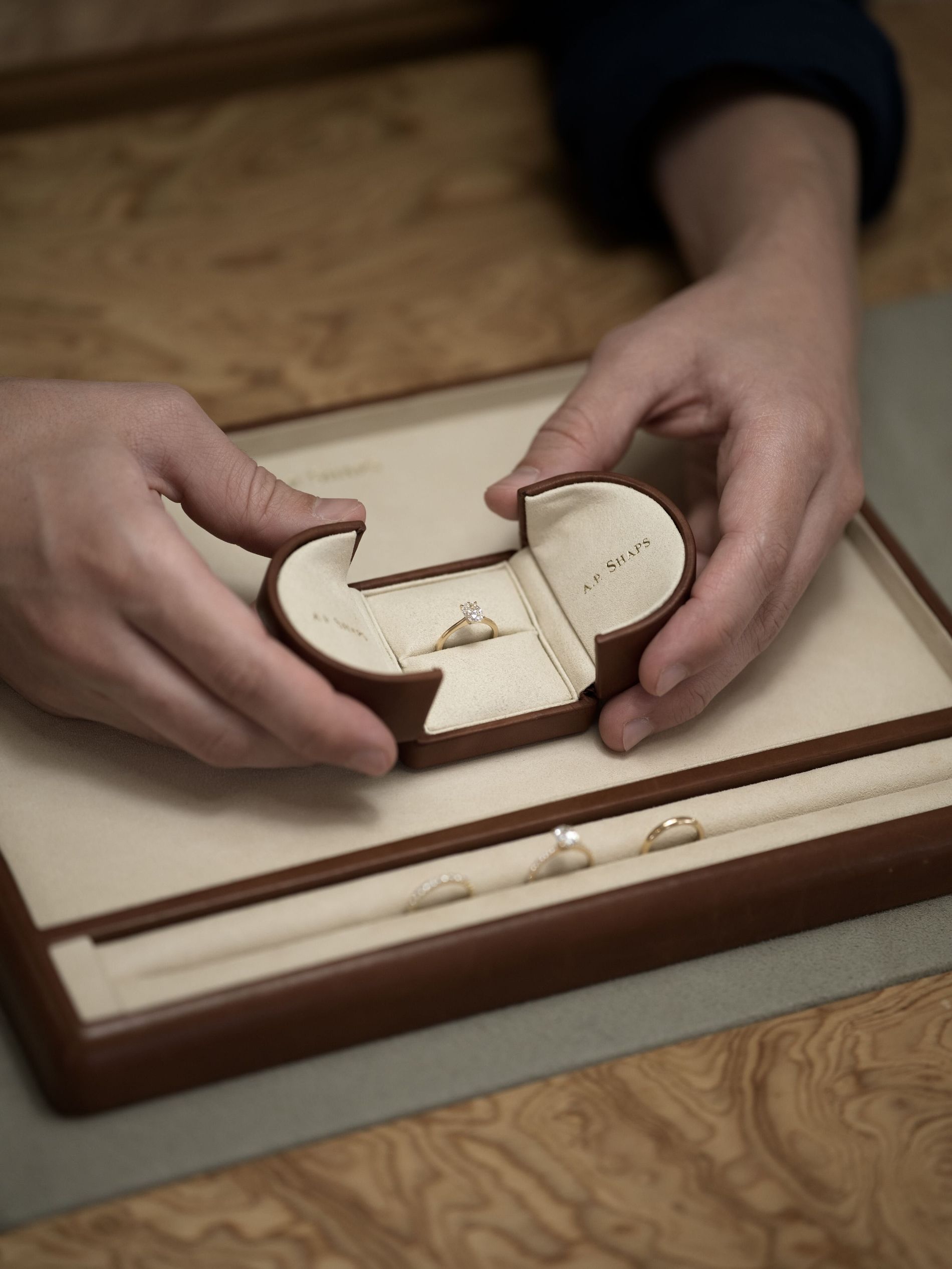
Photo: Courtesy of A.P. Shaps
How to choose a ring for your lifestyle
This is the question most people forget to ask, and possibly the most important one. "Think about what you do during your day," says Schuterman. "Are you an active person? Do you work with your hands, or do you have an office job? These are important factors to consider when choosing the right ring."
High-set stones and ornate vintage settings are more vulnerable to knocks and catching on things. If you spend time at a gym, in the kitchen, or working with your hands, a lower-profile setting will serve you better over decades. Bille Brahe makes no apologies for designing rings that are built for real life. "The little scratches are special to me," she says. "Diamonds are rough and can handle a lot."
What to know about custom and vintage engagement rings
The most significant shift in engagement ring culture over the past decade is not a particular stone or style but the turn towards personalisation. "The trend that we have seen for a while is that couples tend to look for a personal touch," says Swedish jeweller Anette Welander. "They are looking for a more personalised and customised experience to incorporate their personalities and love stories in a special and unique way."
For Guðbjörg Kristín Ingvarsdóttir, the Icelandic designer behind Aurum (whose work has appeared on Björk and Katy Perry and in Netflix's The Witcher) the custom route is often the answer for people who cannot find something that fits both their aesthetic and the way they actually live. "Sometimes, customers ask if we can incorporate gemstones from their inherited rings into a new piece," she says. "So it's a very individual process, and we're always open to creating a special piece according to our customers' preferences." If you are considering going bespoke, Haugeberg's advice is to start earlier than you think you need to. "Allow yourself enough time to enjoy the whole process and the joy of creating a truly unique ring for the person you love."
How to wear an engagement ring and wedding band together
In most Western countries, both rings sit on the fourth finger of the left hand, with the wedding band placed closest to the heart – meaning underneath the engagement ring. The tradition is to move the engagement ring to the right hand during the ceremony, slide the wedding band on, then return the engagement ring on top. Some people reverse the order, some wear one on each hand, while other keep the engagement ring for special occasions only. There is no wrong answer.
What matters more, from a design perspective, is that the two rings actually sit well together. This is the thinking behind Bille Brahe's paired collections such as the Ensemble Escargot, the Ensemble Croissant, the Grand Ensemble Ocean. Each set is designed so the engagement ring and wedding band sit flush, creating one seamless shape on the finger.
Schuterman takes a more relaxed position. She does not think the two need to match perfectly. "There's a certain personal charm to a nonchalantly matched look when done right," she says. The practical concern is the same either way: make sure the rings are not rubbing against each other in a way that causes lasting wear to either one.
How to care for your engagement ring
Engagement and wedding rings are, as Schuterman puts it, some of the first significant investments you make as an adult. A few habits make a real difference over time.
Take your rings off before household chores. "It might feel strange because you're inclined to always wear them, but there's wear and tear no matter what," says Schuterman. Dish soap and hand soap are manageable; hand cream, she warns, is "the death of shiny rings." She will not remove hers in a public bathroom, but takes them off at home without a second thought.
Every three years or so, bring your rings in for a service check and polish. "Doing that regularly helps ensure that the settings are in good condition and minimises the risk of stones falling out," says Schuterman.
And do not be too precious about wear. Bille Brahe's own ring, given by her partner before the birth of her children, has lived a full life on her finger. The scratches, she says, are entirely the point.