
Shining a spotlight on our Vogue Scandinavia Living cover star, Bjarke Ingels, and his innovative studio Bjarke Ingels Group (better known as BIG), we look back at some of the architects most interesting projects. From small scale treehouses in Sweden's Lapland to towering residential developments in NYC – below, architect and content creator Cathal Crumley becomes your tour guide to these must-see sites, answering the question: Whats the BIG idea?
8 House in Copenhagen, Denmark
Built in 2010, the 8 House (located in Ørestad South, on the edge of a canal) was envisioned as a micro city within a city. The largest private development of its time, this is a suburban mixed-use development with a literal twist: a ten-story cycle path encircling two intimate courtyards in a sloping, continuous loop of residential, retail and office spaces all woven together. No wonder, then, that the development is best experienced through a joyful stroll.
What's the BIG idea: A walkable and bike-able aerial neighbourhood flowing in an infinite loop, it attempts to rethink our understanding of urban living by integrating the needs of the modern day city dweller in its playful figurative architectural expression.
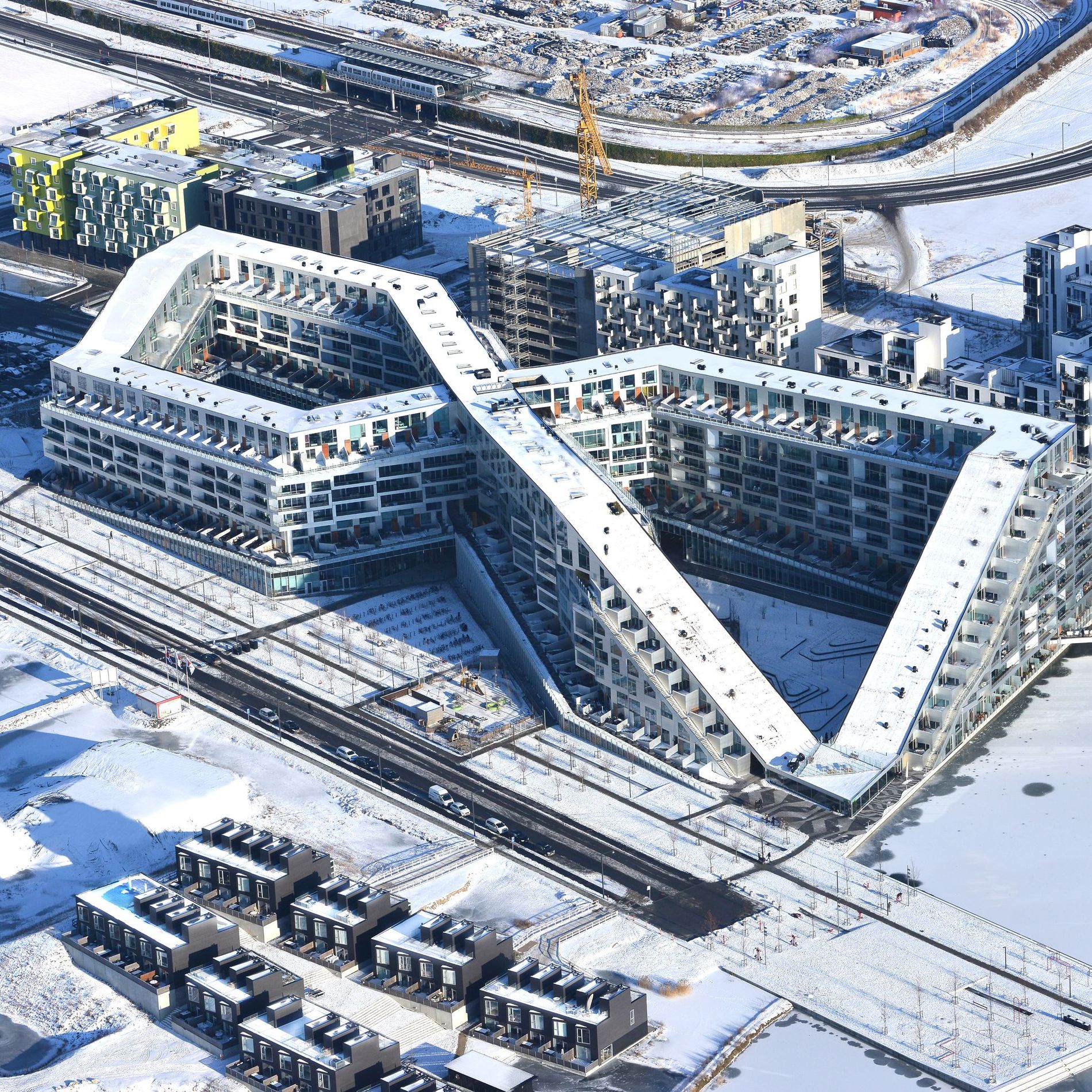
Photo: Dragor Luftfoto
CopenHill in Copenhagen, Denmark
Waste production + artificial ski slope = architectural landmark?
One of Bjarke Ingels Group’s most monumental works, CopenHill (also known as Amager Bakke) sees industrial infrastructure merge with recreational play. The result – a waste-to-energy plant topped with a ski slope – stands as the studio’s clearest expression of hedonistic sustainability: the belief that environmental responsibility and pleasure can coexist. Mixing the spontaneity of sport with the technical precision of large-scale engineering, the project embodies BIG’s ethos: playful, humorous, and boldly diagrammatic in its execution.
CopenHill is BIG at its joyful best, transforming infrastructure into civic experience while supporting Copenhagen’s goal of becoming the world’s first carbon-neutral city.
What's the BIG idea: Industrial infrastructure as recreational playscape.
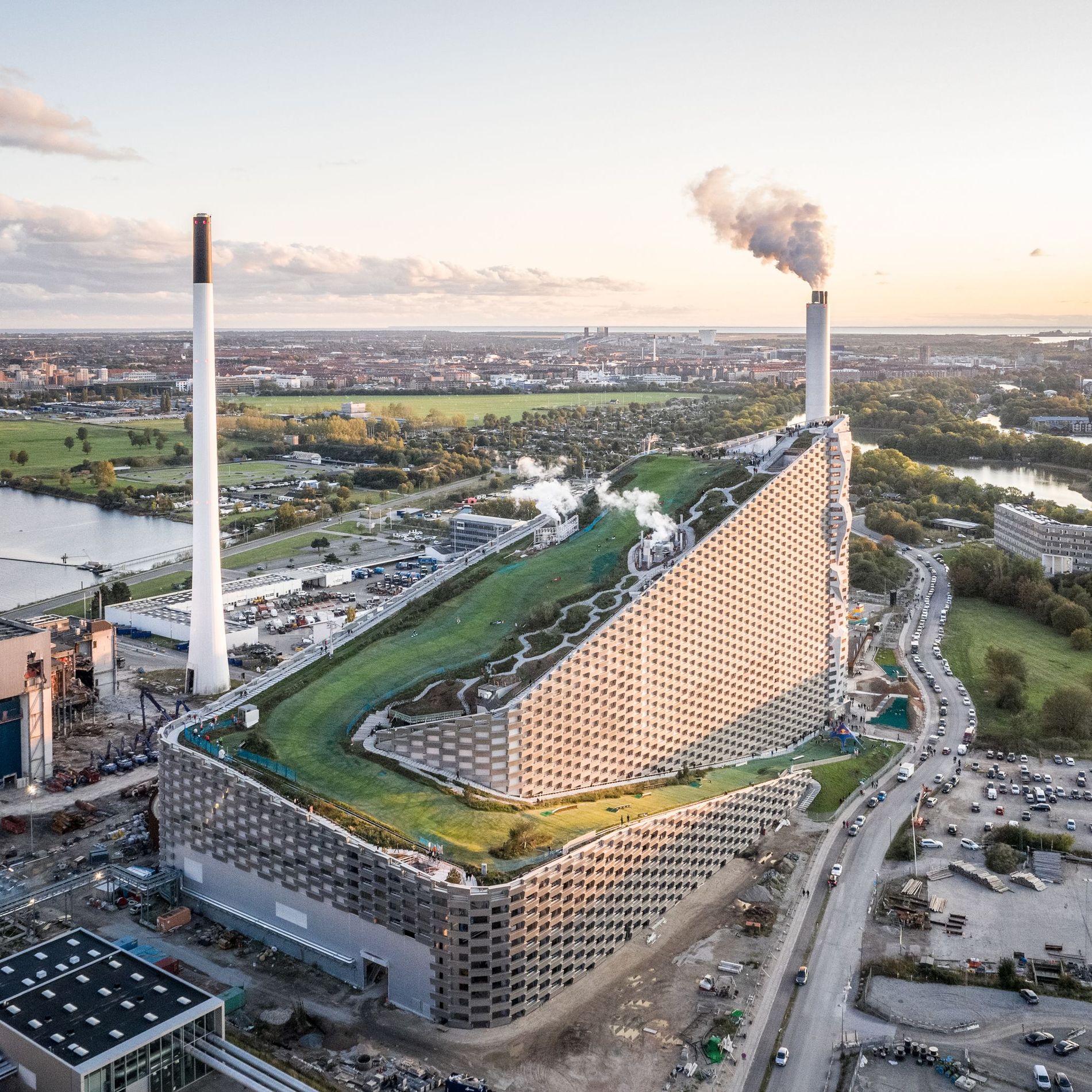
Photo: Rasmus Hjortshoj
VM Houses in Copenhagen, Denmark
The VM Houses are articulated as two distinct figures in the form of a (you guessed it) V and an M – both instantly recognisable from an aerial view of the site. But what is the reason for this irregular design? Working in tandem, the V and the M footprints cleverly mitigate overlooking and voyeurism. It’s a diagrammatic response to a site-specific challenge: each of the 225 homes interlocks and stacks in an irregular formation, forming facades of striking architectural character.
More than that, the irregular arrangement of the blocks allows each apartment to feel like a corner unit, even those situated deep within the plan. In fact, nearly a third of the apartments boast a unique layout, reinforcing the project’s ethos of diversity and individuality. Facing the park, the balconies were designed to provide maximum cantilever with minimal shade. The result is a cascading composition of angular terraces that afford every resident private outdoor space and uninterrupted views without compromising a neighbour’s privacy.
What’s the BIG idea: A uniquely-shaped project that turns every apartment into a light-filled, uniquely oriented home.
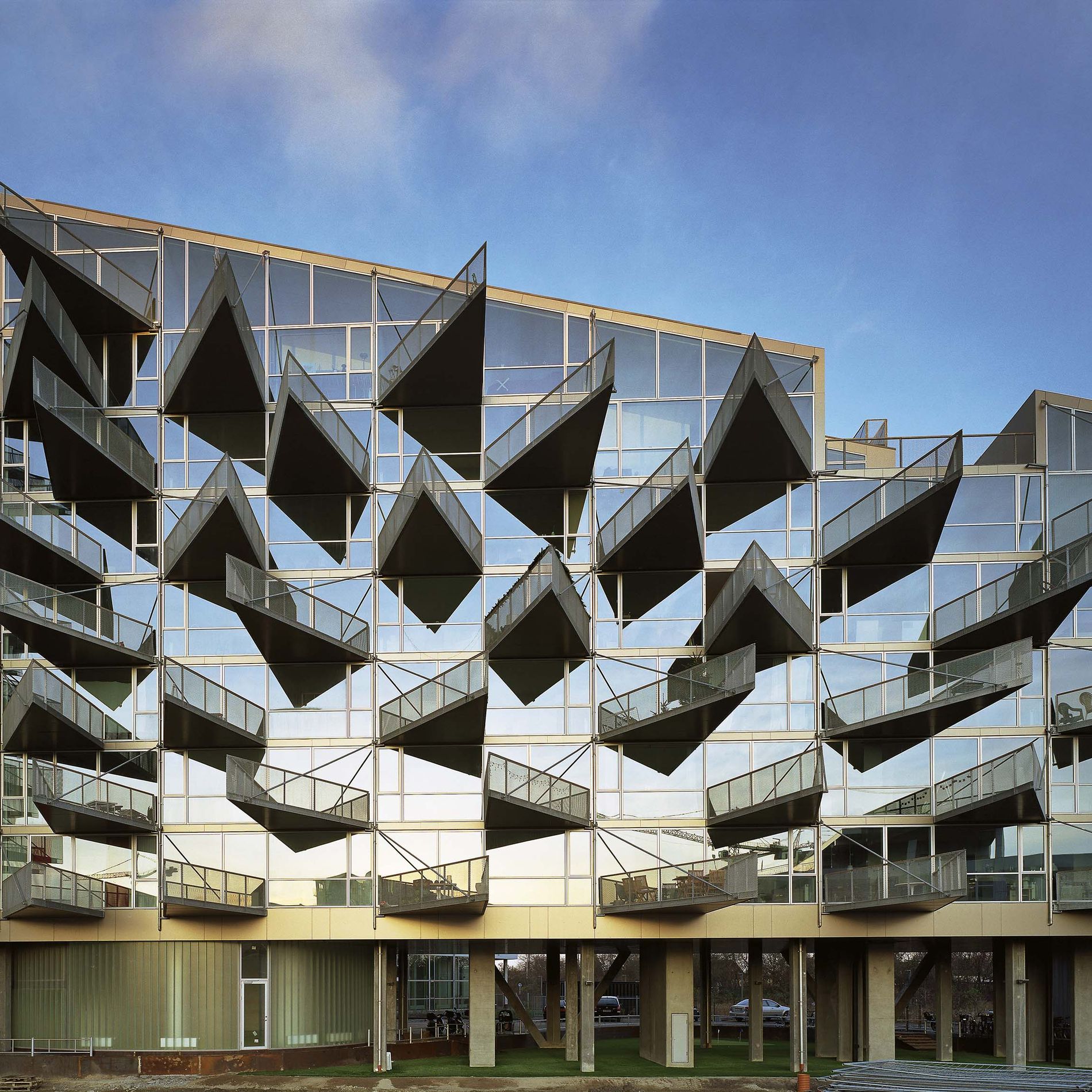
Photo: Johan Fowling
Lego House in Billund, Denmark
Architects love Lego. Right? So it’s little wonder that Bjarke Ingels Group was commissioned to design the Lego House in Billund, Denmark – the birthplace of the iconic brick – in 2017. Conceived as an open invitation to build and play, the structure is both a literal and figurative stack of blocks, interlocking to form a cluster of overlapping galleries suspended above a central public square.
Designed for adults and children alike, the building incorporates child-scale wayfinding, peek-through moments and colour-coded zones that align playfully with the project’s guiding principle: architecture as play.
What’s the BIG idea: Real-life Lego for architects.
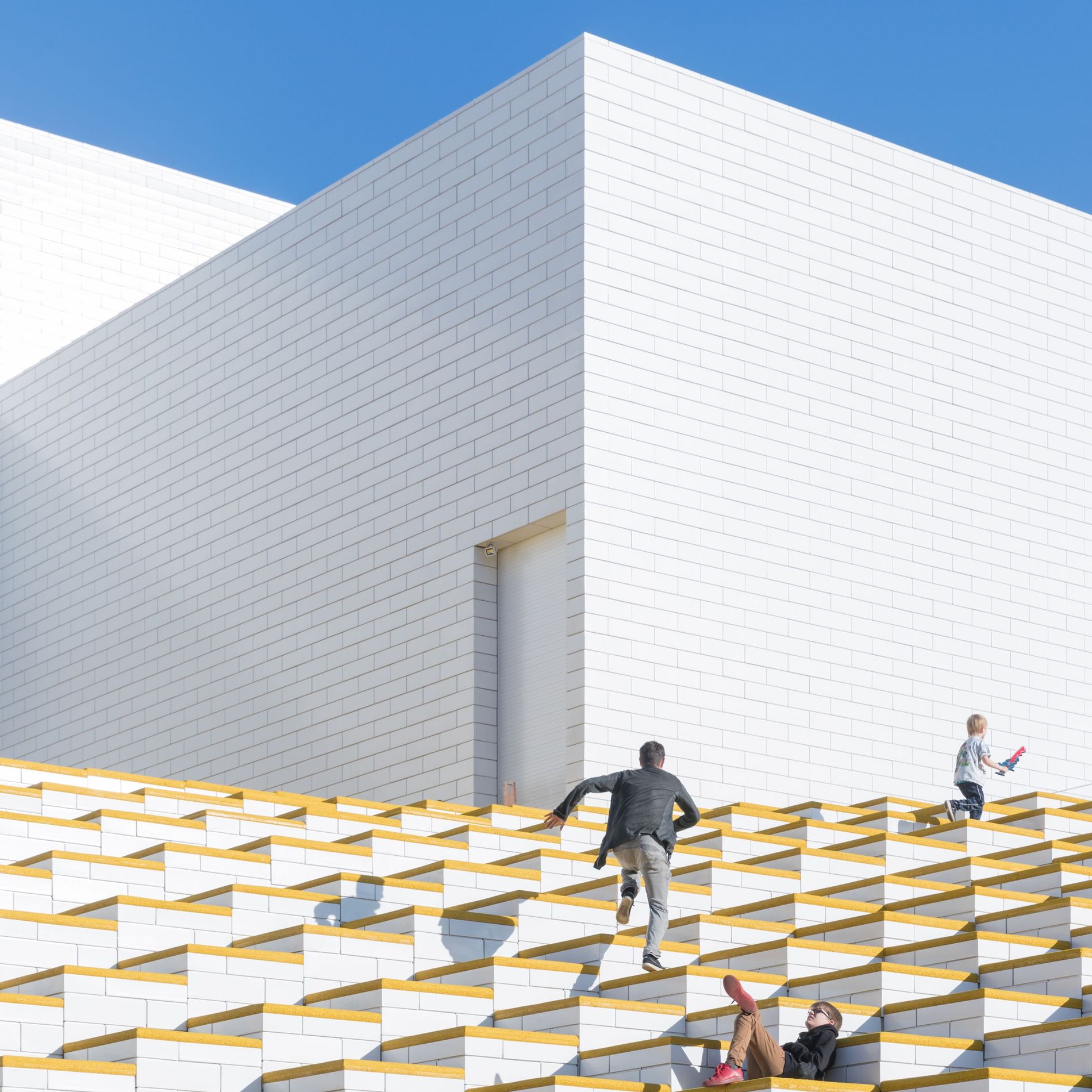
Photo: Iwan Baan
79 & Park in Stockholm, Sweden
Another mass-residential project, this time conceived as an inhabitable landscape. 79 & Park is a timber-clad, stepped courtyard block on the edge of Stockholm’s Gärdet, where each apartment functions as a hillside cabin, complete with a private garden and sweeping penthouse views over the park and the city beyond.
Organised around a 3.6 x 3.6-metre grid applied across the site, the structure rises to a peak of 35 metres before gently stepping down to maximise natural daylight. As with the VM Houses, many of the units feature unique layouts, resulting in a wooden, voxel-like formation that reimagines urban apartment living as landscape.
What’s the BIG idea: Housing as urban landscape.
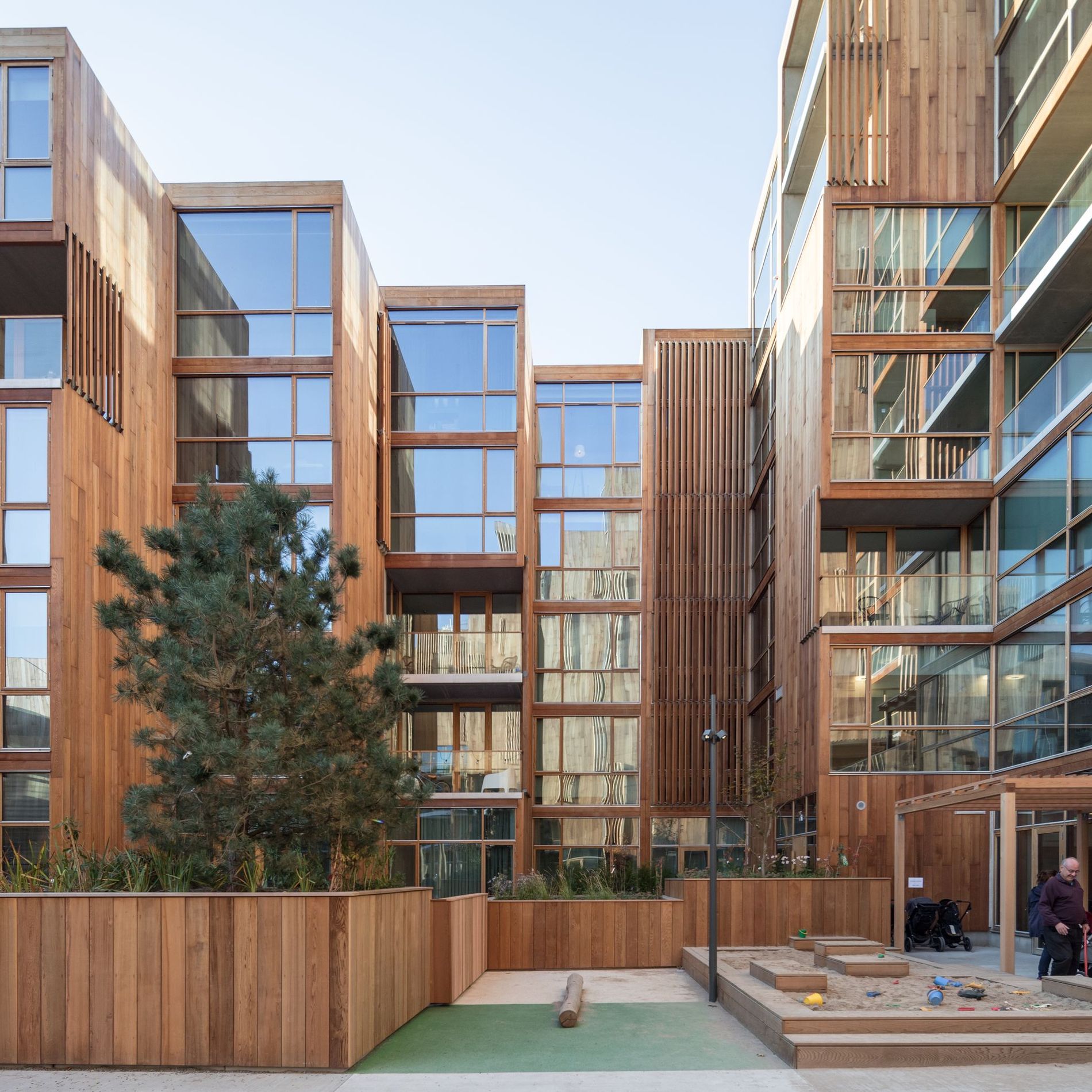
Photo: Laurian Ghinitoiu
VIA 57 West in New York City, USA
Somewhere between modern perimeter block and the ancient pyramids you start to get the picture of BIG's VIA 57 West. This high-rise transplants the European courtyard typology to Manhattan’s west-side waterfront, reimagining high-density living through a distinctly Scandinavian lens. At street level, the structure rises like a faceted mountain in the middle of the city, while at its core lies a light-filled courtyard offering residents a rare pocket of calm amid the relentless rhythm of New York.
What distinguishes this “courtscraper” from its European predecessors is the dramatic northwest corner, which soars to a peak of more than 140 metres. The gesture allows the project to match Manhattan’s vertical density while retaining the intimacy and human scale of European courtyard housing.
What’s the BIG idea: European courtyard living meets Manhattan skyscraper.
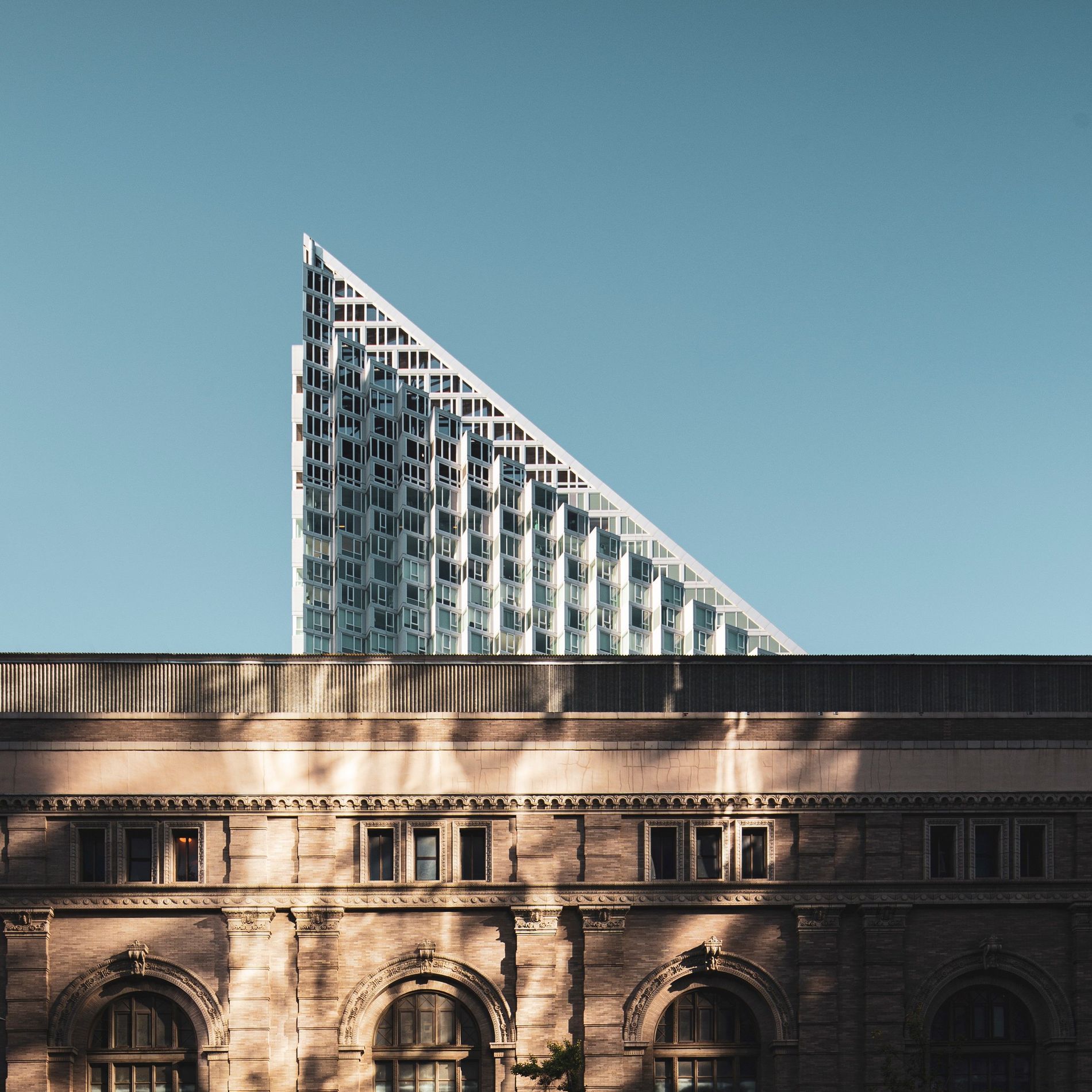
Photo: Ivane Katamashvili
BIG HQ in Copenhagen, Denmark
Completed in 2024, BIG HQ represents the culmination of the studio’s LEAPP philosophy: an integrated design method that brings together landscape, engineering, architecture, planning and product design under one roof. The result is a state-of-the-art headquarters that embodies the studio’s holistic way of working.
Continuous stairs link the studio decks, mezzanines hover above shared spaces, and glass meeting rooms plug in like furniture to encourage openness, movement and exchange. Part studio, part lab, part showroom, it is designed to evolve alongside the teams that inhabit it. The building also aims to achieve Denmark’s DGNB Gold certification, underscoring its commitment to sustainable design.
What’s the BIG idea: Collaboration as the foundation for sustainable design.
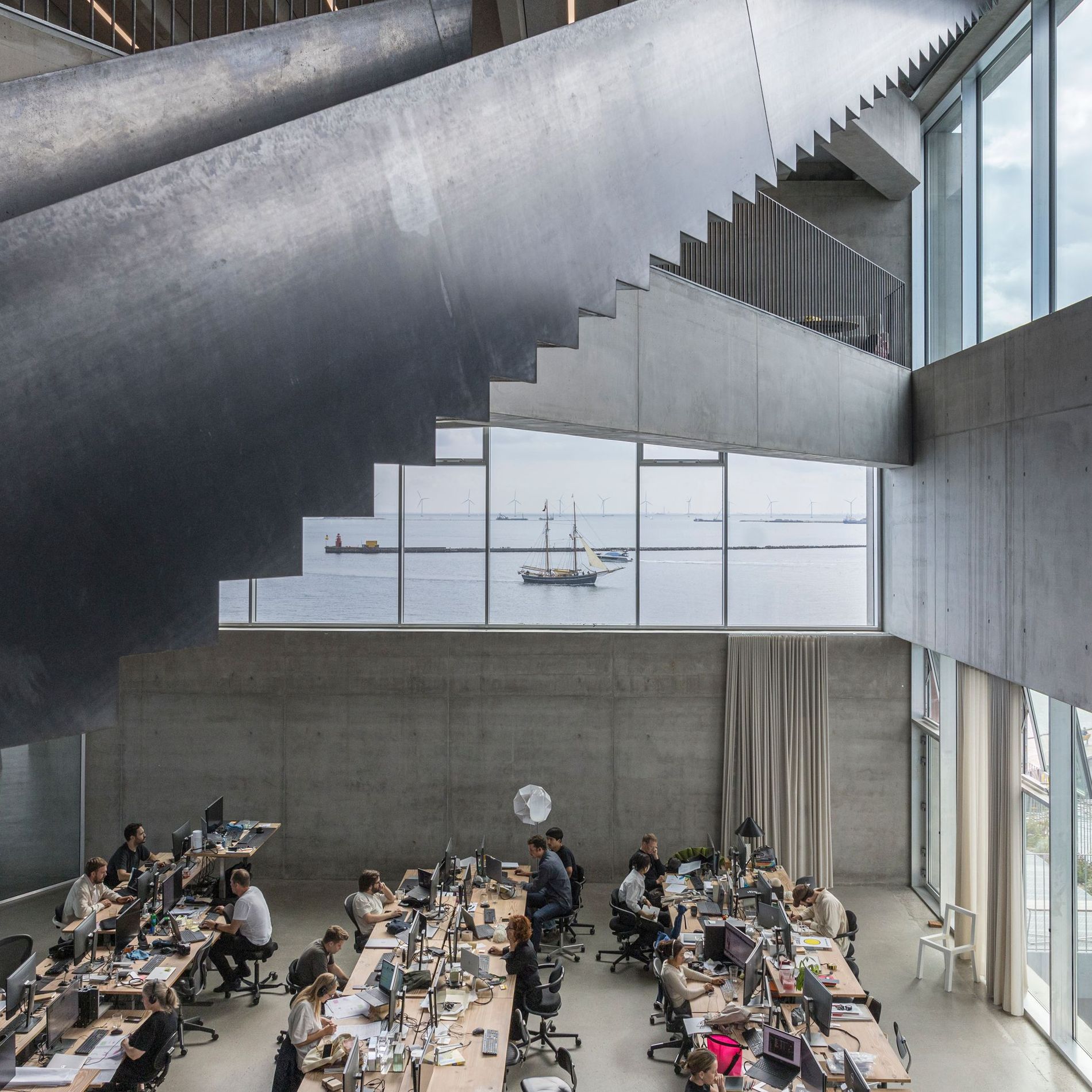
Photo: Laurian Ghinitoiu
Kaktus Towers in Copenhagen, Denmark
Density with character defines Kaktus Towers, a pair of twisting, prismatic towers tied together at the base rise from a raised public park in Copenhagen. Clad in faceted panels, the towers shift from matte to glinting as the sun moves, creating a dynamic presence on the skyline. Each apartment sits on a rotating floor plate, offering unique views across the city and a sense of individuality within the dense urban fabric.
Where many starter homes default to monotony, Kaktus Towers embraces variation. Each of the 495 units features a custom interior and private terrace, while the tallest tower reaches 80 metres at its peak. The arrangement of the towers is an exercise in economical construction and a direct response to the conservative planning typical of large-scale housing developments. The result is a study in architectural expression, spatial arrangement and urban inhabitation in 2025.
What’s the BIG idea: A plan with a twist to maximise views of the city. Speaking of twists…
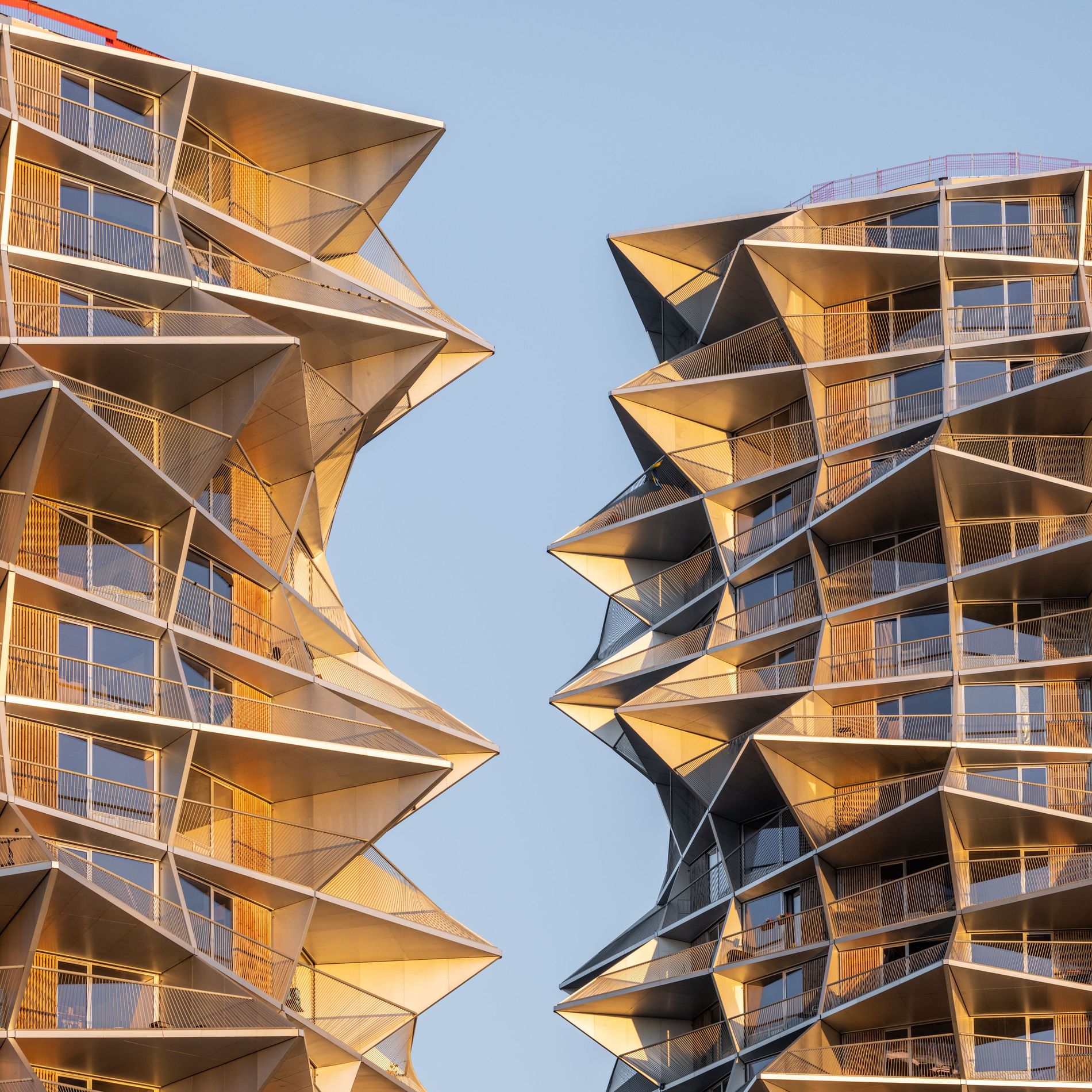
Photo: Rasmus Hjortshoj
The Twist in Jevnacker, Norway
Part bridge, part gallery, part sculpture, The Twist spans the Randselva River at Kistefos Sculpture Park, completing a looped art walk with a single memorable gesture. The irony is that the building doesn’t actually twist... Or does it?
Its striking form comes from BIG’s meticulous attention to detail. Both exterior panels and interior slats are straight elements, each subtly rotated and offset from the one before. The illusion of movement is achieved through precision: forty-centimetre aluminium panels “fanned” like the pages of a book wrap the exterior, while inside, tight eight-centimetre white-fir slats unify floor, walls and ceiling, so visitors feel as though they are walking through a camera shutter.
Light shifts from panoramic glazing at one end to a more controlled, skylit gallery at the other, allowing curators to tailor exhibitions by mood and medium. The 1,000-square-metre structure rotates ninety degrees as it crosses a sixty-metre span, resolving different riverbank heights so the volume lies on one side and stands on the other.
What’s the BIG idea: Circulation as exhibition space.
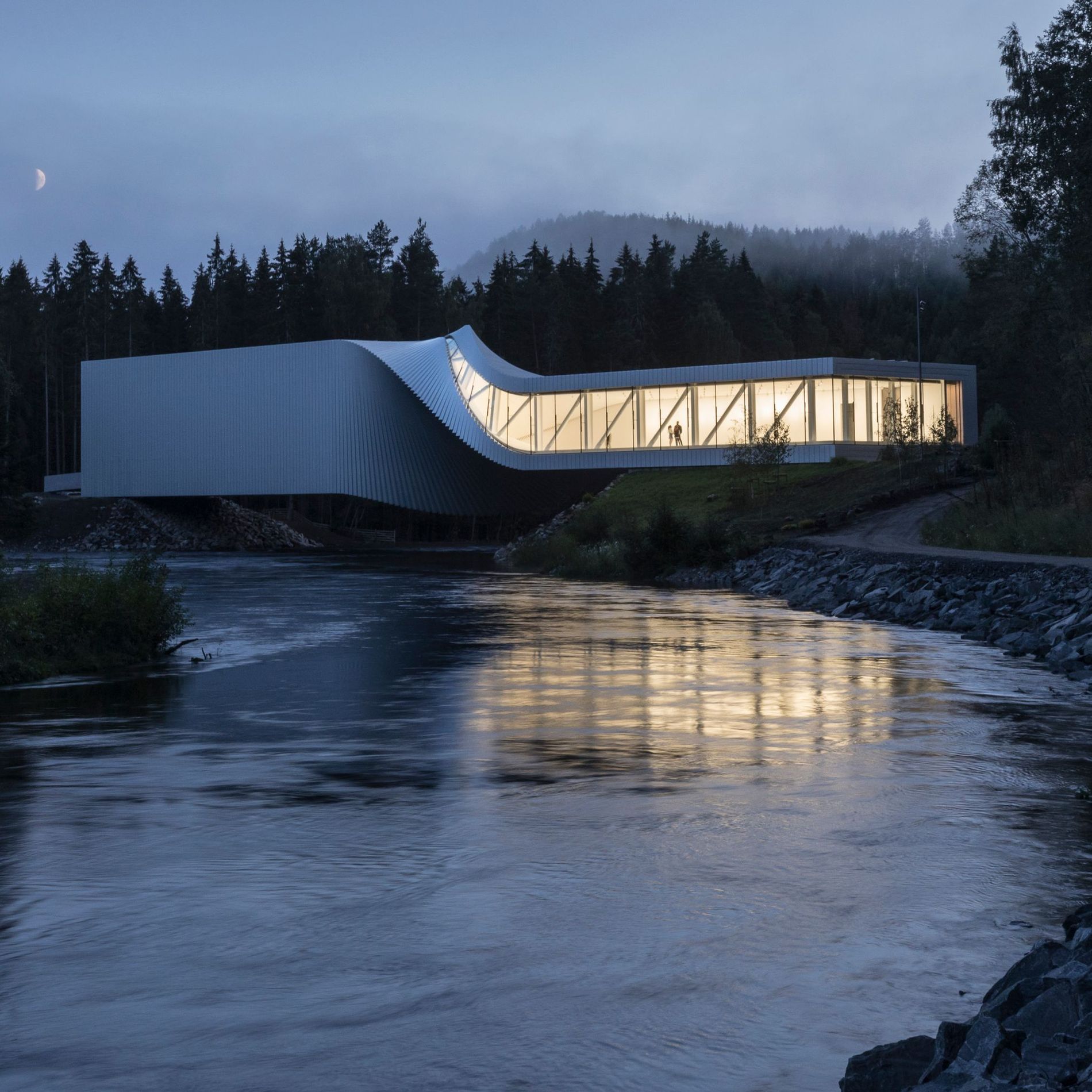
Photo: Laurian Ghinitoiu
Tree Hotel in Harads, Sweden
Conceived as part of Tree Hotel's collection of fantasy cabins, Biosphere by BIG proposes hospitality that extends to the forest itself. Suspended among the pines, a mirrored cube is wrapped in a lattice of birdhouses that transforms the façade into a living habitat. Visitors reach the cabin via a slender bridge, crossing from forest floor to canopy in a single quiet movement.
At once retreat and ecological gesture, Biosphere is among the smallest projects in BIG’s portfolio, yet one of its most conceptually refined. Executed with restraint and precision, it demonstrates how architecture at its most ambitious can also be intimate, generous and profoundly aware of its context.
What’s the BIG idea: Façade as living habitat.
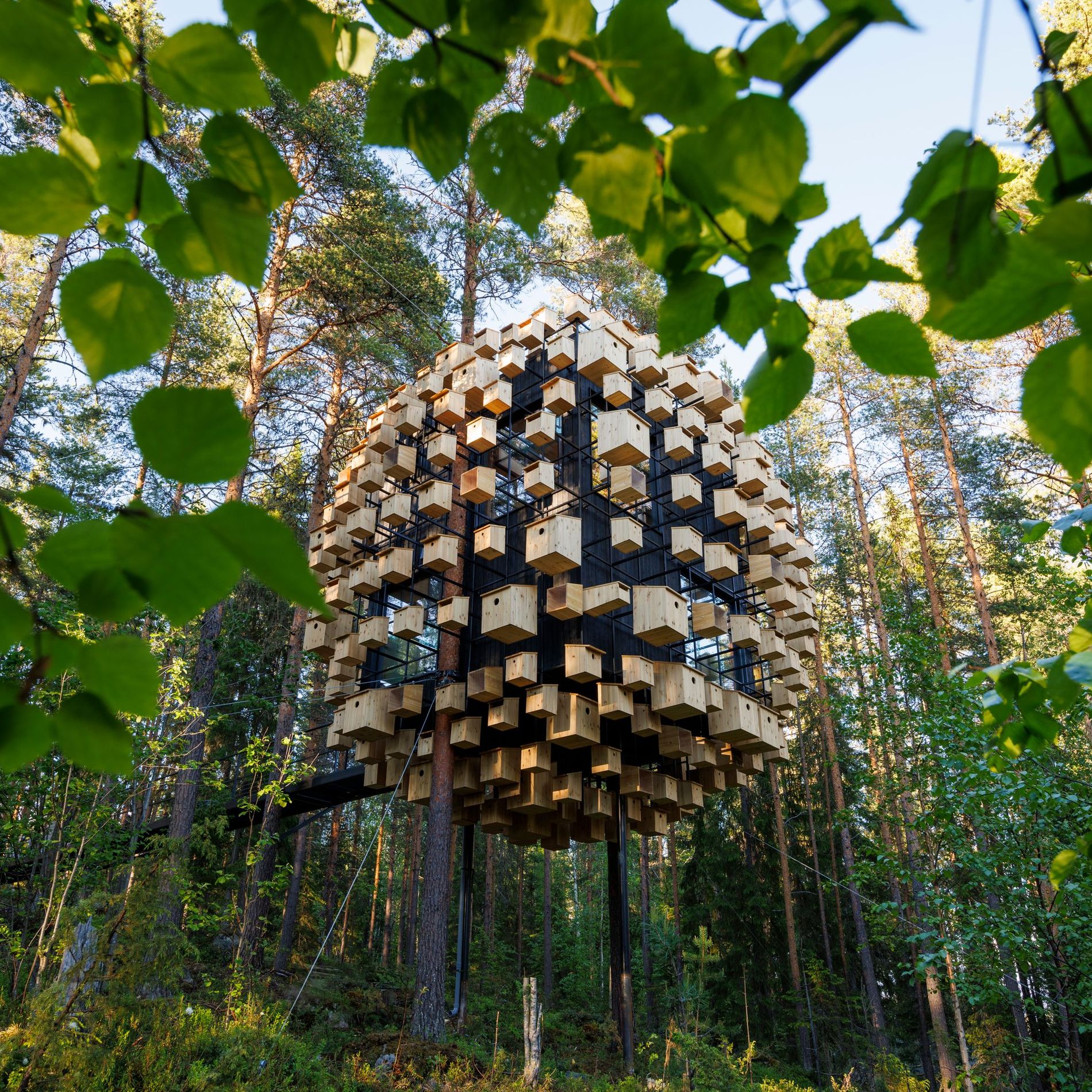
Photo: Mats Engfors