
As Stokke launches a limited-edition Tripp Trapp chair together with the Museum of Modern Art, we speak with the Norwegian innovators about how the iconic high chair has remained relevant for more than 50 years, and how good design should be a family affair
“The best ideas often make us wonder why nobody thought of them sooner,” says Tor Opsvik. “As a designer, my father had a unique ability to question what most people took for granted and challenge established ways of thinking. He saw possibilities and solutions that nobody had thought of before.” The father of whom he speaks is the Norwegian designer Peter Opsvik, who designed the iconic Tripp Trapp chair for Stokke in 1972, inspired by a simple but powerful notion: that children shouldn’t be relegated to sitting on the sidelines; they belong at the table.
“When it came to children and family life, he belonged to a generation in Scandinavia that wanted to move away from traditional hierarchies between adults and children," continues the younger Opsvik, who is managing director of his father's legacy company. “There was a growing belief that children should be included and listened to. My father designed Tripp Trapp to give them a place as equal participants in family life.“
One significant detail of this philosophy that Opsvik believes people might overlook, “precisely because it is defined by an absence”, is the lack of a tray. At the time of designing, almost every high chair separated the child from the family table through an accompanying physical tray. Tor's father deliberately chose not to include one. “By removing the tray, he enabled children to sit directly at the table with everyone else. At the time, this was a significant departure from convention, and an essential part of his vision of bringing children into the heart of family life.” Just like the children it supports, the Tripp Trapp chair itself has found its way into millions of homes worldwide – as well as into The Museum of Modern Art’s collection in New York.
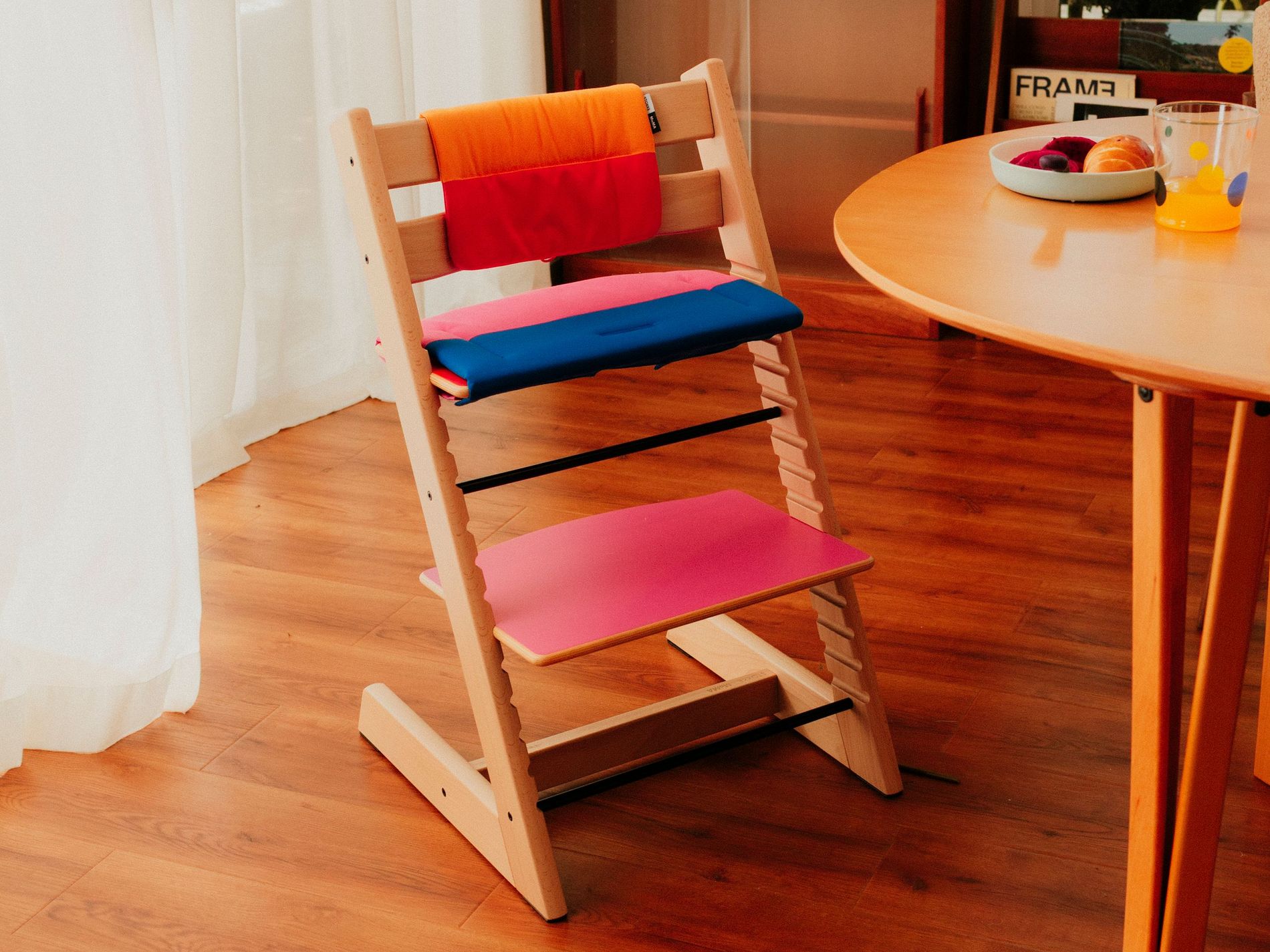
Tripp Trapp Chair MoMA Edition. Photo: Stokke /MoMA