
Ahead of Stockholm Pride 2025, which kicks off July 28th, Vogue Scandinavia exclusively presents a first listen of the official song of this year’s celebration: 'The Spectrum of Love' by Peter Jöback. We speak with the Swedish artist about his journey to total self-acceptance and his new gay anthem
This morning, during the live annual broadcast on Sweden’s SVT to celebrate Crown Princess Victoria’s birthday, Peter Jöback took to the stage to debut a brand new song. Not just any song, mind you, but the official song of Stockholm Pride. Dubbed 'The Spectrum of Love', the upbeat ear worm of a track promises to become a certified pride anthem. One can already picture the raucous dance moves it will elicit when Jöback performs it live at Stockholm Pride’s opening ceremony.
Releasing on July 25, the track marks a new, electro-poppy sound for Jöback, who, since he broke through in the mid-'90s, has gained international stardom for his musical theatre performances (he starred in Phantom of the Opera on both the West End and Broadway) and had a number one album here in Sweden (he’s also collaborated with the likes of Sia and Sophie Ellis-Bextor). And while the song is meant to touch the masses – not only the gay community, but anyone who feels othered – it also signifies a poignant moment for Jöback, an artist who wasn’t always comfortable standing in his truth.
“The song is about authenticity and being who you are. Straight people can feel that too, because we’re all part of the spectrum of love,” says Jöback. “And I’ve never done a song with a drop. I wanted to do a gay anthem.” While the ethos of the song is inspired in part by Cyndi Lauper’s 'True Colors' (“I actually met her backstage at the Tony Awards,” Jöback notes), that aforementioned drop comes courtesy of famed Swedish producer Svidden (who has collaborated with the likes of Miike Snow and Adam Lambert), who co-produced with Ed Harcourt. Co-written by Harcourt and Kathryn Williams, the lyrics are, purposefully, a double entendre, referencing both the pride rainbow and the spectrum of sexuality (the corresponding single art is a yassified version of Pink Floyd’s iconic ‘Dark Side of the Moon’ album cover).
There was a time it would have been inconceivable for Jöback, who today is 54 (though you wouldn’t know it to look at him), to get on national television and sing a gay anthem. Famously, he didn’t come out as gay until he was 32. Having started off as a child actor, Jöback became somewhat of a teen idol by the time he was approaching 20. “A lot of girls liked me,” he says with a smile, noting he had girlfriends until he was about 24. “I wasn’t trying to pretend to be someone else, but at that time there weren’t so many gay people out there.” He notes writer and comedian Jonas Gardell and journalist Mark Levengood as among the few gay public figures in Sweden at that time. And of course, iconic couple Eva Dahlgren and Efva Attling. “They helped a lot of people,” Jöback notes.
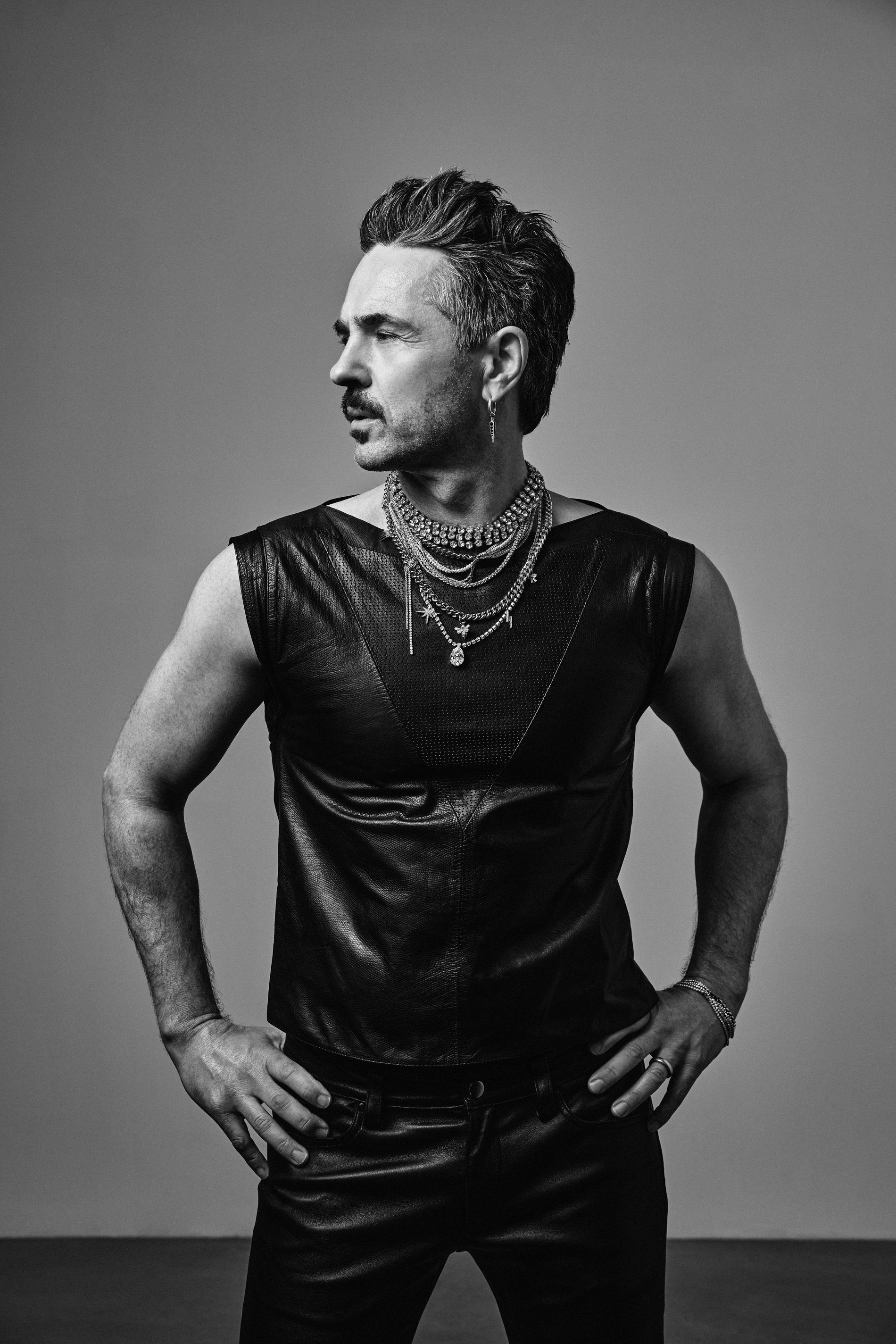
Photo: Magnus Ragnvid
Jöback began exploring his sexuality in the shadows and, simultaneously, becoming more and more famous. “I didn’t like the gay community for a while, because they were trying to push me out,” says Jöback. “No one said, ‘Can we help you?’ It was more like, ‘You have to come out’.” People even plastered Stockholm with posters baring Jöback’s face, with the slogan: “Come out and play with me”. Tabloids, meanwhile, frequently ran stories speculating about his sexuality.
Then finally, on the talk show Sen kväll med Luuk (Late Night with Luuk), host Kristian Luuk said something to the effect of: “I’ve heard you’ve had relationships with men and women, is that true?” “I was brave, I felt brave,” says Jöback. “He asked me the question and everyone in the audience went, ‘Oh’. Because that was the talk of the town – is he gay or is he not. And I said, ‘Yes’.” Three days later, the episode aired. “Then Aftonbladet wrote the next day, ‘Peter Jöback: ‘I am gay’’,” he recalls. “That’s not even what I said!” Jöback, meanwhile, was a bit surprised no one attending the taping had called the paper to tip them off that the big moment was coming. Apparently Aftonbladet had received some calls, but the day after the taping just so happened to be April 1st and everyone at the paper thought the calls were an April Fools prank.
So why did Jöback choose that moment to stand in his truth? For one, he had a song coming out that not-so-subtly referenced his sexuality: “Ingen skyldighet” (no obligation). But more broadly… “I never felt that I had an obligation to say who I’m sleeping with,” says Jöback. “But I came to a point in my life where I felt I had an obligation to myself. A bird cannot fly if it’s in a cage and love cannot fly if it’s in the closet. So now I’m free.”
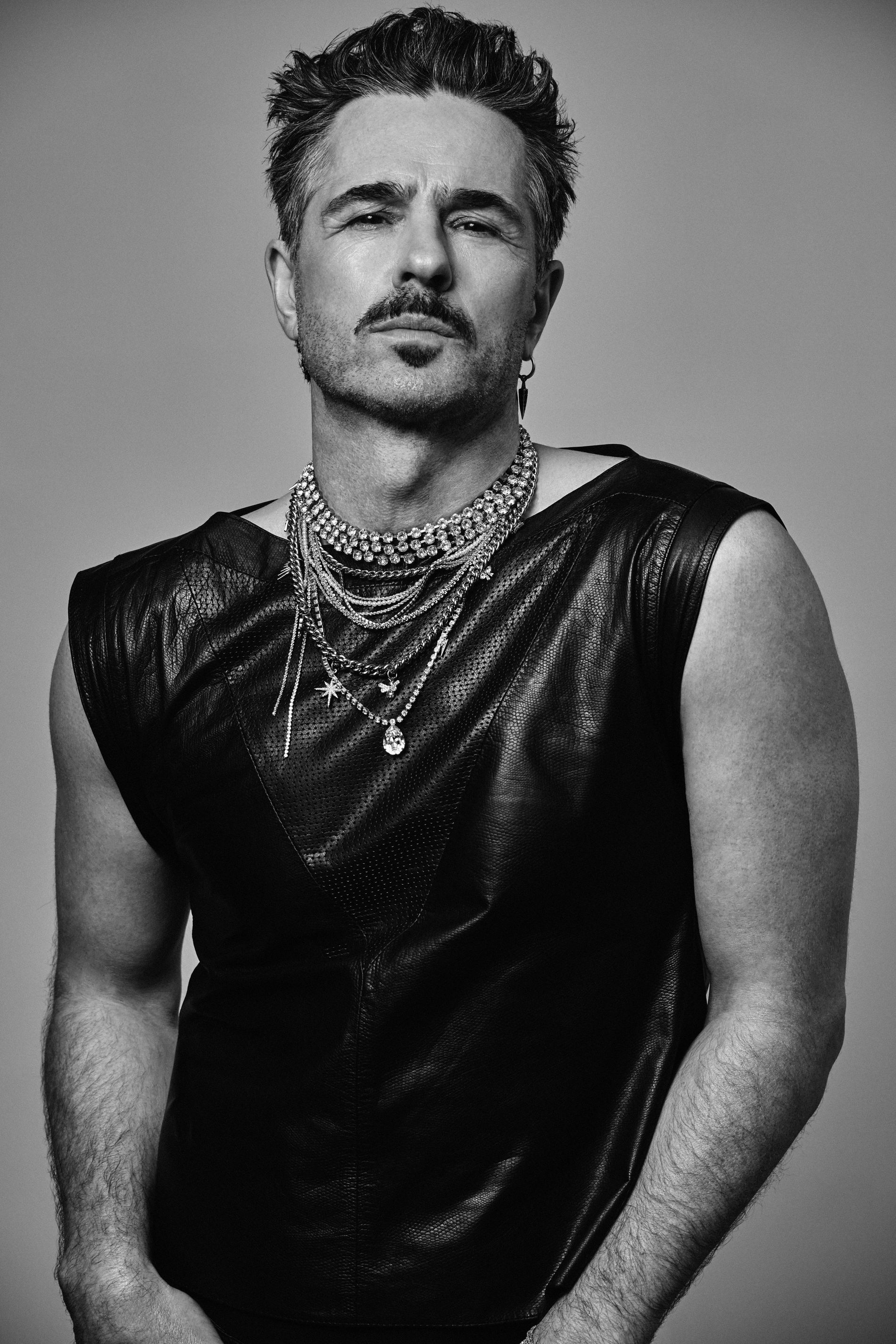
Photo: Magnus Ragnvid
Today, Jöback has been married to his partner, Oscar, for 15 years (they’ve been together for 25). The couple share two daughters approaching their teens. While his desire to come out was motivated by his own well-being, these days he’s more passionate than ever about using his experience to help others. “That’s why I wanted to do this song,” says Jöback, who called the organisation behind Stockholm Pride and requested to make this year’s anthem. “It’s much better now than it was before, but in some parts of the world it’s getting worse. That’s why it’s important to have pride.”
In one way, “The Spectrum of Love” marks a new chapter for Jöback. “I never wanted to be a gay artist – I’m an artist,” he says. “But as I’m getting older, I feel I want to be a little more political. I want to stand up for things. And the gay community is my community. And I want to have a community that’s open for everyone.”
People often ask Jöback if he wishes he had come out sooner, but he has no regrets. “This is my life, this is my journey,” he says. “I remember when I first held my husband’s hand in Stockholm and walked down the street – I felt like I was 15-years-old again. And now I’ve been open with my story because I want to inspire other people to feel it’s never too late.”