
From the razr 70 line-up to the edge 70 pro, Motorola reveals its most design-driven devices yet – with Paris Hilton bringing the flip phone’s cultural legacy full circle in Los Angeles
“Everyone’s been sliving, this has been so fun,” Paris Hilton says, closing her DJ set in Hollywood as a room full of guests – many of them holding open flip phones – cheer back at her. Hilton needs no introduction. Some will remember The Simple Life, her quintessentially Y2K (and barely-there) 21st birthday look, and her unforgettable 2006 earworm 'Stars Are Blind'. Others know her now as a DJ, entrepreneur and, increasingly, something closer to cultural canon. But for a certain generation – myself included – there’s another association that lingers just as vividly: the Motorola razr.
Before 'content creator' was a career, before the front-facing camera became a reflex, there was Hilton – razor-thin phone snapped shut mid-party, rhinestoned, hot pink, clipped to low-rise denim like a piece of jewellery. In the early 2000s, Motorola razr was more of a status symbol than just a device. So being in Hollywood, watching Hilton step behind the decks to mark the launch of a new generation of razr devices, the full circle moment is hard to ignore.
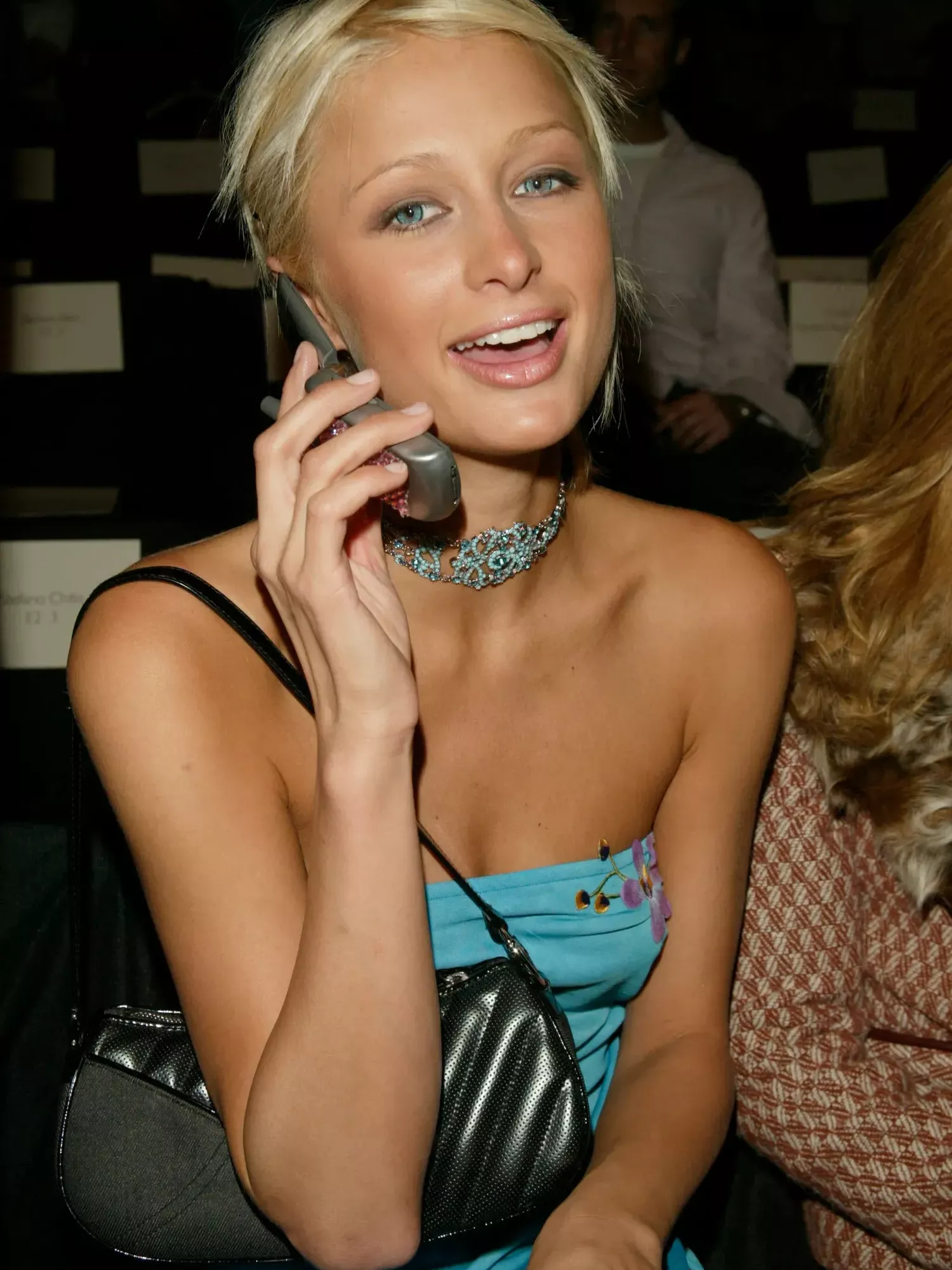
Photo: Getty
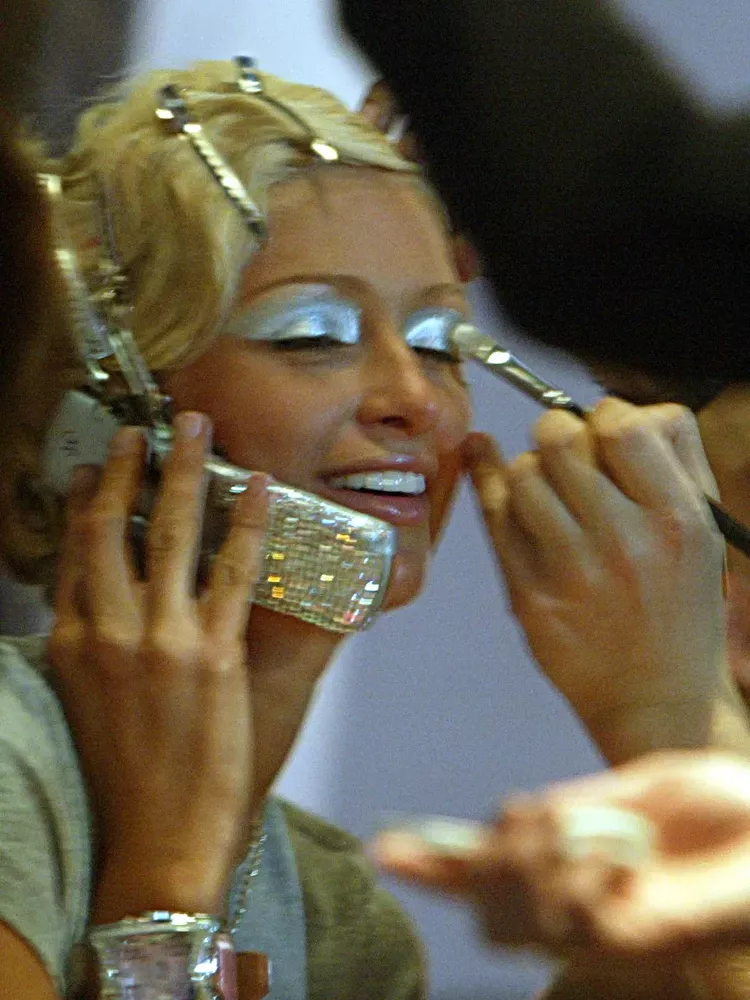
Photo: Getty

Photo: Getty
Across two days in Los Angeles, Motorola unveiled an entire suite of new releases: the razr 70 Ultra, razr 70 Plus and razr 70, alongside the edge 70 Pro and a broader push into design-led accessories. The setting was unmistakably cinematic (after all, we were in Hollywood). We began at the Motorola Villa – an expansive hilltop house overlooking the sprawl of Los Angeles.
Transformed into a showroom, the space became a playground for hands-on exploration, before a panel discussion brought the brand’s thinking into sharper focus. Representatives from Bose, Pantone, Swarovski and other collaborators spoke to an increasing convergence of sound, colour, craftsmanship and technology. Motorola’s direction is less about standalone devices and more about ecosystems of expression – what it terms 'Collections', where materials, finishes and partnerships elevate hardware into something more personal.
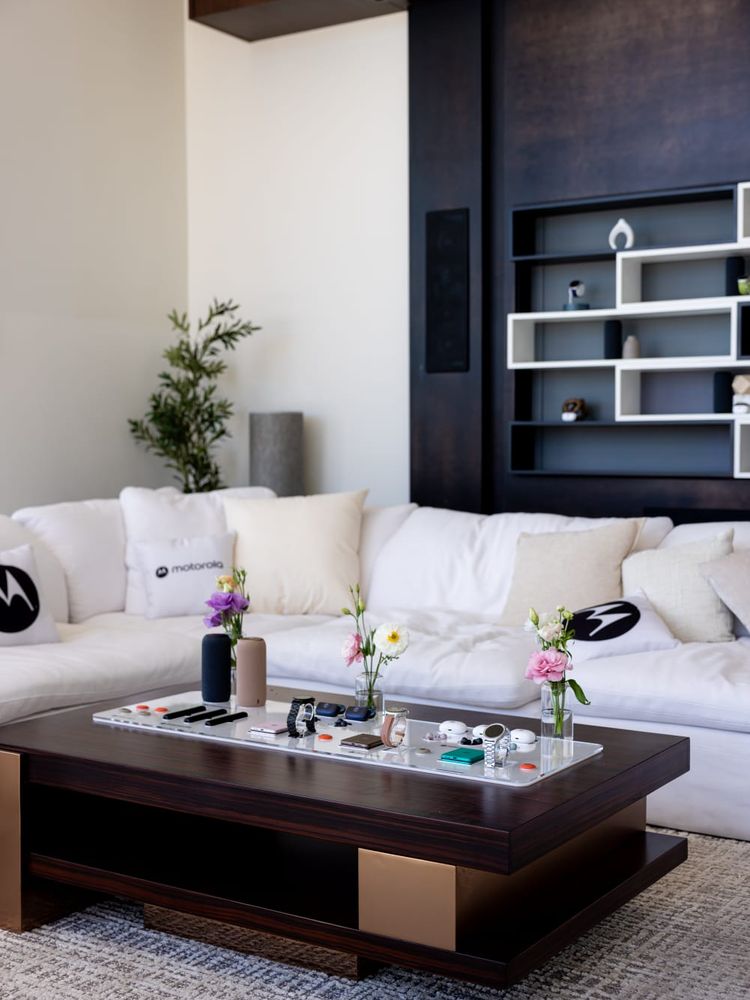
Photo: Courtesy of Motorola
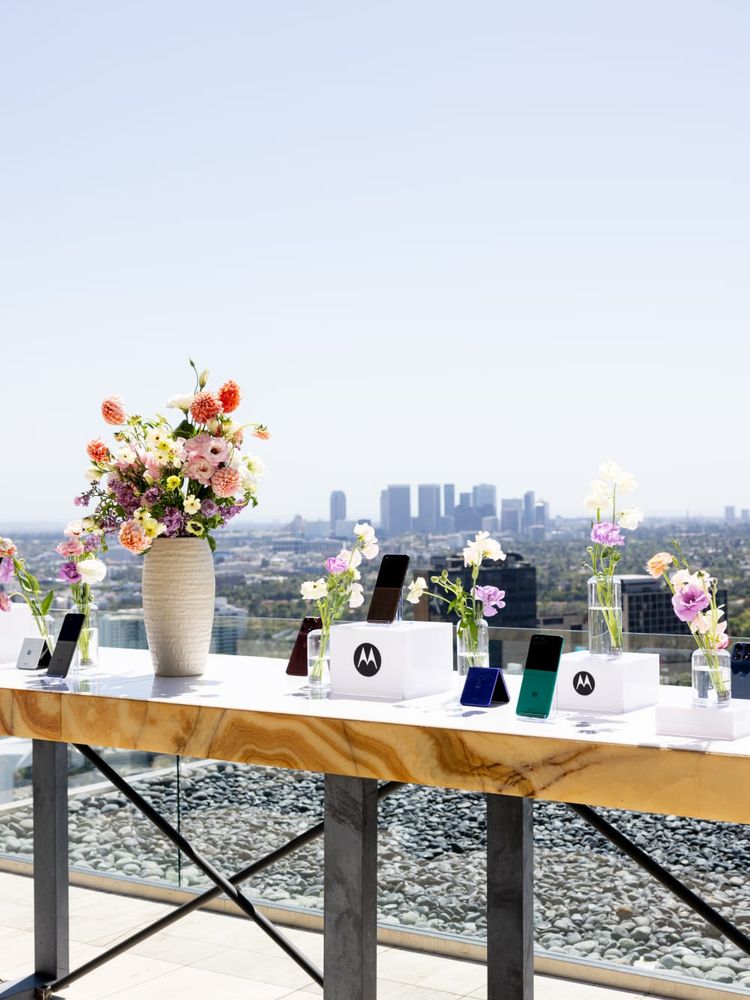
Photo: Courtesy of Motorla
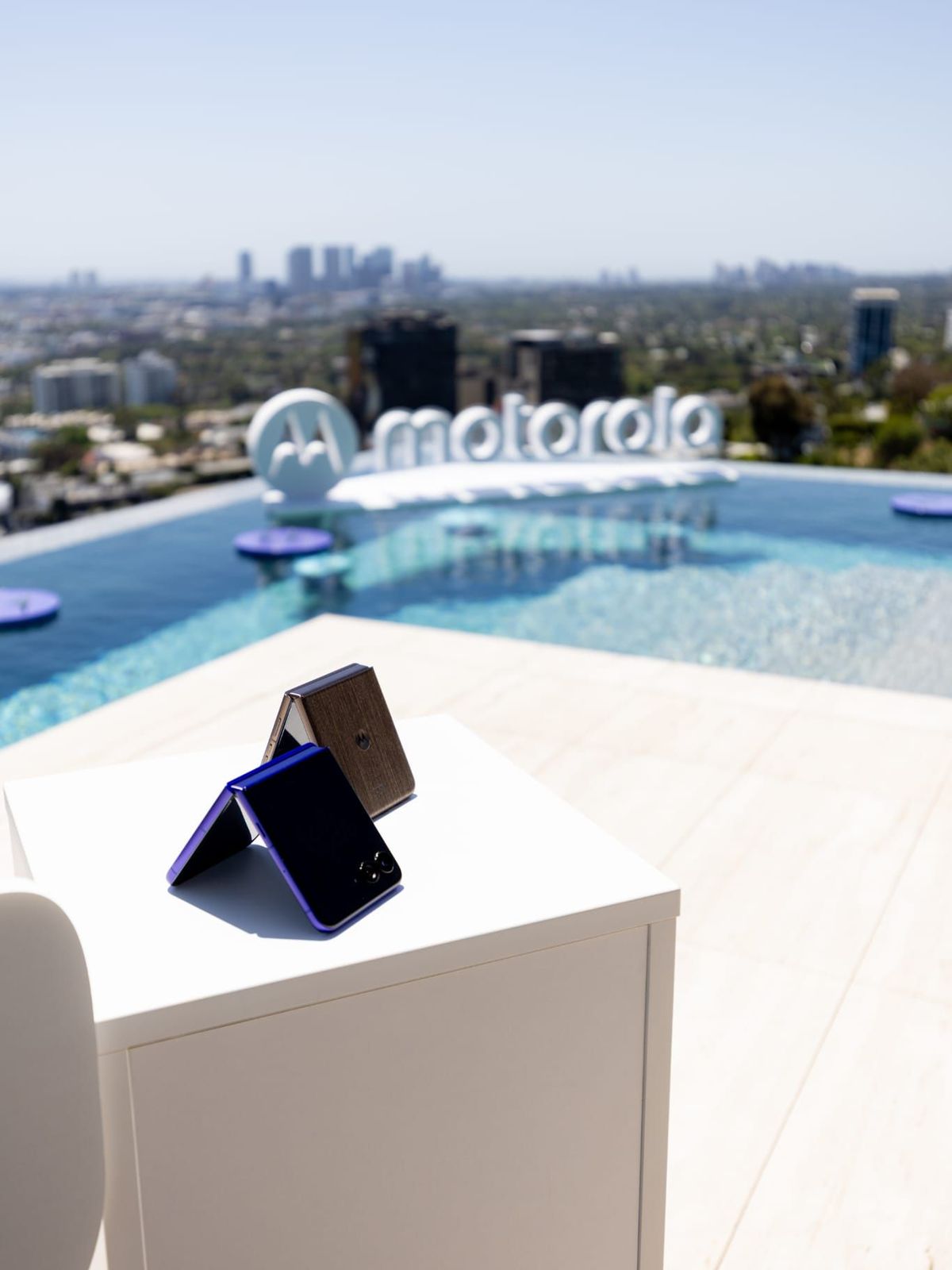
Photo: Courtesy of Motorola
The conversation returns to a simple idea: phones are no longer purely technical objects. Pantone emphasises the emotional resonance of colour, while Bose focuses on integrating immersive 'wow' sound more seamlessly into everyday use. Swarovski, perhaps most compellingly, frames technology as something capable of carrying emotional value through 'bold extravagance'.
That thinking is most visible in the edge 70 Pro. Slim to the point of surprise, it sits easily in the hand, its finishes doing much of the talking – from silk-inspired textures to natural wood and acetate, each paired with Pantone-developed tones. Beneath the surface, it delivers where it matters: a four-lens 50MP camera system, a battery that comfortably exceeds a full day, and a display bright enough to hold its own in direct sunlight.
The Brilliant Collection, developed with Swarovski, pushes the device further into object territory, embedding crystals into both phones and accessories. Paired with moto buds developed alongside Bose, the experience extends beyond the screen – into sound, into touch, into how the device fits into your day.
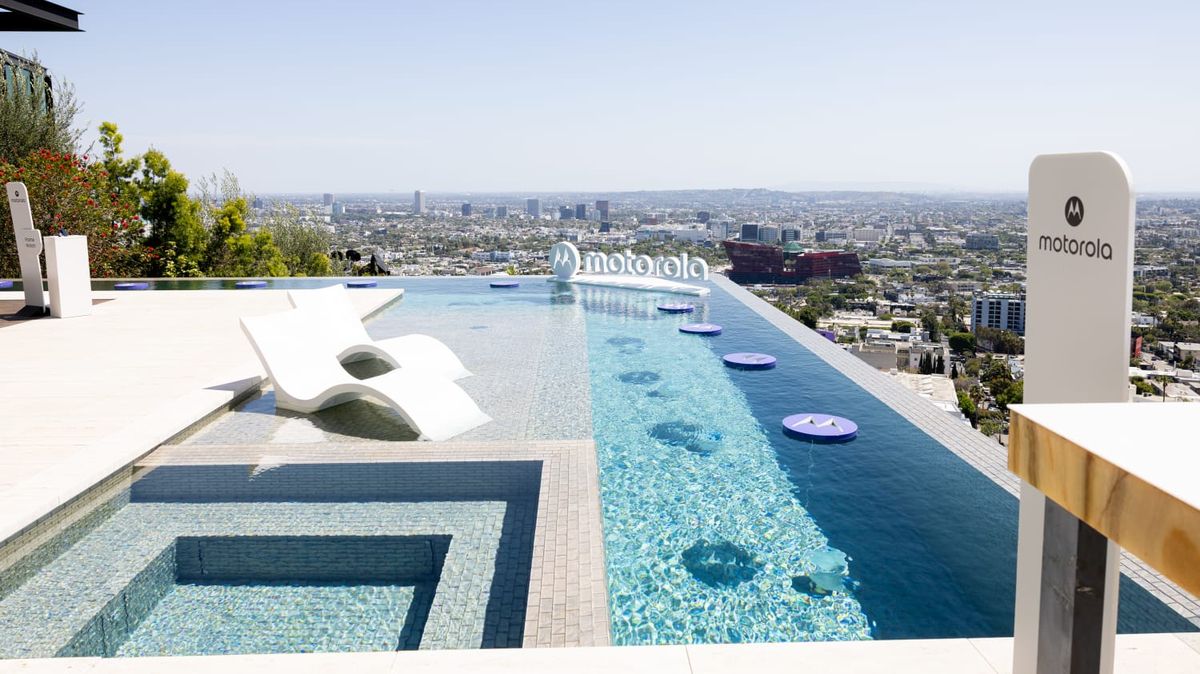
Photo: Courtesy of Motorola
The razr, meanwhile, trades on a different kind of appeal. The new line-up preserves the core idea, refining it into something genuinely usable today. The external display is no longer secondary; messages, apps and AI interactions all live comfortably on the outer screen. Flip it open, and the internal display is expansive, fluid and sharp.
Camera systems have been upgraded across the board, with 50MP sensors and AI-assisted features that refine framing and lighting in real time. Flex View allows the device to hold its position, making hands-free shooting feel intuitive rather than engineered. Battery life and charging, meanwhile, have been refined to the point of invisibility.
More than anything, it’s the interaction that lingers. The act of flipping the phone open and closed is about a rhythm, something that’s largely disappeared from how we use devices. You check something, you close it, you move on. It introduces a sense of intention, of starting and stopping, back into something that has become continuous.
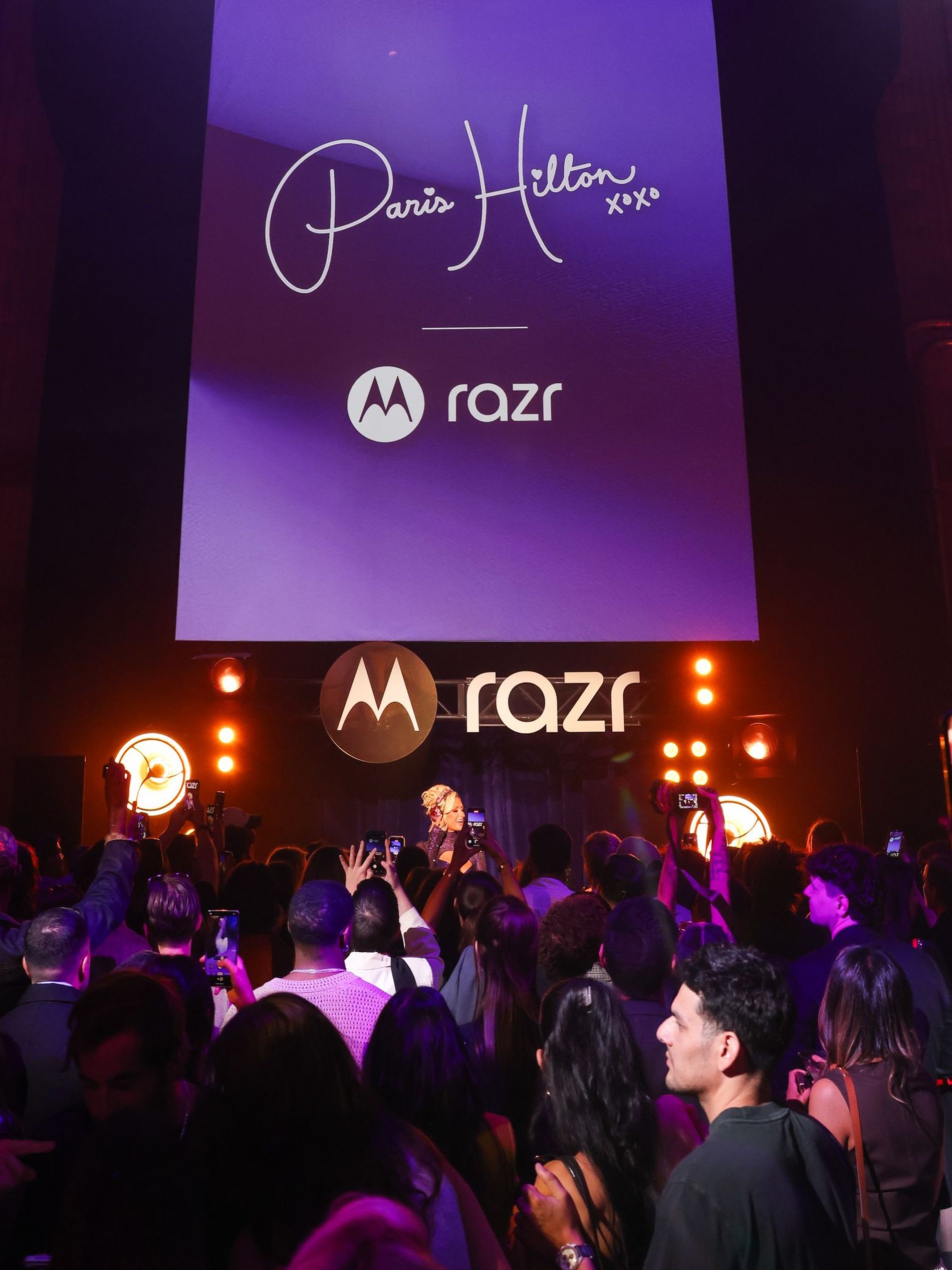
Photo: Courtesy of Motorola
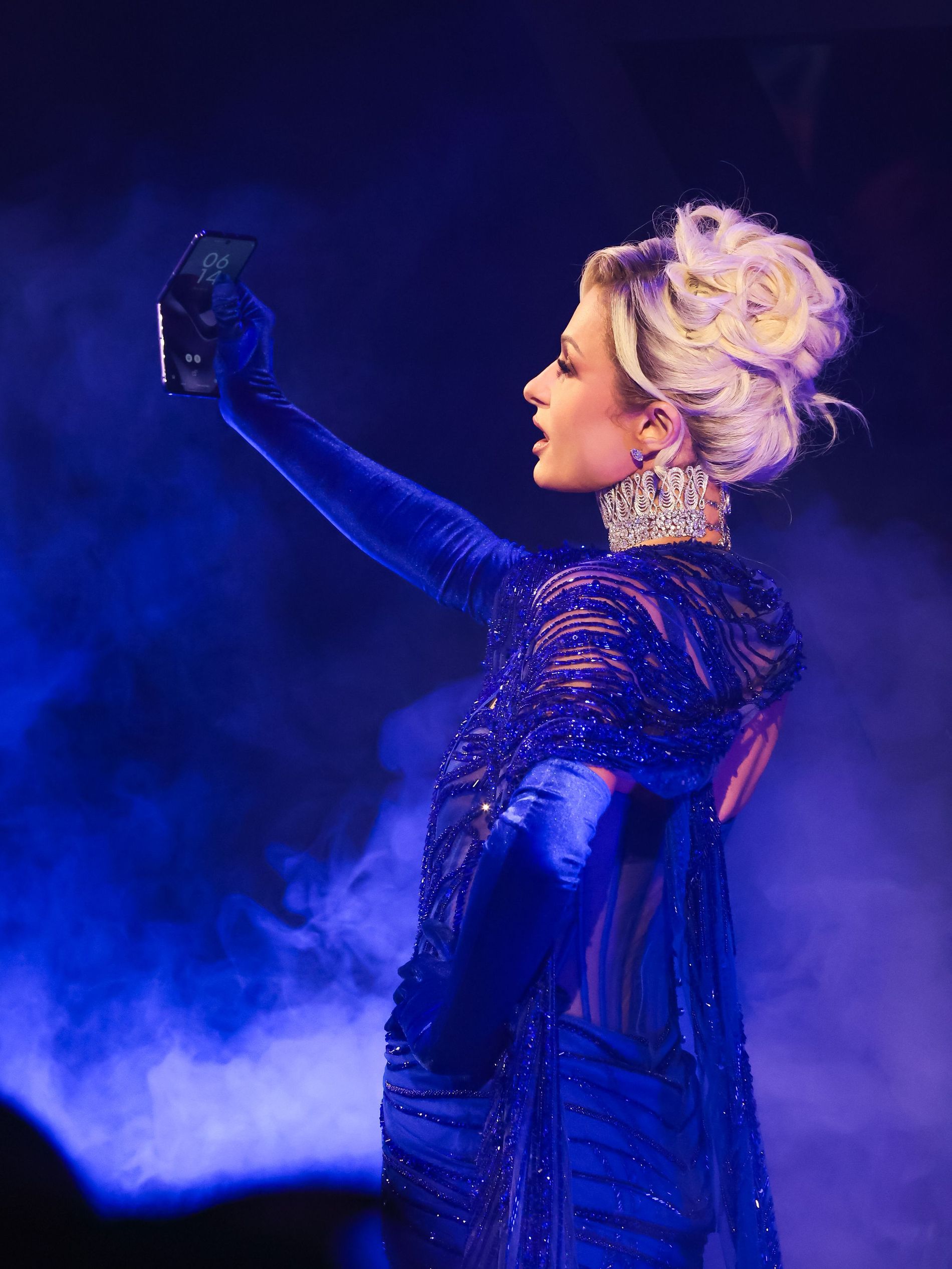
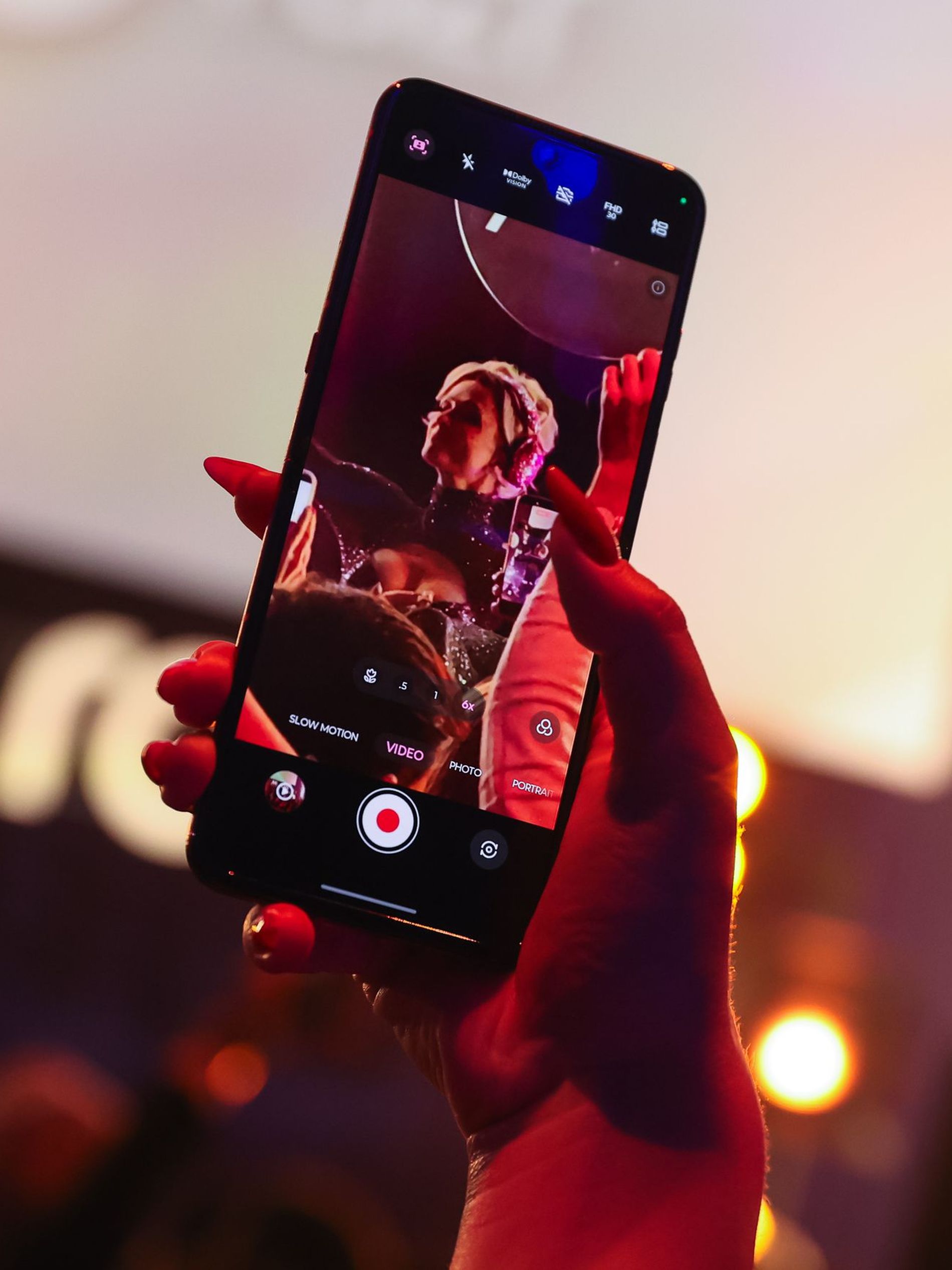
Photo: Courtesy of Motorola
The following evening, the mood shifts to a different Los Angeles feeling. With details still cloaked in intrigue, we arrive via a film production complex – golf carts weaving between sound stages, lighting rigs cutting through the dark. The atmosphere is unmistakably Hollywood.
Then Hilton appears, exactly as you'd expect: crystal details catching the light, bedazzled sunglasses firmly in place, entirely at ease behind the decks. There’s no need to overstate her 20+ year connection to the razr. Around the room, phones snap open almost instinctively to capture the moment.
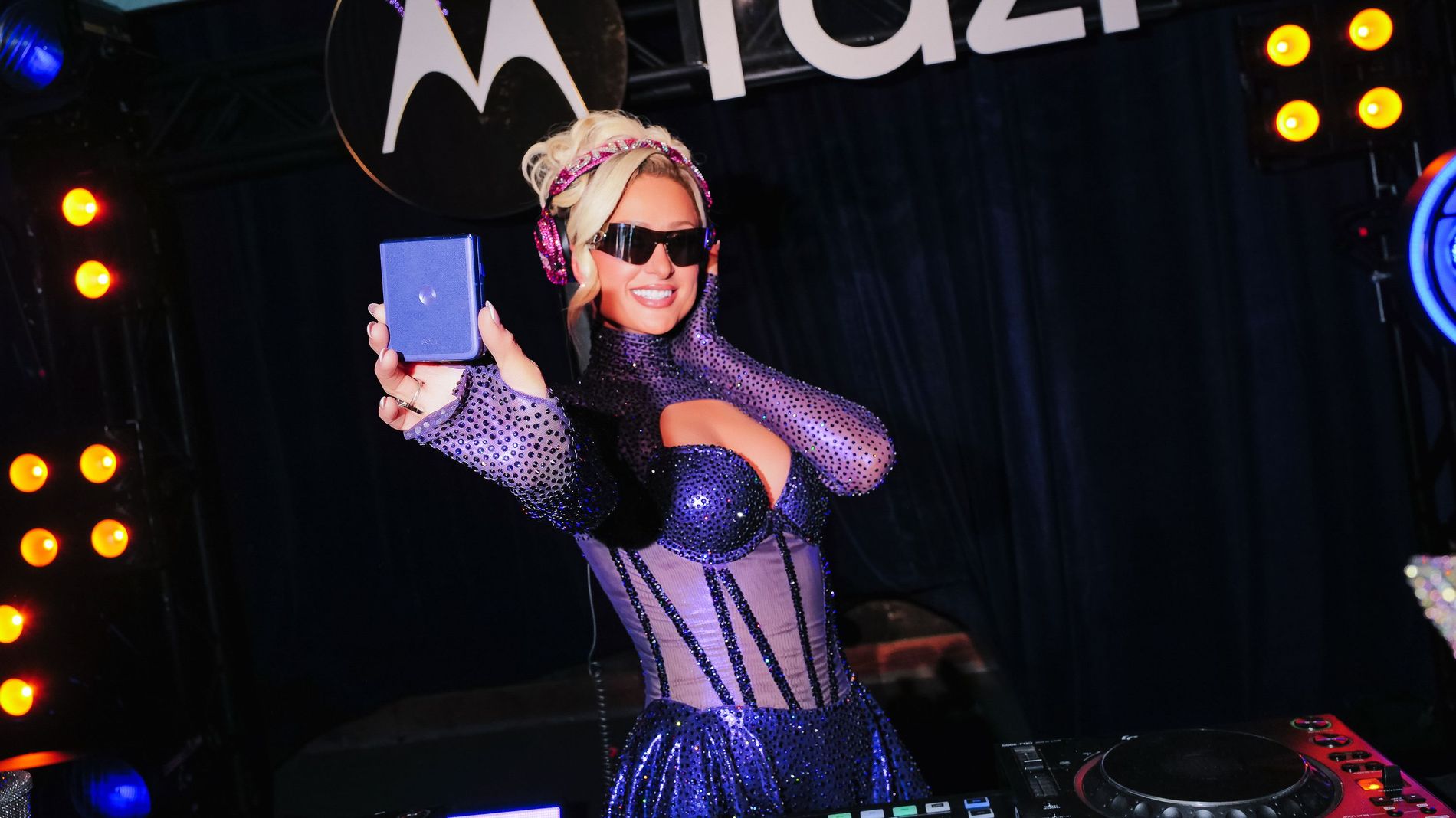
Photo: Courtesy of Motorola
What had been discussed earlier comes into focus here. The devices in hand don’t all look the same – finishes shift from high-gloss colour to softer, almost fabric-like textures. Some are studded with crystals, developed with Swarovski, catching the light on the dance floor. Back on the decks, Paris Hilton grins out at the crowd. “That’s hot, I love you guys” she says, as another wave of cheers cuts through the music.