
Straight off the Haute Couture runway in Paris, our editor-in-chief wears a spectacular gown from Lebanese designer Georges Chakra' autumn/winter '25 collection
A celebration of all things science and art, it is apt that Martina Bonnier, editor-in-chief of Vogue Scandinavia, wore a gown – nay, a technical feat – from couturier Georges Chakra to the 2025 Nobel Gala.
For the prestigious event, Bonnier donned a truly spectacular gown by the visionary Lebanese couturier (upon her initial fitting, the garment elicited numerous 'oohs and 'ahh's from the Vogue Scandinavia team). "The work is very technical, but the goal is always to feel effortless," commented Chakra of his vivid, sapphire creation.
I wanted the richness of the vivid blue to meet the brilliance of the anthracite embroidery in a way that feels almost like light travelling across dark waters.
Georges Chakra, Haute Couture designer
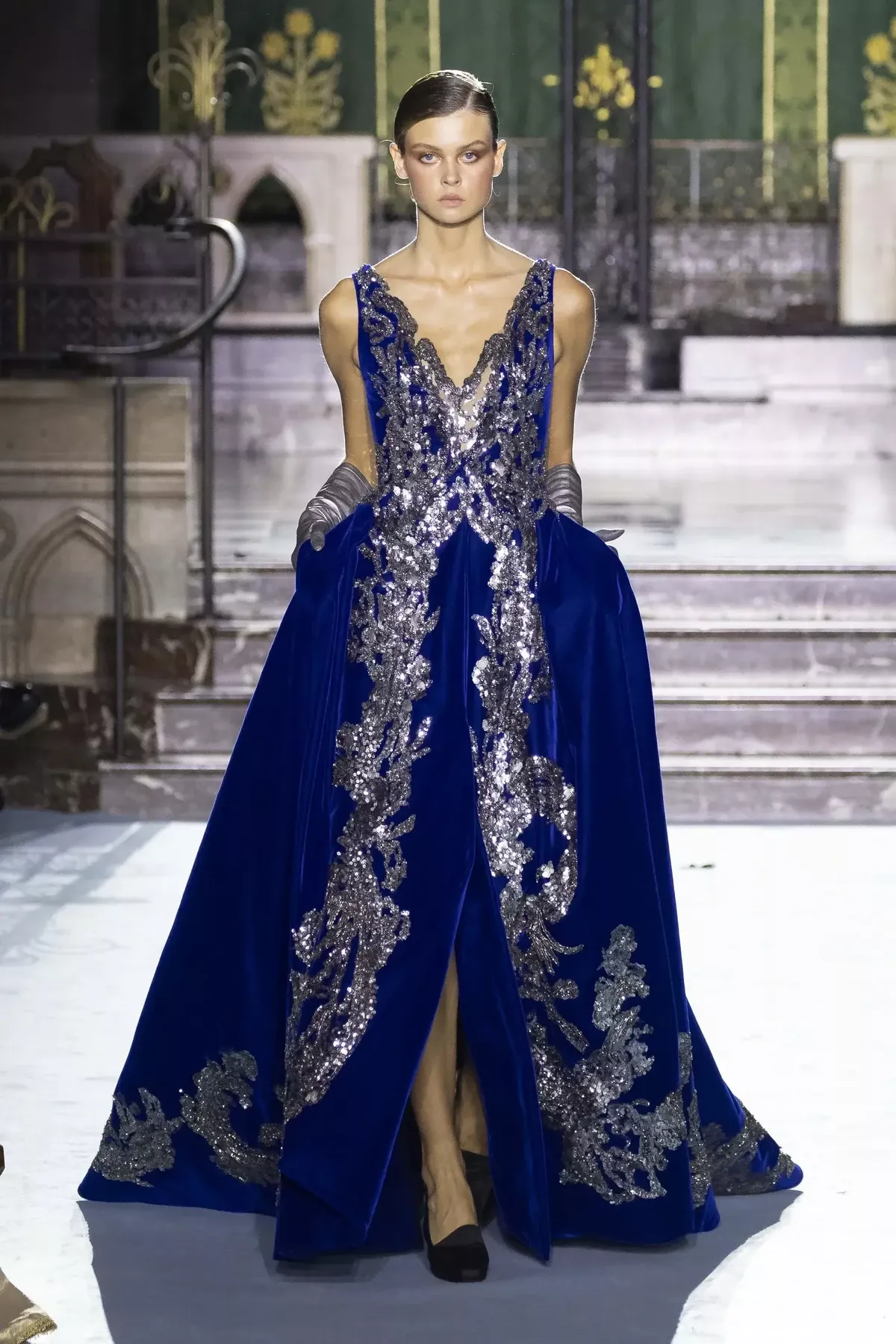
Photo: Courtesy of Georges Chakra
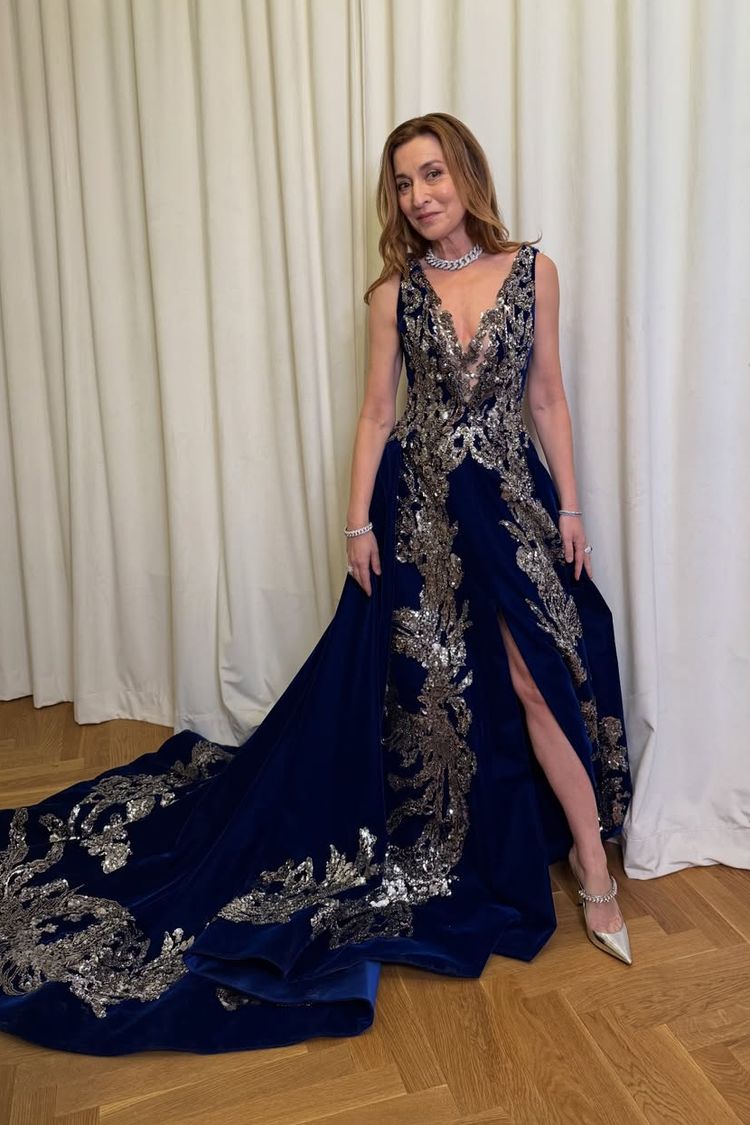
The gown presented a structured, elongated silhouette, meticulously hand-embroidered with cascading motifs in anthracite sequins and metallic thread. This intricate, sculptural work created a reflective effect that stood in stark contrast to the depth of the velvet's rich hue. "For me, this gown is about contrast," said the Chakra tells Vogue Scandinavia of the specific design. "I wanted the richness of the vivid blue to meet the brilliance of the anthracite embroidery in a way that feels almost like light travelling across dark waters."
The creation of the gown was, in itself, a feat of couture craftsmanship, requiring approximately 300 hours of intricate handwork at the label's couture atelier in Beirut. A dedicated team of four artisans developed and executed the elaborate embroidery on panels of tulle, which were then cut and appliquéd onto the sculpted final silhouette.
Furthermore, given the significant weight of the dense velvet and the extensive, heavy embroidery, achieving the skirt's elegantly fluid yet controlled movement necessitated several rounds of precision draping and fittings to ensure the garment flowed perfectly with Bonnier's movements. The final result was a breathtaking demonstration of fashion as an art form.