Be honest: when was the last time you cleaned your makeup brushes? If you have to think about it, the answer is probably not recently enough. Dirty brushes quietly sabotage both your skin and your makeup, yet most of us still treat cleaning them as an optional chore rather than a non-negotiable. Here we ask the experts why it matters, how often you actually need to do it, and how to clean your brushes properly without destroying them in the process
How important is it to clean your makeup brushes? Why should you do it?
Let’s start with the obvious. Makeup brushes collect oil, bacteria, dead skin cells and leftover product every time you use them. That alone should be reason enough to clean them regularly. But skin health is only half the story. “Dirty brushes carry bacteria and can cause skin issues,” says celebrity makeup artist Sophia Sinot (and the talented woman behind Zara Larson's viral makeup looks). “But besides causing skin problems, it can also affect the result of how your makeup turns out. Doing your makeup with fresh and clean brushes gives you a more polished result.”
That performance angle is often overlooked. Old product trapped in bristles muddies colour, affects blendability and makes even the best formulas work harder than they should. As Emelie Sundesten, creative director at Caia, puts it: “Clean brushes are your key to a more precise, even application that ensures colours stay true. You simply can’t achieve a flawless result with dirty tools.” In other words, this isn’t about being virtuous. It’s about getting the result you paid for.
Related: The 7 biggest nail trends of 2026, according to the artists behind Ariana Grande and Laufey’s nails
How often should you clean your makeup brushes?
If you’re hoping for a once-a-month loophole, this is your reality check. “As a professional: I wash my brushes after every client, no excuses,” says Sinot. “For personal brushes, at least once a week. Makeup sponges should be cleaned after every use, and replaced after a maximum of three months. Over time they break down internally and can’t be fully disinfected anymore, even if they look clean.”
Sundesten echoes the same logic, with some nuance depending on formulas. “Brushes used with liquids or creams like foundation and concealer should ideally be cleaned once a week, or even more often if you have sensitive or acne-prone skin. Brushes for powders can be cleaned every one to two weeks.” Consistency matters more than perfection. Regular cleaning not only keeps skin calmer, it also extends the lifespan of your brushes.
Makeup brush cleaning cheat sheet:
Foundation & concealer brushes: Once a week minimum. (Liquids and creams trap oil and bacteria quickly. If your skin is sensitive or acne-prone, aim for twice a week.)
Makeup sponges: After every use (Yes, every time. Replace every three months, even if it still looks clean.)
Cream blush, bronzer & contour brushes: Once a week (Cream products cling to bristles and go stale fast.)*
Powder blush, bronzer & contour brushes: Every one to two weeks (You have a little more leeway here, but monthly is pushing it.)
Eyeshadow brushes (powder): Every one to two weeks (More often if you switch colours frequently or work close to the lash line.)
Eyeliner & brow brushes: Once a week (They sit exactly where bacteria loves to linger.)
Lip brushes: After every use. (No shortcuts here.)
Between washes: A quick wipe on a tissue helps performance, but it does not replace proper cleaning.
The most common mistakes people make when cleaning brushes
Ironically, many brush casualties happen during cleaning. “One thing I used to do that really ruined my brushes was using water that was way too hot,” Sinot says. “Hot water can melt the glue and cause the hairs to fall out. You also don’t want to be too rough with circular motions, and you need to rinse all the soap out properly.”
Drying technique matters just as much. “Reshape the hairs gently and let brushes air-dry completely while laying flat or slightly angled downward with the hairs facing down,” she adds. “Never let them dry upright while wet, and avoid heat.” Sundesten agrees, calling out the ferrule as the danger zone. “Letting water run into the metal part weakens the glue holding the bristles together. Another mistake is not rinsing thoroughly, leaving product or soap residue behind, which can cause irritation."
What should you use to clean makeup brushes?
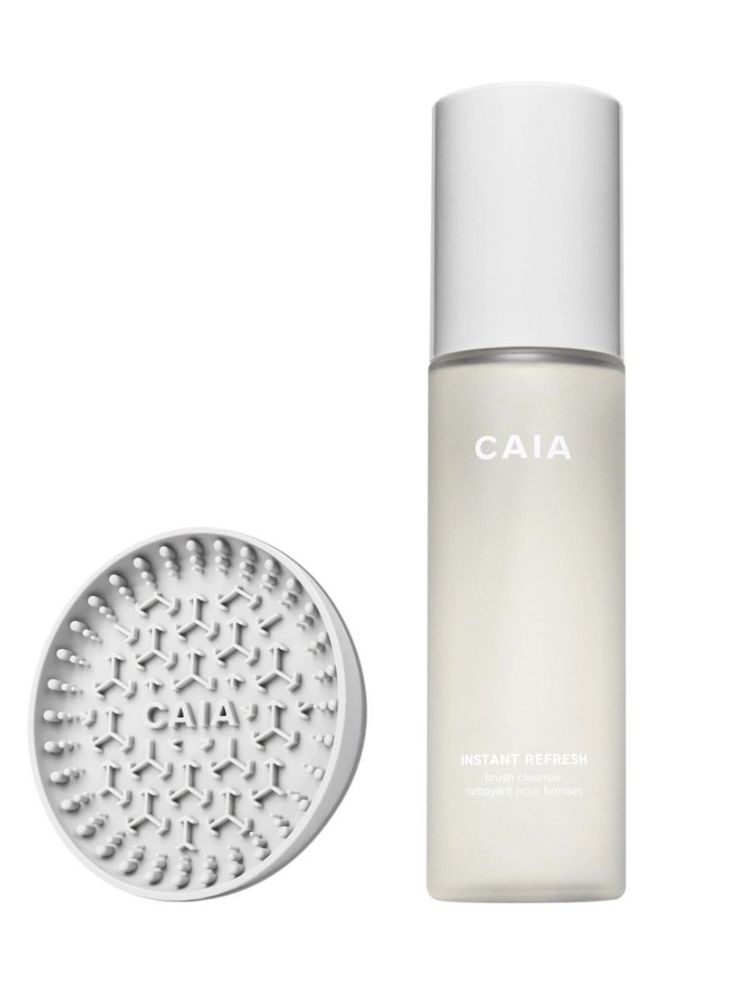
The good news is that you don’t need anything complicated. “For quick cleans on set, I use a makeup brush cleanser,” says Sinot. “But for a proper deep clean, mild dish soap or baby shampoo works perfectly.”
Sundesten takes a similar approach, especially with synthetic brushes. “The goal is to break down makeup, oils and bacteria without stripping or damaging the bristles. On busy weeks, I sometimes combine soap cleaning with an alcohol-based brush spray for quick disinfection between washes.” The key distinction is this: sprays are helpful in between, but they don’t replace a proper wash.
Do you need a makeup brush cleaning machine?
Short answer: no. "Cleaning by hand is way more effective,” says Sinot. “If you want to speed things up, a cleansing mat can be handy, but machines aren’t necessary.” Sundesten agrees. “Machines can be convenient, but manual cleaning gives you more control and is often gentler. Some machines push water too far into the ferrule, which can shorten the life of the brush.” If you enjoy a gadget, fine. If not, your hands will do just fine.
How to clean makeup brushes, step by step:
1. Wet only the bristles with lukewarm water, keeping the ferrule dry
2. Add a small amount of cleanser to your palm or a cleaning mat
3. Gently work the brush in circular motions
4. Rinse thoroughly until the water runs clear
5. Squeeze out excess water, reshape the bristles
6. Lay flat or angled downward to air-dry completely