
Modular, adaptable furniture may be the norm in the interiors sphere today. But long before it became a thing, one smart and elegant design was already redefining modern lounging: Flexform's Groundpiece sofa. In honour of the iconic sofa's 25th anniversary, we look back at its origins, and how it continues to shape homes across the globe
In 2001, renowned Italian design company Flexform introduced a sofa that reinvented the way this central piece of furniture occupied living spaces. Called Groundpiece, the design – dreamt up by architect Antonio Citterio – proposed new proportions for the sofa, rendered in a low-slung silhouette that introduced a more relaxed and casual approach to seating. Its generous, plush goose-down cushions practically begged to be sunk into, while its modular structure allowed the piece to adapt to a range of interiors and needs.
In the hands of Citterio, the armrest was refreshed, too, into a multifunctional metal console that could be padded, upholstered, or clad in cowhide, even featuring shelves for extra storage, making the sofa truly a destination for long lingering and relaxation.
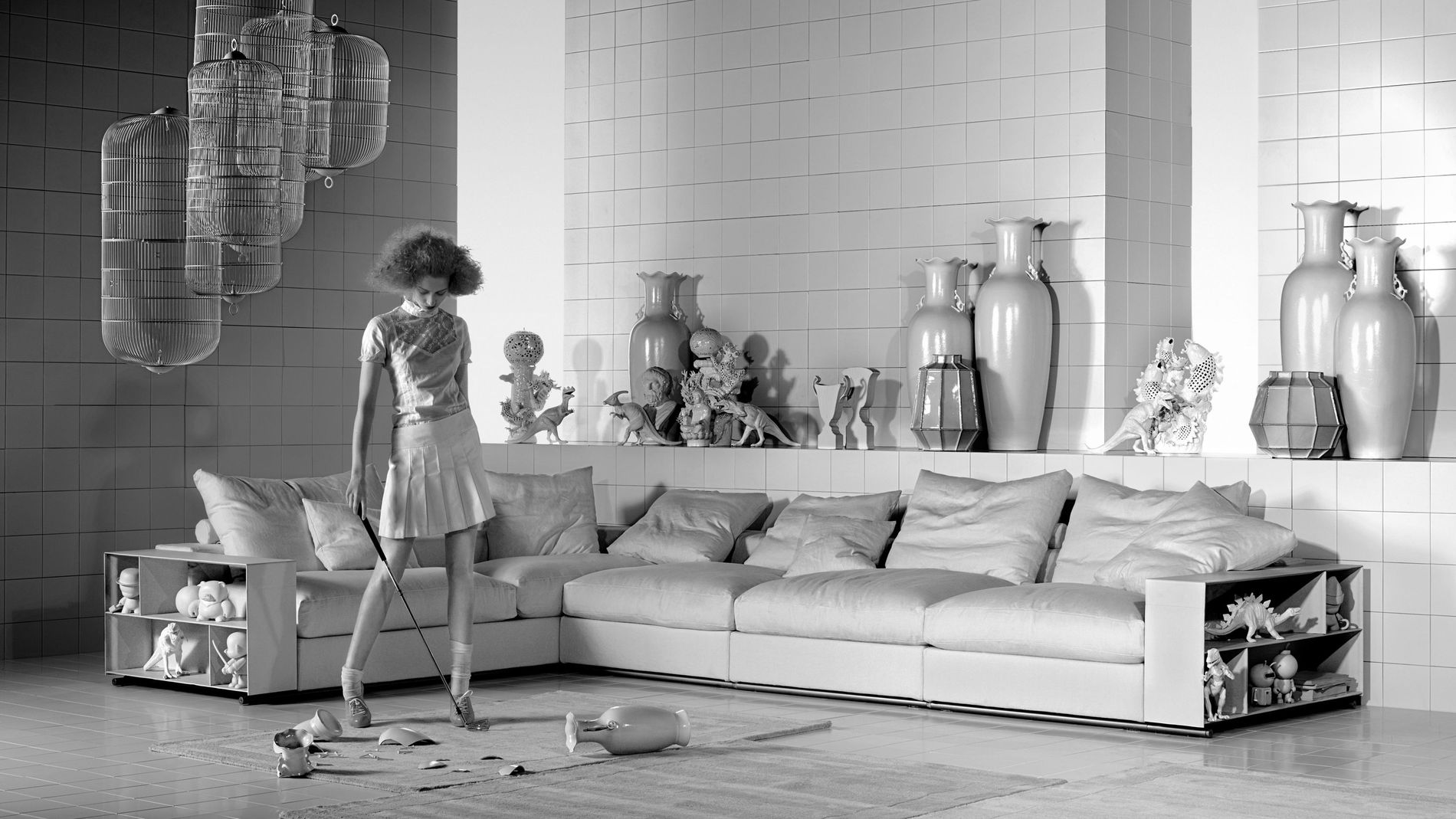
Photo: Maria Vittoria Backhaus
Ever since it launched, the Groundpiece has remained Flexform’s steady bestseller, this year heralding its 25th anniversary. Though modular furniture, particularly sofas, has become de rigour in the industry, the Groundpiece continues to captivate with its elegant form and smart functionality.
“When we designed the sofa in 2001, it felt like an idea rich in substance but with little chance of success. Too simple, too direct, non-traditional. It wasn’t even clear whether it was a sofa or not,” Citterio recalls. “And yet we found the experiment compelling – this encounter between art and a cushion – something extraordinary, almost paradoxical. So, we went ahead with it. A few months later – success.”
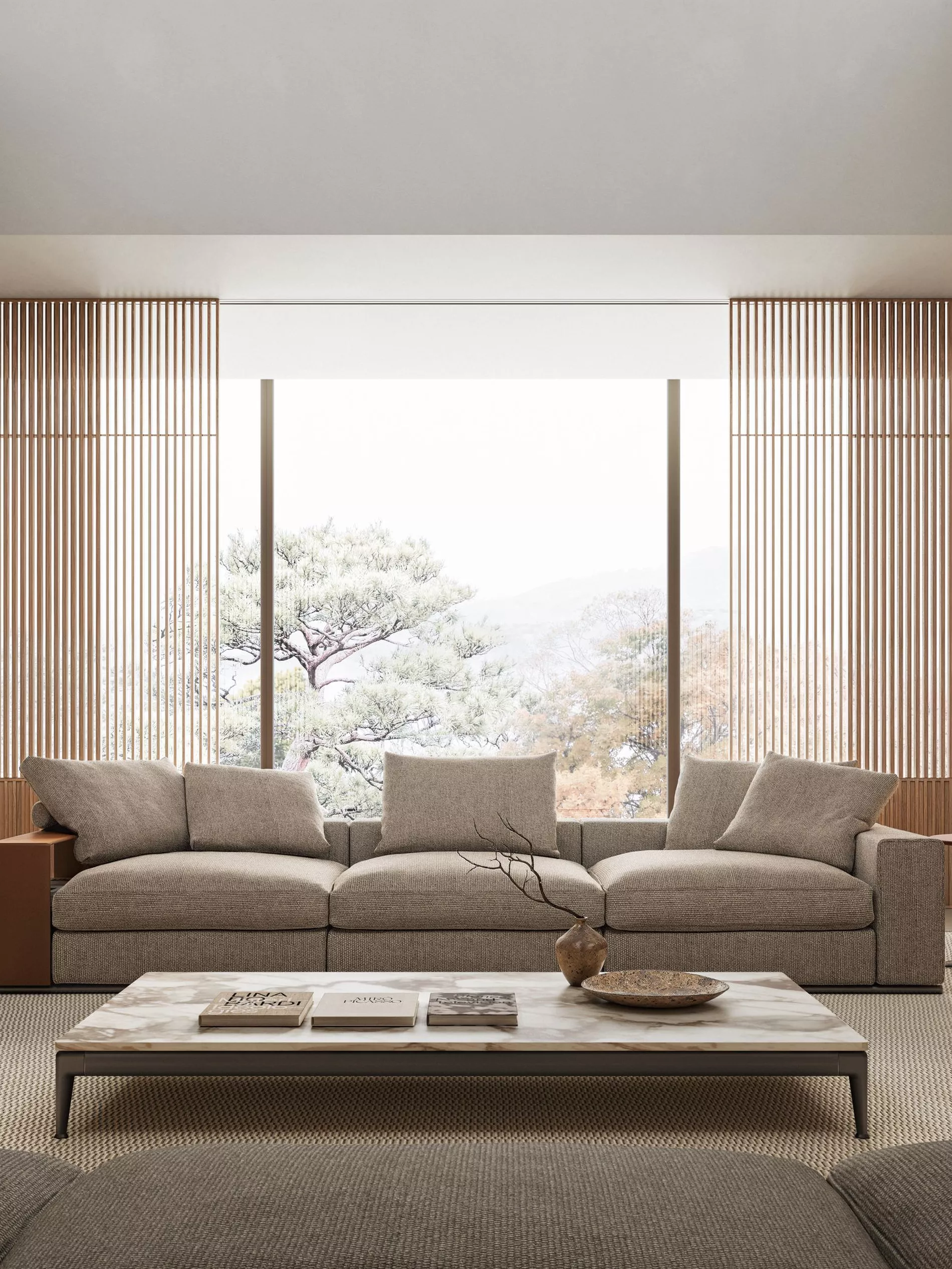
Today, the Groundpiece is available in a range of materials and configurations. Photo: Flexform
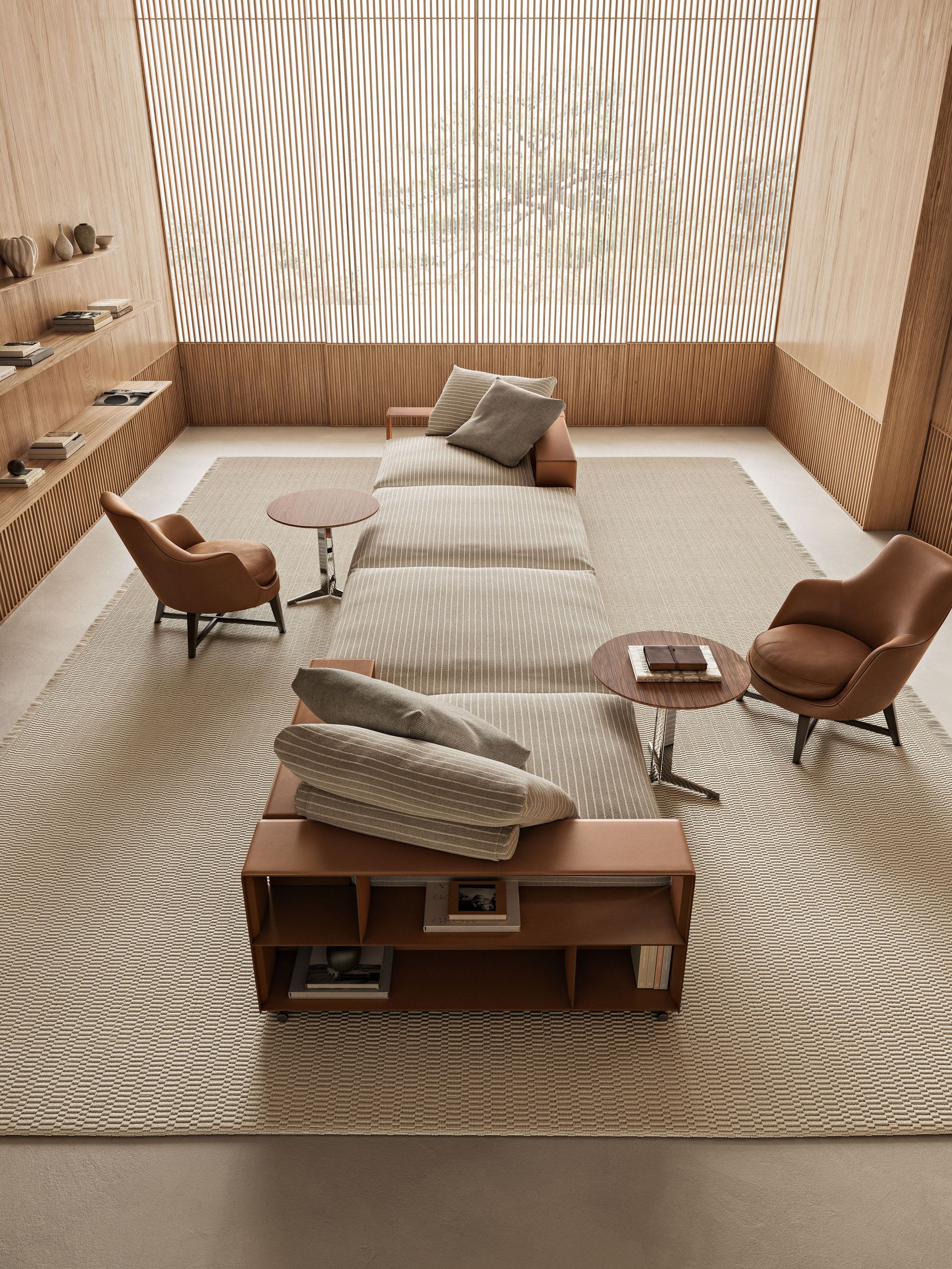
Photo: Flexform
The name Groundpiece was inspired by the sculptures of American artist Donald Judd, with Citterio noting that “my sources and influences don’t always need to be explained; what matters is the sensitivity that comes from looking at and reinterpreting what we’ve seen.” In Groundpiece, he explains, “the leather allowed us to translate proportions and asymmetries – borrowed from art – into a domestic object. That’s the essence of creativity: a chain of references, emotions, and perceptions filtered through our own sensibilities.”
Wrapped around the corner or slicing through a room, the Groundpiece boasts endless styling options and configurations. Today, the sofa is available in a range of calming, earthy hues and in tactile materials, including linen, cashmere, and cotton blends. Much like 25 years ago, “effortless style” remains at the core of the Groundpiece, each of its elements crafted with care and consideration. Its pared-back, refined silhouette endures – proof that great design stands the test of time.
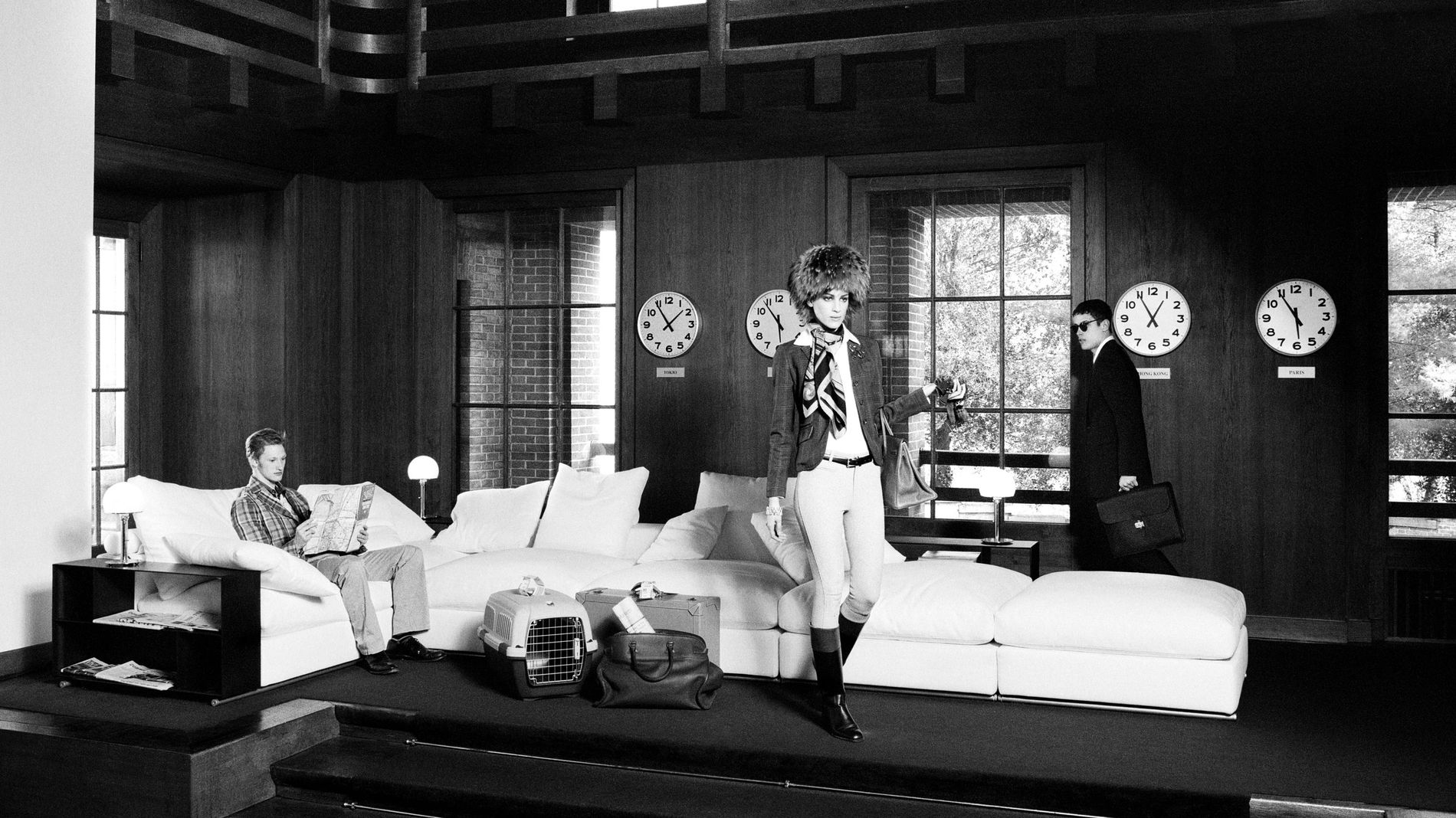
A Groundpiece campaign picture from 2006. Photo: Maria Vittoria Backhaus