
Forget the caricature of Copenhagen Fashion Week street style. These three homegrown labels offer a more authentically Danish proposition of personality without performance
There has been plenty of discourse lately about whether the street style we see coming out of Copenhagen Fashion Week is really representative of Copenhagen style at all. It's a reasonable query for debate. Spend any old Wednesday in the Danish capital and you’re unlikely to see quite the same concentration of clashing colour, supersized silhouettes and eccentric accessories that fill our feeds twice a year (save for the bicycles in tow – they're legit).
Of course, fashion week has always been fashion at its most exaggerated. But Copenhagen presents a particularly interesting case. The city has developed such a distinct fashion identity that, twice a year, visiting editors, buyers and guests arrive already ready to tap into a perceived dress code. Colour, print, playfulness are dialled up for the occasion, captured by the street-style photographers and circulated around the world as Copenhagen style. It becomes difficult to tell where the local influence ends and the global interpretation of it begins.
That doesn’t mean the international perception is entirely misplaced. Colour is important here. So are ease, playfulness and clothes that don't take themselves too seriously. But look at what Danish women actually wear day to day – and the brands they return to – and there is certainly personality, just far less of the performance.
Three homegrown labels Vogue Scandinavia is loving right now capture that particularly well. Copenhagen-based brands Sissel Edelbo, Tapis Noir and APOF each embrace colour, print and character, but in a way that feels designed for real wardrobes.
Sissel Edelbo
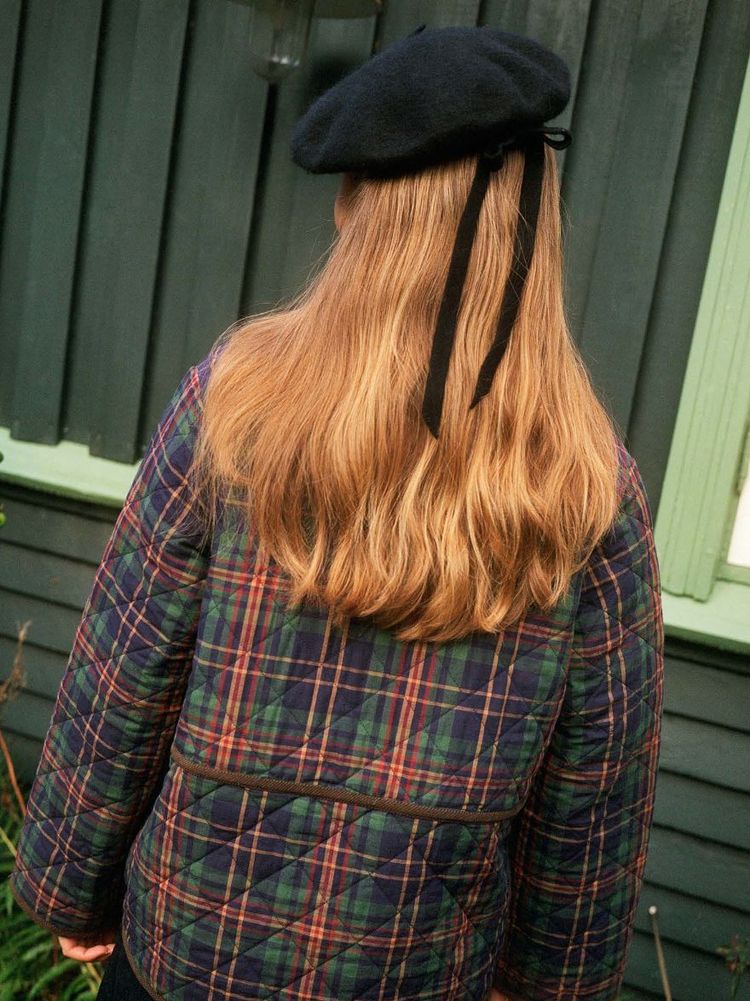
Photo: Courtesy of Sissel Edelbo
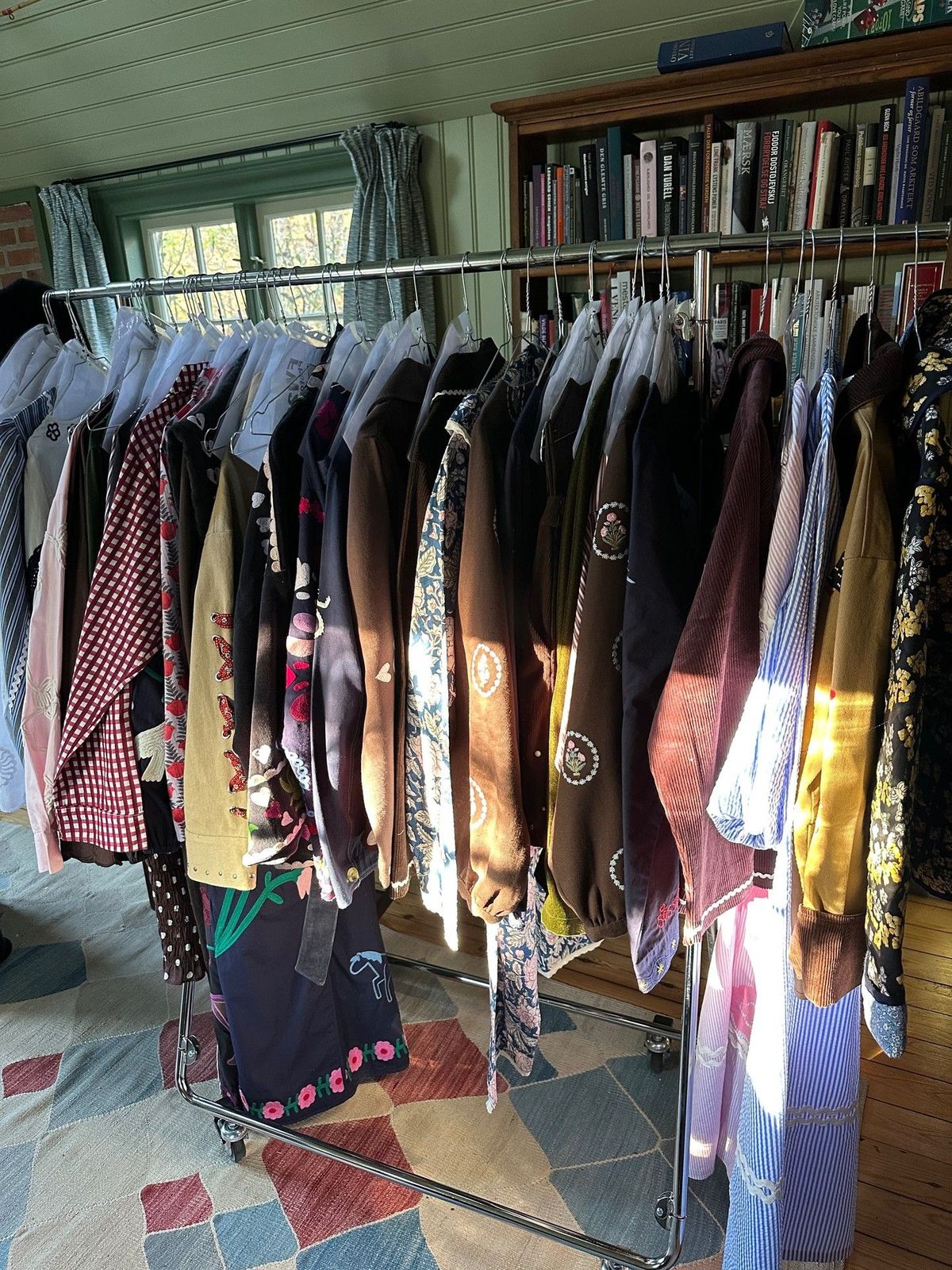
Photo: Courtesy of Sissel Edelbo
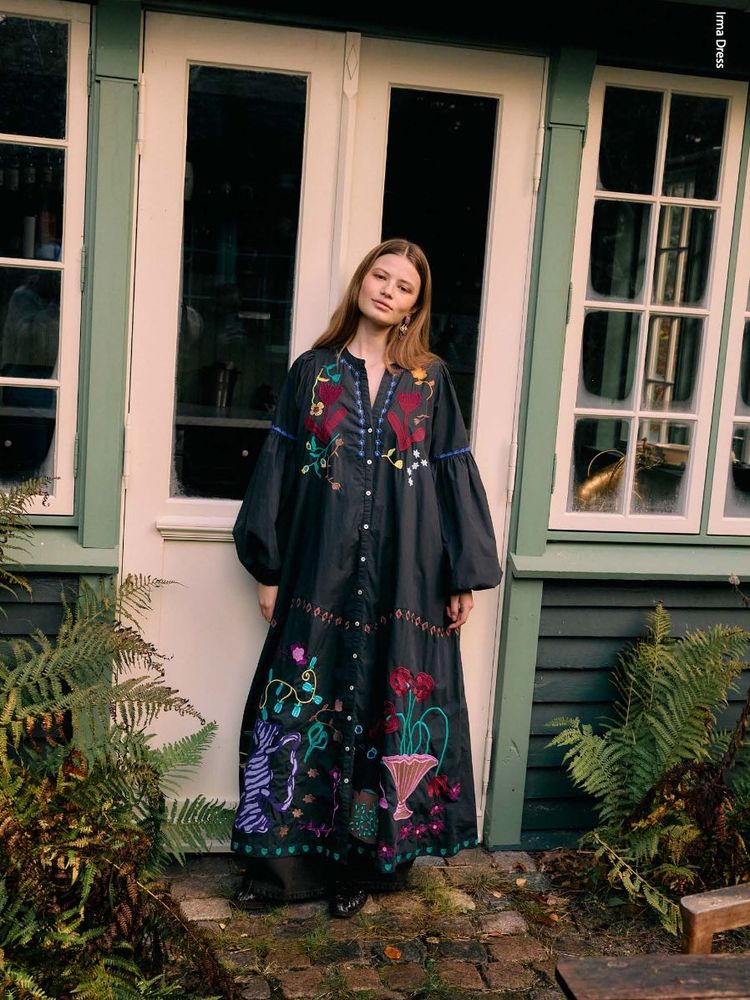
Photo: Courtesy of Sissel Edelbo
There is an exuberance to Sissel Edelbo that feels immediately at home in Copenhagen. Colour is plentiful, prints are happily mixed and silhouettes have the looseness that makes you want to throw them on rather than carefully construct an outfit around them.
Founded in 2004 by Jeanne Sissel Thomsen and Christina Edelbo, and today led by Thomsen alongside Chris Elmengaard, the Copenhagen label has built its identity around textiles – particularly the reuse of existing ones. Vintage Indian saris have long been a signature, transformed into one-of-a-kind dresses, jackets and separates, alongside deadstock and other pre-existing fabrics. The variations that come with them are very much the point: no two pieces are necessarily quite the same.
For autumn/winter ’26, that textile focus takes on a more homespun feel. The collection looks to everyday rituals and domestic details, translating paper-cut art, vintage trims and crochet lace into embroidery, cutwork and appliqué. There are English cabin plaids, stripes and folkloric motifs, worked across winter browns and mossy greens with jolts of blue and pink. It’s decorative and playful but grounded in the kind of clothes Sissel Edelbo does best: pieces made to be worn, rather than saved for fashion week.
Tapis Noir
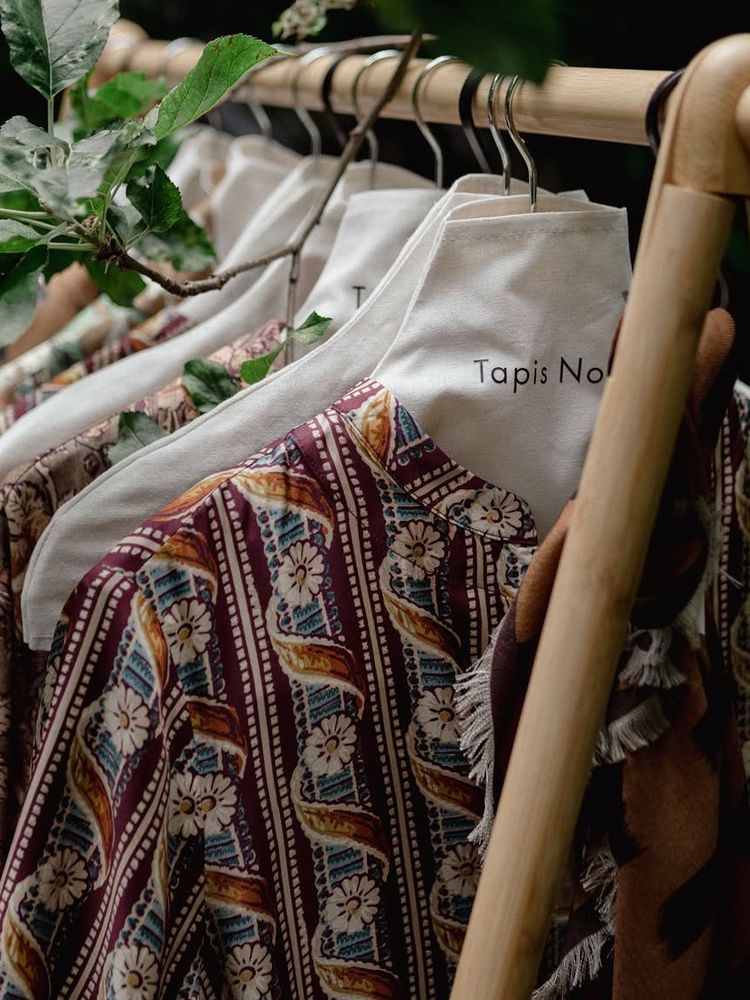
Photo: Courtesy of Tapis Noir
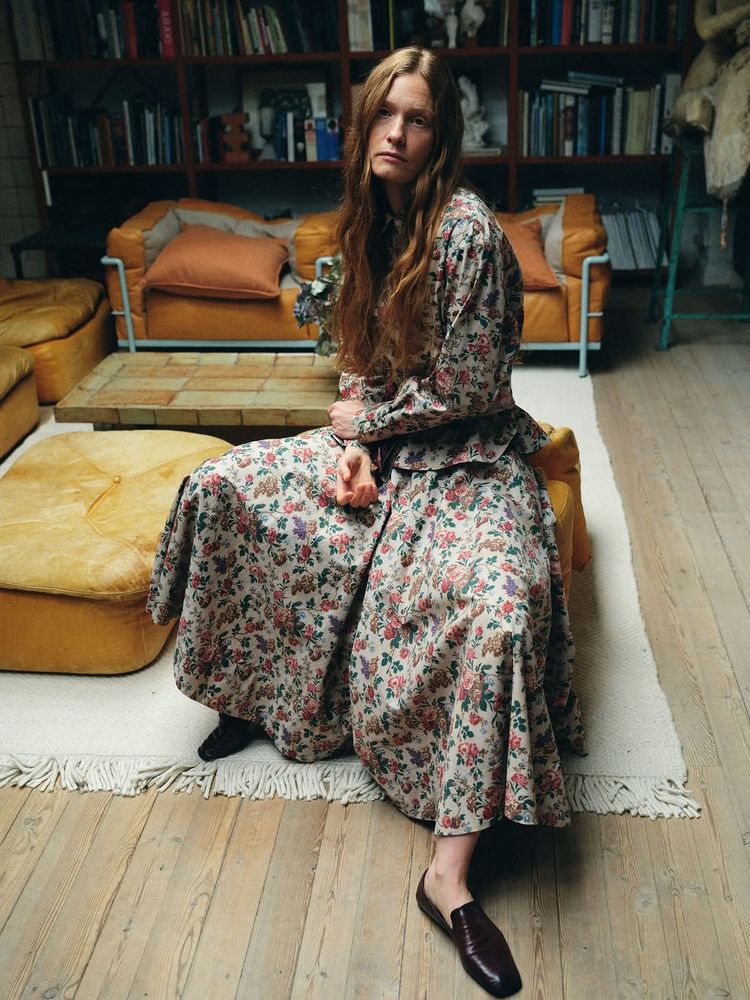
Photo: Courtesy of Tapis Noir
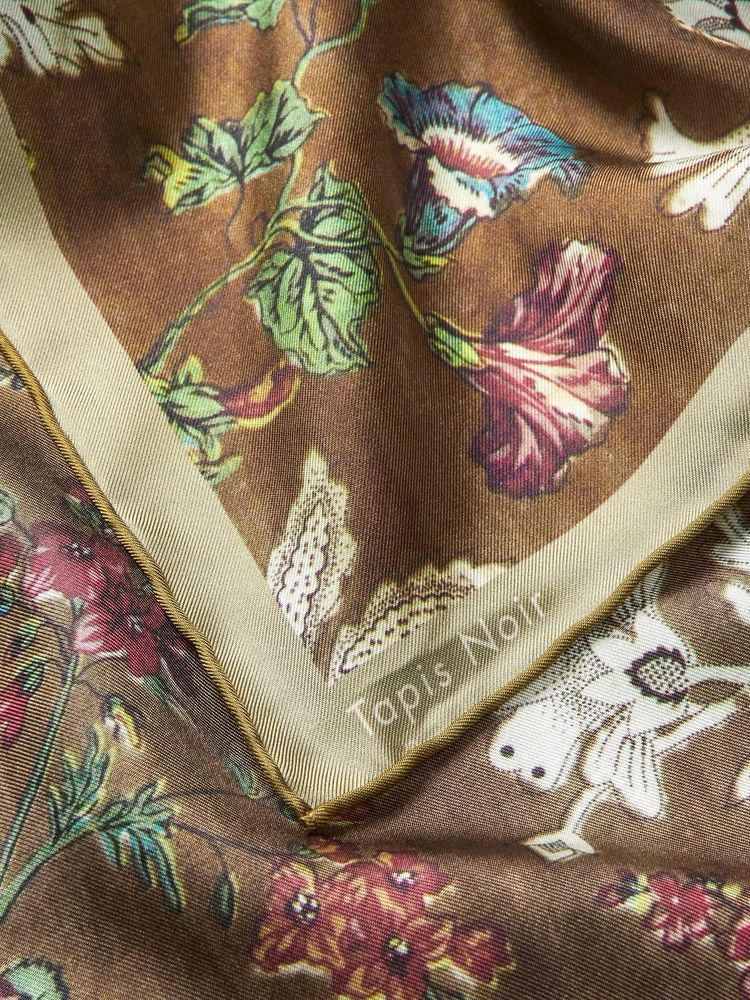
Photo: Courtesy of Tapis Noir
Tapis Noir takes its fascination with textiles several centuries back. Founded in Denmark in 2020 by art director Mads Lehn Kruse, the label draws on his own collection of antique fabrics, translating historic patterns, tapestries and woven textures into silk scarves and flowing garments.
The brand's references span continents and centuries, but Tapis Noir doesn’t simply reproduce them. Archival motifs are digitally reworked, rescaled and recoloured, turning the faded detail of an old textile into something much more graphic. The pieces themselves are made in small-scale production, primarily from silk twill and structured cotton weaves, with an emphasis on the kind of useful, decorative objects that can sit outside the usual seasonal cycle.
That approach carries into autumn/winter ’26, which moves between Paris and the British countryside. Swedish stripes sit alongside 18th-century French toile de Jouy, early 19th-century chintz and oversized Spanish florals, with strong pinks cutting through softer blues. The silhouettes shift for colder weather too, bringing those prints to more substantial shapes and fabrics. It’s a collection of contrasts – florals and geometry, city and country, old textile references and painterly colour – that neatly sums up what Tapis Noir does.
APOF
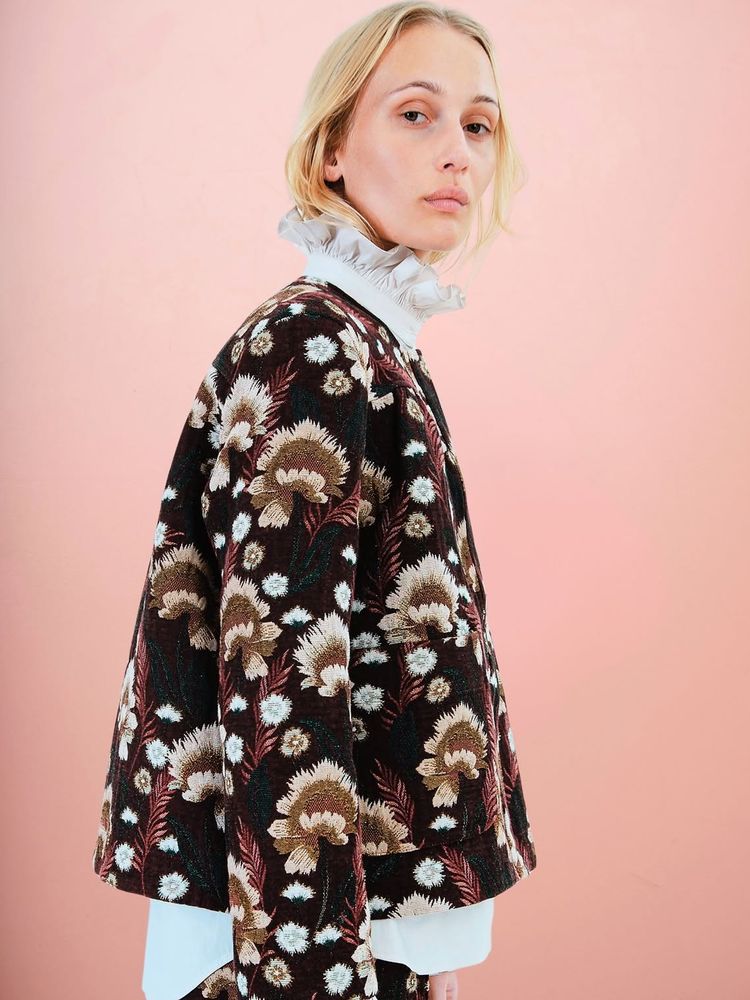
Photo: Courtesy of APOF
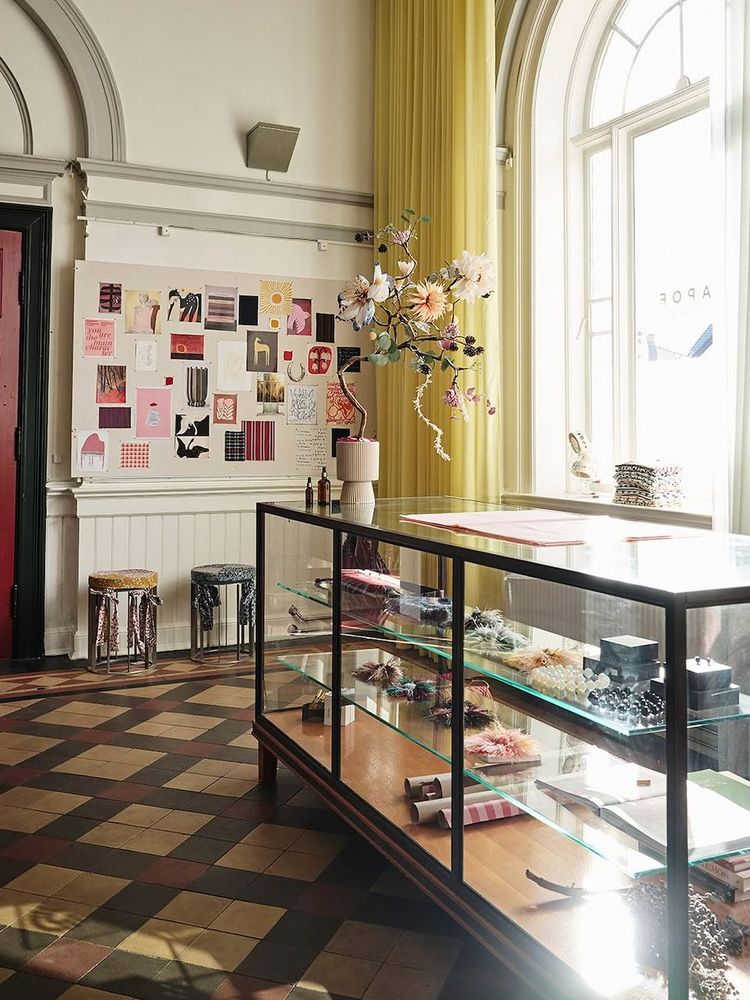
Photo: Courtesy of APOF
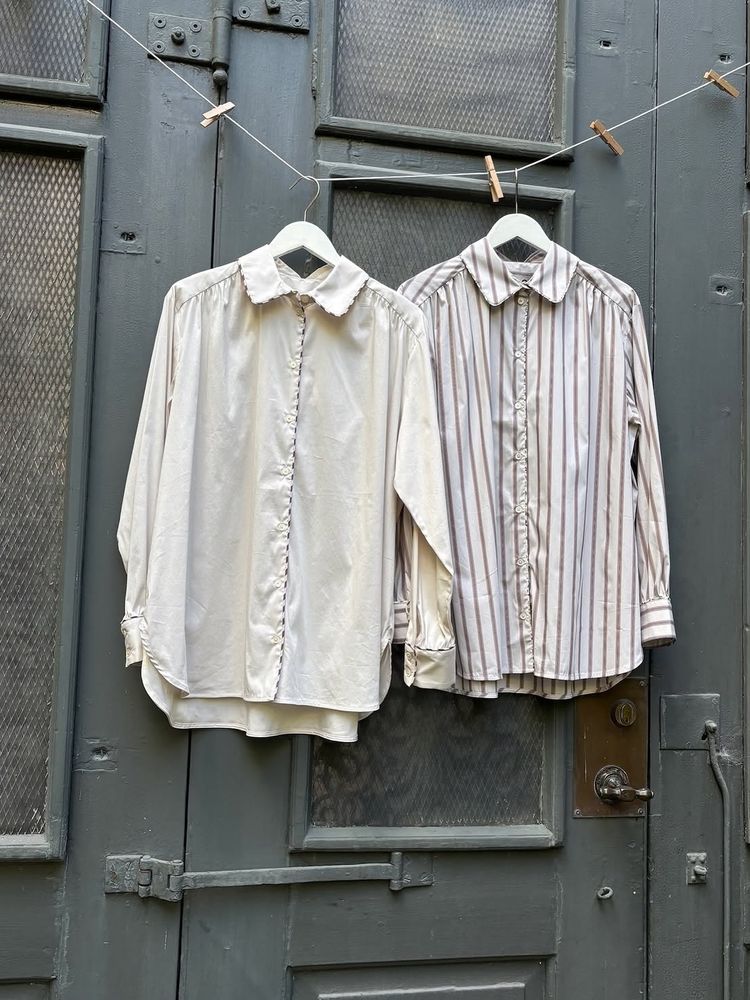
Photo: Courtesy of APOF
APOF – short for A Piece of Favourite – offers yet another interpretation of Copenhagen’s authentic fondness for and use of colour. Founded by sisters Kathrine and Frederikke Hviid, the Danish label is built around a straightforward idea: making the pieces in your wardrobe you reach for again and again.
Feminine silhouettes, crisp cottons, distinctive prints and considered colour combinations form the backbone of the brand. There is a polish to APOF that sets it apart from some of Copenhagen’s more eclectic labels, but the clothes remain practical. A printed dress is easy in shape; a colourful blouse works with the jeans already in your wardrobe. The point isn’t to build an entire look around one piece.
For autumn/winter ’26, titled Notes of Heritage, the sisters look to tradition and the things passed between generations. Classic wool checks, soft alpaca, velvet and Liberty prints appear across familiar, uncomplicated silhouettes, in a palette of deeper autumnal shades. It’s a collection that feels recognisably APOF: feminine and decorative, but made with repeat wear in mind.
Taken together, Sissel Edelbo, Tapis Noir and APOF are a reminder that Danish fashion is bigger than the version of Copenhagen dressing that makes the street style galleries. There is colour, print and personality in abundance here, too – just made with life beyond fashion week in mind.